Panel discussion featuring:


About the webinar
Across the United States, city governments are taking the lead in rethinking how air quality is monitored and managed. This panel brings together representatives from Chicago, Philadelphia, and Washington, D.C., three cities that have each deployed extensive networks of air sensors to provide residents with real-time, neighborhood-level air quality data.
Panelists will share the motivations behind their cities’ investments in air sensor technology, from addressing longstanding environmental justice concerns to improving public health responsiveness and transparency. The discussion will explore the process of planning and deploying these networks at scale, including how each city navigated technical challenges, community engagement, and interagency coordination.
While their contexts differ, all three cities are building new models for local air quality management that prioritize accessibility, equity, and actionable data. The panel will also address lessons learned along the way: what worked, what didn’t, and what other cities should consider when starting similar efforts.
With hundreds of sensors now in operation across these municipalities, this session offers a practical look at how next-generation air monitoring is taking shape on the ground and how local governments are turning sensor data into a tool for smarter decision-making and stronger community trust.
Meet the Panelists
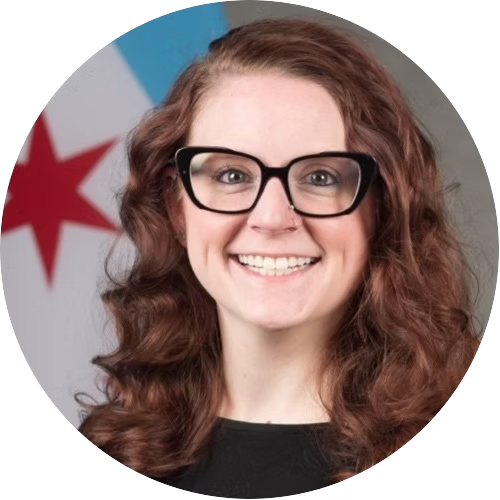
Grace Adams, MNM, MPH
Projects AdministratorChicago Department of Public Health

Kassahun Sellassie, PhD, PE
Air Management Services DirectorCity of Philadelphia Department of Public Health

Galen Rose-King
Engineering Specialist | Air Management ServicesCity of Philadelphia Department of Public Health

Kane Samuel
Environmental Protection SpecialistDepartment of Energy & Environment (DOEE)

Henry Frishman
Air Quality SpecialistDepartment of Energy & Environment (DOEE)

Sean Wihera (Moderator)
VP, Business Development and PartnershipsClarity Movement


