Clarity provides a complete, end-to-end air quality monitoring system trusted by governments, businesses, and communities in 85+ countries. Sensing-as-a-Service℠ combines resilient solar-powered air monitoring equipment, a full stack of cloud-based software, and expert air quality support into one seamless solution for air quality measurement.
Independently evaluated by the world’s leading air quality experts:
London
Chicago
Perth
Yerevan
Why global cities trust Clarity for air quality data
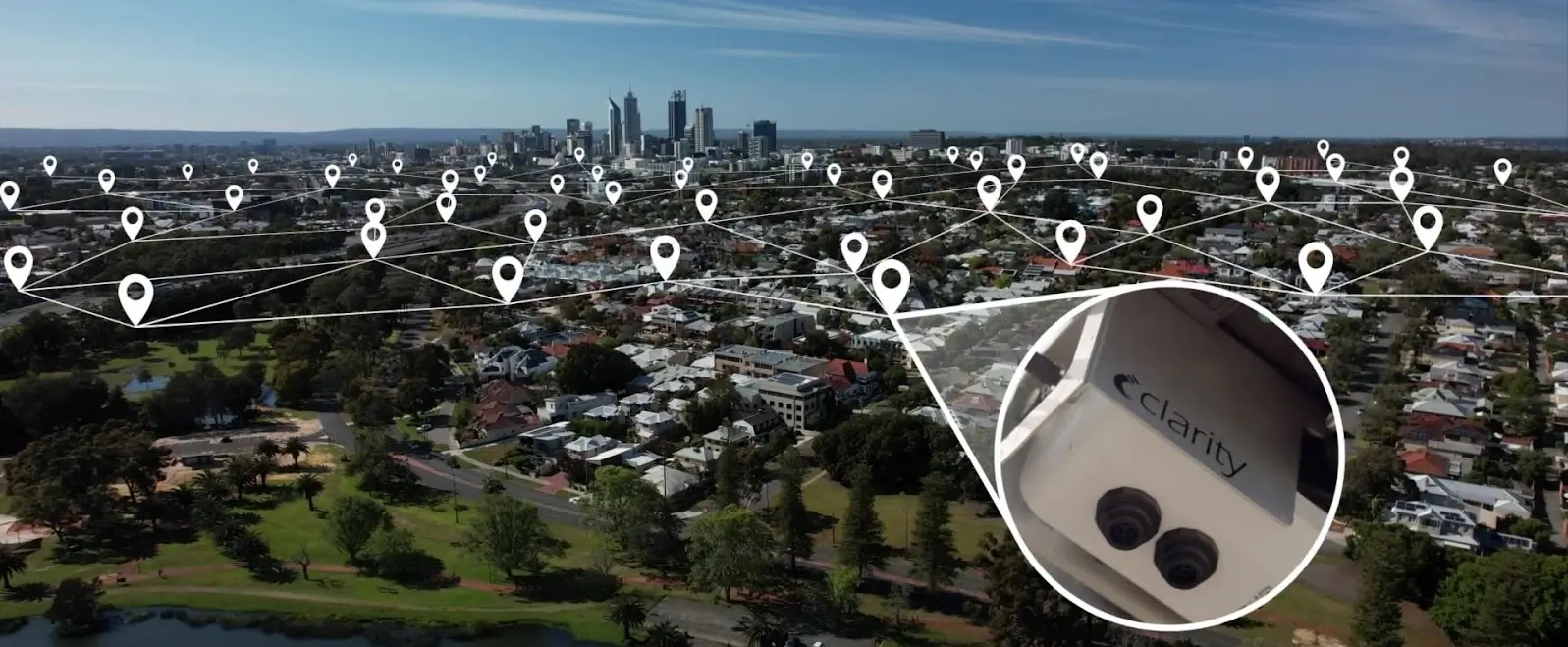
Global cities including Accra, Chicago, London, Los Angeles, Manila, Philadelphia, Perth, Washington D.C., and Yerevan trust Clarity for real-time, reliable air quality data. Clarity’s air monitoring systems are trusted in 85+ countries to accurately measure outdoor air pollution.
Clarity’s Sensing-as-a-Service℠ delivers air quality monitoringhardware, software, and support in one affordable package with minimal maintenance and no hidden costs. A modern, hassle-free way to monitor air quality, so you can focus on using the data, not managing your air quality measurement equipment.
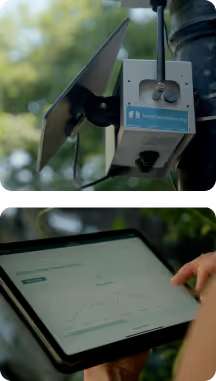
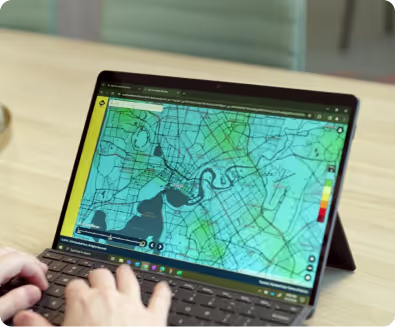
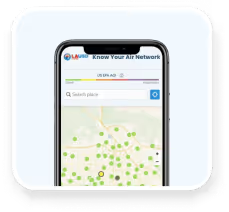
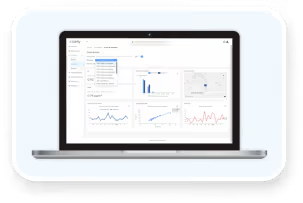
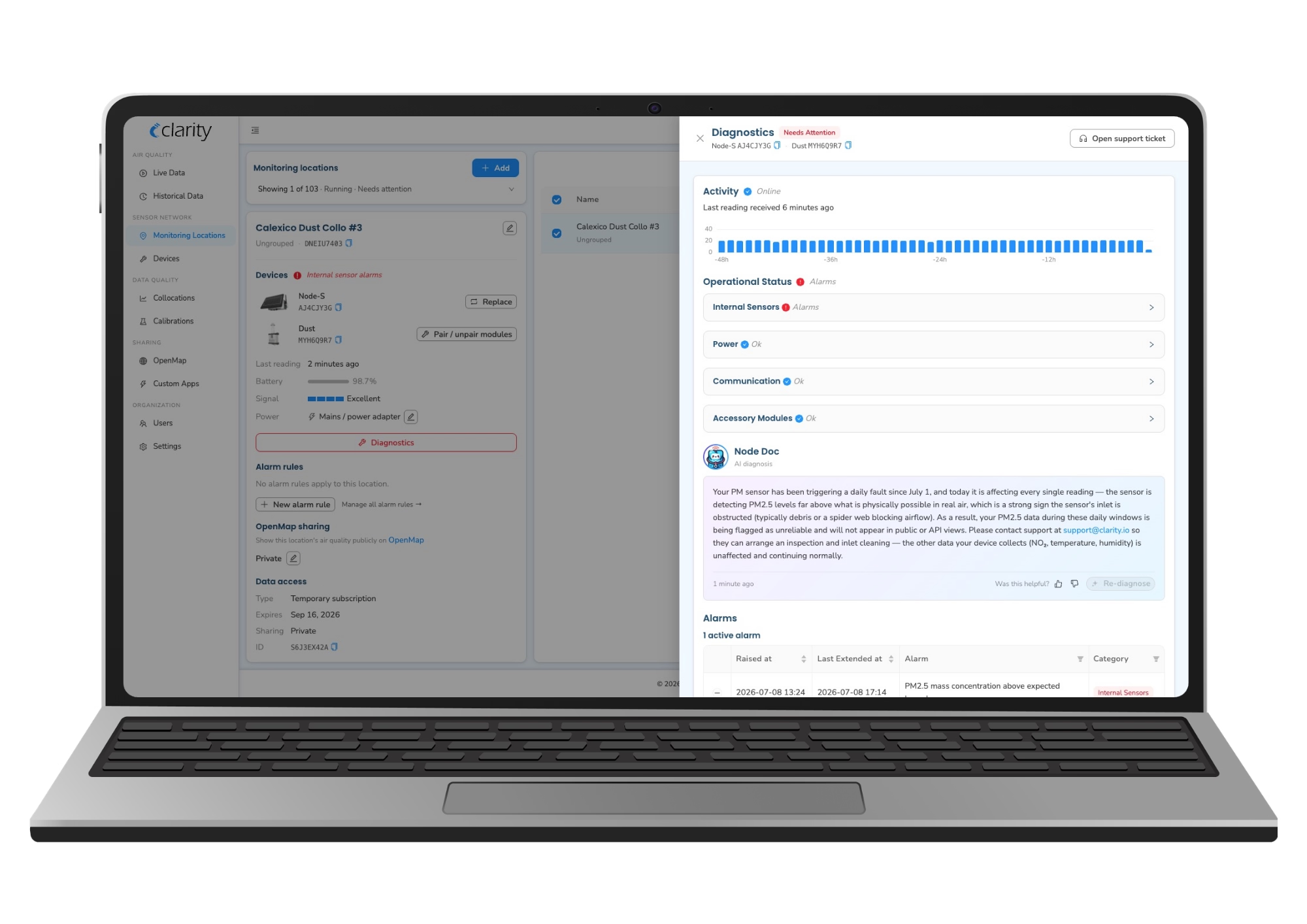
Air quality measurements and air sensor network status are easily accessible in real-time via Clarity’s user-friendly Dashboard, REST API, and OpenMap.
Clarity Node-S: The globally-trusted, solar-powered air quality sensor
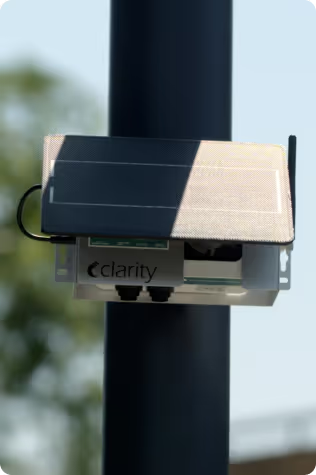
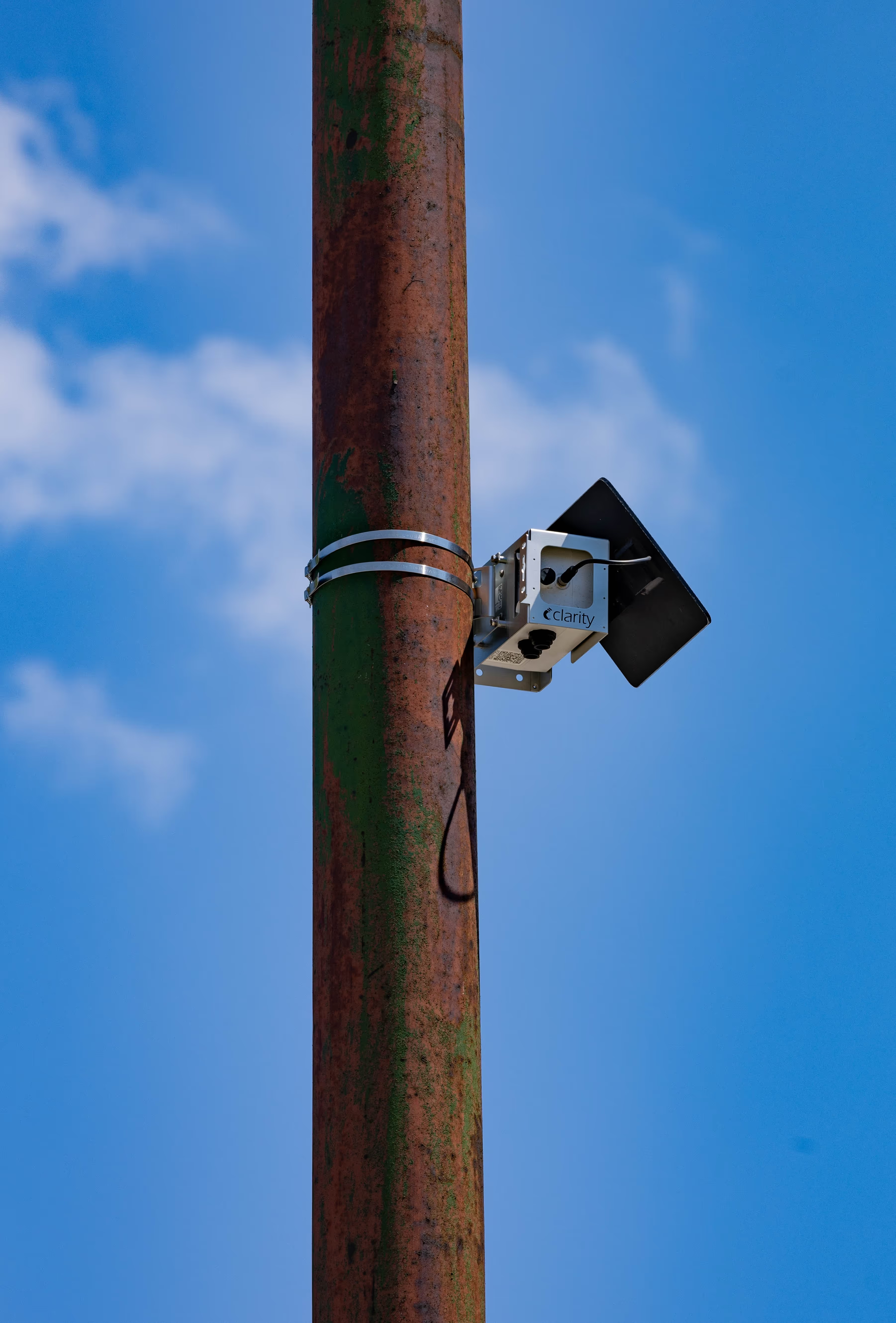
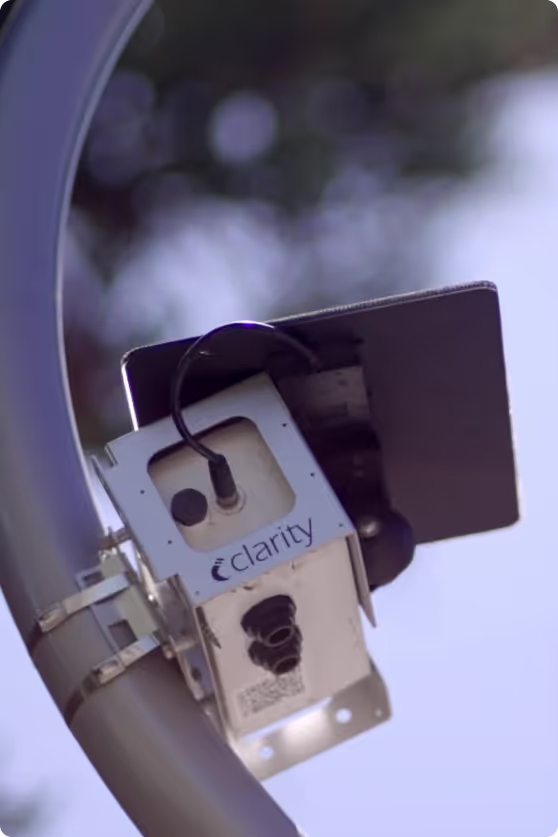
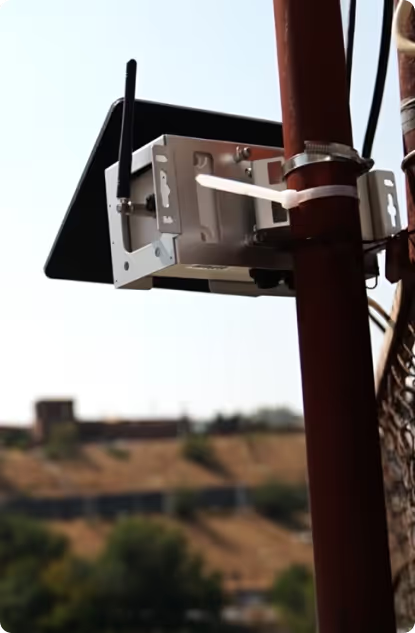
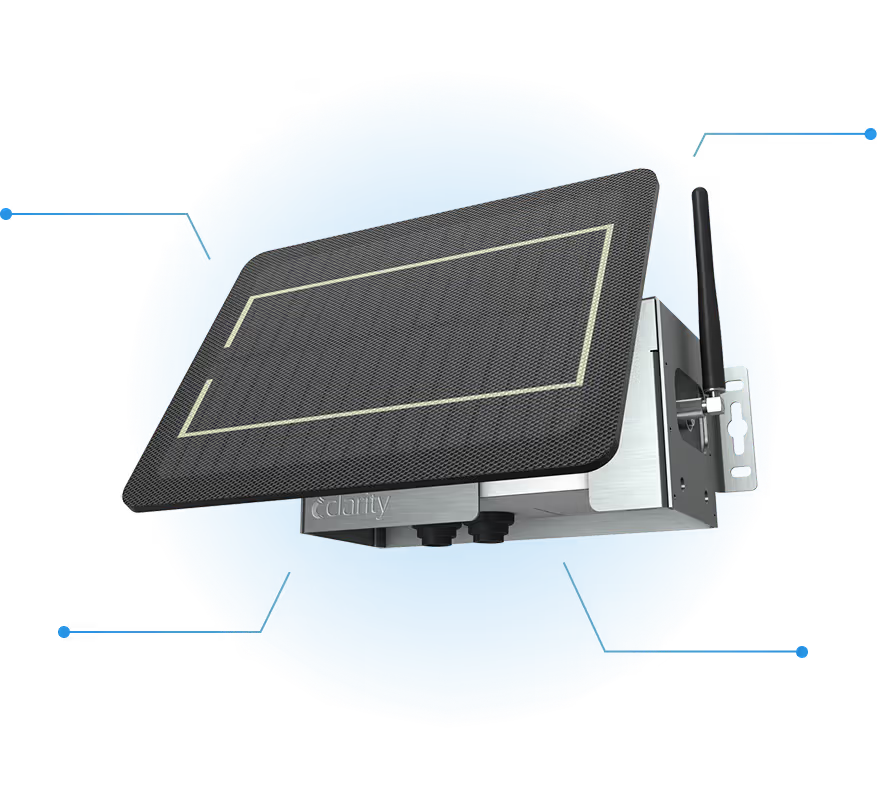
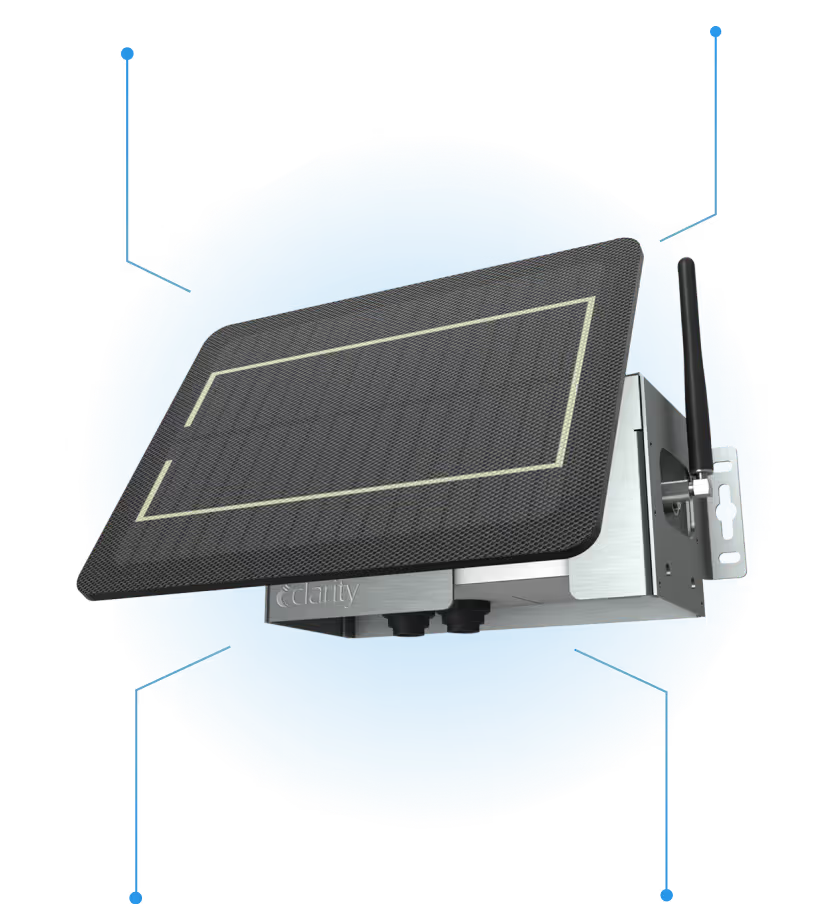
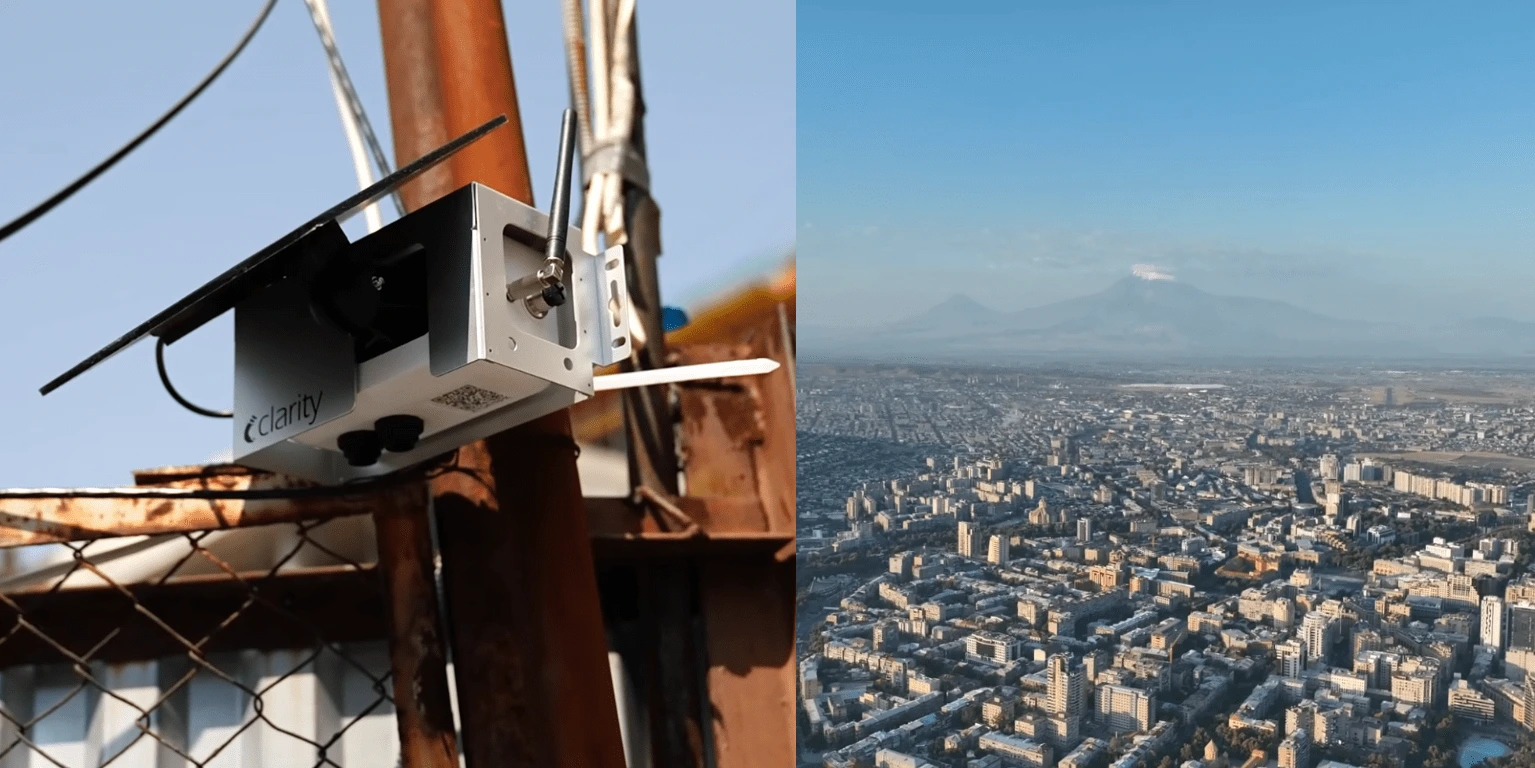
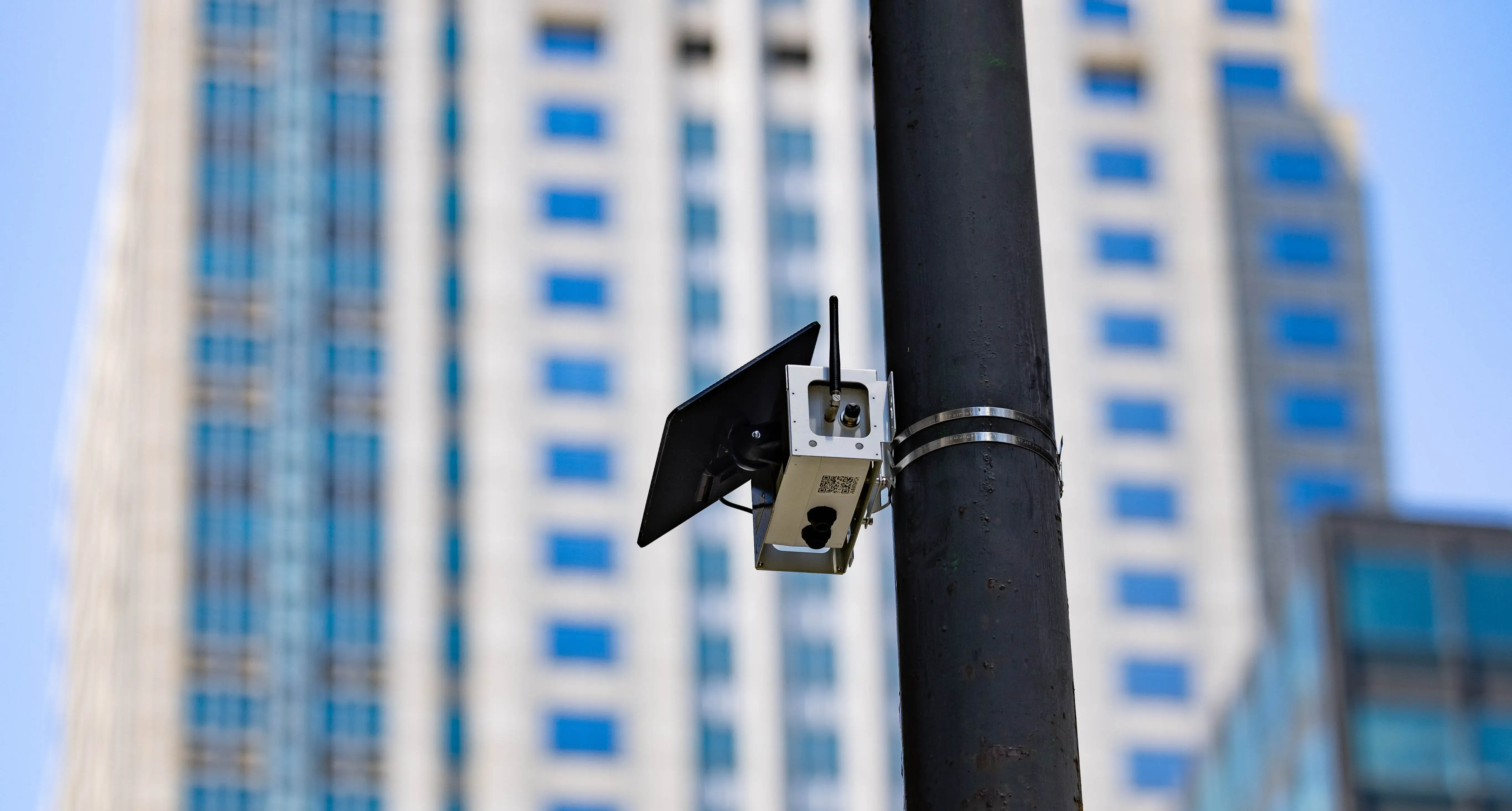
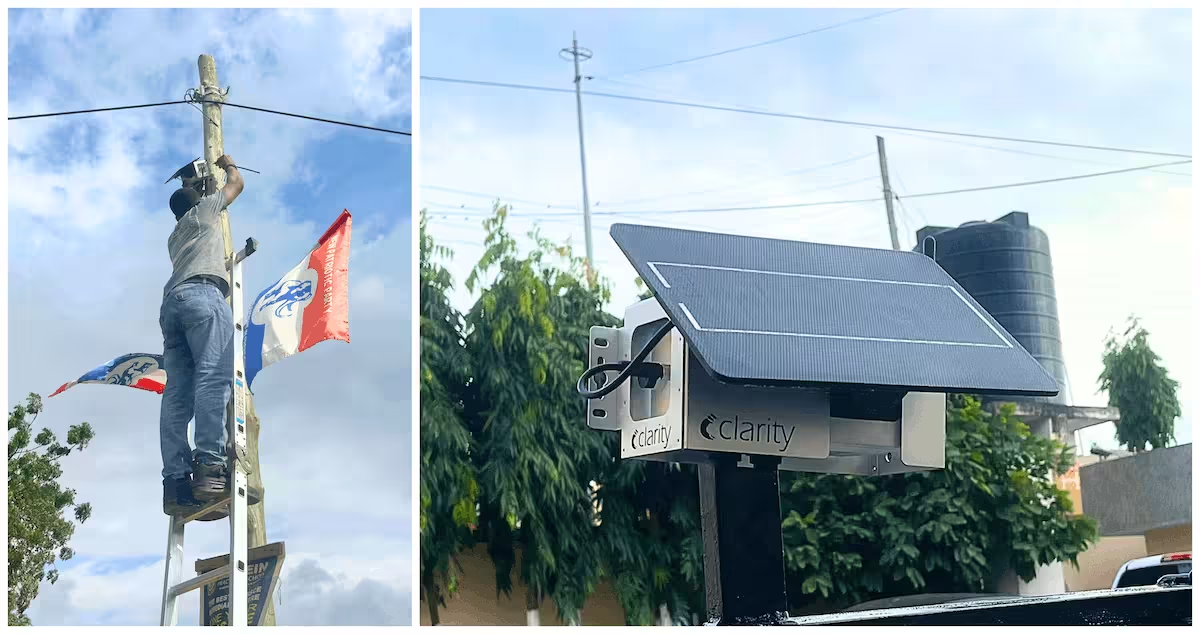
The Node-S is Clarity’s flagship outdoor monitor, delivering real-time, calibrated PM₂.₅ and NO₂ data. Solar-powered and cellular-connected, it operates continuously without external power or Wi-Fi. Built for reliable, scalable deployment in both cities and remote environments, the Node-S provides accurate air quality data anywhere.
Solar-powered performance
Runs autonomously with its integrated solar panel and battery - no grid power or cabling required.
Global cellular connectivity
A global SIM ensures reliable data transmission, even in low-infrastructure areas.
Simple, fast deployment
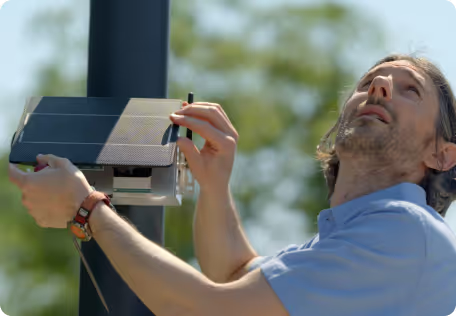
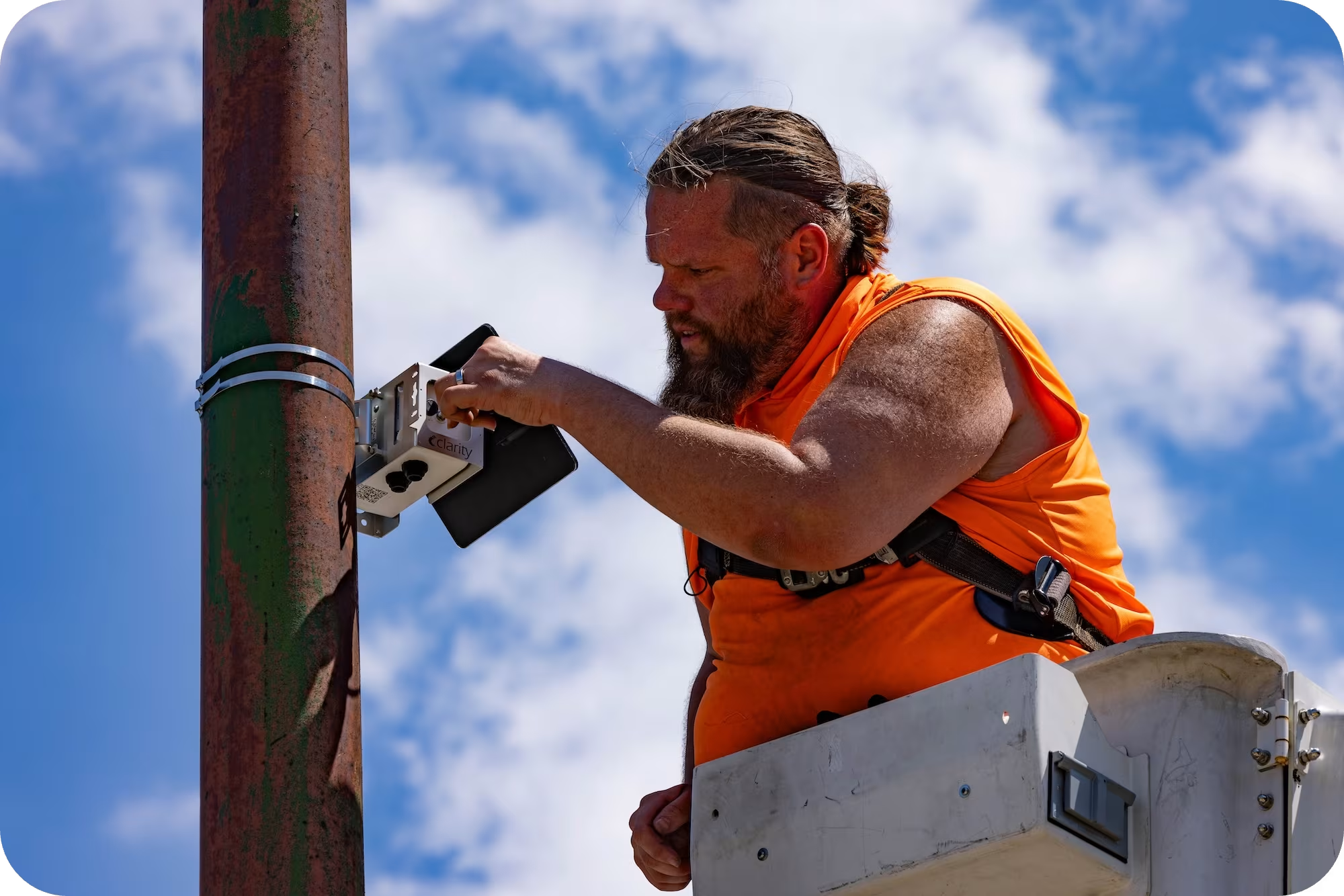
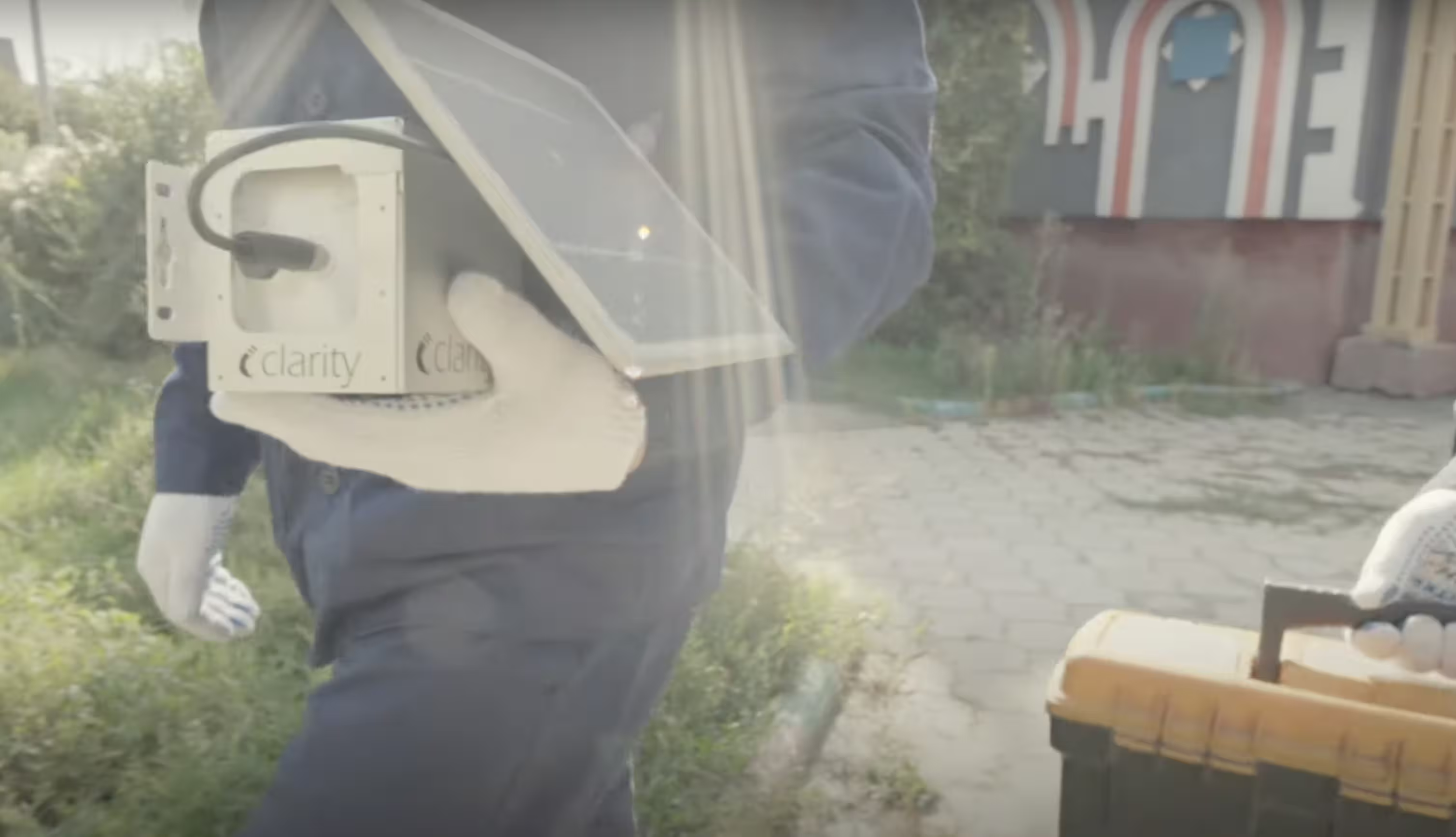
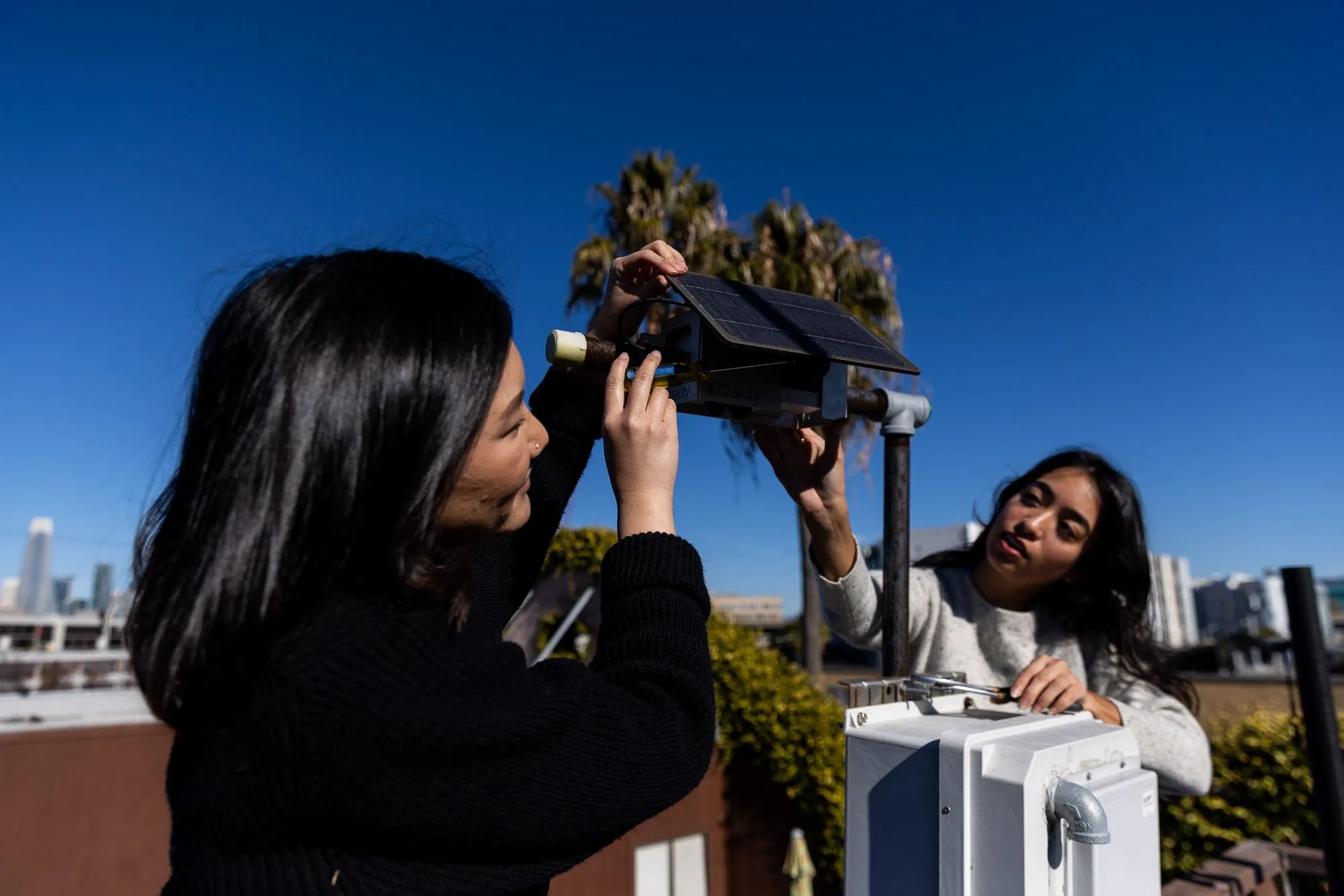
Compact, weatherproof, and lightweight for quick mounting on poles or walls.
Certified data accuracy
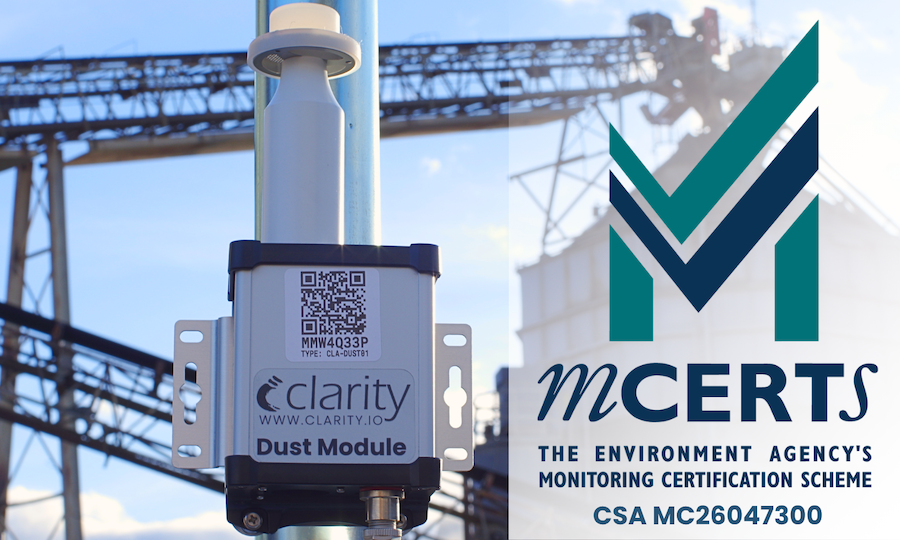
Rigorously field-tested and the only solar-powered air sensor with UK MCERTS certification for proven accuracy.
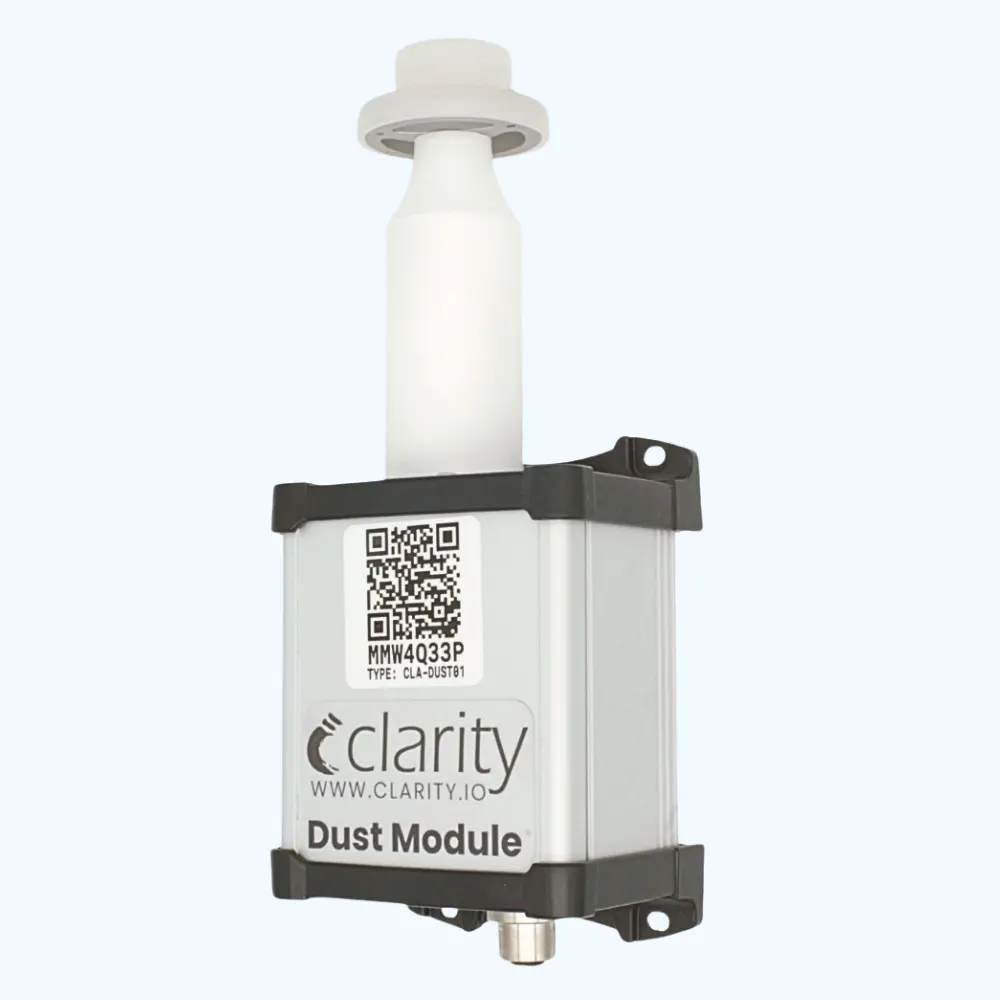
The Node-S is the foundation of Clarity’s modular air quality measurement system. This flexible, cost-effective approach means you invest only in the air pollution measurement devices you need, easily incorporating new Add-On Modules to scale as your needs evolve. Explore our Add-on Modules to build the right air quality monitoring system for your goals.
Large-scale air quality monitoring networks powered by Clarity
See examples of how major cities around the world use the natively solar-powered Clarity Node-S air quality sensor and Clarity Add-On Modules for air pollution measurement across large geographic areas. For more examples, see our Customer Stories page.
Air quality monitoring at the city scale, proven around the world
Use the interactive map below to explore a few of our largest, flagship air quality monitoring networks. To see all featured project visit our Customer Stories page.
Air quality monitoring for governments, businesses, and communities
Air quality needs vary, so Clarity’s platform is designed to serve cities, companies, and community organizations alike. Whether you’re a mayor, a sustainability lead, or a community advocate, Clarity delivers the real-time data you need.
For Governments
Agencies use Clarity to expand coverage beyond sparse regulatory stations, creating dense networks that inform policy and provide transparent public reporting.
Industrial sites, construction projects, and private companies rely on Clarity to monitor emissions, identify issues, and support mitigation efforts.
Hear directly from partners who have built effective air quality monitoring programs with Clarity. Their testimonials highlight the impact of reliable, scalable air quality data.
"The Node-S is solar powered, has impressive battery life, and transmits data via cellular network. That means we could put these monitors anywhere that the sun shines and you can make a cell call. After the Marshall fire we installed a total of 22 monitors in the burn area. "
Bill Hayes
Air Quality Program Coordinator, Boulder County Public Health
The information we get from the Clarity Node-S sensors and the air health monitoring has helped us shape a lot of what we're doing under our sustainability pillar. Having access to this data helps us in one of our key objectives for the city, which is to attract residents to the city in the future.”
Dale Page
General Manager, Planning and Economic Development, City of Perth
"The Clarity Node-S is light, it has a small solar panel, and it's reliable. We can put them anywhere. All of those things combined mean it is super easy for communities to put them up by themselves."
Andrew Grieve
Senior Air Quality Analyst, Imperial College London
“There's less maintenance with Clarity’s compact Node-S device — remote monitoring of device health means less cost to actually go to that particular site for maintenance. That time and cost-saving measure is critical for our business.”
Elisha Mulilo
Air Quality & Emissions Specialist, Kansanshi Mine
"Today we have 50 Clarity Node-S sensors in Almaty that provide us with online data on the type of particles and pollution in different parts of the city. Thanks to these sensors, we can plan environmental measures in Almaty.”
Bolat Amirgaliyev
Head of Environment Division, EcoAlmaty
"We needed high-density data to develop a model that was representative of a real situation on a very local scale – so multiple devices and multiple locations. The Clarity Node-S was ideal for this use case."
Dr. Ian Longley
Principal Scientist - Air Quality, National Institute of Water and Atmospheric Research
Explore the resources behind Clarity’s Sensing-as-a-Service℠ solution, from technical specifications and white papers to videos, collocation data, and academic research. Together they cover every stage of an air quality monitoring programme, from planning and funding to deployment and reporting.
Clarity serves cities and regulators, communities, schools, industries, and researchers. Customers, from the Chicago Department of Public Health to small rural counties, use Clarity’s data to inform policy, protect public health, manage compliance, and engage the public.
Clarity sensors are calibrated using remote and local methods to ensure decision-grade accuracy. Their patented Remote Calibration approach allows data from Clarity equipment to be calibrated using global or custom calibration models, and ongoing updates (e.g. wildfire-specific calibration models) keep data accurate even in extreme conditions. Third-party evaluations show strong performance compared to reference monitors. Performance testing results are available in Clarity’s collocation results library.
Every subscription includes the Clarity Cloud, which receives data from your sensors, applies calibration in real time, and stores it with no servers to manage. Three tools sit on top of it: the Clarity Dashboard for viewing, analyzing, and exporting data across an entire network, OpenMap for publishing real-time data to the public, and the Air Monitoring API for streaming data into existing systems. There are no separate software licenses, cellular data fees, or storage costs.
Yes. The Node-S air quality sensor ships solar and battery powered out of the box, so it needs no AC power and no Wi-Fi. It requires an average of only one hour of direct sunlight per day, and can operate for up to 30 days with no sunlight at all, slowing its sampling rate automatically to preserve the battery and returning to normal operation on its own once power recovers. The weatherproof housing is IPX3 rated and operates from -10°C to 55°C. Devices have held up to sandstorms, snowstorms, and strong winds in deployments ranging from tropical Southeast Asia to high-altitude Central Asia and wildfire-affected areas of the western United States.
Yes, Clarity’s Sensing-as-a-Service air quality monitoring solution was designed with city-scale monitoring in mind, and our sensors are deployed in 85+ countries and 250+ cities, collecting billions of data points globally. Major citywide monitoring projects using dozens or hundreds of Clarity sensors include Open Air Chicago, Breathe Accra, Breathe Philly, Breathe London, Breathe Metro Manila, Los Angeles Unified School District, and Bishkek, Kyrgyzstan.
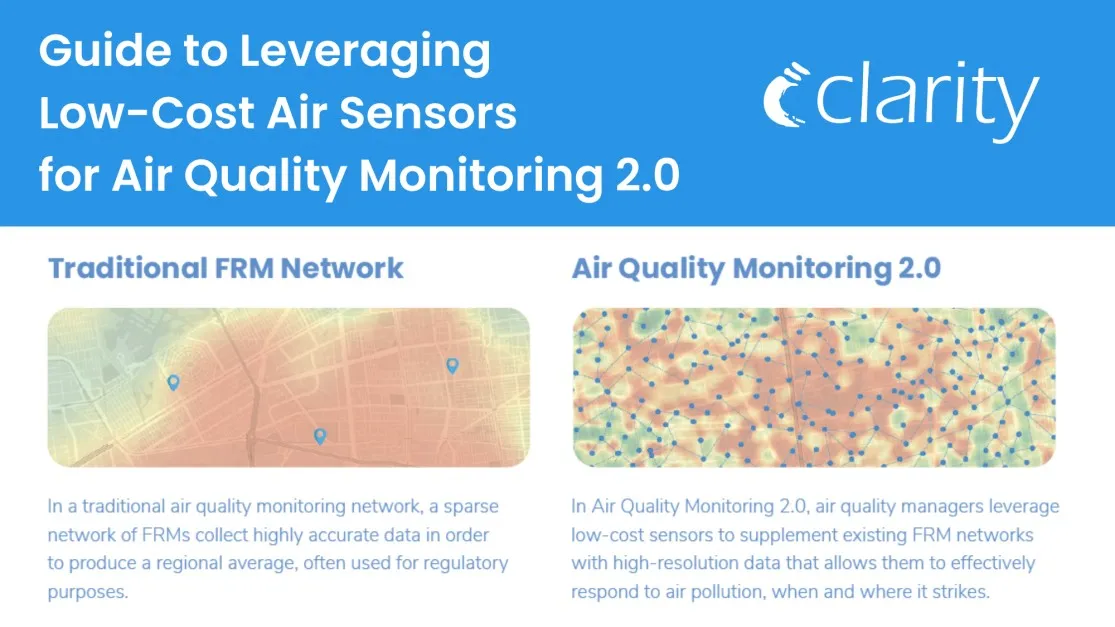
Traditional reference monitors are accurate but expensive to buy, site, and operate, so most regions run only a handful of them. That leaves the street-level air quality differences that drive exposure invisible. Clarity fills those gaps with dense air pollution sensor networks that report in real time and stay aligned to reference measurements through remote calibration, giving agencies neighborhood-scale coverage that complements the regulatory network rather than replacing it.
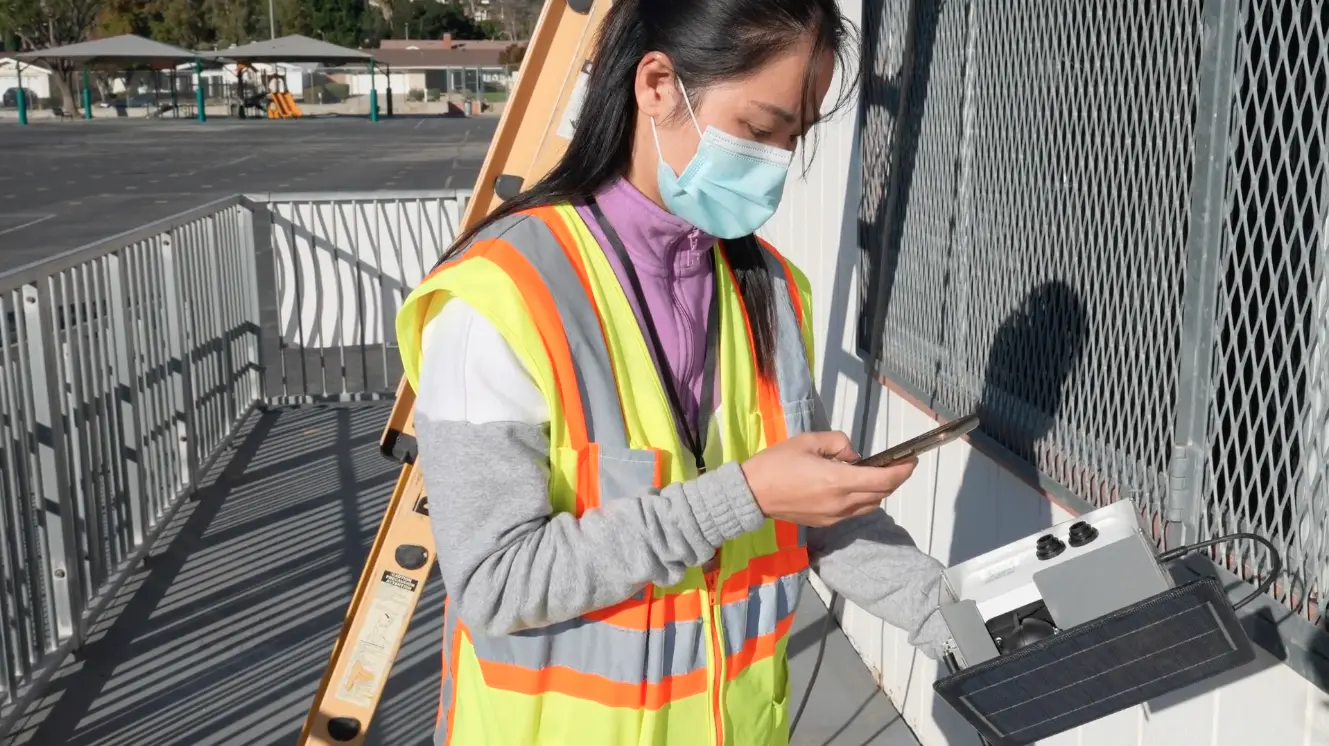
Our Sensing-as-a-Service air quality monitoring solution was designed for ease of use and the collection of accurate air quality measurements at scale. Most providers sell hardware and leave calibration, connectivity, and data management to you, but Clarity delivers all of this in one reliable package, at one predictable annual subscription cost. With hardware that installs in under ten minutes, a suite of cloud-based software and connectivity options, and data that stays calibrated and accurate without the need for physical maintenance, Clarity eliminates the hassle and overhead of deploying an air quality sensor network.
Clarity provides the tools to make air quality data publicly accessible through its OpenMap air quality data platform, which enables organizations to share real-time data with communities, stakeholders, and the general public. While the data is not open-source by default, it can be transparently published and easily embedded into websites, dashboards, or public health initiatives.
Clarity Movement Co. is an environmental technology company providing a complete Sensing-as-a-Service solution for ambient air quality monitoring. Their offering includes solar-powered Node-S air quality sensors, a cloud-based data platform, and expert support, empowering governments, businesses, schools, and communities to measure air pollution reliably and affordably.
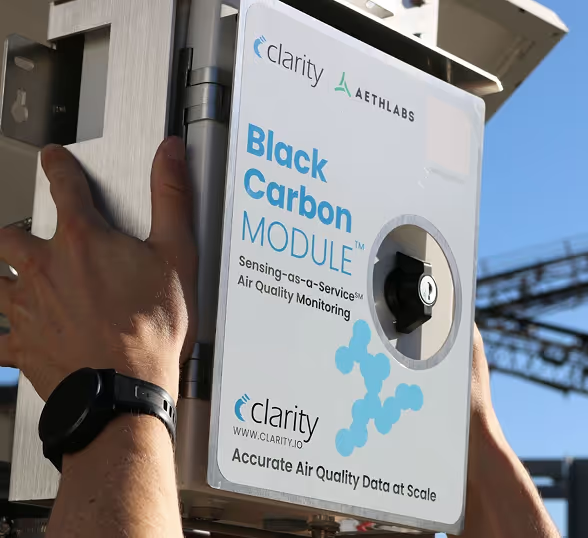
Yes, Clarity’s air quality sensors are specifically designed to detect fine particulate matter (PM2.5), which is a major component of wildfire smoke. In addition, Clarity offers modular pollutant measurement capabilities including nitrogen dioxide (NO₂), ozone (O₃), and black carbon, allowing for tailored monitoring of specific air pollution sources such as traffic, industry, or biomass burning.
Most agencies buy Clarity as an annual subscription rather than a capital purchase, typically as part of their operational budget but at times leveraging grant funding. Hardware, connectivity, software, calibration, and support arrive as a single line item that is easier to budget, approve, and report against, and the cost ends when the project ends instead of leaving a stranded asset. Clarity maintains a collection of air quality funding opportunities and provides grant-writing support including an AI-assisted proposal writing tool. Customers have funded networks through CARB Community Air Grants, EPA programs, and philanthropic sources.
Sensing-as-a-Service℠ is one annual subscription covering the sensors, cellular data, cloud software, calibration, QA/QC, and expert support. Faulty devices are replaced free of charge under warranty for the length of the subscription, and customers own their data outright. There are no separate fees for software, data transmission, or storage. Optional Add-On Services, including deployment support, environmental project management, data analysis, and training, are available for projects that need more than the standard package. Pricing depends on network size and the modules selected, but is one of the most competitively priced professional air quality monitoring solutions. Contact us for a quote for pricing.
With Clarity, calibration is handled remotely. Every sensor is factory calibrated before shipment, then we apply global calibration models built by collocating hundreds of Node-S devices with Federal Equivalent Method monitors worldwide. For higher accuracy or atypical environmental conditions, we may recommend a local collocation study near a regulatory monitor to produce a site-specific calibration that our team will then apply (also free of charge). Because calibration runs through Clarity’s patented remote calibration approach, devices never need to be shipped back, and model improvements such as the wildfire smoke calibration reach deployed sensors without a site visit. Maintenance is minimal: occasional cleaning of the solar panel and housing, with hot-swappable sensor modules if performance degrades.
Clarity data is built for non-regulatory supplemental monitoring, community exposure assessment, and environmental justice reporting, filling the spatial gaps between reference stations. While data from the Node-S are accurate enough to have been accepted for use on the EPA Fire and Smoke Map, they are not a substitute for FRM or FEM instruments in regulatory contexts. For agencies that need defensible data, Clarity supports collocation with reference monitors and provides accuracy reporting, as well as a range of other reporting options offered natively in the Clarity Dashboard. We can also support the production of more in-depth analyses and reports through our Add-On Services.
From product news and funding updates to pollutant deep-dives and solution guides, the Clarity blog covers the full picture of air quality monitoring. Below are some of our most recent posts.
.webp)





.png)








%20copy.webp)


.png)



.png)

.webp)



.svg)



























.png)