
Image provided by Chandan Chaurasia via Unsplash.
TL;DR: OpenAQ’s 2025 report highlights major growth in global air quality data, with thousands of new monitoring locations added, especially in low- and middle-income countries, and a rise in low-cost sensors. The platform now hosts over 2 billion measurements, with OpenAQ expanding access to air quality data to help address pollution and promote environmental equity worldwide.
What is OpenAQ?
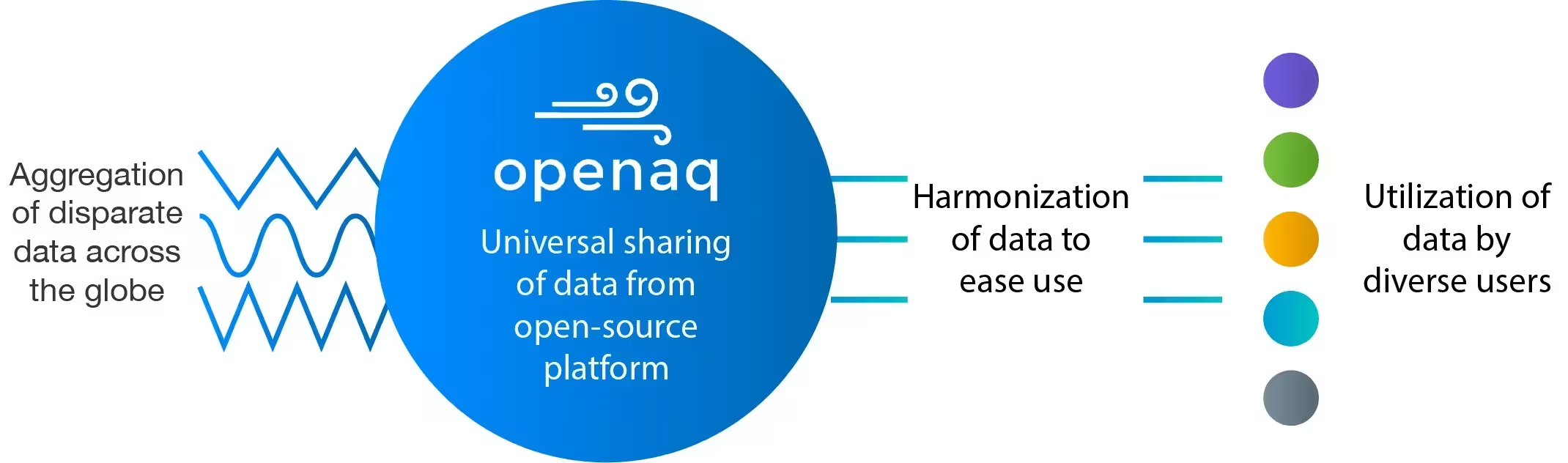
OpenAQ is an environmental tech nonprofit that aggregates and harmonizes open air quality data from across the world onto an open-source, open-access data platform. Universal access to air quality data enables changemakers to solve air pollution inequality and promote cleaner air around the world. Clarity is proud to partner with OpenAQ by providing them with air quality measurements from all Clarity devices that have been configured for public data sharing by our customers.
OpenAQ recently released its 2025 Year in Data report, which illustrates its important achievements and observations over the past year.
Recent highlights
In 2025, OpenAQ aggregated air quality data from 94 new locations in 9 countries where it did not previously host data. All of these new countries were designated low- and middle-income countries by the World Bank’s 2025 country income classification. These new countries included Georgia, Lebanon, Cambodia, Liberia, Malawi, Zimbabwe, Tunisia, Albania, and Bhutan.
In the same year, OpenAQ also introduced over 3,500 recovered or new locations, which added over 86 million measurements (historical and active ingestion included). Approximately 42% of the new/recovered locations span 50 low- and middle-income countries. Real progress has been made, especially in the Global South.
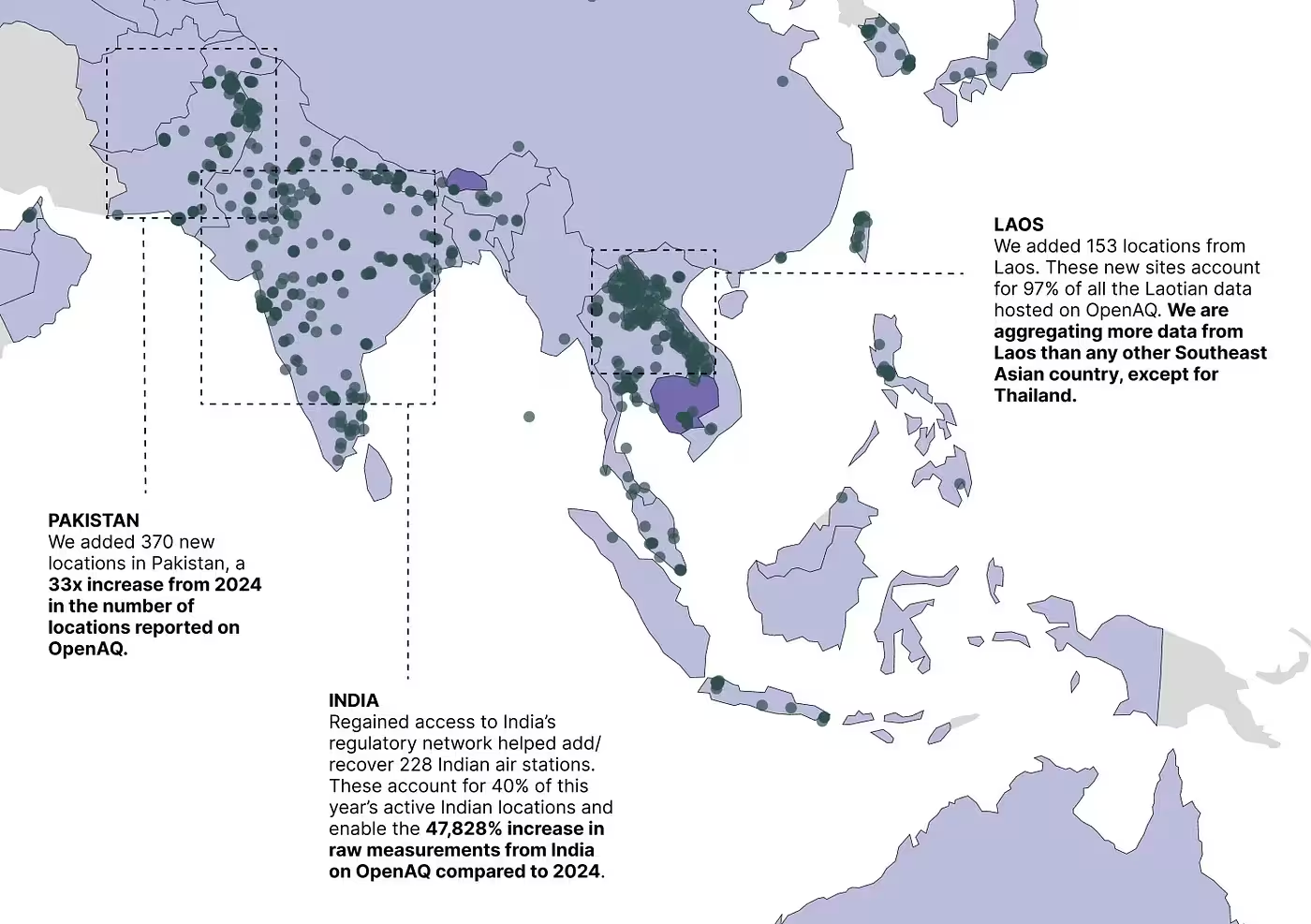
In 2025, several countries became more notable on the platform. In Asia, Pakistan, Laos, and India were among the top four countries with the most new or recovered OpenAQ locations. In the Americas, the United States saw the most added/recovered locations. Honduras exemplifies the data growth in Central America due to the efforts of Sustenta Honduras, a youth movement fighting for the installation of a local air quality network across the country.
Since 2022, OpenAQ has added a total of 43 new countries, raising its current global coverage to 141 countries and territories across the globe. OpenAQ has been able to maintain a net increase of more than 7,100 active locations from 2021 to the end of 2025, with over 15,300 actively monitored locations. Active and historical data combined means that there are more than 2 billion measurements that users can now tap into using the OpenAQ platform.

Progress with open data from air quality sensor networks
The global air quality monitoring landscape is becoming more and more defined by low-cost sensors. 75% of OpenAQ’s total locations as of the end of 2025 comprise reference-grade stations, but 80% of the new locations added last year were actually air quality sensors. This was already double the percentage of air sensors added in 2024, signaling the rapid increase in this type of monitoring.
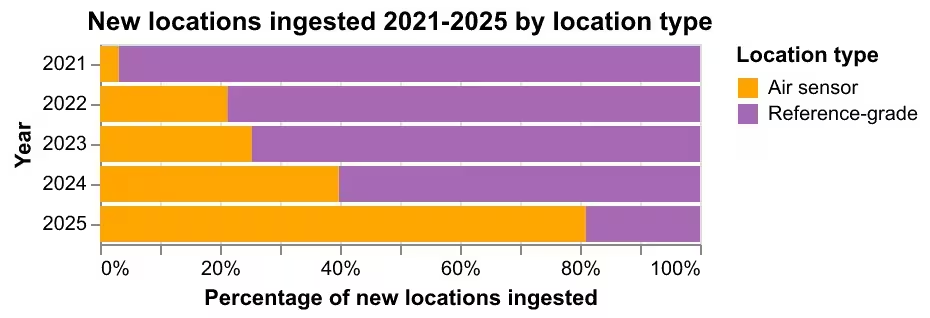
Notably, air sensors account for a larger share of locations in low- and middle-income countries than they do for high-income locations. Moreover, while low- and middle-income countries have fewer newly added locations on OpenAQ than high-income counterparts, the former captures a greater variety of parameters, such as NO2, O3, black carbon, and other meteorological markers in 2025.
OpenAQ partners with certain air quality sensor companies. These companies share the open data mission and are willing to facilitate the sharing of their air quality data. In 2025, a few of these air sensor companies, including Clarity, showed the most growth in data sharing.
Epic Air Quality Fund and Clean Air Catalyst
The EPIC Air Quality Fund is led by the Energy Policy Institute (EPIC) of the University of Chicago. The fund supports local governments and organizations to install air quality monitoring networks. The aim is to use the air quality data to drive national-level action for clean air. In 2025, the EPIC Air Quality Fund enabled over 520 new locations. OpenAQ worked with 16 project partners across 12 countries to support EPIC. In Africa, about 42% of locations with any OpenAQ data in 2025 come from EPIC-funded projects.

The Clean Air Catalyst (CAC) is funded by the USAID. It focuses on identifying air pollution sources, building coalitions, and empowering women as clean air leaders in three cities: Indore, India; Nairobi, Kenya; and Jakarta, Indonesia. The CAC installed reference-grade instruments in polluted urban areas and deployed black carbon sensors. In 2025, some of the first OpenAQ black carbon sensors deployed in the Global South were due to the efforts of the CAC.
Looking forward
Building on 2025’s momentum, OpenAQ has already formed a new 3-year strategic plan. They will continue to equip air quality changemakers with the tools they need to access and effectively use OpenAQ data to promote clean air. Partner with Clarity to establish a local sensor network and further the goal of open access to air quality data for all.