Regulations & Standards
Announcement
September 16, 2026
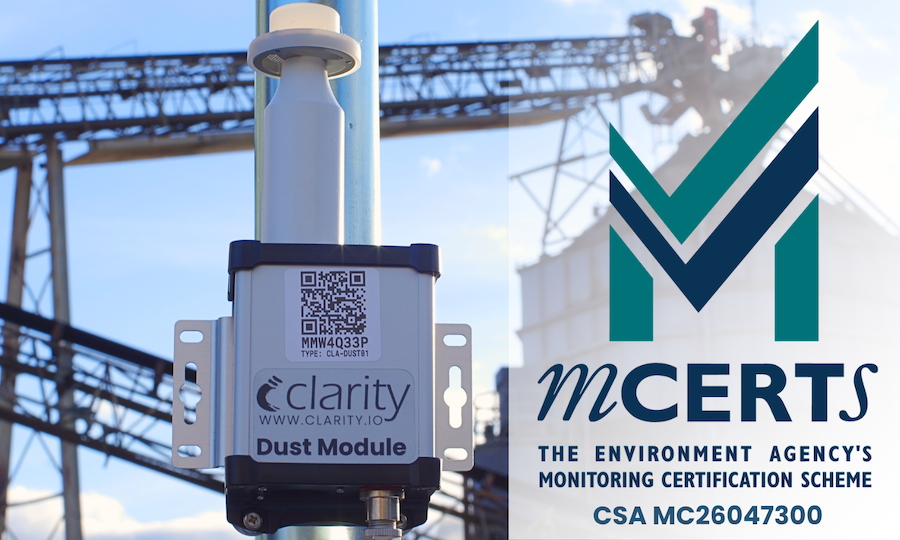
Clarity Dust Module earns MCERTS certification for PM10: First indicative monitor approved for elevated dust concentrationsThe Clarity Dust Module is the first indicative PM10 monitor MCERTS-certified at the elevated dust concentrations found on construction and industrial sites.
Article
Data center air quality monitoring & standardsWhat air quality standards apply to data centers, and how do you monitor against them? This practical guide covers EPA data center air quality requirements, key pollutants to track, and how to build a compliance-ready air quality monitoring solution for data centers.
Article
Cancer Alley: How regressive laws are preventing air quality monitoring where it is needed mostLouisiana’s Cancer Alley has roughly 200 fossil fuel and petrochemical plants. Air pollution emissions disproportionately harm Black and low-income communities and threaten public health.
Article
OpenAQ’s 2025 Year in Data Report: Rapid growth in access to open air quality data globallyOpenAQ’s 2025 Year in Data report shows rapid expansion of global air quality monitoring, improving access to data, and supporting efforts to address pollution worldwide.
Article
How many human lives have been saved by air pollution regulations such as the Clean Air Act?Learn how air pollution regulations save lives, strengthen the economy, and shape a healthier future.
Article
55 years of the Clean Air Act: What have we accomplished, and what should come next? The Clean Air Act is a landmark U.S. law that has enabled the Environmental Protection Agency to dramatically improve air quality, reduce pollution, and protect public health and the environment since the 1970s
Article
Air Quality Management 2.0: Why regulatory engagement is key to driving policy outcomes and air pollution emissions reductionsBy working in partnership with other key stakeholders, regulators can leverage the use of both low-cost sensors and reference-grade monitoring equipment to turn air quality data into tangible action.
Article
US EPA Air Sensor Guidebook Series: What is air quality measurement equipment collocation and why is it important?As we continue to break down the US EPA's Enhanced Air Sensor Guidebook, we discuss the importance of collocation to ensure effective, accurate air quality measurement with low-cost sensors.
Article
US EPA Air Sensor Guidebook Series: What are the best practices for siting and installing low-cost air quality monitoring equipment? We break down the US EPA's Enhanced Air Sensor Guidebook's recommendations on siting sensor and installation, with key considerations to make to establish an effective air quality monitoring network.
Article
US EPA Air Sensor Guidebook Series: What are the recommended use cases for non-regulatory supplemental and informational (NSIM) air monitoring equipment?In the second installment of our series on the USEPA Enhanced Air Sensor Guidebook, we're highlighting the recommended use cases for NSIM air quality monitoring.
Article
US EPA Air Sensor Guidebook Series: What environmental and air pollution questions can air quality sensor networks answer?We're breaking down the USEPA's Enhanced Air Sensor Guidebook, beginning with the important considerations and guiding questions that drive the design of a successful network.