Monitoring Technology
Announcement
September 16, 2026
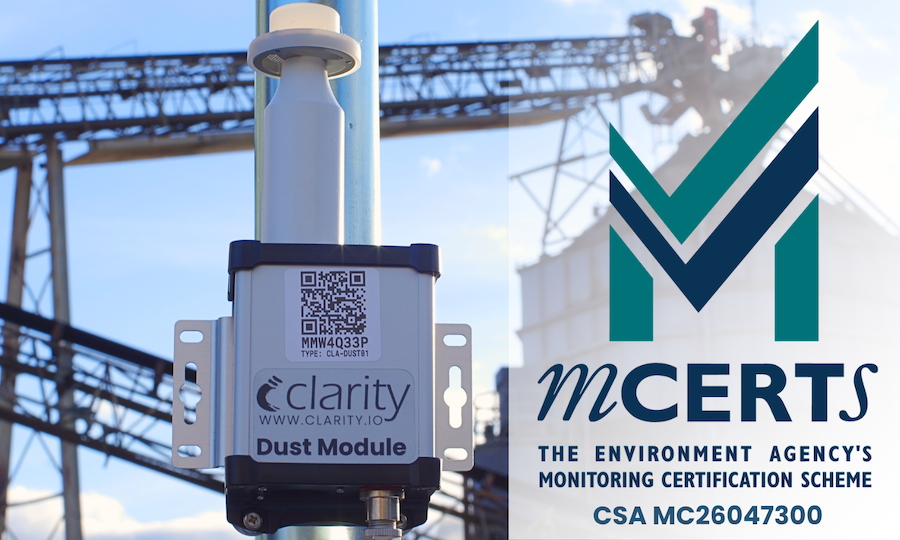
Clarity Dust Module earns MCERTS certification for PM10: First indicative monitor approved for elevated dust concentrationsThe Clarity Dust Module is the first indicative PM10 monitor MCERTS-certified at the elevated dust concentrations found on construction and industrial sites.
Air Quality Measurement Series
PM10 (Coarse Particulate Matter): Sources, Health Effects & Dust MonitoringPM10 (coarse dust) from construction, mining and wildfires. Part of our Air Quality Measurement Series: sources, health effects, safe levels, and how to monitor ambient PM10 dust.
Article
Data center air quality monitoring & standardsWhat air quality standards apply to data centers, and how do you monitor against them? This practical guide covers EPA data center air quality requirements, key pollutants to track, and how to build a compliance-ready air quality monitoring solution for data centers.
Article
Ambient air quality monitoring systems & methodsExplore the ambient air quality monitoring methods, system components, and key parameters that cities and agencies rely on to measure outdoor air pollution, from reference-grade stations to continuous ambient air particle monitoring sensor networks.
Article
How are major cities achieving improved air quality? What has worked for London, San Francisco, and BeijingDiscover how London, San Francisco, and Beijing achieved major air quality improvements through air quality monitoring networks, cleaner transportation, low-emission policies, and other pollution reduction strategies.
Article
Royal Automobile Club of Western Australia publishes first black carbon monitoring report!Discover key insights from the RAC’s black carbon monitoring report in Perth, revealing how traffic emissions, weather, and biomass burning impact local air quality and public health.
Article
Cost of air quality monitoring: A pricing guide for cities & agenciesExplore sensor pricing, station costs, hidden fees, and affordable ways cities and agencies can scale air quality monitoring networks.
Article
Pros and Cons of IoT-based Air Quality MonitoringExplore the advantages and disadvantages of IoT-based air quality monitoring, including how low-cost air quality sensors provide real-time data, expand coverage, and complement reference-grade monitors.
Article
The history of air quality monitoring technology: How has air quality measurement evolved over the years?Discover how air pollution sensing technology has evolved from early chemical methods to regulatory-grade monitors and modern low-cost tools like Clarity’s Node-S air quality sensor.
Article
Why networked air quality monitoring systems are better than individual or crowdsourced air quality sensorsNetworked air quality monitoring systems provide reliable, standardized data, flexible placement, and more equitable coverage than individual or crowdsourced sensors.
Article
Webinar recap: How next-generation air quality monitoring infrastructure is powering wildfire resilienceLearn how schools, government agencies, and rural communities are using next-gen air quality sensors to prepare for and respond to wildfire smoke in California.