
TL;DR: In the UK, construction and demolition dust monitoring is shaped by law, planning conditions, and expert guidance. The bar for low-cost sensors in construction environments has risen in recent years. Following the IAQM’s 2025 position statement, MCERTS certificates for indicative particulate monitors no longer list state certified measurement ranges by default. Manufacturers can extend their certification scope with field evidence from high-dust locations, which gives site managers a clearer way to check whether a sensor suits the elevated PM10 levels found at construction sites.
What is construction dust monitoring?
Construction site dust monitoring typically uses Indicative Ambient Particulate Monitors (IAPMs) to measure particulate matter on or near construction sites. These usually use low-cost sensors that continuously monitor emissions, rather than regulatory-grade air monitoring stations, which are often more expensive and harder to implement at scale. Demolition dust monitoring serves a similar function, but for demolition purposes.
What construction & demolition dust monitoring measures
Construction and demolition activities produce particulate matter, which refers to any solid or liquid particles in the air. These activities produce both larger particulates (PM10) and smaller particulates (PM2.5).
While PM2.5 is generally considered more harmful to human health than larger dust particles, PM10 can still pass through the nose and throat and settle in the airways and upper regions of the lungs. Dust (PM10) can cause tissue damage, lung inflammation, and harm to both the respiratory and cardiovascular systems.
Construction dust and demolition dust, in particular, can produce especially harmful forms of PM10. Asbestos and silica particles, for instance, can scar and damage lung tissue, preventing the lungs from working as they should. The resulting pulmonary fibrosis has no cure, worsens over time, and can eventually be fatal.
Why dust monitoring on construction sites matters
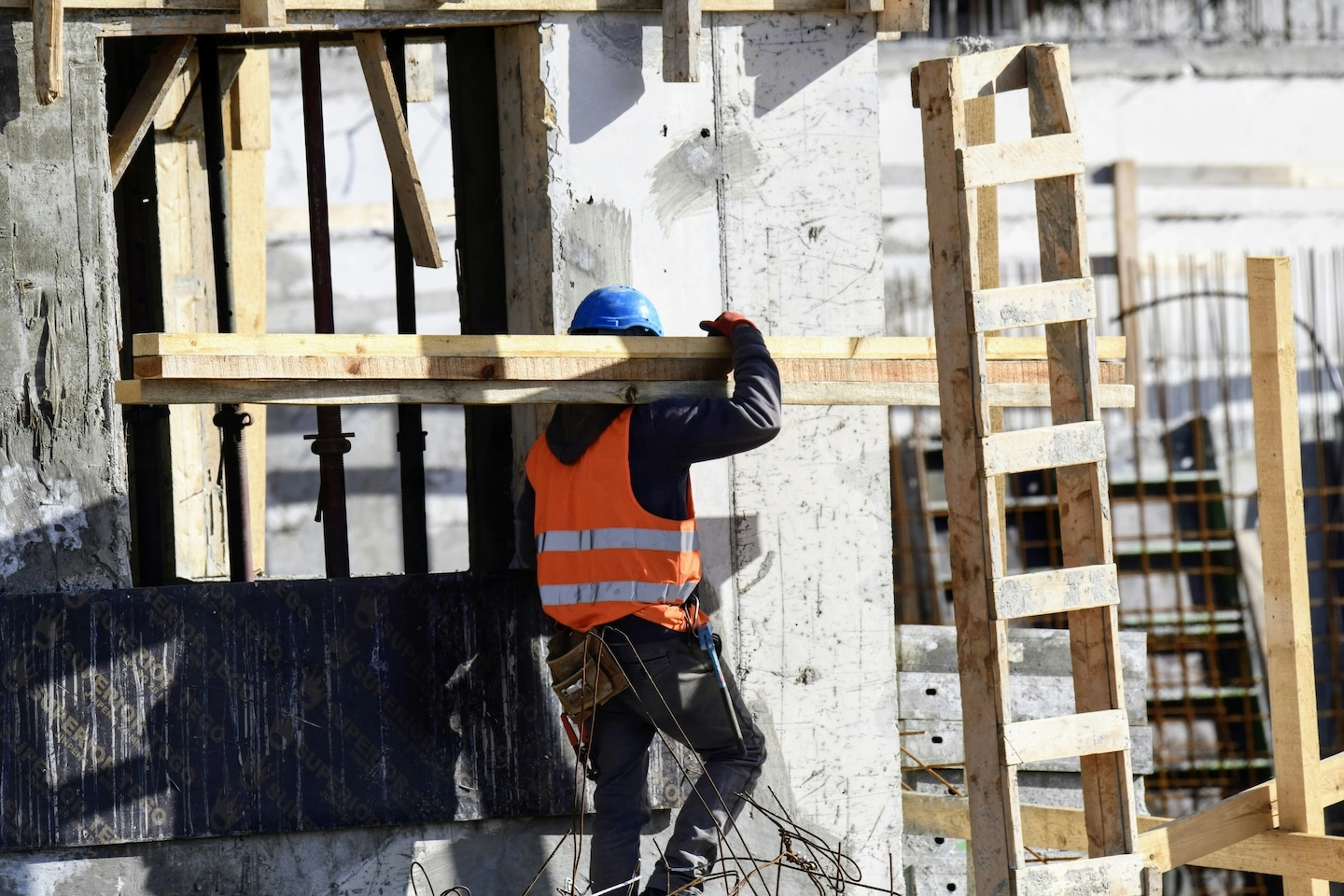
Dust monitoring on construction sites is an important step in regulating and mitigating construction dust emissions. Minimizing emissions helps protect construction workers and nearby communities from harmful particulate matter air pollution.
UK regulations and guidance for construction dust monitoring
The United Kingdom has several laws, statutes, and guidance that govern construction dust and construction dust monitoring in the UK. The Control of Substances Hazardous to Health (COSHH) regulations, for instance, require those involved with construction work to follow the “Assess, Control, and Review model” to mitigate harmful emissions to protect construction workers.
The Town and Country Planning Act 1990 governs the planning permissions granted to new development projects. Councils and local planning authorities can attach conditions to certain projects that may require construction dust management plans and construction dust site monitoring. If these conditions are not met, development may be halted.
The Institute of Air Quality Management (IAQM) is not a government body, but its advice influences construction planning and permissions. The IAQM is a member-led organization within the Institution of Environmental Sciences (IES) family. It serves as the mouthpiece for air quality professionals in the United Kingdom, and it issues well-respected air quality guidance.
For instance, the Greater London Authority’s supplementary planning guidance (SPG) for reducing construction and demolition dust draws from the IAQM’s guidance. The SPG provides guidance on London Plan policy 7.14, the later London Plan March 2021, and other policies that involve environmental concerns.
PAS 4023:2023 is a voluntary standard that provides guidance on best practices for the selection, quality assurance, deployment, and maintenance of low-cost air quality sensor systems. PAS 4023:2023 applies to both sensors that measure particulate matter and certain gases.
Rules and regulations affecting construction dust monitoring in the UK
Below are some of the different rules, regulations, and guidance affecting construction dust monitoring in the UK.
The IAQM position on low-cost sensors
In September 2025, the IAQM published a position statement on the use of low-cost sensor systems for dust (PM10) near demolition and construction sites. The IAQM is a well-respected organization, and its advice is highly valuable in the industry.
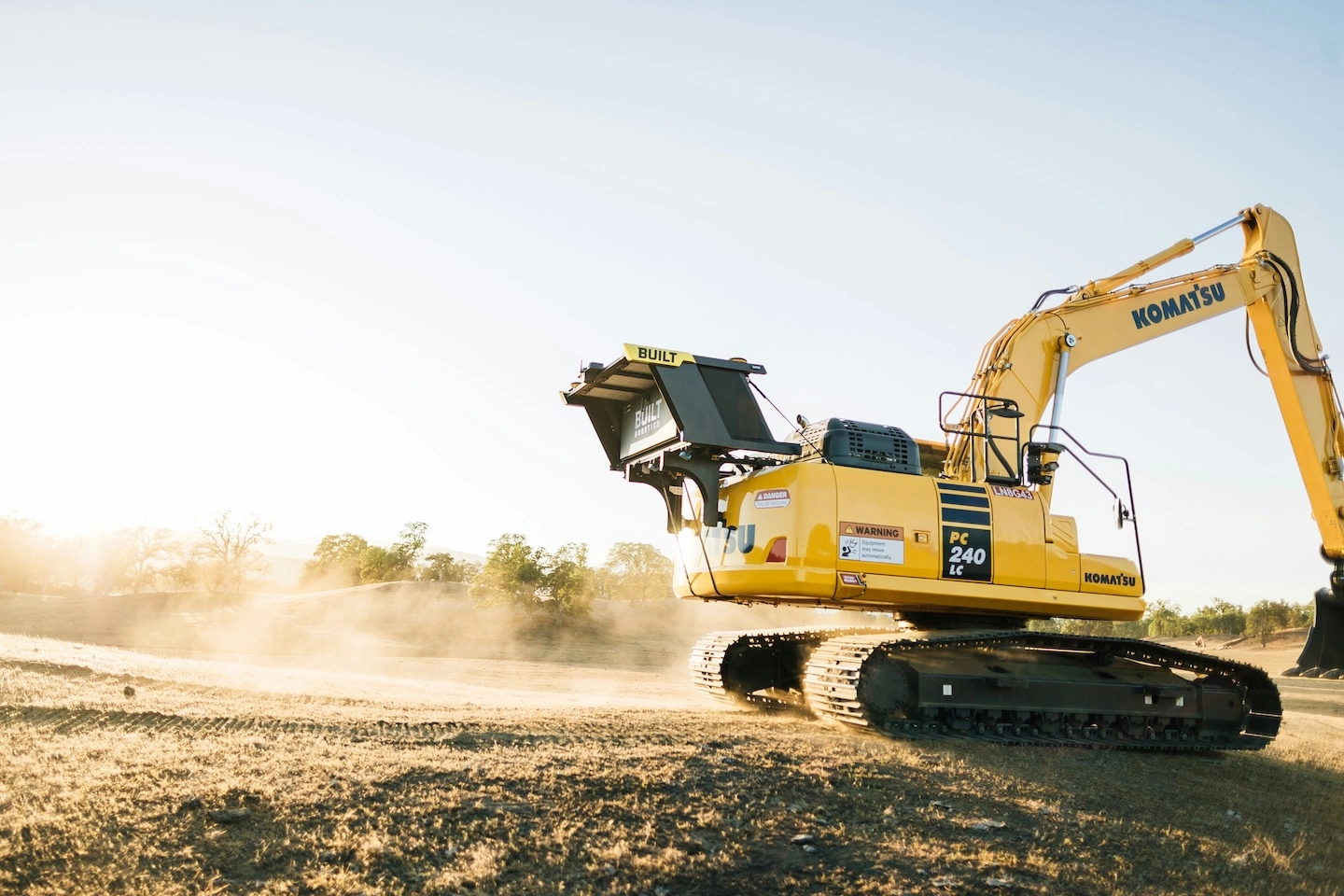
This particular position statement raised concerns about whether low-cost sensors are fit to measure PM10 concentrations around construction sites. The IAQM guidance recommends the use of either a site-specific action level or a generic action level of 190 μg/m³ for PM10 averaged over one hour. Anything above this should trigger an alert for the site manager.
Unfortunately, some low-cost sensor systems under-report PM10 concentrations that are near or above the 190 μg/m³ generic action level. Even indicative MCERTS product certification is not sufficient for construction and demolition dust monitoring scenarios.
Many of these products were developed for typical ambient air quality conditions, rather than the elevated scenarios produced by construction, demolition, industrial sites, and other similar conditions. They may have been calibrated, validated, or contain algorithms based on concentrations below the recommended site action level.
IAQM dust monitoring recommendations
The 2025 IAQM position statement lists 8 recommendations for construction dust monitoring, which are summarized below:
- 1. Construction monitoring should be designed to identify elevated PM10 concentrations and complement other dust reduction measures.
- 2. Those responsible for dust management should ensure that low-cost monitoring systems are fit-for-purpose.
- 3. MCERTS certification alone is not sufficient. Other measures need to be taken.
- 4. Those responsible for dust management should seek assurance from manufacturers that the monitoring system they are using is suitable for PM10 concentrations at or above the IAQM recommended site action level. Sensors with heated inlets should have their performance independently verified prior to deployment.
- 5. Those responsible for dust management should make efforts to confirm which sensor(s) are used.
- 6. Manufacturers and users of low-cost sensors should collect and publish independent evidence of effective performance at elevated PM10 concentrations.
- 7. The specific purpose of construction dust monitoring should be considered and be appropriate to the sensor(s)’ capabilities. Those responsible for dust management should be familiar with the PAS 4023:2023 considerations and be able to justify their sensor selection.
- 8. If an existing low-cost sensor system stays in place, lower the action levels. Set them well within the range the equipment was validated for, and document how they were derived and agreed. Investigate spikes in PM₂.₅ and PM₁₀ against the lowered levels, and compare upwind and downwind data to tell site-related dust from background sources.
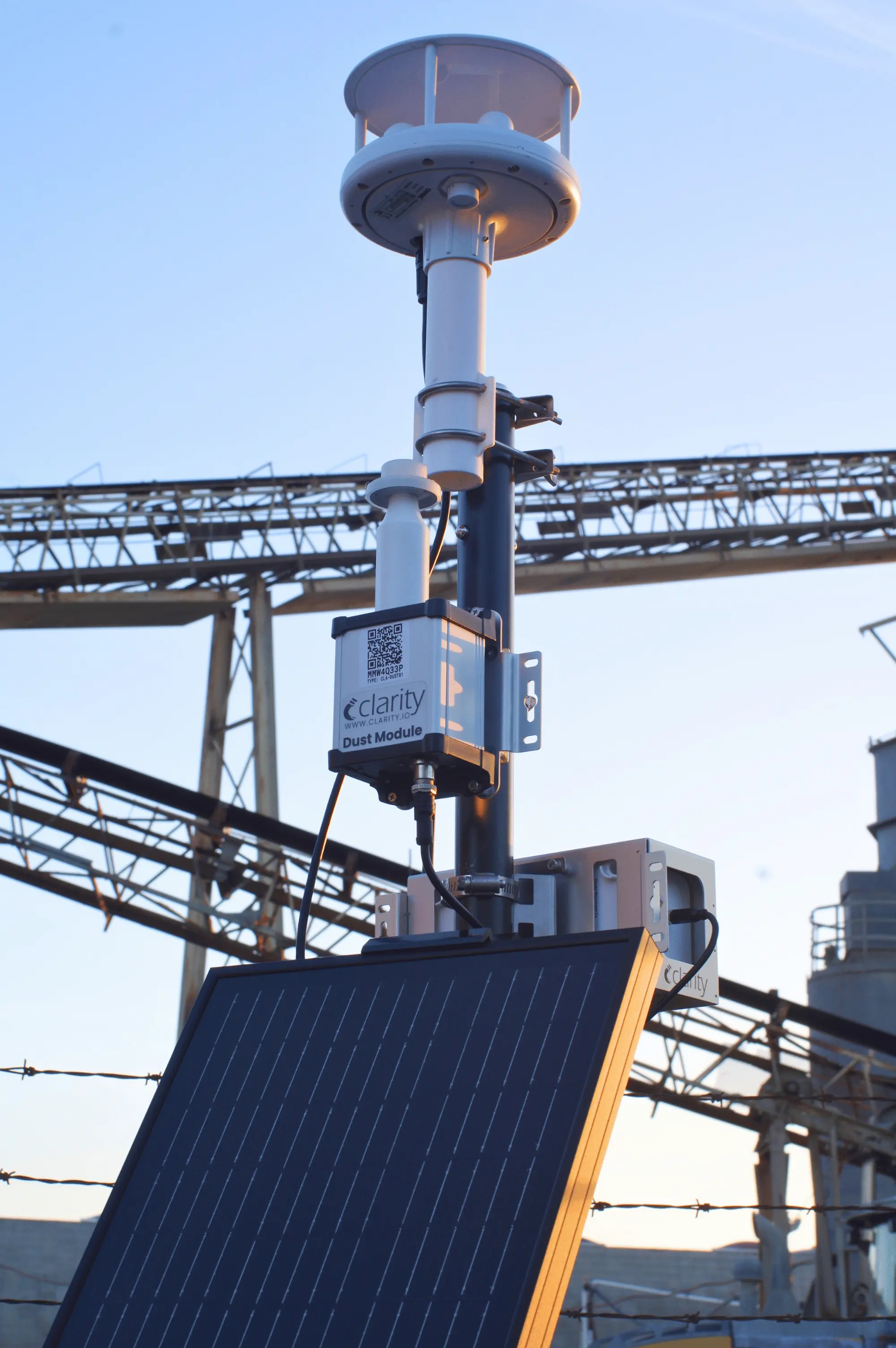
Clarity’s Dust Module satisfies some of the 8 recommendations that are hardest to satisfy, making it an ideal construction and demolition dust monitor. With a heated inlet, it has MCERTS-certified performance at elevated PM10 levels up to 374 µg/m³, as verified through independent evidence.
Choosing construction dust monitoring equipment
Identifying the right low-cost sensor system for your purposes can be difficult. Fortunately, there are certifications and guidance that can help identify the appropriate sensors for high dust concentration situations.
MCERTS certification and indicative monitors
MCERTS is the United Kingdom’s Environment Agency’s Monitoring Certification Scheme for environmental permit holders. MCERTS issues permits for ambient air quality sensors. Its standard for indicative ambient particulate monitors involves testing a monitor in the field against a reference instrument. The monitor is certified if its measurement uncertainty stays within 50%. In the past, this field test occurred under typical ambient air conditions.
However, the recent IAQM position statement proved that this test was insufficient for sensors used in construction environments. In July, the CSA Group, which is the body responsible for MCERTS certification, published MCERTS Product Certification Bulletin PC4, which confirmed the IAQM’s assertion. Normal MCERTS-certified products are not adequately tested for environments with high dust concentrations.
To fix this gap, the CSA Group withdrew stated certification ranges from their certificates for indicative ambient particulate monitors. Fortunately, manufacturers can now extend the scope of certification by submitting field test evidence from locations with high dust concentrations. Now, project managers can know with certainty that a particular sensor is appropriate for environments with elevated dust.
Clarity’s MCERTS Dust Module certification
On September 15th, 2026, Clarity’s Dust Module received MCERTS product certification, with a performance range for PM10 of 0 to 374 µg/m³ based on the hourly concentrations encountered during field testing. This range covers the dust levels typically found at construction and demolition and is nearly twice the IAQM action level of 190 µg/m³.
The Dust Module achieved a PM10 measurement uncertainty of 38% across all valid data and 40% for the subset at or above 30 µg/m³. This is well under the 50% limit for indicative instrument certification.
While many sensors on the market are designed to measure fine particles, the Dust Module measures PM10 directly with enhanced optics that detect differences in particle size distribution rather than estimating coarse mass from fine mass measurements. The Clarity Dust Module also has a dedicated heated inlet to dry the sample prior to measurement, allowing it to take accurate readings in humid and foggy conditions. The module has a measurement range of 0 to 10,000µg/m³ at 1 µg/m³ resolution.
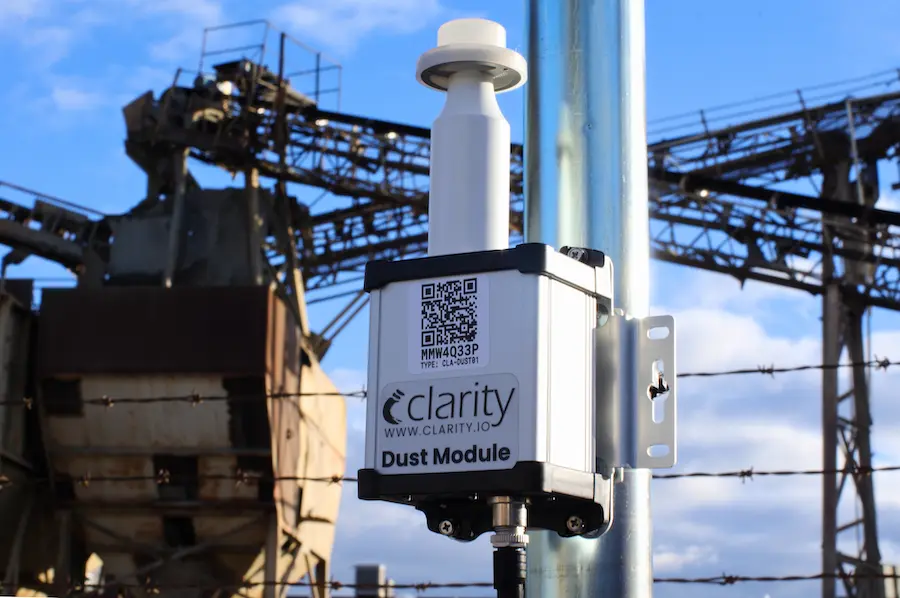
To our knowledge, the Dust Module is the first device to be certified for elevated dust (PM10) concentrations specifically. It is the first low-cost sensor that is MCERTS certified for PM10 that meets most of the points from the 2025 IAQM position statement. Clarity’s flagship Node-S air quality sensor, which measures fine particulate matter and nitrogen dioxide, already holds MCERTS certification for PM2.5 and PM10 at ambient concentrations, making Clarity a suitable solution for a variety of dust and particulate monitoring applications.
How to set up dust monitoring on construction sites
The PAS 4023:2023 provides guidance on selecting the right construction dust monitor for your applications, taking into account monitoring technique, method performance, certification, cost, operation, and more. Fence-line monitoring relies on proper detection, tracking, and reporting in order to sufficiently protect the community.
Key things to consider when setting up dust monitoring for construction:
- Monitoring technique: Low-cost sensor systems provide cost-effective, scalable monitoring at construction sites.
- Monitoring performance: Are the sensors properly certified for elevated dust levels? Are their readings accurate?
- Time resolution: Continuous, real-time construction dust monitoring is best for identifying and mitigating air pollution spikes in a timely manner.
- Sensor cost: Sensors must fit the project budget. Don’t forget about sensor maintenance and other hidden costs.
- Sensor placement: Place sensors strategically to better detect emissions, deter vandals, and protect the community.
Construction dust monitoring with Clarity
Construction and demolition dust harms both workers and nearby residents. Construction dust monitoring can help protect the community, but only if the sensors appropriately measure high dust concentrations.
Clarity’s Dust Module is MCERTS certified with a performance range for PM10 of 0 to 374 µg/m³ based on hourly concentrations, a number that is almost twice the IAQM action level. With a measurement range of 0 to 10,000µg/m³ at 1 µg/m³, the Dust Module is the ideal solution for construction and demolition monitoring in the UK and beyond.
Partner with Clarity today to implement accurate construction monitoring and help safeguard clean air.