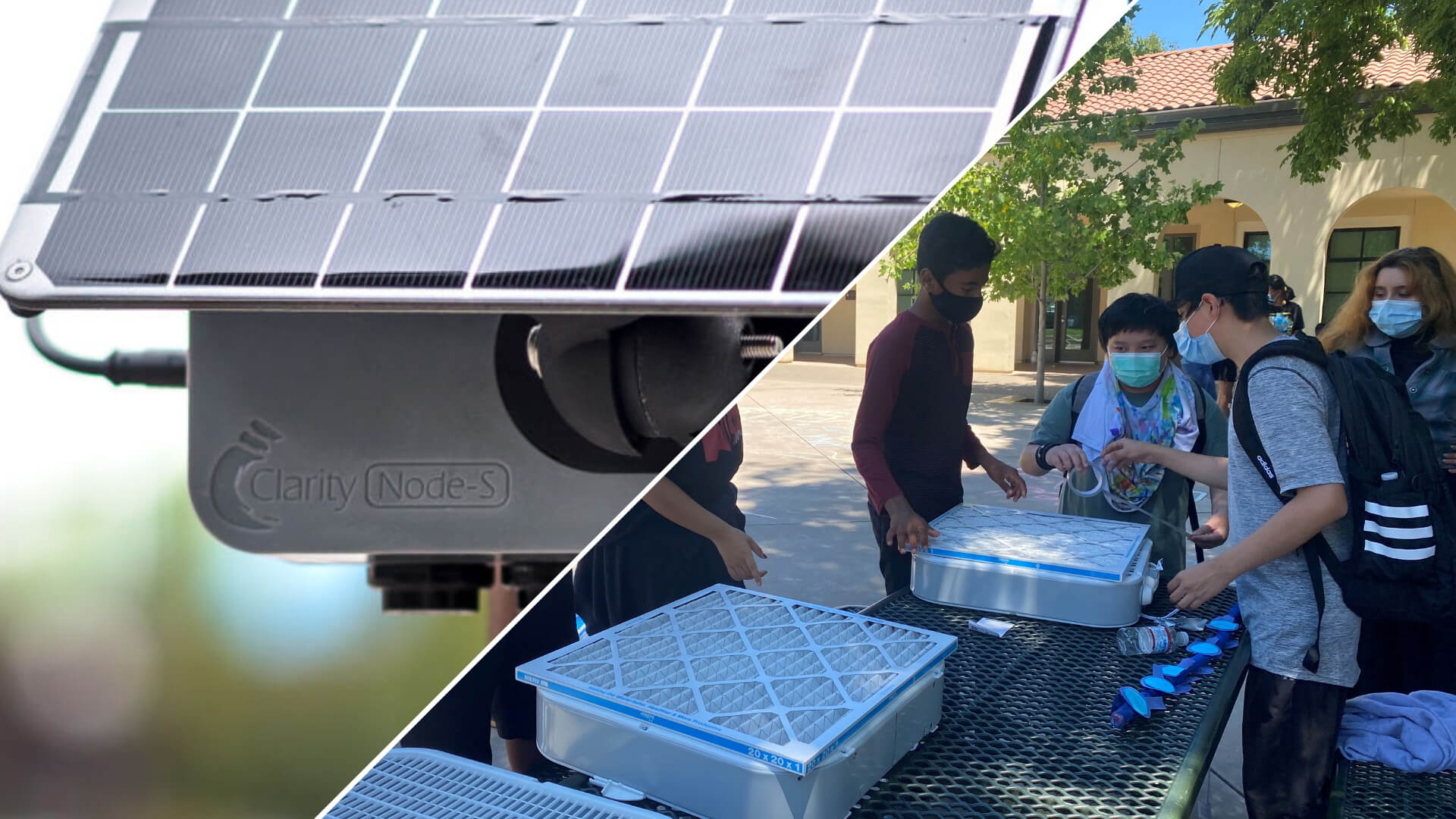
Dust (PM₁₀ ) Module
The Dust Module brings powerful coarse particle detection to the Node-S platform, enabling near-reference, real-time measurement of PM₁₀ — a major leap in accuracy compared to the Plantower and other low-cost sensors.
Learn more

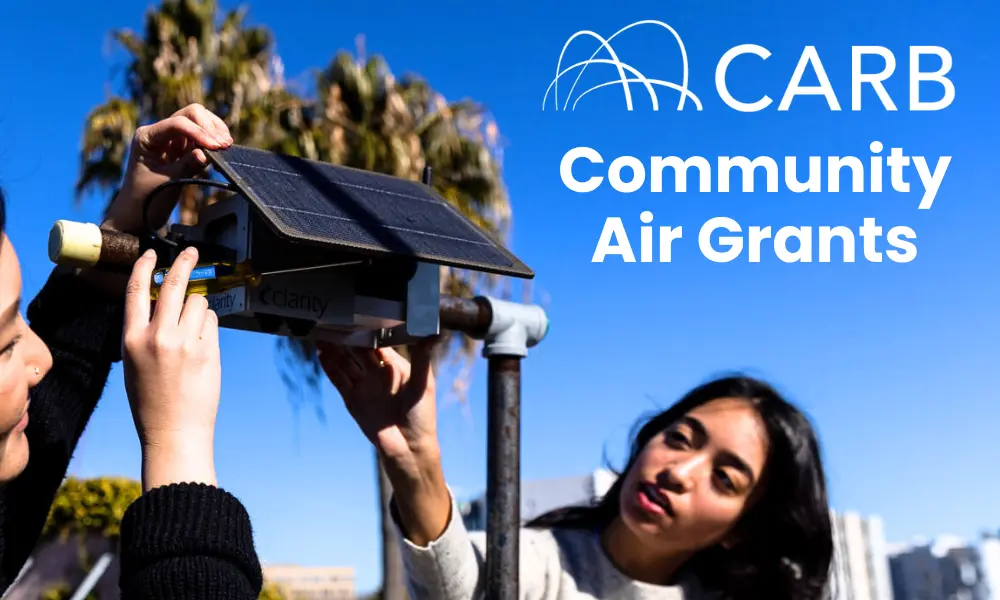
CARB Community Air Grants
Whether you are preparing a California Air Resources Board (CARB) Community Air Grant application or already managing an award, this page brings together the practical resources you need: eligibility, budget planning, calibrated air monitoring hardware, and community-accessible data from Clarity Movement’s Sensing-as-a-Service℠ team.
* Award ceilings reflect Cycle 5 figures. Confirm current amounts when the Cycle 6 Request for Applications is released.

Community air monitoring grant funding often feeds into CERPs and CARB reporting, so measurements need a credible calibration and QA/QC story.

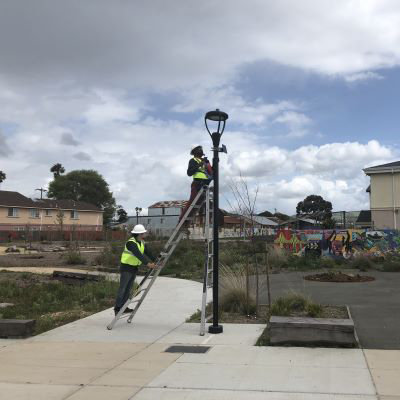
Monitoring sites near freeways, refineries, ports, and railyards, where power and mounting options are limited. The Node-S was designed for exactly these locations.

Public dashboards and maps that residents, steering committees, and local leaders can actually use, including OpenMap for public-facing air quality data.
Training and documentation so community members can run the network after the funding period ends, backed by our expert project support team.

Solar-powered sensors and cellular connectivity for sites without reliable mains power or Wi-Fi, standard on every Node-S.

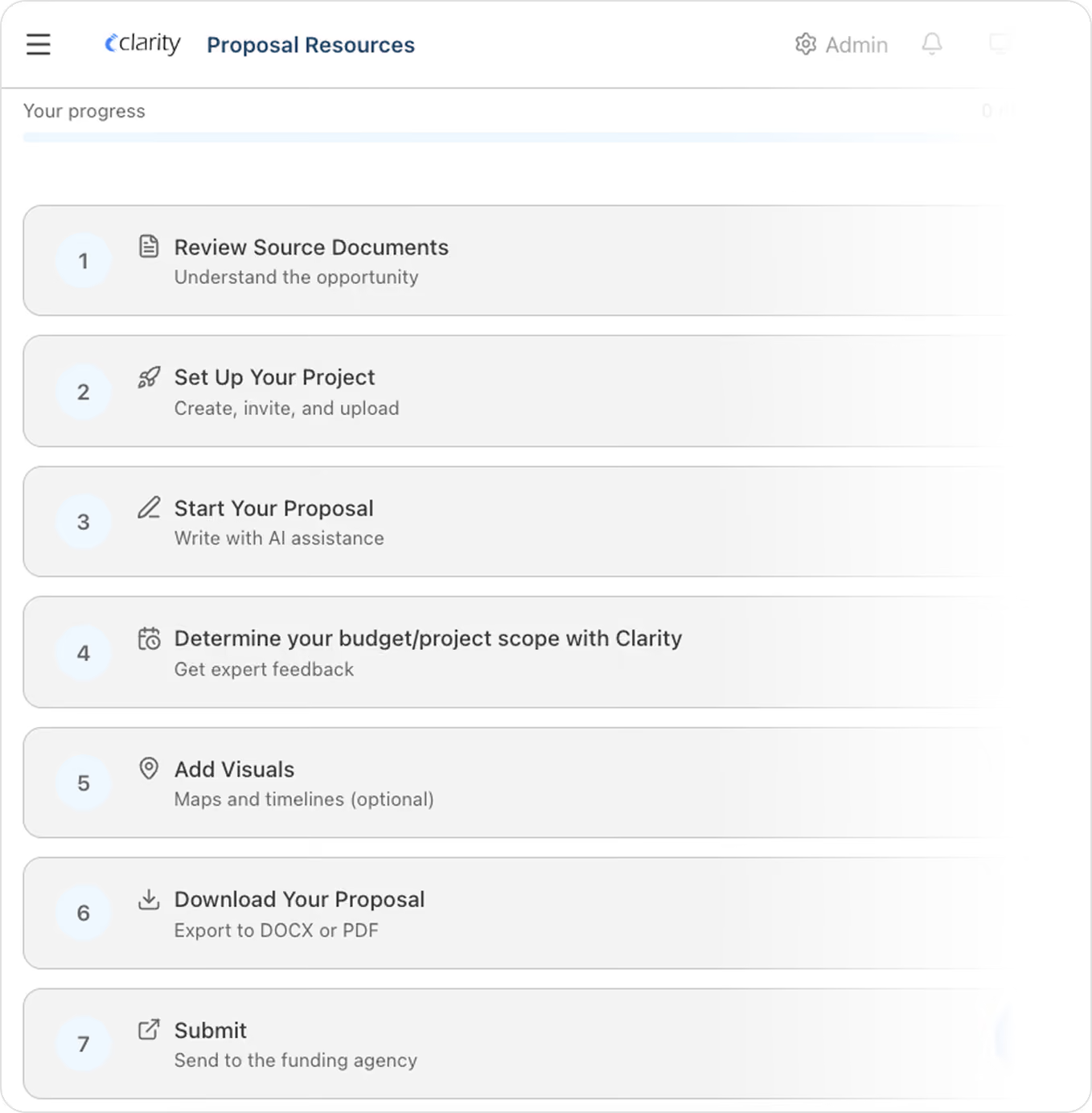
A realistic bill of materials and operating costs matched to award ceilings and a two-year grant term. Start from our solution builder to get the numbers right.

Calibrated sensors deliver near-reference accuracy after collocation with a reference-grade monitor, without the cost of procuring a reference station.

The Node-S deploys at hard-to-power sites in EJ neighborhoods, from streetlights near freeways to rooftops near refineries.

Sensing-as-a-Service bundles hardware, calibration, software, and expert support into one annual subscription with a clear total cost of ownership.

REST API access, public dashboards, and OpenMap sharing make it simple to put air quality data in residents’ hands.

Clarity equipment powers AB 617 community air monitoring projects in Richmond, San Francisco, Sacramento, and beyond.

A dedicated Environmental Project Manager, ongoing calibration, and free hardware replacement under warranty keep networks running.
Clarity's modular accessory ecosystem unlocks flexibility for air quality monitoring networks. With modules that attach in seconds, it's simple to upgrade your air quality monitoring network over time. Expand capabilities by mixing and matching accessory modules like Wind Module, Ozone Module, Black Carbon Module, and more.


program overview, cycle updates, and RFA announcements

the AB 617 program Community Air Grants support
instructions and scoring criteria from the most recent cycle
awardees, grant amounts, and examples of funded projects
administration and reporting resources for current awardees
sign up to be notified when the Cycle 6 RFA is released
Community Air Grants are open to community-based organizations with 501(c)(3) nonprofit status and California Native American Tribal governments. Organizations without their own nonprofit status can apply through a fiscal sponsor, a route several Cycle 5 awardees used. These air quality grants for nonprofits and Tribal governments prioritize communities disproportionately burdened by air pollution, the same communities and environmental justice groups we work with across California.
Cycle 5 award ceilings were $300,000 for Educational projects and $500,000 for Technical and Focused projects. Across the cycle, CARB awarded a record $20.9 million to 43 nonprofit community groups and four Tribes for 51 projects, roughly double previous cycles. To see what a network at that budget looks like, build your solution or compare configurations in the proposal tool.
Cycle 6 is expected to open in Fall 2026. For reference, Cycle 5’s RFA was released on September 3, 2024, applications closed on November 1, 2024, and awards were announced in May 2025. Draft RFA comment periods and public workshops typically precede the deadline, so sign up for CARB’s email updates and start preparing early with help from our project support team.
Educational projects (up to $300,000) build community capacity through outreach, training, and leadership development. Technical projects (up to $500,000) fund community air monitoring, including equipment, training, and data collection. Focused projects (up to $500,000) either expand a proven emissions reduction strategy to a new community or convene a community to develop a Local Community Emissions Reduction Plan, work that often draws on expert data analysis.
Yes. Technical grants commonly fund networks of low-cost air sensors, and calibration is what makes the data credible in a Community Air Protection Program context. Clarity pairs low-cost sensors with remote calibration and collocation against reference monitors, an approach used by AB 617 community networks in Richmond, San Francisco, and Sacramento.