
Clarity, Accurate & Scalable Sensing-as-a-Service

EPIC Air Quality Fund

EPIC Air Quality Fund: How to Apply, Plan, and Deploy an Air Quality Monitoring Network

Whether you are preparing an EPIC Air Quality Fund application or already managing an award, this page brings together the practical resources you need: budget planning, hardware guidance, calibration support, and an open-data strategy from Clarity Movement’s Sensing-as-a-Service℠ team.

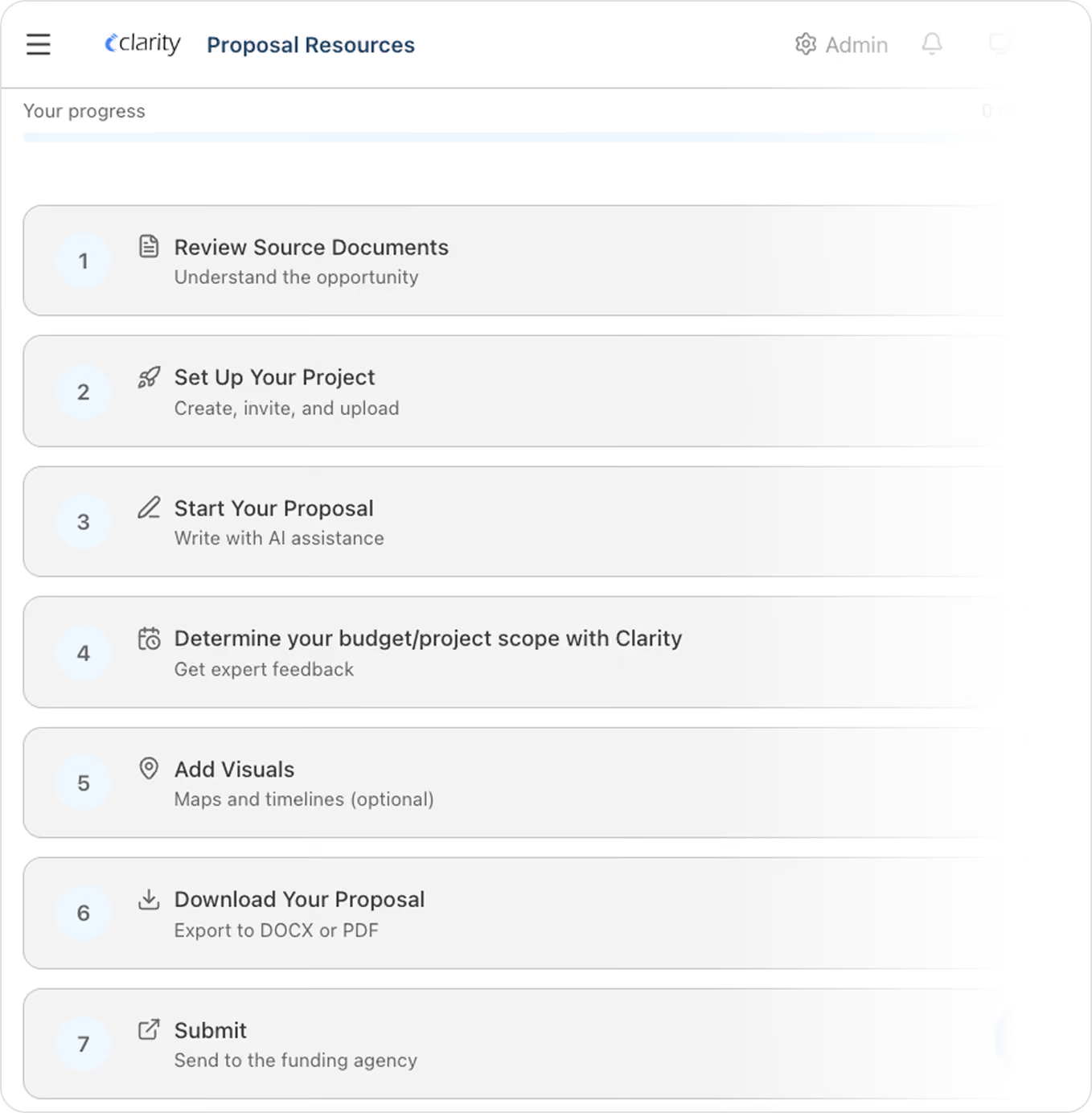
EPIC Air Quality Fund Proposal Tool

Build a defensible EPIC proposal budget in minutes

Compare different air quality monitoring equipment configurations, model three-year operating costs, and export a procurement-ready budget breakdown matched to EPIC’s typical award ranges. Built specifically for EPIC air quality monitoring funding applicants.

What is the EPIC Air Quality Fund?

The EPIC Air Quality Fund is a grant program led by the Energy Policy Institute at the University of Chicago (EPIC). It funds outdoor monitoring of fine particulate matter (PM2.5) in under-monitored countries, with the goal of expanding access to open air quality data to 1 billion people by 2030. Awards typically range from $50,000 to $75,000 or more over an 18-month project period, and every funded project must work toward a national-level policy impact.

Successful EPIC projects combine three traits: a trustworthy monitoring network, local capacity to operate and maintain the system, and a public open-data strategy that supports research, policy, and community action.

2026 EPIC Air Quality Fund Application Cycle

The 2026 EPIC Air Quality Fund application cycle opened on March 12, 2026, and closed on April 30, 2026. Award decisions are expected in Summer 2026, and EPIC intends to renew successful awards in future years. If you missed this deadline, sign up for EPIC’s mailing list and start preparing now: competitive proposals take months to build.

Confirm current dates and required documents in
EPIC’s official Call for Proposals, FAQ, and
Priority-Country List.

For a deeper read, see our blog: Apply for EPIC Air
Quality Fund support
.

Need to estimate your EPIC project budget?

Use the EPIC Air Quality Fund Proposal Tool to compare monitor mixes, model three-year operating costs, and export a procurement-ready budget breakdown before you submit.

What EPIC-Funded Air Quality Monitoring Teams Usually Need

EPIC-funded teams work across global air quality programs, and typically face similar constraints: tight budgets, complex deployment environments, and a hard requirement for credible, publishable data.

 Network design that holds up in the field

Site selection, coverage strategy, connectivity, and a realistic phased rollout plan.

Local capacity and operational ownership

Training, documentation, and a system local technicians can maintain long after the grant cycle ends.

Open, accessible data

Easy export, REST API access, and a public dashboard that meets EPIC’s open data sharing requirements.

Credible measurements over time

A collocation, calibration, and QA/QC plan that stands up to EPA performance targets.

Power and connectivity flexibility

Solar-powered sensors and cellular connectivity for sites without reliable mains power or Wi-Fi.

Operability beyond the grant

Hardware, software, and a service model that keeps running when the funding cycle ends.

Why Clarity Is a Strong Partner for EPIC Awardees

EPIC awardees choose their own monitoring equipment. Here is why our Sensing-as-a-Service℠ model fits the constraints EPIC projects face.

Decision-grade data through remote calibration

Mid-tier calibrated sensors deliver near-reference accuracy after collocation with a reference-grade monitor, without the cost of procuring a reference station.

Solar-powered, cellular-connected hardware

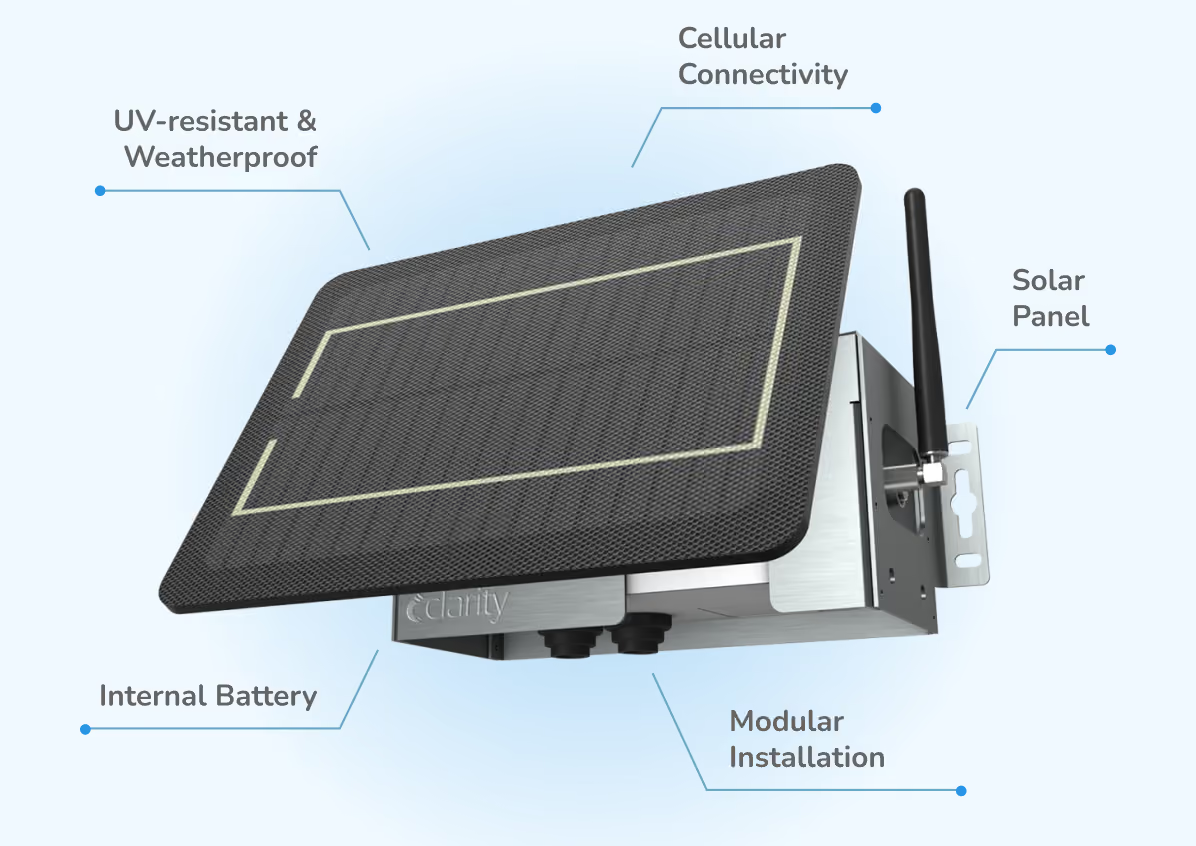
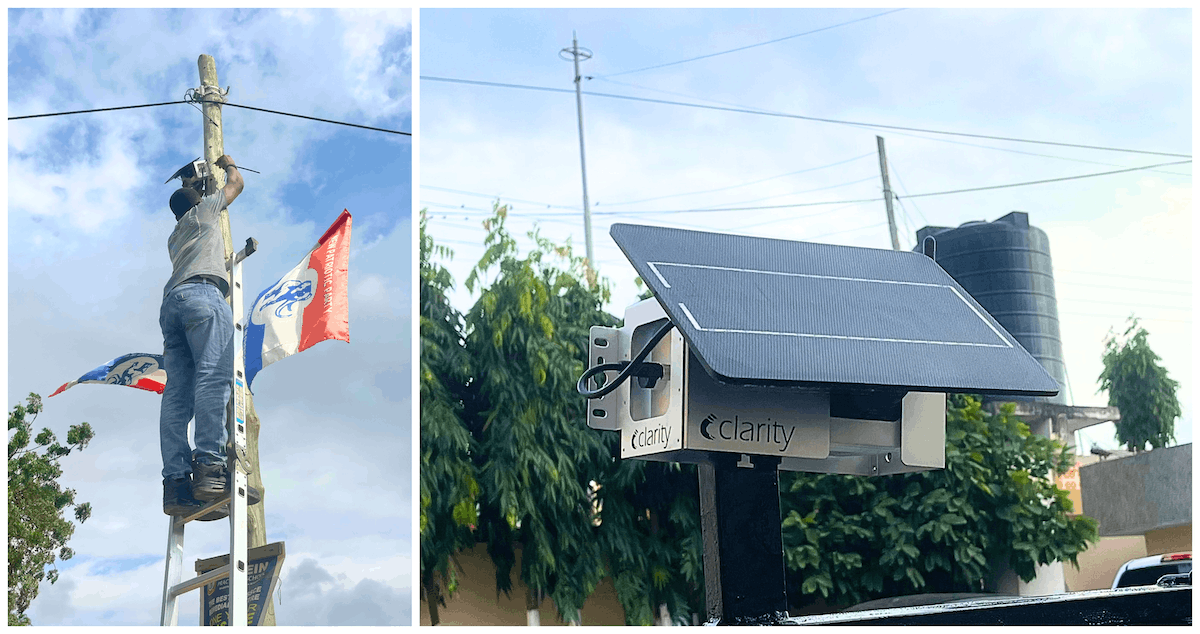
The Node-S is a solar-powered and cellular-connected air quality sensor, so it deploys at sites without grid power or fixed internet.

One subscription, predictable costs

Sensing-as-a-Service bundles hardware, calibration, software, and expert support into one annual subscription with a clear total cost of ownership.

Open data by default

REST API access, public dashboards, and OpenAQ-compatible data sharing meet EPIC’s open-data requirements out of the box.

Proven in similar environments

Our equipment runs in community air monitoring networks, environmental justice communities, and city programs in 85+ countries.

Support that outlasts the grant

A dedicated Environmental Project Manager, ongoing calibration, and free hardware replacement under warranty keep networks running.

 Clarity Hardware for EPIC Deployments

Clarity’s air quality monitoring equipment is perfectly suited for EPIC deployments. Featured here is our flagship Node-S air quality sensor, see our Hardware page for a full catalog of Add-On Modules.

Clarity Node-S (Solar + Cellular)

Self-powered, weatherproof sensor for PM2.5 and NO2 measurement, anywhere you need it.

Measures PM2.5 and NO2, with add-on modules for ozone, black carbon, multi-gas, and wind

MCERTS-certified for PM2.5 and PM10, including when running on solar power

Integrated solar panel and battery, with 30-day operation without sunlight

Global cellular connectivity with SIM card and service included

Available through the Sensing-as-a-Service℠ subscription

Reference-Grade Integration for Hybrid Networks

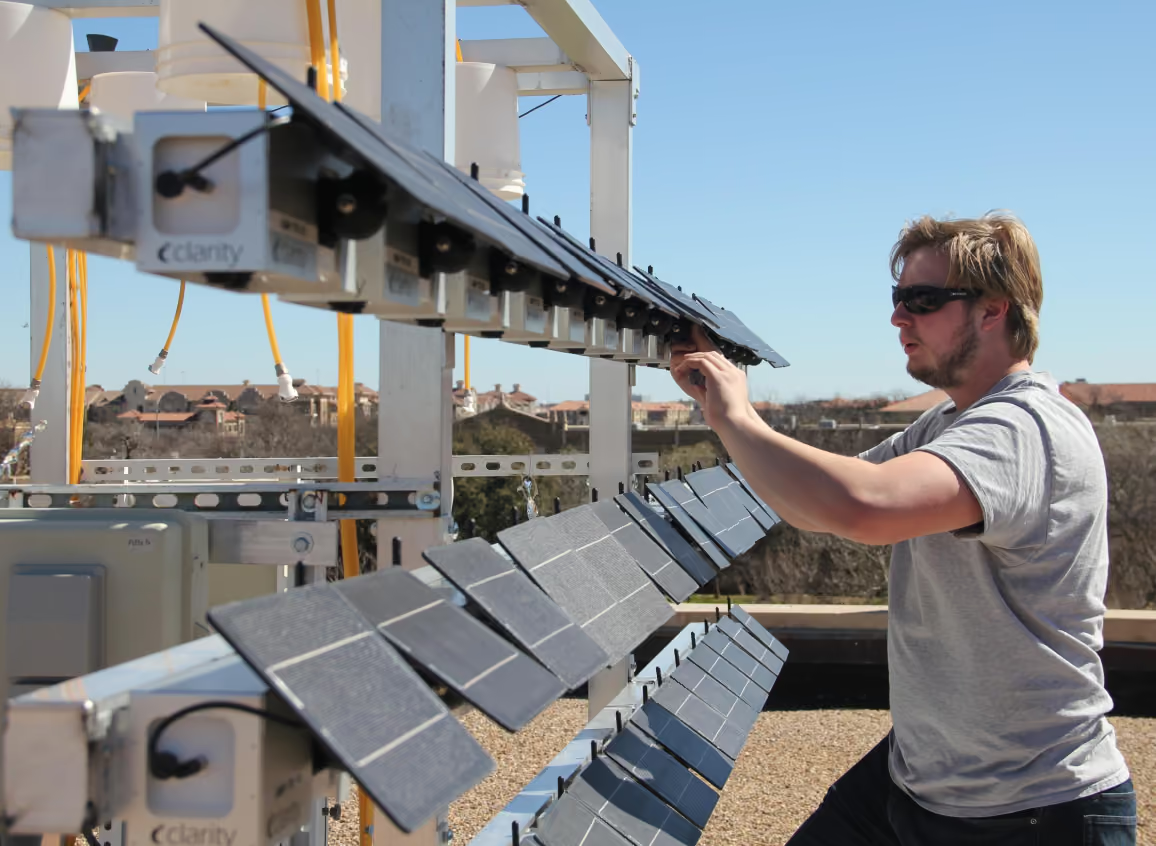
Pair Node-S sensors with reference-grade instruments for a hybrid monitoring network that balances credibility and coverage.

Reference-grade monitors anchor the network while sensors extend hyperlocal coverage

Collocation campaign planning and reporting templates included

Calibration that holds up to EPA performance targets for ambient air monitoring

The same supplemental monitoring model behind city-scale networks like Breathe London

Sensing-as-a-Service: A Procurement Model  Built for Grant-Funded Projects

Grant cycles are time-bound, and air quality monitoring equipment bought as a capital expense can become a stranded asset once funding ends. A subscription matches cost to the
project lifecycle instead. Sensing-as-a-Service℠ bundles air quality measurement hardware, ongoing calibration, software access, and expert support into one annual subscription, which gives procurement teams a predictable total cost of ownership rather than a multi-vendor capital purchase. For public-sector and NGO teams, a single annual line item is also easier to approve, renew, and report against.

See How Sensing-as-a-Service Works

How Clarity Supports EPIC Awardees

We support EPIC air quality monitoring awardees end to end, from proposal stage through annual operations, with services included in our Sensing-as-a-Service℠ subscription.

Network Design & Rollout Planning

Site selection, coverage modeling, monitor counts, and a phased deployment timeline matched to your funding period.

Outputs:

monitor mix, budget-ready bill of materials,
deployment timeline.

Calibration & Collocation Support

Collocation campaign planning, QA/QC routines, and anomaly triage to keep your data defensible.

Outputs:

QA/QC checklist, calibration schedule, accuracy report.

Open Data Publishing & Public Dashboards

Public dashboards, REST API access, AQI translation, and OpenAQ-compatible exports for real-time air quality data.

Outputs:

project dashboard, data export configuration, open-data documentation.

Onboarding & Local Capacity Training

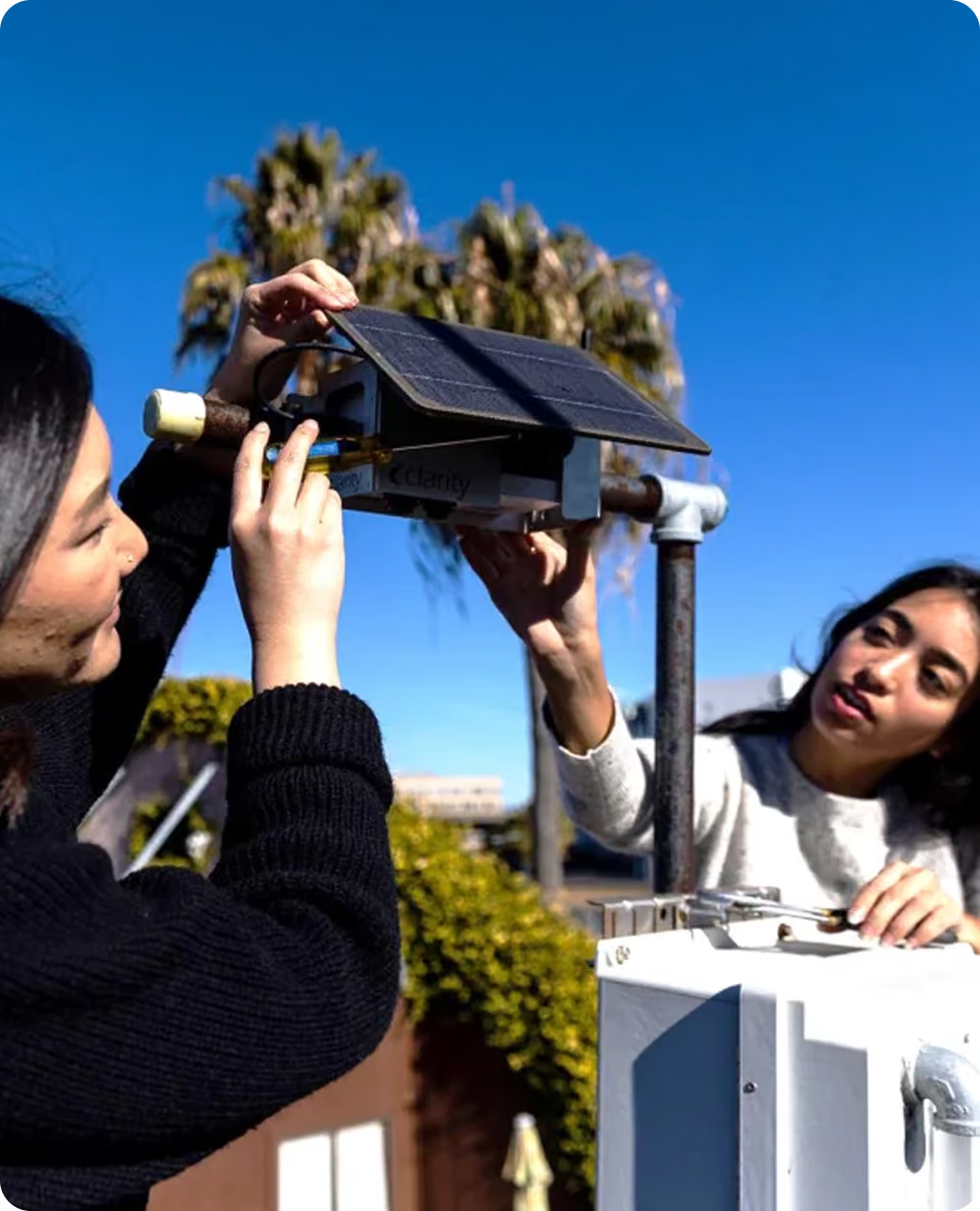
Training for local technicians and project leads on setup, maintenance, and data workflows.

Outputs:

training plan, standard operating procedures, handover documentation.

Ongoing Operations & Continuity Support

Remote diagnostics, replacement logistics, uptime monitoring, and escalation paths.

Outputs:

service terms, incident response process,
maintenance calendar.

Network Design & Rollout Planning

Expert analysis of your network’s measurements for reports, stakeholder briefings, and policy submissions.

Outputs:

analysis reports, briefing materials.

Clarity Hardware for EPIC Deployments

Clarity’s air quality monitoring equipment is perfectly suited for EPIC deployments. Featured here is our flagship Node-S air quality sensor, see our Hardware
page for a full catalog of Add-On Modules.

Official EPIC Resources

Access official EPIC Air Quality Fund resources below to find everything you need to draft a proposal or start preparing for the next round of funding.

Planning an EPIC Air Quality Fund proposal?

Start with a defensible budget and design an air quality monitoring deployment plan that lasts beyond the grant.

FAQ: EPIC Air Quality Fund

Who is eligible for the EPIC Air Quality Fund?

EPIC funds governmental and non-governmental organizations of any type, including universities, Wireframe layout reference non-profits, for-profits, NGOs, and civil society organizations. Applicants must be legally authorized to receive funds from a US institution, and individuals must apply in partnership with an eligible organization. Priority goes to projects in 83 countries EPIC has identified as high-opportunity locations for closing PM2.5 data gaps.

How much grant funding does the EPIC Air Quality Fund award?

Awards are roughly $50,000 for projects using low-cost air sensors and roughly $75,000 or more for projects using reference-grade equipment. At least 20 groups receive support per cycle, and projects run for 18 months. EPIC intends to renew successful awards in subsequent years.

When does the EPIC Air Quality Fund application cycle open, and what was the 2026 deadline?

The 2026 cycle opened on March 12, 2026, and the application deadline was April 30, 2026, with award decisions expected in Summer 2026. Sign up for EPIC’s mailing list to be notified when the next application period opens.Unlike consumer-grade air quality monitors, our platform is built for large-scale deployments in tough environmental conditions and supports integration into enterprise systems. It’s tailored for air pollution measurement projects at a large scale, such as municipal ambient air quality monitoring networks.

Can low-cost air quality monitors qualify for EPIC funding?

Yes. EPIC supports low-cost air sensors when they are paired with a credible calibration plan and open data sharing. Applicants must own the data their equipment generates, which rules out some popular sensor brands; Clarity meets all of EPIC’s open-data requirements.

What kind of monitoring network does EPIC expect to be deployed?

EPIC expects outdoor, stationary PM2.5 monitoring that collects data for at least 12 of the 18 project months and shares it openly. The data must support a specific national-level policy impact. Hybrid networks that pair low-cost sensors with reference-grade collocation are increasingly common.

How can Clarity help me apply for or implement an EPIC project?

We support the full project lifecycle: proposal budgeting with the EPIC Proposal Tool, network design, Node-S hardware, calibration and collocation, public dashboards with OpenAQ-compatible data sharing, training, and ongoing operations support, all within the Sensing-as-a-Service℠ subscription.