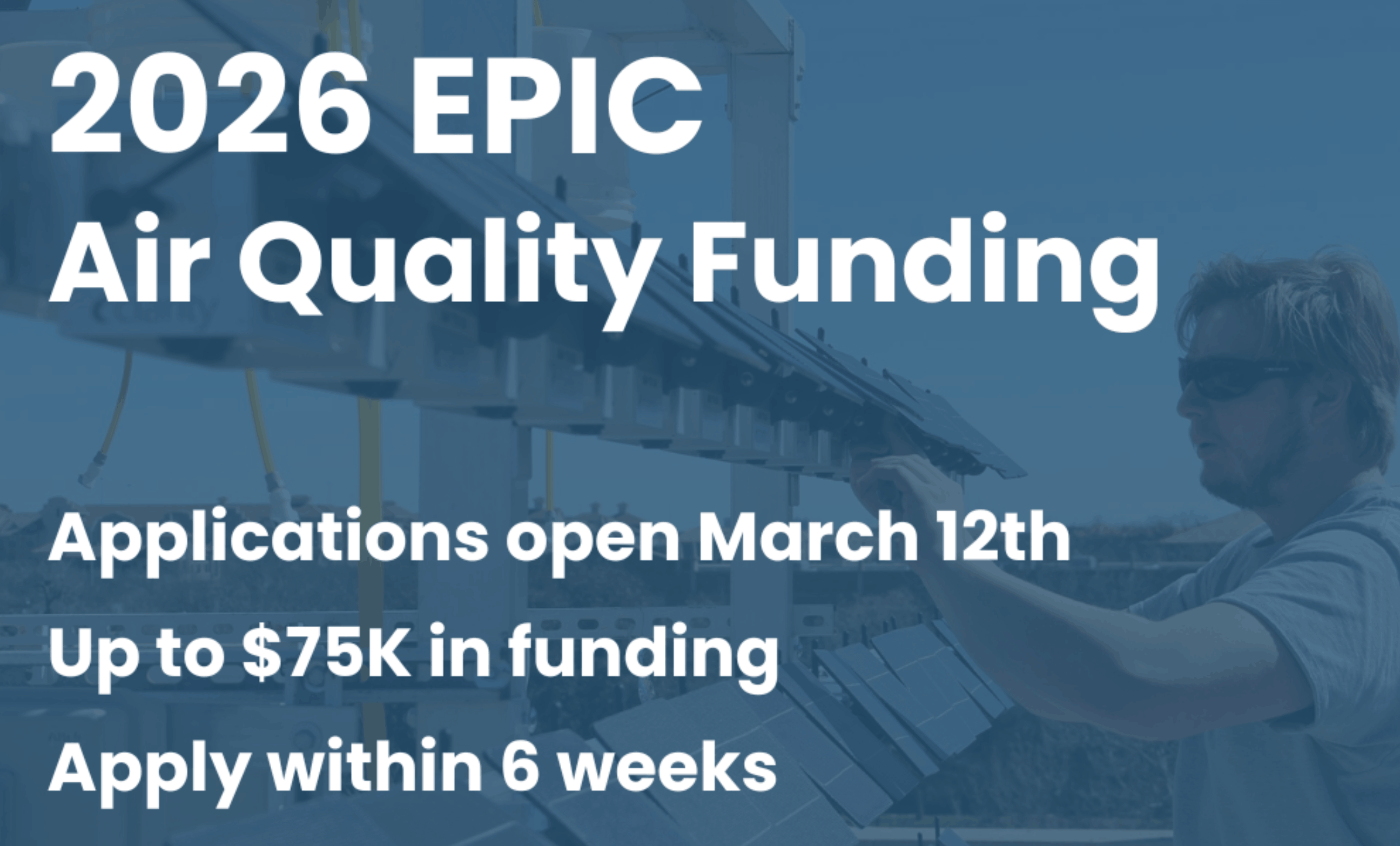
TL;DR: The EPIC Air Quality Fund, led by the Energy Policy Institute at the University of Chicago, is opening its 2026 call for proposals in March 2026 to support outdoor PM2.5 monitoring projects in under-monitored areas. The fund aims to improve public access to open air quality data and enable policy change at the national level. Grants typically range from $50,000 – $75,000+ for 18-month projects. Eligible applicants include governments, NGOs, universities, and other organizations, with priority given to countries facing high pollution and strong potential for impact. Projects must include open data sharing and a clear plan for national-level policy impacts.
Particulate matter air pollution (PM2.5) is one of the greatest external risks to human health. Yet, nearly 40% of countries are not delivering open air quality data to their citizens. Access to reliable, open air quality data remains one of the biggest barriers to improving air quality policy worldwide.
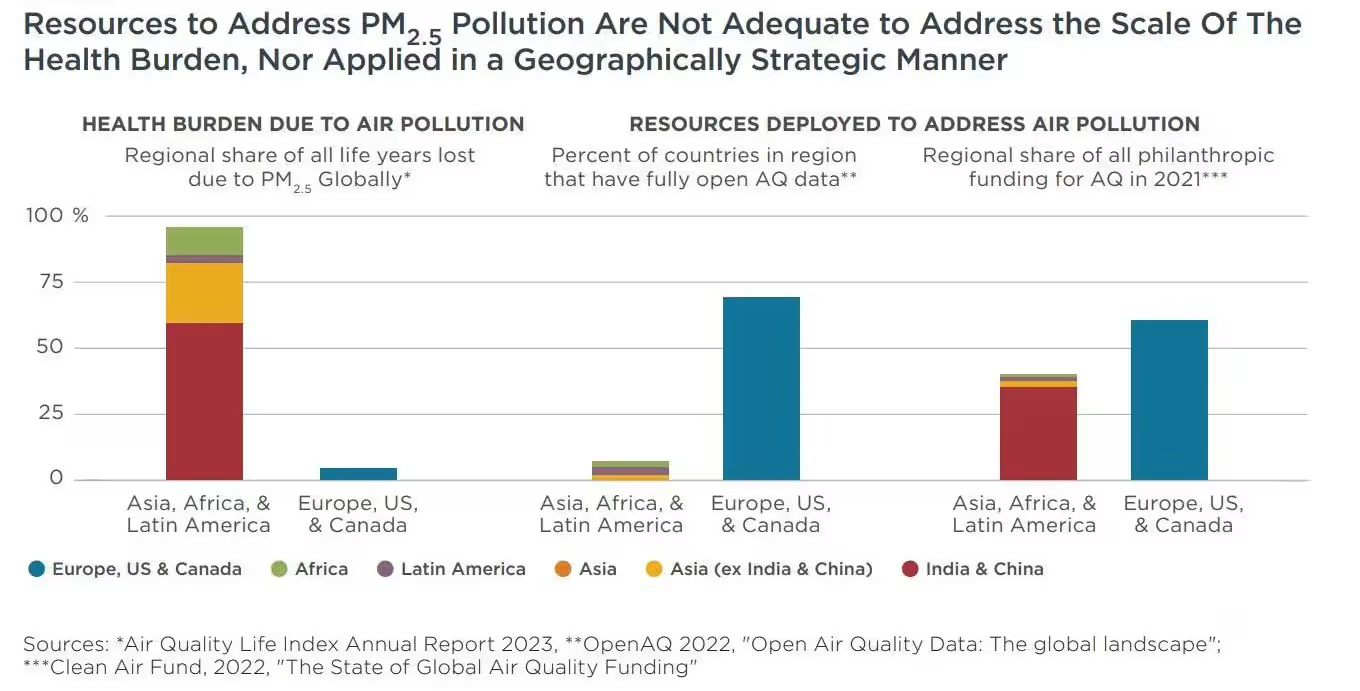
To help close this gap, the EPIC Air Quality Fund is once again offering funding to support new outdoor PM₂.₅ monitoring projects that can drive national-level policy impact. Below is an overview of the 2026 EPIC Air Quality Fund application, including who is eligible, what types of projects are supported, and how to prepare a competitive proposal.
What is the EPIC Air Quality Fund?
The EPIC Air Quality Fund is an initiative of the Energy Policy Institute at the University of Chicago (EPIC). EPIC’s mission is to research and address the global energy challenge, including the impact of air pollution. To do this, they established the EPIC Clean Air Program, which includes both the Air Quality Fund and the Air Quality Life Index (AQLI).

The AQLI works to produce peer-reviewed research on the effects of long-term exposure to air pollution on life expectancy, whereas the EPIC Air Quality Fund aims to expand access to air quality data to 1 billion people by 2030. The Fund supports local governments and organizations that deploy air quality monitors in under-monitored locations and share the resulting PM2.5 data openly to inform public policy.
The goal is not just to collect air quality data, but to ensure that data is used to drive concrete national-level policy outcomes, such as new regulations, standards, enforcement actions, or public investment decisions.
What types of projects are eligible?
For the 2026 funding cycle, projects must meet all three core objectives:
- 1. Measure fine particulate matter (PM2.5) concentrations for at least 12 months in an area that currently has little or no air quality monitoring
- 2. Share this data in a fully open manner
- 3. Use the data to achieve a specific national-level policy impact
Notably, projects that aim to install indoor, mobile, and wearable air quality monitors are not eligible to apply to the EPIC Air Quality Fund. Projects that aim to create or improve air quality monitoring technologies, and those seeking funding only for academic purposes, are also ineligible. Projects and funding must be focused on the installation of stationary, ambient air quality measurement equipment and the collection of outdoor air pollution data.
The fund is looking for projects that aim to accomplish specific and systemic national-level policy impacts, such as creating or tightening an air quality standard, addressing a specific policy, or achieving a clear and detailed air pollution mitigation outcome. The organization should be able to achieve measurable impacts, changing how air pollution is viewed or addressed in the country. More generic nationwide mitigation measures, such as the distribution or increased awareness of masks and filters, are not as impactful.
Who can apply?
Applications are open to both governmental and non-governmental organizations of any type, as long as they are legally authorized to receive funds from a US institution and have a working bank account that can accept those funds. Any country is able to apply, except for those included on the US Department of State “State Sponsors of Terrorism” List. Individuals cannot apply independently, but must be affiliated with an organization.
Some common institutions that can apply for funding include:
- Governmental organizations
- Corporates
- Non-profit organizations
- For-profit organizations
- Universities
- NGOs
- CSOs
Funding amounts and project duration
This year, the EPIC Air Quality Fund is offering financial support to at least 20 groups. Typical awards are about $50,000 for projects using lower-cost air quality sensors and roughly $75,000 or more for projects using regulatory-grade or reference-grade monitoring equipment. Funded projects run for 18 months, with data collection required for at least 12 of those months. Depending on available resources, the Fund hopes to renew successful awards for subsequent years of funding.
Data sharing requirements
The EPIC Air Quality Fund has its own open data sharing requirements for organizations to adhere to, ensuring that their data is fully open and publicly accessible. These requirements include:
- The data must be provided programmatically, be findable, and be accessible to a broad audience at no cost to the public. This can mean sharing data through an Application Programming Interface (API). The data also needs to be able to be shared on a platform with a CC-BY-4.0 license.
- The data must be given in a well-structured format. This can mean a CSV file or any other variety of formats that are machine-readable. They also must include, at a minimum, PM2.5 information in raw units, timestamps for each measurement, the time average of collection, and geographic coordinates for the monitors.
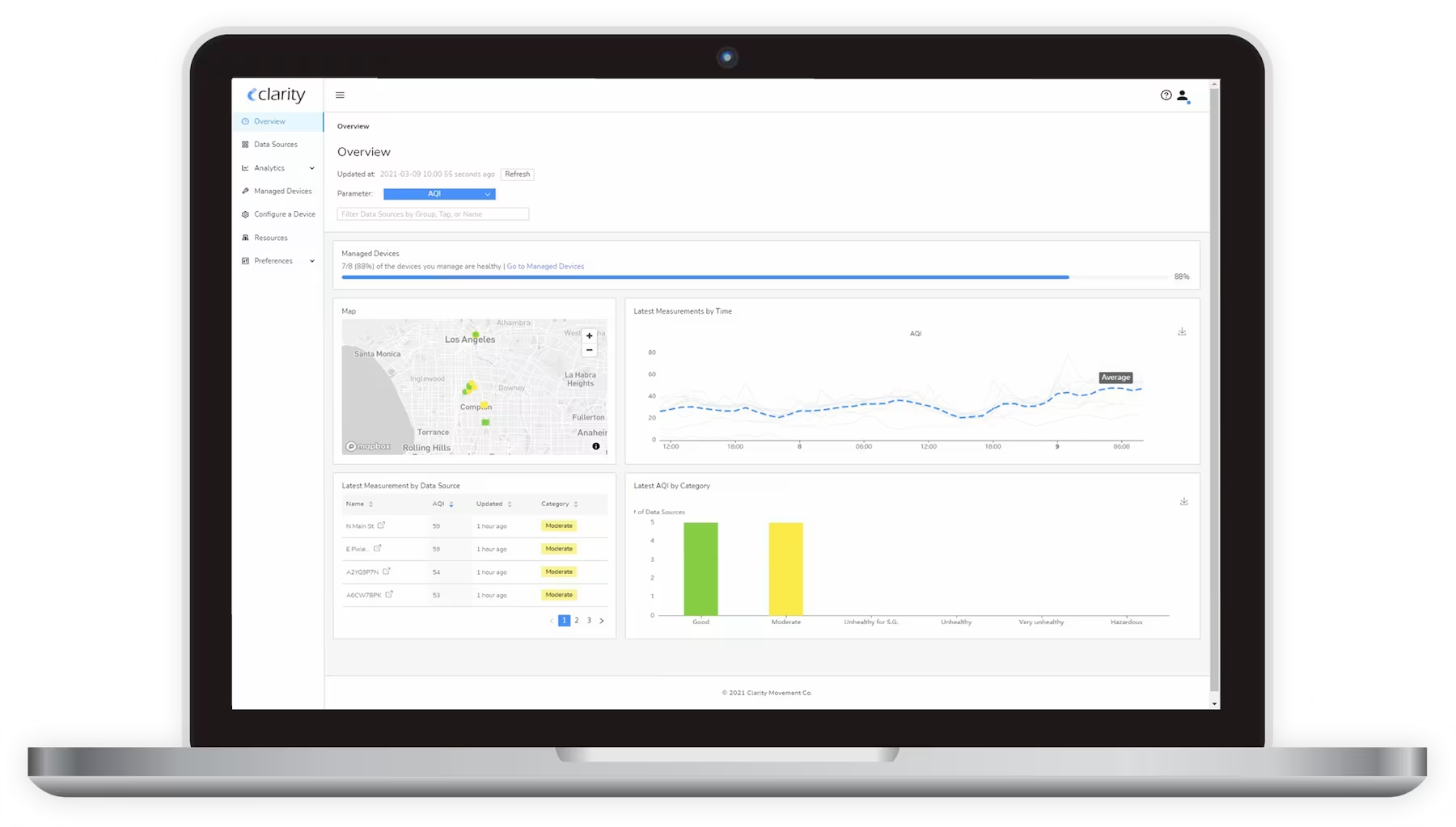
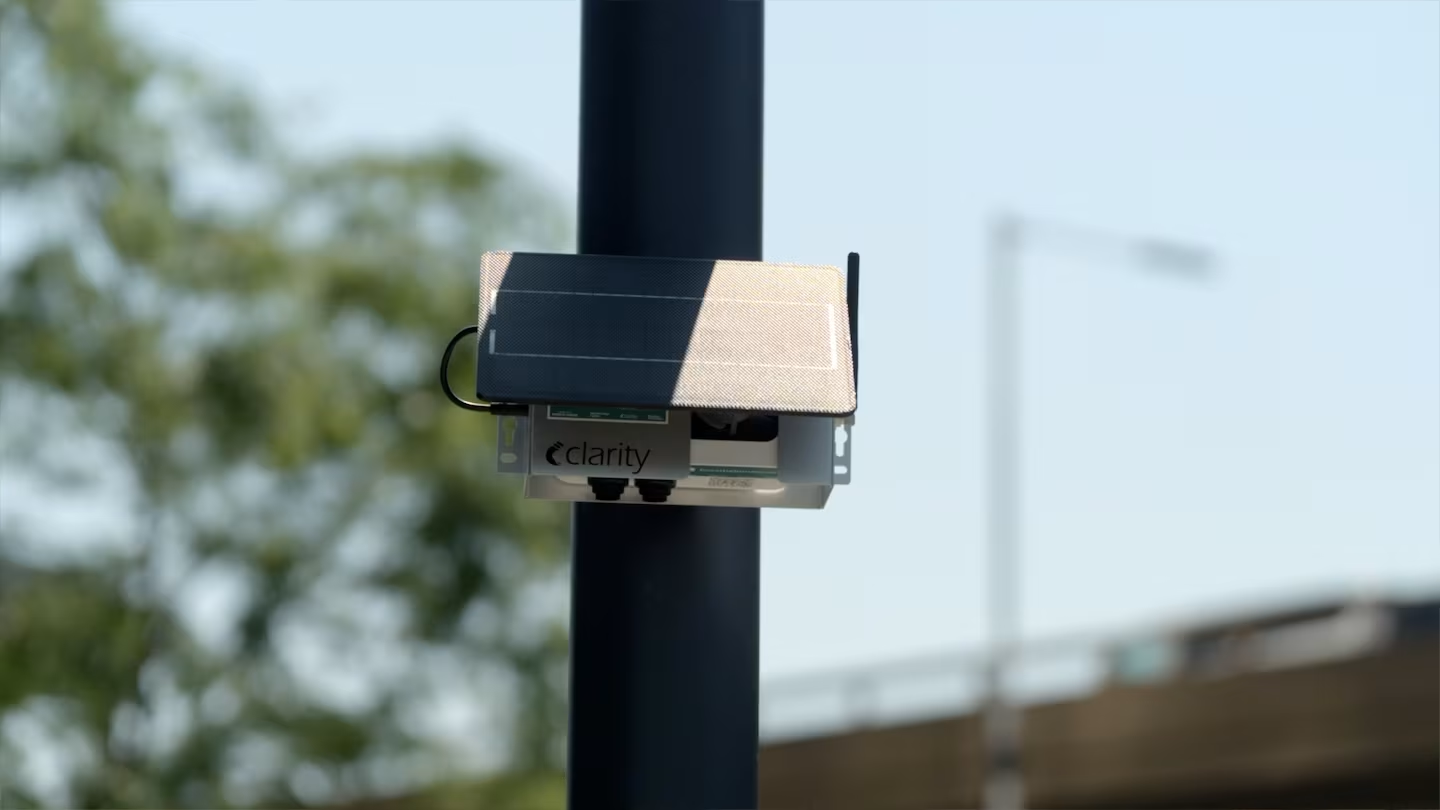
To be eligible for EPIC funding, organizations must own the data they generate, which limits the number of air quality sensors they can purchase equipment from. Some popular low-cost air quality sensor companies, such as PurpleAir, are not permitted to be purchased with these funds, as the company retains ownership of the data produced by their sensors. Fortunately, Clarity Movement fulfills all requirements.
Priority locations
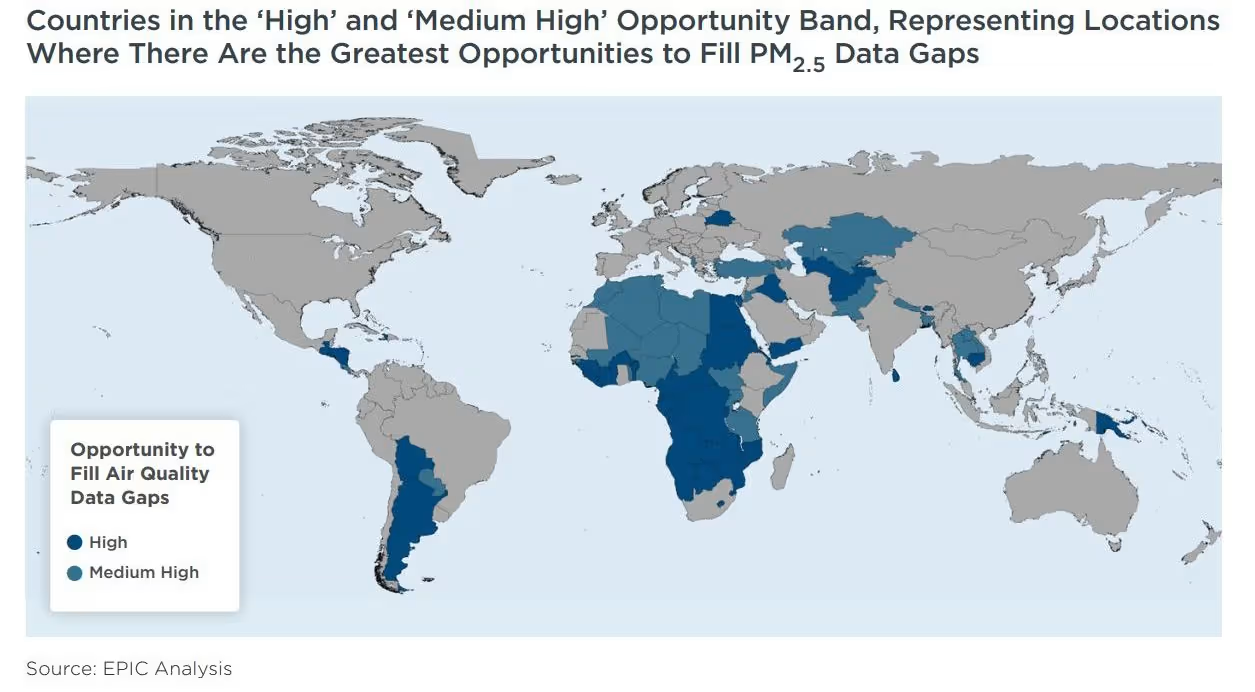
The EPIC Air Quality Fund prioritizes projects in countries with high or medium-high opportunity scores, reflecting both air pollution severity and potential for policy impact. The updated list of all 83 countries is included in the 2026 application materials. Projects outside priority countries may still be considered, but alignment with EPIC’s geographic priorities can strengthen an application.
Application Timeline
The timeline for 2026 applications includes:
- Applications open: March 12, 2026
- Application preview: Available now via the official EPIC Air Quality Fund website
- Submission Deadline: To be announced once applications open. However, applications are expected to be open for about 6 weeks.
- Award Decisions: Recipients of the award are expected to be informed in Summer 2026
Applications are encouraged to review the full application in advance and begin preparing responses early.
Tips for a strong application
Based on this year’s guidance, competitive proposals will:
- Clearly articulate a specific national-level policy goal
- Explain how PM2.5 data will be used by decision-makers
- Demonstrate the feasibility of long-term monitoring and open data sharing. Preference will be given to candidates who appear capable and interested in monitoring air quality over multiple years.
- Avoid generic or boilerplate responses
- Show familiarity with the local policy context
- Include any proven track record in air quality and/or related projects
- Demonstrate the ability to put together an effective team and collaborate with nationally-relevant stakeholders
- Provide detailed methodology, with specifics about the equipment, locations, and strategies for data collection and dissemination
- Establish a strong budget justification with a detailed breakdown explaining each expense
- Include support letters from relevant stakeholders
Make sure that you show how your project aligns with EPIC’s goals and provide very specific plans on how to achieve a national-level impact. For more detailed application tips, check out this application launch video made for the previous 2024 EPIC Air Quality Fund application call.
Learn more and apply
View the Air Quality Fund’s full call for proposals, where you can preview the 2026 application and explore frequently asked questions. If your organization is planning to deploy air quality monitors and use the data to drive meaningful policy change, the EPIC Air Quality Fund represents a major opportunity to support that work. Clarity equipment meets all requirements for EPIC funding, so please feel free to contact us if you are interested in submitting a proposal for air quality monitoring using our air pollution measurement equipment!
Looking for ways to fund your monitoring program? Check out our Air Quality Monitoring Fundings collection for relevant grant and funding resources.