Protecting yourself starts with trustworthy air quality data, so join Clarity’s co-founders on September 30, 2026 for a free 30-minute first look at new wildfire smoke monitoring capabilities, including the all-new Clarity Dashboard, and save your seat here.
TL;DR: As the 2026 wildfire season brings an outlook forecasting elevated risk across certain parts of the U.S. this July, wildfire community preparedness remains essential. Wildfire smoke contains air pollutants like fine particulate matter (PM2.5), which pose serious health risks. At-risk areas should create safety precautions for wildfires, from monitoring the air quality index to building an evacuation plan. Clarity's downloadable wildfire preparedness checklist, paired with real-time monitoring tools like the Node-S, gives communities a practical way to prepare for and respond to wildfires.
Climate change has caused wildfire seasons to grow longer and more intense in certain parts of the world, including regions of the United States, affecting both human health and the environment. More people are living in Wildland-Urban Interface areas, putting them at the front lines of wildfire activity. Amid these developments, it is important to establish proper wildfire community preparedness. This blog identifies some concrete safety steps and a wildfire preparedness checklist.
The 2026 wildfire season outlook
As of June 30th, 3,168,102 acres have already burned across the United States this year. This is 157% of the previous ten-year average. Climate change is reshaping the wildfire landscape, putting people at risk. In July, above-normal significant fire potential is forecast across portions of Texas, Oklahoma, the Carolinas, Florida, the Great Basin, California, Puerto Rico, the U.S. Virgin Islands, and the Greater Four Corners (parts of New Mexico, Colorado, Utah, and Arizona).
The Wildland Fire Potential Outlook continues to fluctuate in the coming months, with August showing fire potential returning to normal in some areas, but expanding into other places, including the Northwest, central Idaho, and western Wyoming. In September, fire potential will remain above normal for the Northwest, most of the northern Great Basin, and northeast California, but fortunately return to normal for all other areas.
Wildfire smoke and community air quality
Not only are the flames themselves a threat to public health, but wildfire smoke is significantly harmful. Smoke is dynamic, undergoing chemical reactions in the air. It contains different contaminants depending on what has been burned. Moreover, wildfire smoke can travel far away from its source, sometimes up to hundreds or even thousands of miles away, or, conversely, pollutants can linger in the same area for months in the wake of a fire.
The harmful air pollutants in wildfire smoke include:
- Particulate Matter (PM): PM2.5 is considered to be the most dangerous air pollutant in wildfire smoke. Wildland-Urban Interface (WUI) fires produce especially harmful particulate matter that can include trace metals and asbestos.
- Black carbon (BC): Also known as soot, black carbon is a type of particulate matter that is particularly harmful to both human health and the environment.
- Dust (PM10): Considered less dangerous than PM2.5, these larger particles are less likely to disperse in the wake of a fire, lingering in the aftermath and potentially containing hazardous materials.
- Nitrogen Oxides (NOx): Irritate the upper respiratory tract and lungs and can lead to shortness of breath, coughing, and nausea.
- Volatile Organic Compounds (VOCs): The second-largest source of VOCs is biomass burning, a category that includes wildfires.
- Ozone (O3): The ozone in wildfire smoke is formed through the chemical reaction between volatile organic compounds (VOCs), nitrogen oxides (NOx), and sunlight.
- Carbon monoxide (CO): Although less harmful when diluted in the atmosphere, carbon monoxide reduces the blood’s ability to carry oxygen throughout the body, potentially damaging vital organs.
- Hazardous air pollutants (HAPs): Wildfires can produce HAPs, including formaldehyde, acrolein, acetaldehyde, and benzene.
Wildfire safety measures & precautions
Fortunately, there are some steps that individuals can take to protect themselves from wildfires. Wildfire safety measures include things such as:
- Being ready to evacuate quickly
- Keep up to date with any emergency alerts and advisories
- Learn emergency skills such as First Aid and CPR
- Gather emergency supplies in advance
- Prepare your home for wildfires, making them less likely to catch fire
- In the aftermath of the fire, take proper precautions when cleaning up ash
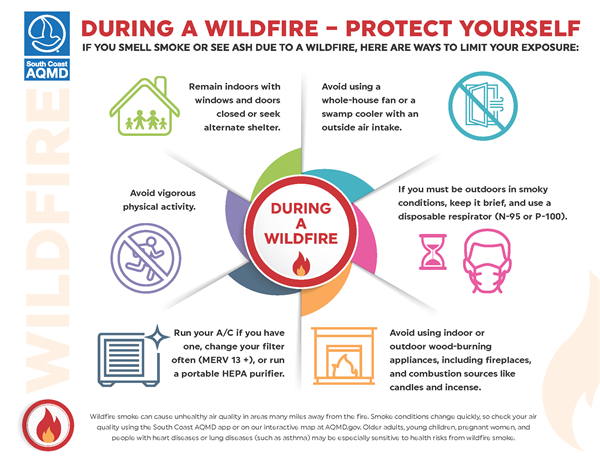
There are also specific steps that people can take to protect themselves from wildfire smoke:
- Check your local air quality index (AQI): Look at the AirNow Fire and Smoke Map or the Clarity OpenMap for accurate and hyperlocal AQI.
- Stay aware: If you smell smoke or see ash, take precautions even if the AQI is at a healthy level.
- Stay indoors or wear an N95 or KN95 mask: Take these precautions when the AQI is unhealthy
- Protect indoor air: Putting the AC on the recirculate setting, using HEPA air filters, and keeping doors and windows closed can help keep indoor air clean.
Building a wildfire emergency preparedness plan
There are steps that households can take to protect against wildfires and wildfire smoke. These wildfire safety precautions include things such as:
- Plan several evacuation routes
- Designate safe meeting places
- Know your emergency contacts
- Make extra considerations for children, pets, and elderly family members
- Practice the safety plan beforehand
- Stay in contact with family members/friends, and make sure everyone is aware of the plan and when to implement it
Your wildfire preparedness checklist (downloadable)
A wildfire preparedness checklist can help with the creation and execution of a safety plan. Keeping your ideas and actions organized can make a big difference in the event of an emergency. Clarity’s checklist contains concrete steps to take in the event of a wildfire or smoke day.
Download your wildfire preparedness checklist by Clarity here.
You can find other checklists provided by the American Red Cross, the U.S. Fire Administration, and more. South Coast AQMD also provides helpful Wildfire Smoke and Ash Health and Safety Tips.
Monitoring wildfire smoke & air quality with Clarity
During wildfire events, real-time, hyperlocal air quality monitoring is particularly important for wildfire community preparedness. Residents need to know what the AQI is in their area and what precautions they need to take amid rapidly changing air pollution conditions. Dense, low-cost air quality sensor networks fulfill this need.
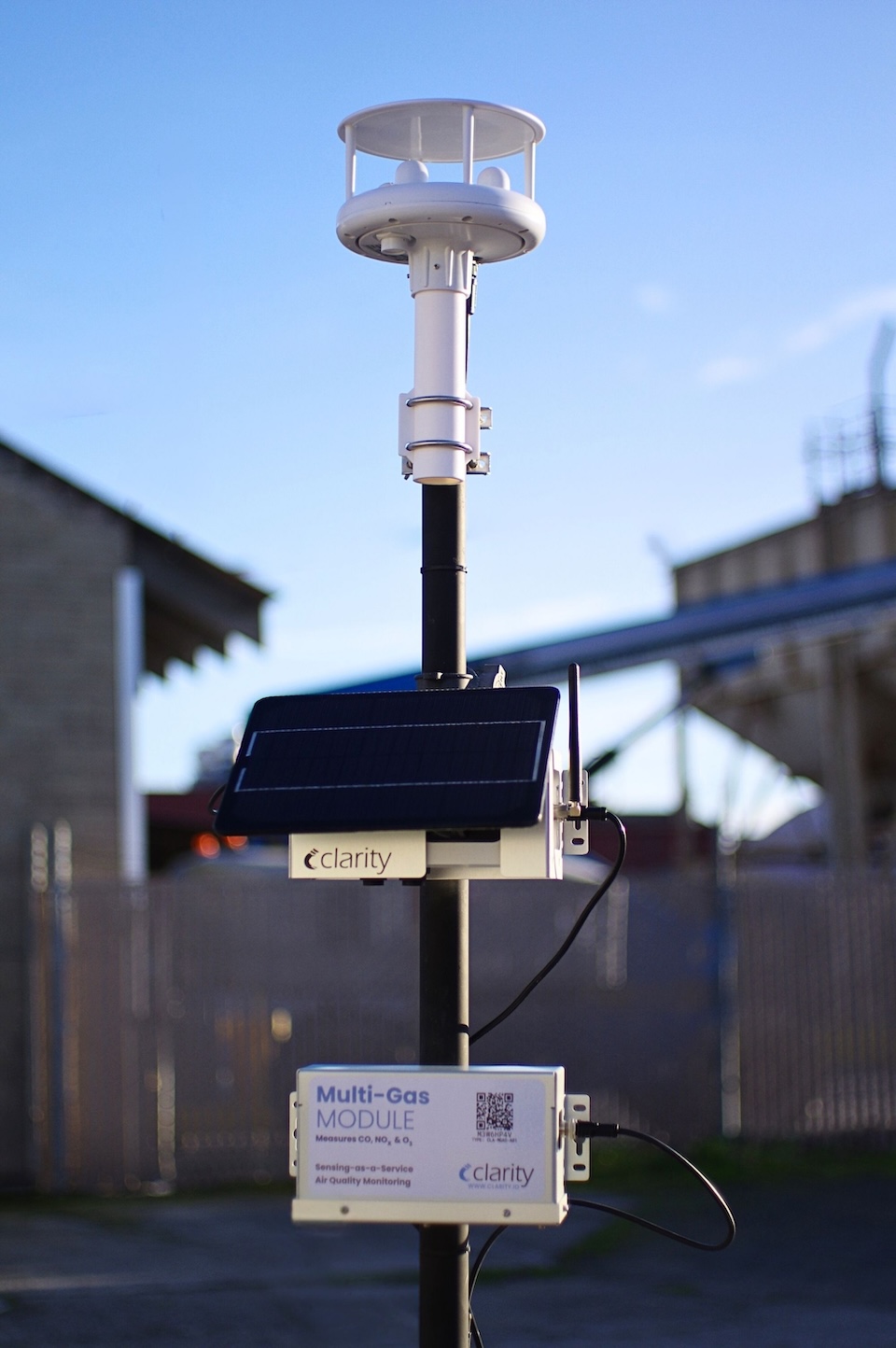
Clarity’s Node-S sensors, offered as part of our Sensing-as-a-Service model, provide data that is both accurate and essential. In the wake of the 2021 Marshall Fire, Boulder County Public Health easily deployed a network of 22 Node-S air sensors to monitor post-fire air quality conditions. Amidst 2020 wildfires, Brightline Defense, a Bay Area-based environmental justice nonprofit, deployed 19 Node-S air quality sensors across neighborhoods in San Francisco, which helped inform the public about air quality conditions, uncover exposure inequalities, and support clean air policy.
Partner with Clarity to monitor wildfire smoke and create wildfire-resilient communities.