TL;DR: What does air quality monitoring really cost in 2026? See a full breakdown of sensor prices, station costs, hidden fees, and how cities and agencies can scale dense air monitoring networks affordably with Clarity.
Air pollution is a significant threat to public health worldwide. In 2019 alone, 6.7 million deaths were connected to air pollution exposure. 99% of the world’s population lives in areas where air pollution levels exceed World Health Organization (WHO) guideline limits, with 41% of cities having air pollution that is 7 times higher than the WHO’s recommendation.
With these statistics, air quality monitoring is no longer optional for cities and agencies. However, air quality sensor pricing can be confusing and varied.
How much does air quality monitoring cost?
Air quality monitoring spans several different pricing tiers. The purchase cost of a regulatory-grade reference monitor usually ranges between $15,000 to $40,000. Low-cost sensors offer a more affordable alternative; however, they can greatly vary in price, ranging from $100 to $5,000.
Low-cost sensors include multi-sensor units, like Clarity’s Node-S and Modules, which range from a few hundred to a few thousand dollars. At the lower end of the spectrum, low-cost air quality sensors sold to individual consumers typically range from below $100 to several hundred dollars.
Many factors affect air quality sensor price, including pollutant coverage, accuracy, deployment context, and ongoing service needs.
What drives the cost of air quality monitoring?
Many different factors contribute to the cost of air quality monitoring, including:
- Pollutants monitored: Different air pollutants may require separate monitoring considerations.
- Network size: Larger air quality networks may rack up higher purchase and operational costs.
- Sensor accuracy: FRMs and FEMs are more accurate than air quality sensors, but reference air monitoring equipment is much more expensive.
- Calibration and QA/QC: Calibration, colocation, and quality control measures help ensure sensor accuracy, but can add cost if not included in the provider’s package.
- Data storage and access: Some sensors store data locally, whereas others transmit the data to a virtual computer server. Software also enables data visualization and public sharing.
- Operating costs: Certain monitoring methods may incur higher operating costs than others. FRMs and FEMs, in particular, often have operating costs that exceed their purchase prices, with annual costs sometimes in the tens of thousands of dollars.
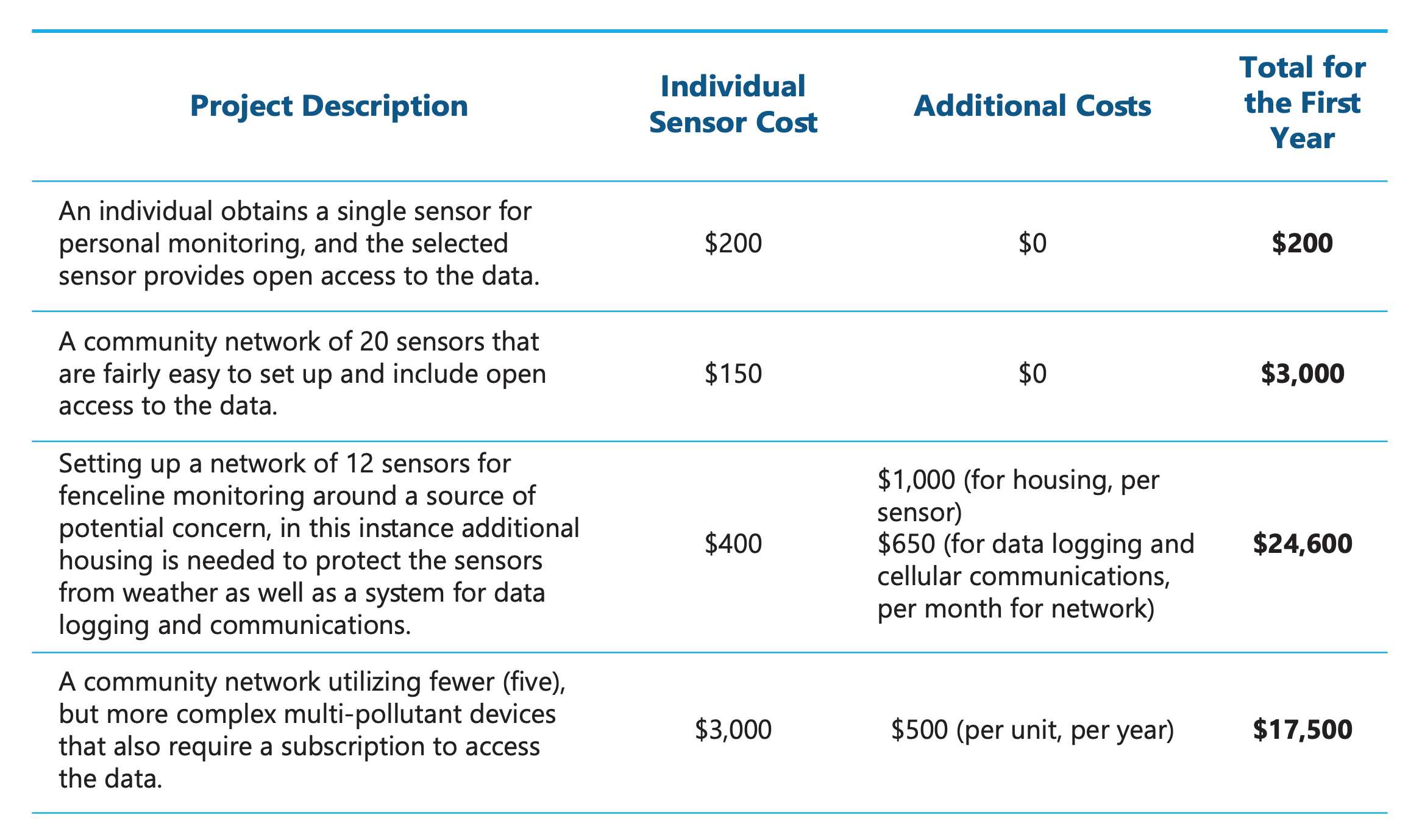
As you can see, the additional costs for operating an air quality monitoring network can add up quickly, making it important to consider the operational costs and not simply the initial upfront cost to purchase the hardware.
Clarity introduced our Sensing-as-a-Service air quality monitoring model to address this issue. When cities and other organizations set up an air quality monitoring network with Clarity, they know that they will pay one flat annual cost with no hidden costs or surprises. Cellular connectivity, software and API access, customer service, and free hardware replacement under warranty are all covered under the annual subscription fee.
Reference vs low-cost air quality monitoring: A cost comparison
Regulatory-grade reference methods (FRMs) and equivalent methods (FEMs) are used by State and local governmental air pollution control agencies to comply with the U.S. National Ambient Air Quality Standards (NAAQS). FRMs and FEMs are the gold standard for air quality monitoring, providing the most accurate measurements and are designed to meet strict performance standards for regulatory monitoring. However, they are extremely expensive, with high purchase and operating costs.
Air quality sensors are more portable and generally easier to operate than reference monitors or research instruments. They are less accurate than FRMs and FEMs, and can vary in lifetime and reliability. However, air quality sensors are significantly less expensive than regulatory-grade equipment and require lower operating costs.
Cities don’t have to choose between regulatory-grade reference monitors and low-cost air quality sensors. Instead, they can layer both sensing technologies to create a more holistic picture.
2026-05-11%20at%208.50.12%E2%80%AFPM.png)
Air quality sensors can be used for non-regulatory supplemental and informational monitoring (NSIM) applications, such as air quality forecasting, hotspot detection, emergency response, and more. Air quality sensors can also be sold to consumers for personal air quality monitoring.
Outdoor air quality monitoring devices cost: Sensor-level pricing
Air quality sensor prices can vary. A sensor’s cost depends on what it measures and how it is calibrated.
Commercial air quality monitoring cost: What industry should expect
Air quality monitoring is not just important for government agencies; it is also important for the private sector. Industries such as mining, construction, and manufacturing rely on air pollution monitoring to ensure the safety of both workers and surrounding communities. Air quality monitoring can also help confirm that industries are complying with local regulations.
Subscription-based air quality monitoring is the optimal choice for commercial buyers who are working on a temporary project, such as construction work. Project managers can rent air pollution sensors for the duration of the project lifecycle, without committing to long-term device ownership.
Hidden costs of air quality monitoring cities often miss
Setting up an air pollution sensor network can be complicated. Not all costs are obvious up front. Certain air quality monitoring cost factors are easily overlooked, such as:
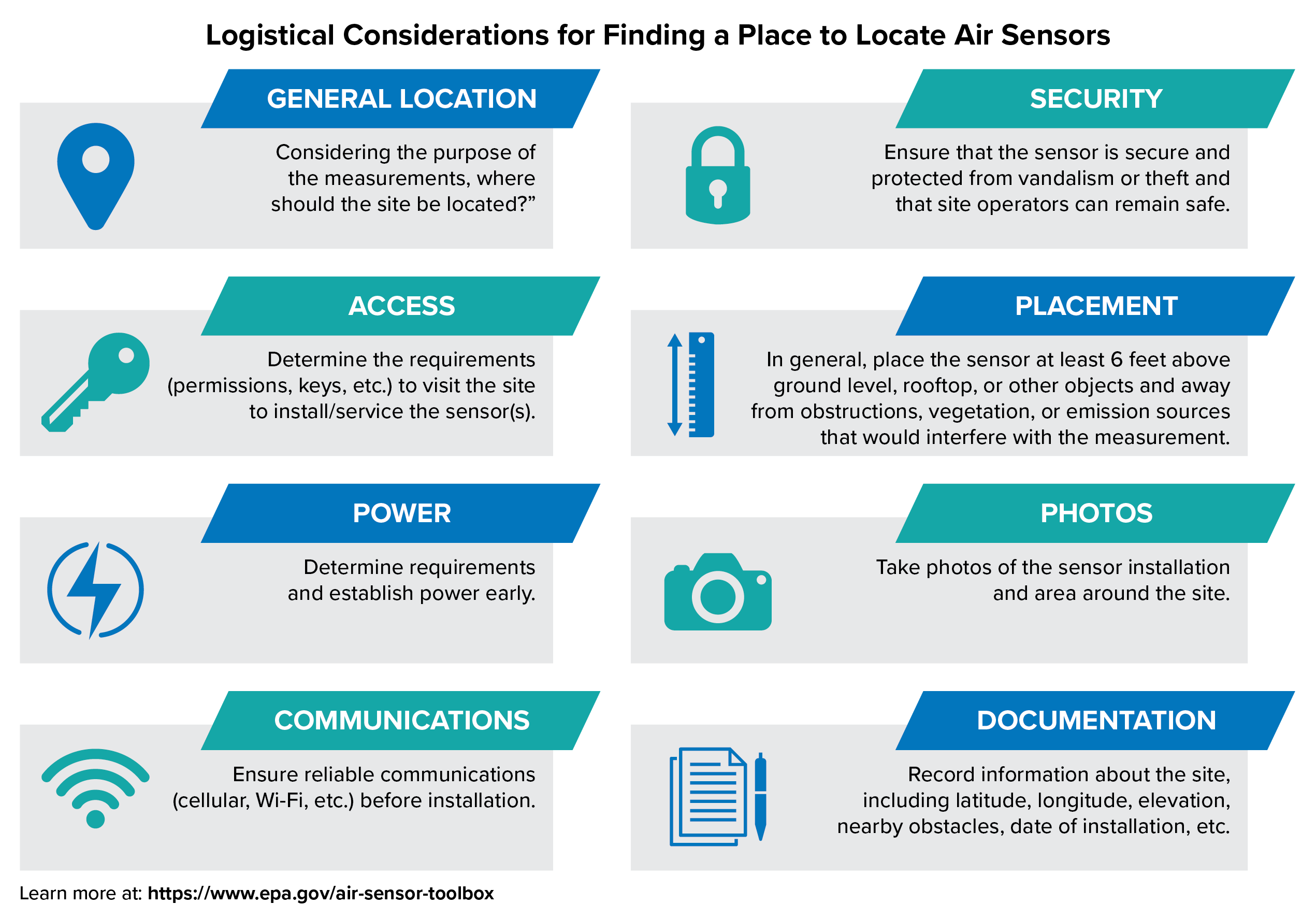
- Power considerations: For sensors that require external power sources, it can be both expensive and time-consuming to deliver power to areas without existing infrastructure. Devices that operate self-sufficiently using solar power and a battery have a major advantage here.
- Theft and vandalism: Unfortunately, sensors are subject to theft, vandalism, and tampering, which may require maintenance or replacement costs.
- Housing and weatherproofing: Certain sensors require additional protection against the elements. All of Clarity’s air quality monitoring equipment comes weatherproofed out of the box for reliable operation under any conditions.
- Technical support: This includes both training on how to use air sensors and troubleshooting sensor issues. Clarity’s air quality Sensing-as-a-Service model includes access to our team of air quality experts and a dedicated project manager at no extra cost.
- Data management fees: Some air sensors have monthly or annual data access subscription fees (Clarity does not). Others may also have cellular provider fees. This allows the sensors to automatically transmit data to a virtual computer server for storage.
- Sensor collocation: This process helps ensure accurate sensor measurements, but it can incur costs. Collocation and the development of a custom calibration model are provided free of charge under Clarity’s air quality Sensing-as-a-Service model.
How to reduce the cost of an air quality monitoring system
Fortunately, there are practical steps that cities, agencies, and stakeholders can take to reduce the cost of air quality monitoring. For instance, they can:
- Take advantage of low-cost air sensors: Air sensors are more affordable and often more practical for certain monitoring needs than regulatory-grade FRMs and FEMs. Buyers might consider a hybrid network to balance accuracy with practicality and balance costs more effectively.
- Look into service-based operational models: Maintenance, operation, and siting costs can often overshadow cheap purchase costs, making service-based air quality monitoring like Clarity’s air quality Sensing-as-a-Service model more cost-effective in the long run.
- Bundle hardware, calibration, and software: Stakeholders might consider purchase options that incorporate sensor calibration, data storage, and visualization to cut down on later costs and provide reliable and easily accessible data. Clarity’s Sensing-as-a-Service air quality monitoring model bundles all of these elements into one predictably-priced annual package.
- Choose self-sufficient air quality sensors: Air sensors that utilize solar power require no other external power sources, which can be expensive and inconvenient to set up, while air sensors that take advantage of cellular hardware remove the need for wifi or the labor required to manually transfer local data. Air quality sensors that are weatherproof do not need extra housing or protection and associated costs. All of Clarity’s air quality monitoring devices can operate self-sufficiently using solar power and internal batteries, and are weatherproofed out of the box.
- Select sensors that are easy to use and deploy: Air quality sensors that require very little manual labor or oversight can help cut down on management, training, and deployment costs. The Clarity Node-S is specifically designed for ease of use and can be deployed in minutes.
- Set up mutually-beneficial funding models: Certain air monitoring projects can split costs with other stakeholders, such as polluting industries or even community sensor hosts. Stakeholders may also consider applying for relevant grants.
- Pick strategic sensor locations: Placing air quality sensors out of reach of vandals can prevent maintenance and replacement costs.

Real-world examples: How cities and agencies scale air quality monitoring
The Monterey Bay Air Resources District (MBARD)
The Monterey Bay Air Resources District (MBARD) installed a network of 25 Node-S air quality sensors across 21 municipalities. The network complemented the eight reference-grade monitoring stations in the district, providing a more granular view of air quality amid frequent wildfires.
By choosing high-quality air sensors, MBARD was able to avoid some of the pitfalls and installation costs that come with cheaper consumer-oriented sensors and EBAMs. MBARD was able to save time and money in the long run by choosing easily manageable air sensors that were easy to install, required no wifi or hardwired power source, and included remote calibration. The air quality monitoring staff could dedicate more time and resources to what matters.
The best thing I can say about Clarity is the reduction of effort by our air monitoring staff. Very little hands-on work is required to operate the equipment. It's implemented quickly, we can start streaming the data immediately, and we really don't have to do much more than that."
— David Frisbey, Planning and Air Monitoring Manager, Monterey Bay Air Resources District
Yerevan
On a larger scale, Yerevan, the capital of Armenia, installed over 170 Node-S air quality sensors to address construction-related air pollution emissions. Traditional monitoring stations are too expensive to install next to every construction site, making low-cost air quality sensors the ideal solution. With Clarity’s technology, Yerevan was able to install two air sensors at every major construction site in the city.
Yerevan was able to manage air quality monitoring costs by adopting a hybrid funding model where the city budget covers sensors that serve as general “background” monitors, while private developers and businesses take on the cost of sensors that monitor their specific activities. Yerevan also implemented a network that required no external power or wifi, allowing them to save installation costs while enabling site flexibility. Clarity’s user-friendly software and easy sensor deployment additionally saved resources by minimizing maintenance requirements.
This project has been a crucial step toward modernizing Yerevan's air monitoring system. For a long time, our city relied on outdated, manual methods for measuring pollutants— for example, we even measured dust levels by physically weighing samples. Deploying Clarity's automated sensors has helped us move into real-time monitoring and data-driven decision making. Building on this success, we plan to expand our air quality monitoring network to cover other areas of the city with significant pollution issues. In fact, in the near future we intend to install sensors to monitor dust emissions from Yerevan's mining sites."
— Gorik Avetisyan, Deputy Head of the Environmental Protection Department for the City of Yerevan
Sensing-as-a-Service: A modern cost model for cities & agencies
Fortunately, certain business models offer cost-effective solutions without sacrificing sensor accuracy. Clarity’s Sensing-as-a-Service model provides accurate Node-S air quality sensors, calibration, the Clarity Cloud, and expert project support in a single annual subscription. With ease of installation and weatherproof hardware, Clarity’s offerings cut down on power, maintenance, and location costs while providing reliable air quality data. Request a quote to find an air quality solution with Clarity.