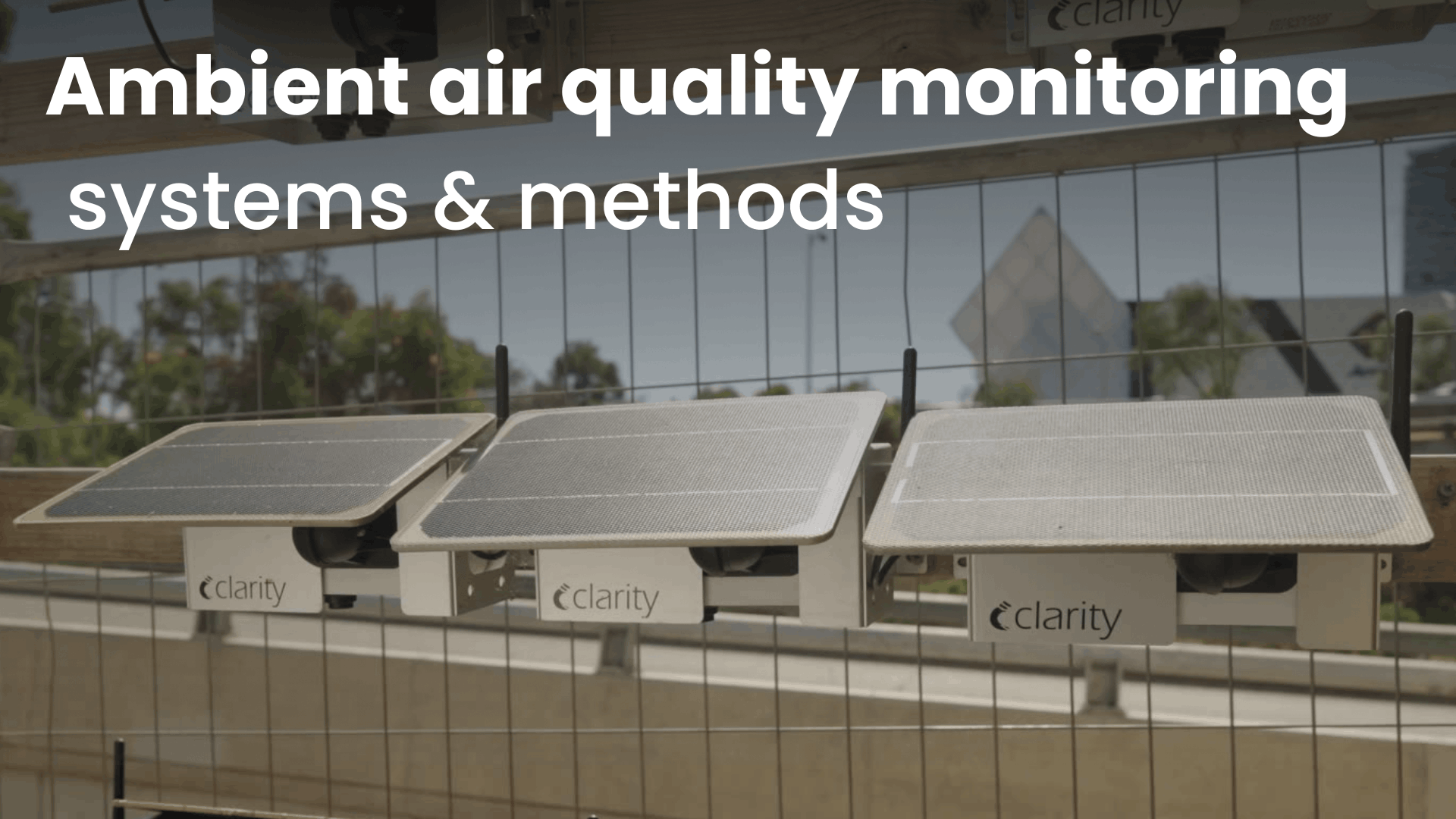
TL;DR: Outdoor air quality monitoring protects public health and the environment, with pollutants like PM2.5, NO2, and ground-level ozone posing serious risks. Monitoring methods range from filter-based federal reference methods to low-cost optical sensors, with each serving different regulatory and informational purposes. Air quality sensors have expanded what's possible for continuous, hyperlocal monitoring, complementing rather than replacing traditional regulatory infrastructure.
Air pollution is a significant threat to both public health and the environment. 41% of the world’s cities have air pollution that is over 7 times higher than the World Health Organization’s recommendations, and 97% of cities in low- and middle-income countries have levels of air pollution considered unsafe.
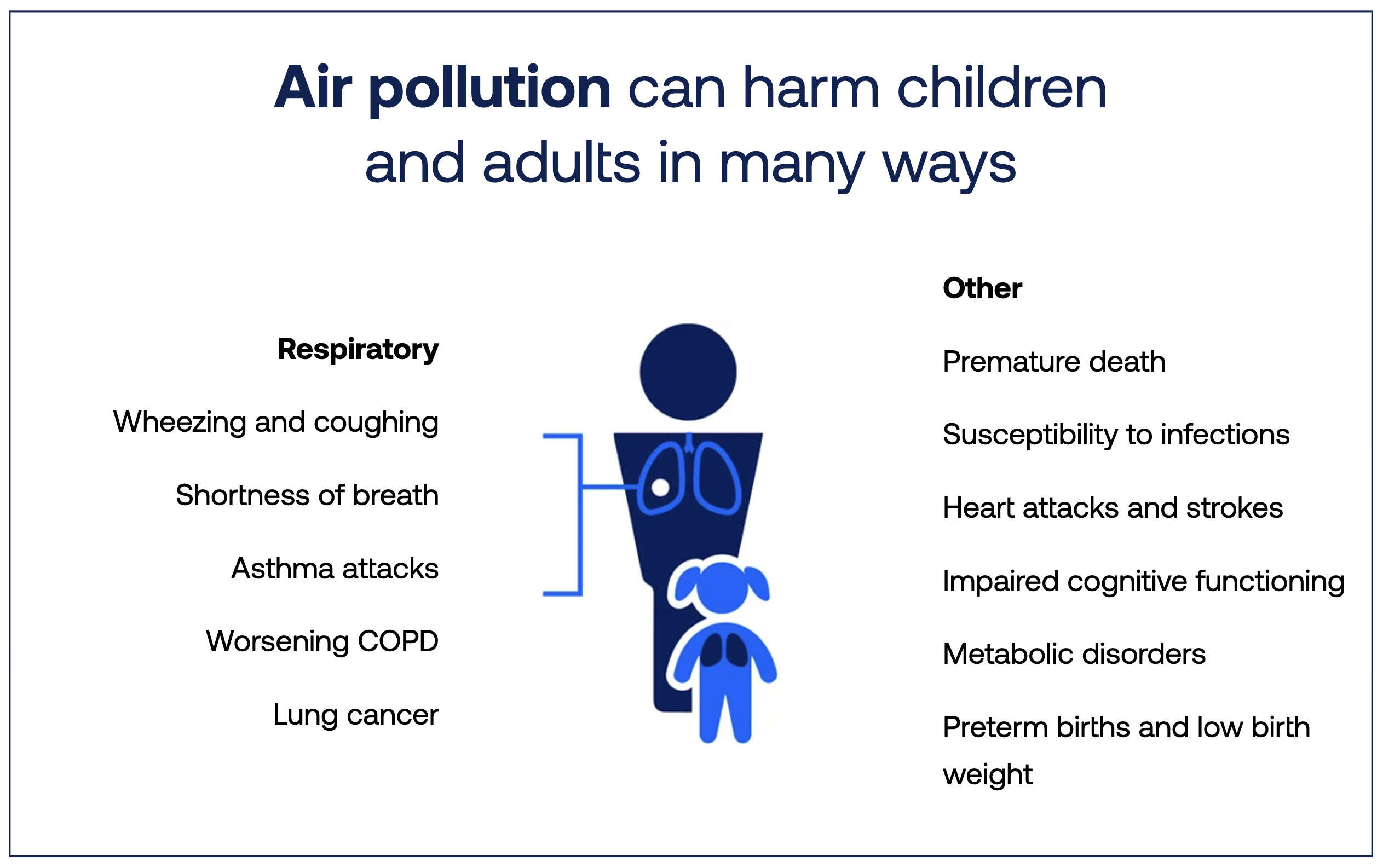
Ambient air quality monitoring is how cities, agencies, and industrial operators measure outdoor air pollutant concentrations. This kind of monitoring allows cities and industries to meet regulatory benchmarks and ensure public safety.
Ambient air quality monitoring explained
The United States Environmental Protection Agency defines ambient air monitoring as “the systematic, long-term assessment of pollutant levels by measuring the quantity and types of certain pollutants in the surrounding, outdoor air.” Ambient air pollution refers to outdoor air pollution, unlike household air pollution, which concerns indoor air.
Ambient air quality monitoring is necessary to ensure the enforcement of air pollution regulations, such as the National Ambient Air Quality Standards under the Clean Air Act. It provides a baseline and measures the impacts of air pollution mitigation measures. Ambient air monitoring also raises public awareness about both the harms of air pollution and environmental inequalities that need to be addressed.
Ambient air quality monitoring methods
There are many different air quality monitoring methods. The methods can differ in accuracy, consistency, cost, temporal resolution, geographic coverage, and ease of deployment.
| Method | How It Works | Resolution | Typical Use |
|---|---|---|---|
| FRM | Particulate samples collected on filters, to be weighed and analyzed in a laboratory | 24-hr | Compliance, NAAQS reporting |
| FEM | Calculates mass concentration particle measurements | Hourly/ continuous | Compliance, NAAQS reporting |
| BAMs | Measures the attenuation of beta particles passing through a fine layer of particulate matter to determine particle mass concentration | Hourly | NAAQS compliance, community and fenceline monitoring, emergency response applications |
| Optical/nephelometric sensors | Counts particulates based on the intensity of scattered light. | Continuous | Non-regulatory supplemental and informational monitoring (NSIM) applications |
| Electrochemical sensors | A chemical reaction produces an electrical current proportional to the present gas concentrations | Continuous | Non-regulatory supplemental and informational monitoring (NSIM) applications |
Traditional air quality monitoring methods and low-cost air sensors
Federal reference methods (FRMs) and federal equivalent methods (FEMs) are highly accurate traditional air quality monitoring methods. They are the gold standard for air quality monitoring, meeting strict requirements to support U.S. National Ambient Air Quality Standards reporting. Low-cost air quality sensors are more affordable, allowing them to form more granular air quality sensor networks for non-regulatory supplemental and informational monitoring (NSIM).
Federal Reference Methods (FRM)
The Federal Reference Method measures the mass concentration of particulate matter over a 24-hour sampling period using the gravimetric method. Monitoring stations collect ambient air samples on filters, which are later weighed and analyzed in a laboratory. FRMs are highly accurate but labor-intensive, and they provide data that is not immediately available and has less temporal resolution than other methods.
Federal Equivalent Methods (FEMs)
Federal Equivalent Methods constitute a wide range of ambient air quality monitoring methods deemed sufficiently close to FRMs in accuracy through rigorous testing and requirements to be considered of “equivalent” accuracy. FEMs can generally be separated into three classes based on how similar they are to FRMs. Class III equivalent methods, those that are most dissimilar to FRMs, can provide more continuous and less labor-intensive monitoring.
Beta attenuation monitors (BAMs)
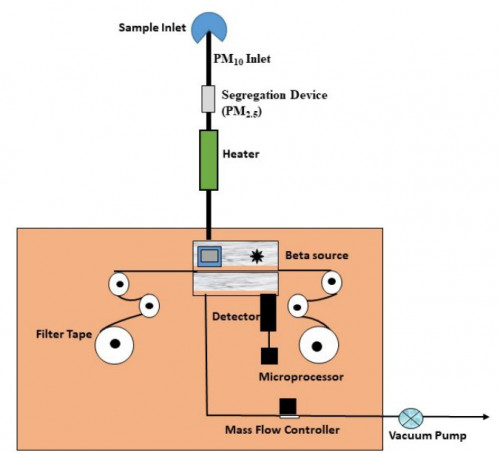
Beta attenuation monitors (BAMs) are among the most popular federal equivalent methods (FEMs). BAMs use beta rays to measure particulate matter concentrations. When beta particles pass through particulate matter, they are attenuated or weakened. By detecting how much the beta particles have been attenuated, monitors can calculate the concentration of particulate matter present in the air.
Optical/nephelometric sensors
Optical particle counters (OPCs) are frequently used in air quality sensors. This ambient air particle monitoring technology uses a light source to illuminate particulate matter as it passes through a detection chamber. The particles in the chamber scatter light, which allows detectors to count and size them based on the intensity of the scattered light. Nephelometric sensors use a similar method, but rather than counting individual particles, they estimate mass particulate concentrations from bulk scattered light.
Electrochemical sensors
Electrochemical sensing technology is frequently used in low-cost air-quality monitoring to detect gases such as nitrogen oxides and carbon monoxide. Gas molecules undergo a chemical reaction on the sensor’s surface, which generates an electrical current depending on the gas concentration. Since the strength of that electrical current is proportional to the concentration of gas present, the sensor can interpret the electrical signal to calculate gas levels in the air.
Key ambient air quality monitoring parameters
An air quality monitoring network can be used to measure a variety of air pollutants harmful to both public health and natural ecosystems, as well as relevant meteorological conditions that affect those pollutants. Many of these pollutants are criteria air pollutants, for which the Clean Air Act sets regulations.
| Parameter | Type | Why It's Monitored |
|---|---|---|
| PM2.5 | Particulate | Major threat to public health, primary AQI driver |
| PM10 | Particulate | Threatens health and is associated with construction and industrial hazards |
| BC | Particulate | Threatens health and contributes to climate change |
| NO₂ | Gas | Threatens health and contributes to both acid rain and ozone formation |
| NOx | Gas | Threatens health and contributes to both acid rain and ozone formation |
| CO | Gas | Threatens health and indirectly contributes to climate change |
| Ground-level O3 | Gas | Threatens health, harms vegetation, and contributes to global warming |
| Wind | Meteorological | Helps determine where air pollutants originated and where they are going |
Inside an ambient air quality monitoring system
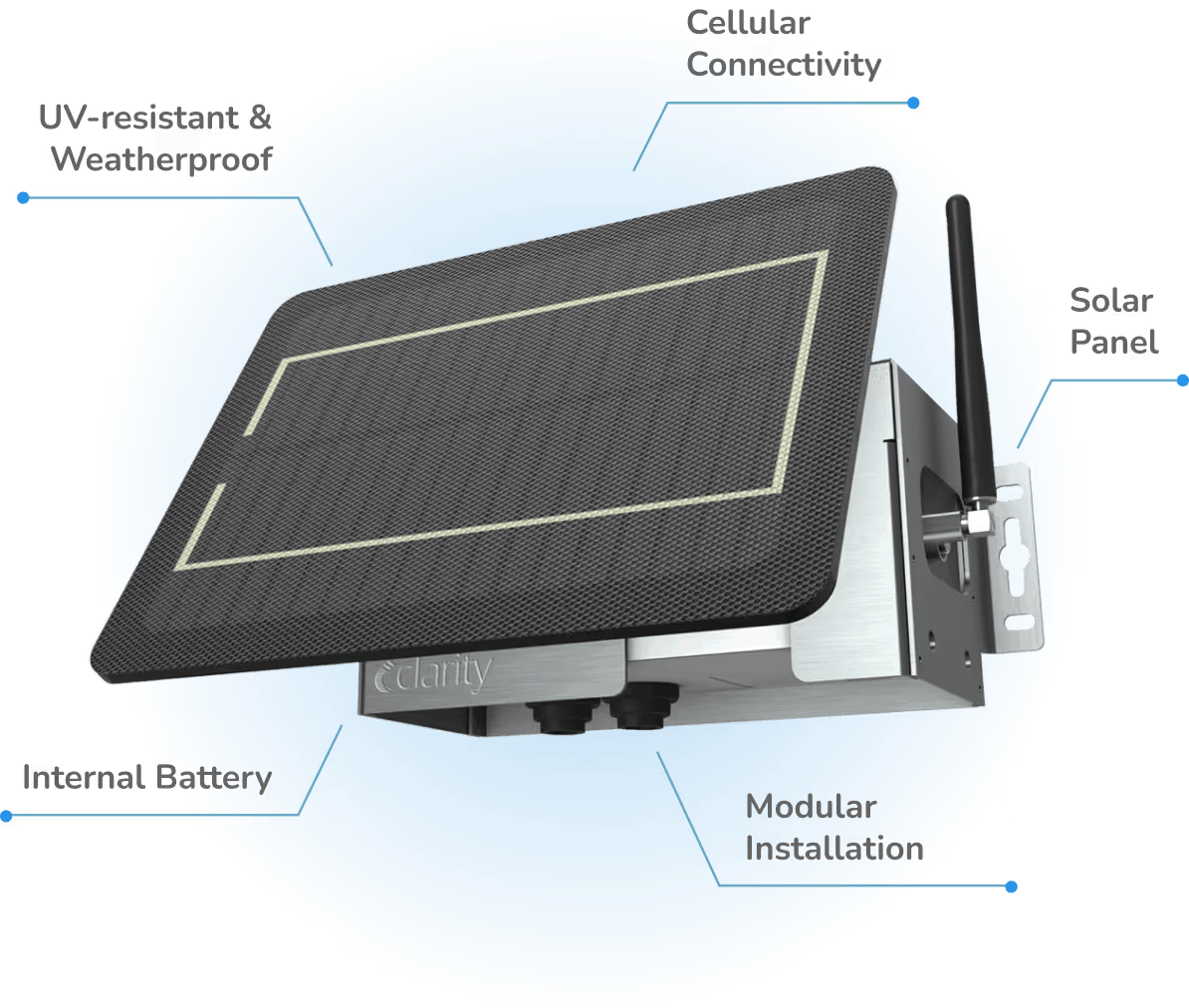
Modern ambient air quality monitoring systems are more than just the sensing technology; they combine many different complementary components, including:
- Sensor hardware
- Power (solar panel or wired connection)
- Connectivity (Wifi or cellular connectivity)
- Calibration and data validation
- Data storage, platform, and reporting (such as the Clarity Cloud)
- Weather protection
Continuous ambient air quality monitoring systems & stations
Regulatory-grade FRM monitoring stations deploy semi-continuous monitoring. This means that air quality samples are collected daily or every few days to develop 24-hour average data. Regulatory-grade FEM monitoring stations deploy a kind of continuous monitoring where measurements are taken using automated sensing equipment, usually on an hourly basis.
Low-cost air quality sensors usually take measurements even more frequently, logging air quality measurements as often as every few seconds or minutes. Because of this frequent logging, air quality sensors supply continuous air quality measurements with high temporal resolution that the public can access in near real-time.
Some helpful, relevant definitions include:
- Discrete sampling: a “manual” method of sampling, typically using an air filter to trap ambient air for a defined period of time. The filter is then taken to a laboratory to be analyzed. This can be useful for detailed chemical insights.
- Continuous air quality measurements: Air pollution monitoring through automated sensing equipment and low-cost sensors can provide more real-time data that helps keep the public informed and protected in changing air conditions.
- Data telemetry: The automated collection and transmission of data and air quality measurements from individual sensors to a central system for analysis. This technology supports near real-time data collection.
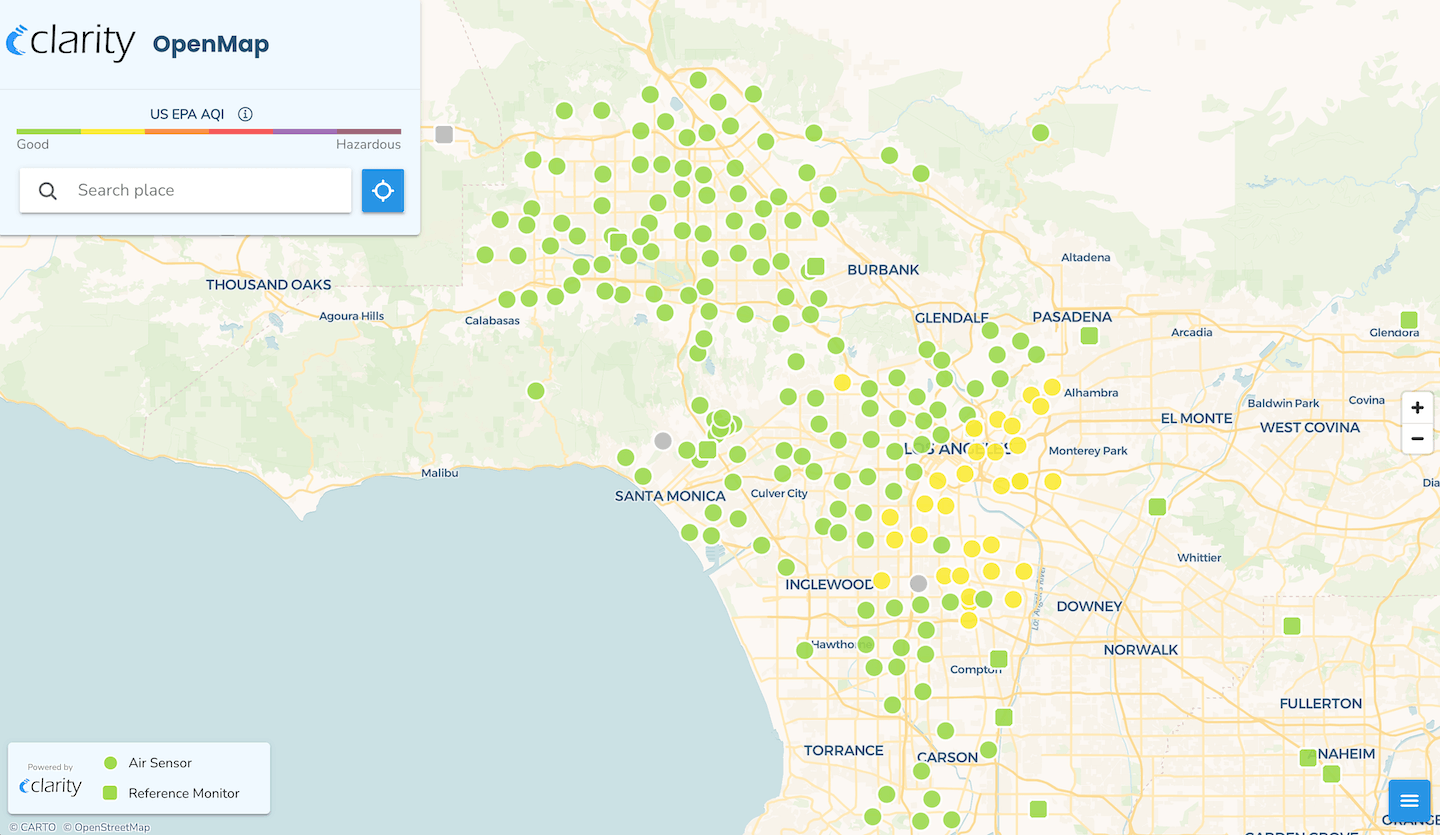
Real-world example: Ambient air monitoring in action
Cities around the world are starting to implement robust air quality monitoring systems beyond what has traditionally been required for regulatory purposes. Perth, Australia, hosts a network of 200 Clarity Node-S air quality sensors stationed strategically around the city. Implemented by the Royal Automobile Club of Western Australia (RAC WA), the Air Health Monitor network keeps communities, government officials, industry, and RAC WA members informed with hyperlocal air quality data.
The solar-powered Node-S air quality sensors that serve as the foundation of the Air Health Monitor measure both fine particulate matter (PM2.5) and nitrogen dioxide (NO2). The RAC WA has also integrated 10 Black Carbon Modules across the Perth and Peel region to capture data on significant traffic-related air pollutants. The Air Health Monitor network exists alongside regulatory-grade air quality monitors, demonstrating that traditional air quality monitors can be combined with low-cost sensor networks to create a more holistic picture of ambient air pollution.
This is the first time in Australia that the community can access localized, hour-by-hour information about the air quality in their area via an extensive network with sensors and data modeling."
— Rob Slocombe, Group CEO, Royal Automobile Club of Western Australia
Modern ambient air quality monitoring with Clarity
With modern air quality monitoring technology, cities and agencies can now combine the accuracy of regulatory-grade monitors with the real-time data, low cost, and high temporal/spatial resolution of air sensors to create a comprehensive ambient air quality monitoring system. Clarity’s Sensing-as-a-Service bundles advanced hardware, expert calibration, and intuitive data storage and handling capabilities all within a single subscription. Partner with Clarity to implement a cutting-edge air quality monitoring network and safeguard clean air.