
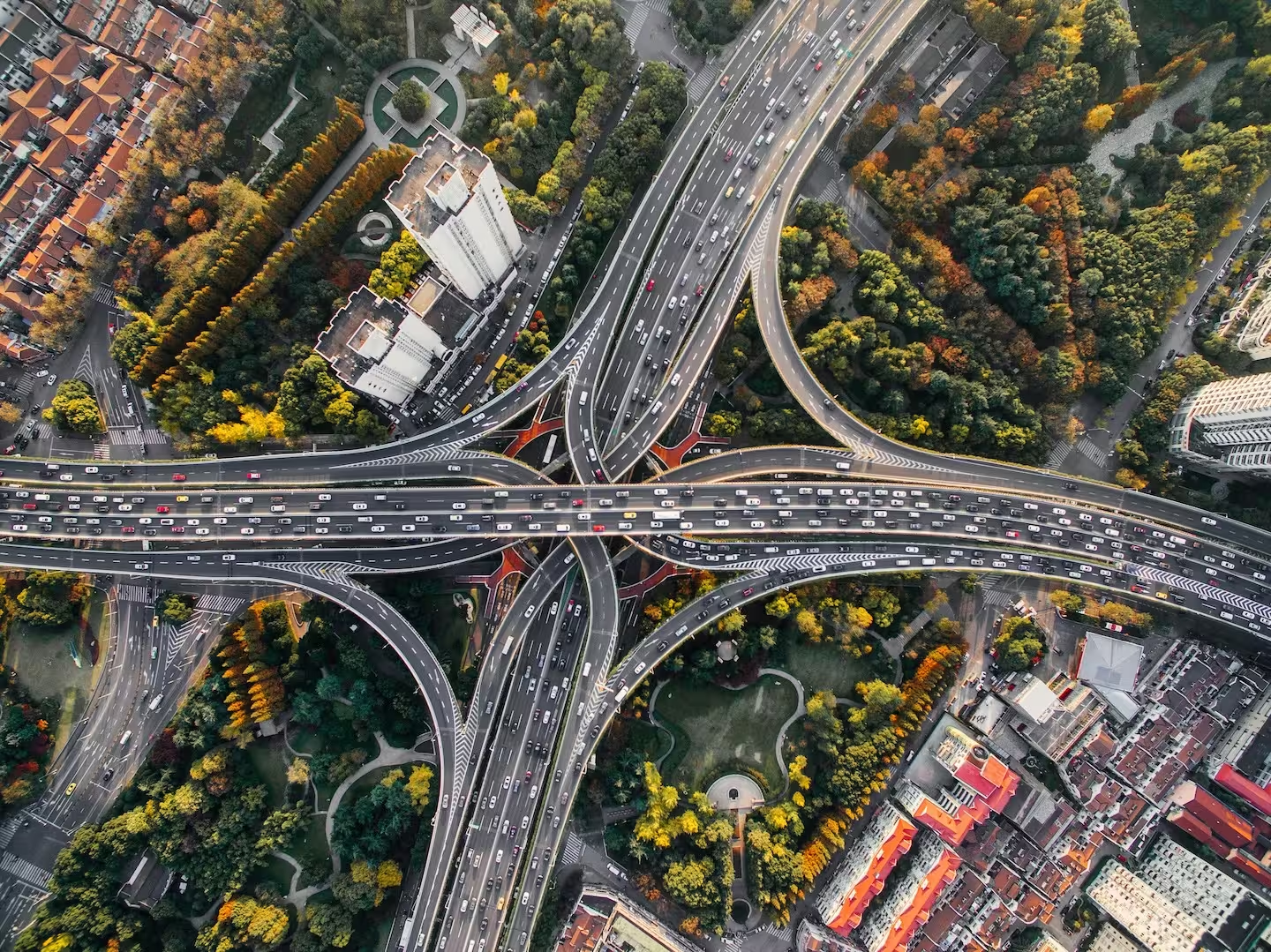
Image provided by Jacek Dylag via Unsplash.
TL;DR: Traffic-related air pollution (TRAP) comes from vehicle exhaust and non-tailpipe sources like brake and tire wear. It includes air pollutants such as particulate matter, nitrogen oxides, carbon monoxide, and VOCs, which harm both human health and the environment. Reducing TRAP requires cleaner transportation, better vehicle practices, and strong policy action.
What is traffic-related air pollution (TRAP)?
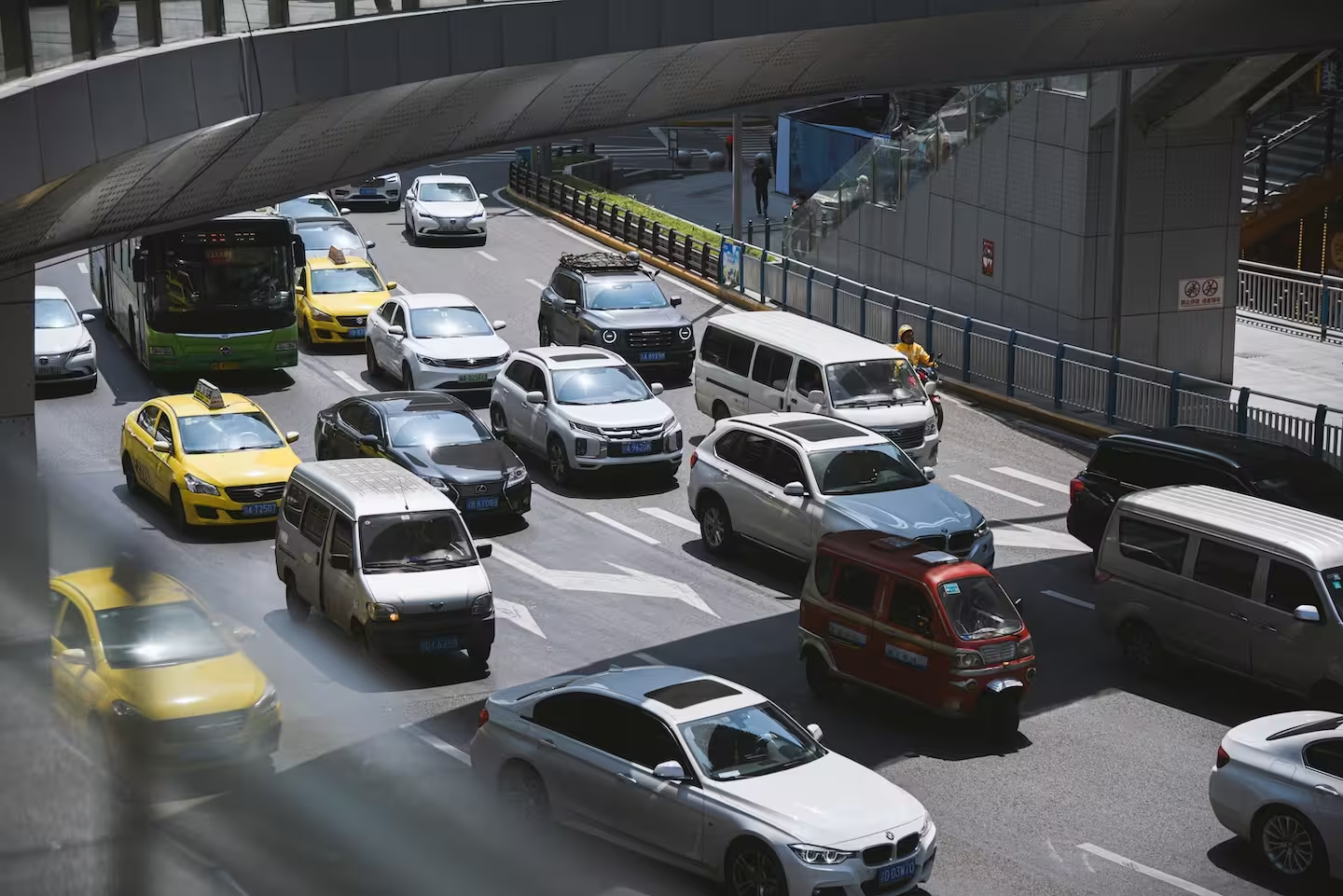
Traffic-related air pollution (TRAP) refers to the air pollution emissions from vehicle traffic. It includes both tailpipe or exhaust emissions and non-tailpipe emissions from things like brake and tire wear. It can even include emissions from road dust and evaporation of fuels from engine components. TRAP emissions are often centered around urban hotspots, and they contribute to smog and climate change.
Global vehicle numbers are set to triple or maybe even quadruple in the coming decades, particularly in low- and middle-income countries, making TRAP emissions important to address now.
What specific air pollutants make up traffic-related air pollution?
TRAP is not made up of just one air pollutant; it is the combination of many different air pollution emissions. TRAP emissions include particulate matter (PM), black carbon (BC), ultrafine particles (UFP), carbon monoxide (CO), nitrogen dioxide (NO2), polycyclic aromatic hydrocarbons (PAHs), and volatile organic compounds (VOCs), like benzene.
Traffic-related particulate matter (PM) emissions
Particulate matter (PM) refers to any solid or liquid particles suspended in the air. Particulate matter is often classified based on its size. Coarser particles have a diameter of 10 micrometers or smaller (PM10), fine particles have a diameter of 2.5 micrometers or smaller (PM2.5), and ultrafine particles have a diameter of 100 nanometers or less (UFP). Even coarse particles are small enough to be inhaled.
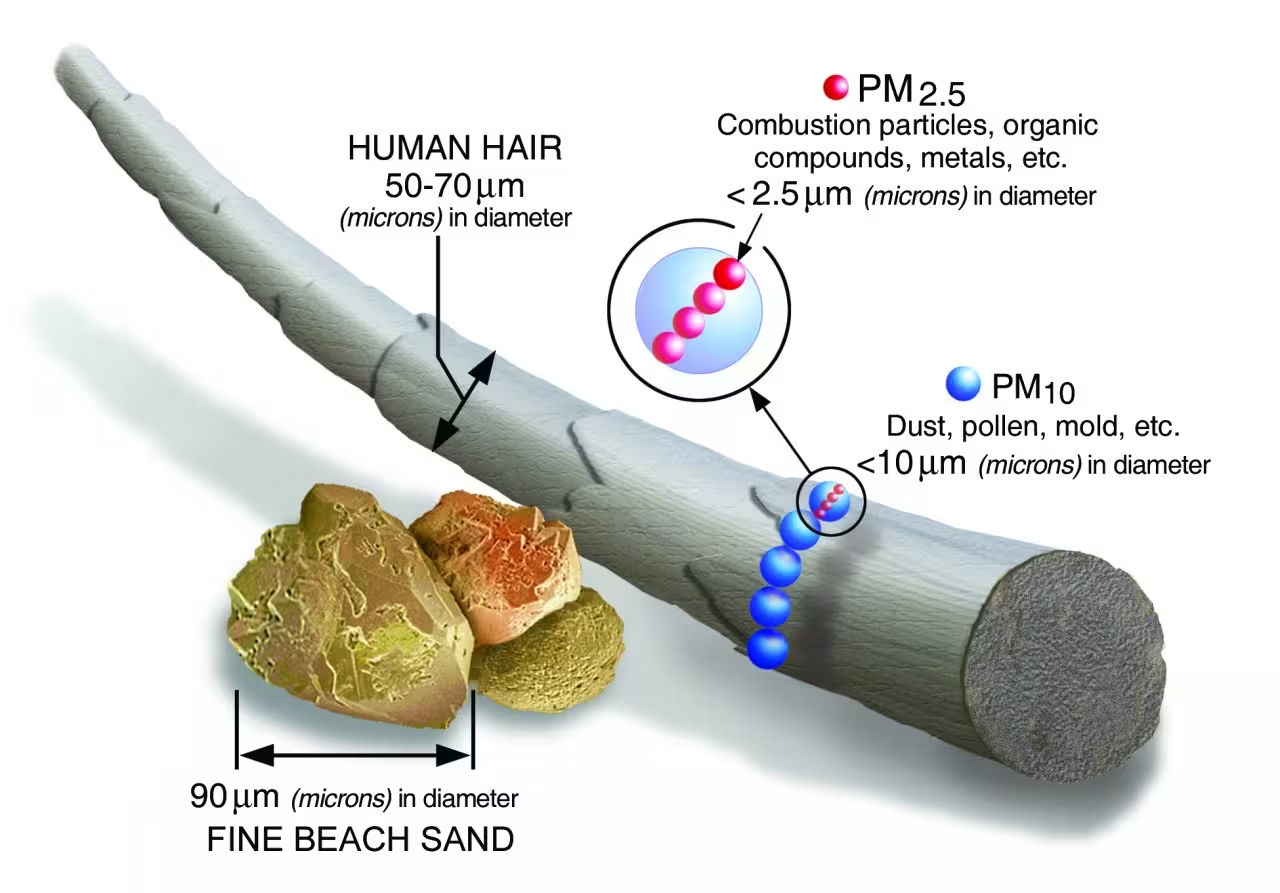
Particulate matter is not made up of any one substance, but multiple substances. When breathed in, these particles damage human health. PM2.5 particles can penetrate deep into the lungs and even the bloodstream.
Vehicle exhaust from burning fossil fuels emits particulate matter. Soot, or Black Carbon (BC), is a type of particulate matter that is emitted by vehicle exhaust. BC is especially harmful to human health and contributes to climate change. In fact, it has a warming effect that is 460 - 1,500 times stronger than carbon dioxide per unit mass.
Particulate matter can also come from non-tailpipe emissions. When driving a car, the friction between the tires, brakes, clutches, and the road results in wear and tear, producing particulate air pollution. Non-tailpipe PM emissions are significant. Technical advancements and engine restrictions have been decreasing exhaust air pollution, but non-tailpipe emissions remain less regulated. For this reason, even electric vehicles can produce PM air pollution on the road.

Interestingly, particulate matter can be a secondary air pollutant as well as a primary pollutant. Particulate matter can form in the atmosphere from chemical reactions involving volatile organic compounds, ammonia, nitrogen oxides, and sulfur dioxide.
Traffic-related carbon monoxide (CO) emissions
Carbon monoxide (CO) is a colorless, odorless, and poisonous gas. Carbon monoxide is formed by the incomplete or inefficient burning of carbon-based fuels. This means that fossil fuel combustion, including the burning of gasoline, produces CO.
When inhaled, this gas reduces the blood’s ability to carry oxygen. Although people are unlikely to encounter very high levels of CO outdoors, even low levels of carbon monoxide can be highly dangerous, especially for people with certain types of heart disease.
Traffic-related volatile organic compounds (VOCs) emissions
Volatile organic compounds (VOCs) are compounds that have a high vapor pressure and low water solubility. Volatile organic compounds can come from vehicle tailpipe emissions. In particular, gasoline vehicles emit most of the motor vehicle VOC emissions. The toxic air pollutants benzene, acetaldehyde, and 1,3-butadiene are some of the VOCs emitted from cars, trucks, and buses.
Traffic-related nitrogen oxides (NOx) emissions
Nitrogen oxides (NOx) refer to a subgroup of gaseous air pollutants formed from nitrogen and oxygen. This group consists of a family of seven compounds. However, NOx is often used as a shorthand to refer to two of these compounds in particular, which are nitric oxide (NO) and nitrogen dioxide (NO2). The transportation sector is responsible for roughly 45% of NOx total emissions inventory in the United States.
Nitric oxide and nitrogen dioxide are closely related. Nitric oxide (NO) is produced during combustion, including vehicle exhaust from burning fossil fuels. The heat produced by combustion allows the nitrogen to react with oxygen to produce nitric oxide.
While nitrogen dioxide (NO2) is also produced in combustion, it is to a lesser degree. However, in a short time, nitric oxide (NO) oxidizes to form nitrogen dioxide (NO2). Nitrogen dioxide is the most prevalent form of NOx in the atmosphere, creating the visible yellowish-brown color in smog.
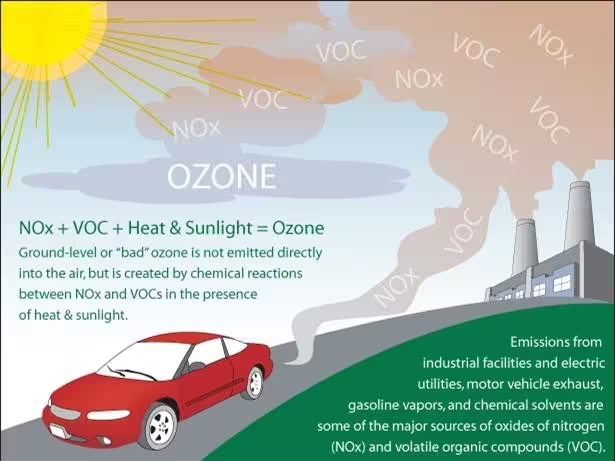
When sunlight reacts with both volatile organic compounds (VOCs) and nitrogen oxides, it forms ground-level ozone. While ozone (O3) is helpful in the upper atmosphere, ground-level ozone is harmful to both human health and the environment.
What are the consequences of traffic-related air pollution?
A review of over 300 relevant studies found an overall high or moderate-to-high level of confidence in an association between long-term exposure to TRAP and several adverse health outcomes. The Canadian government concluded that exposure to traffic-related air pollution:
- Causes lung cancer in adults
- Causes the development and worsening of asthma symptoms in children
- Causes premature death
- Likely reduces lung function
- Likely causes childhood leukemia
- Likely causes premature death due to circulatory system diseases and coronary heart diseases
TRAP has additionally been linked to hypertensive disorders in pregnant women and acute lower respiratory infections in children. TRAP air pollutants can seep indoors and get inside cars, affecting the people inside. Every year in Canada, traffic-related air pollution contributes to an estimated 1,200 premature deaths.
Looking forward: Reducing TRAP emissions
Traffic-related air pollution emissions can be reduced by using cleaner modes of transportation, such as biking, walking, public transit, and carpooling. You can avoid any unnecessary vehicle idling, as well as needless heavy braking and acceleration. Properly maintaining your vehicle can also help.
Government policies and regulations also play a major role in reducing TRAP emissions. Governments can shift to lower-emission fuels and vehicles, implement mandatory inspections, establish public transportation, and create low-emission zones. By 2030, the United States EPA air quality emission standards for vehicles are projected to annually prevent 40,000 premature deaths and 34,000 avoided hospitalizations.
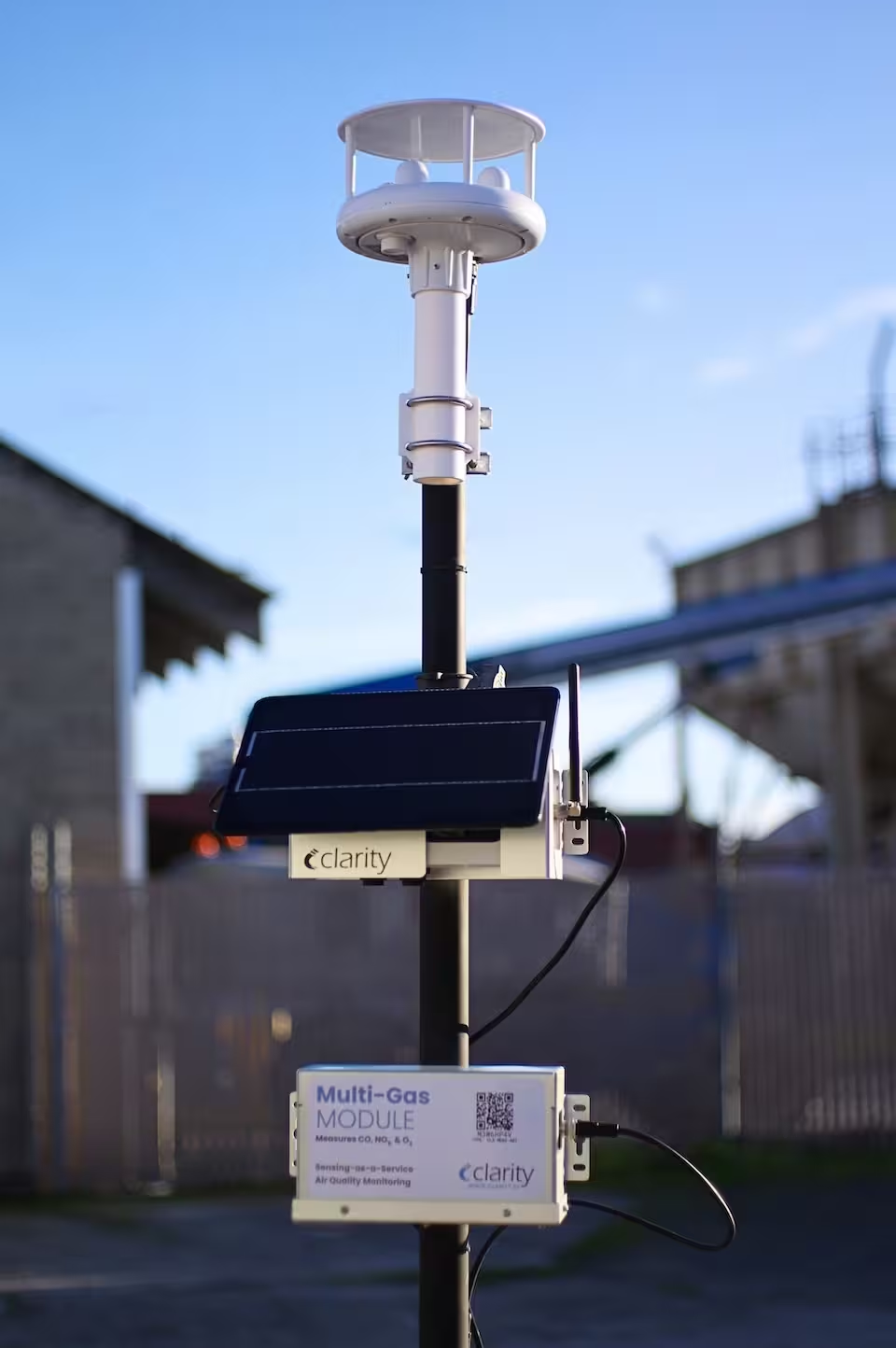
Air quality monitoring can help raise public awareness of air pollution, giving individuals the real-time information they need to protect themselves and equip them with the data to advocate for policy action. Air quality sensors can also support policy and regulation by detecting violations and monitoring the effectiveness of specific legislation. Partner with Clarity today to implement a low-cost air quality sensor network.