
This image is provided by Joshua Tsu via Unsplash.
TL;DR: Particulate matter consists of tiny particles suspended in the air that can be inhaled and cause serious health problems. These particles also reduce visibility by absorbing and scattering sunlight, creating haze that dulls colors and obscures distant scenery. Sources include fossil fuel combustion, wildfires, and dust. Particulate Matter air pollution can travel hundreds of miles from its emission sources. Reduced visibility affects national parks, tourism, ecosystems, and even plant growth.
What is particulate matter air pollution?
Particulate matter refers to any solid or liquid particles suspended in the air. While some of these particles are large enough to be seen with the naked eye, many are far smaller. Particulate matter with a diameter of 10 micrometers or less (PM10) is small enough to be inhaled. Within this category, particulate matter with a diameter of 2.5 micrometers or less (PM2.5) is particularly dangerous because it can penetrate deeper into the human lungs and even enter the bloodstream.
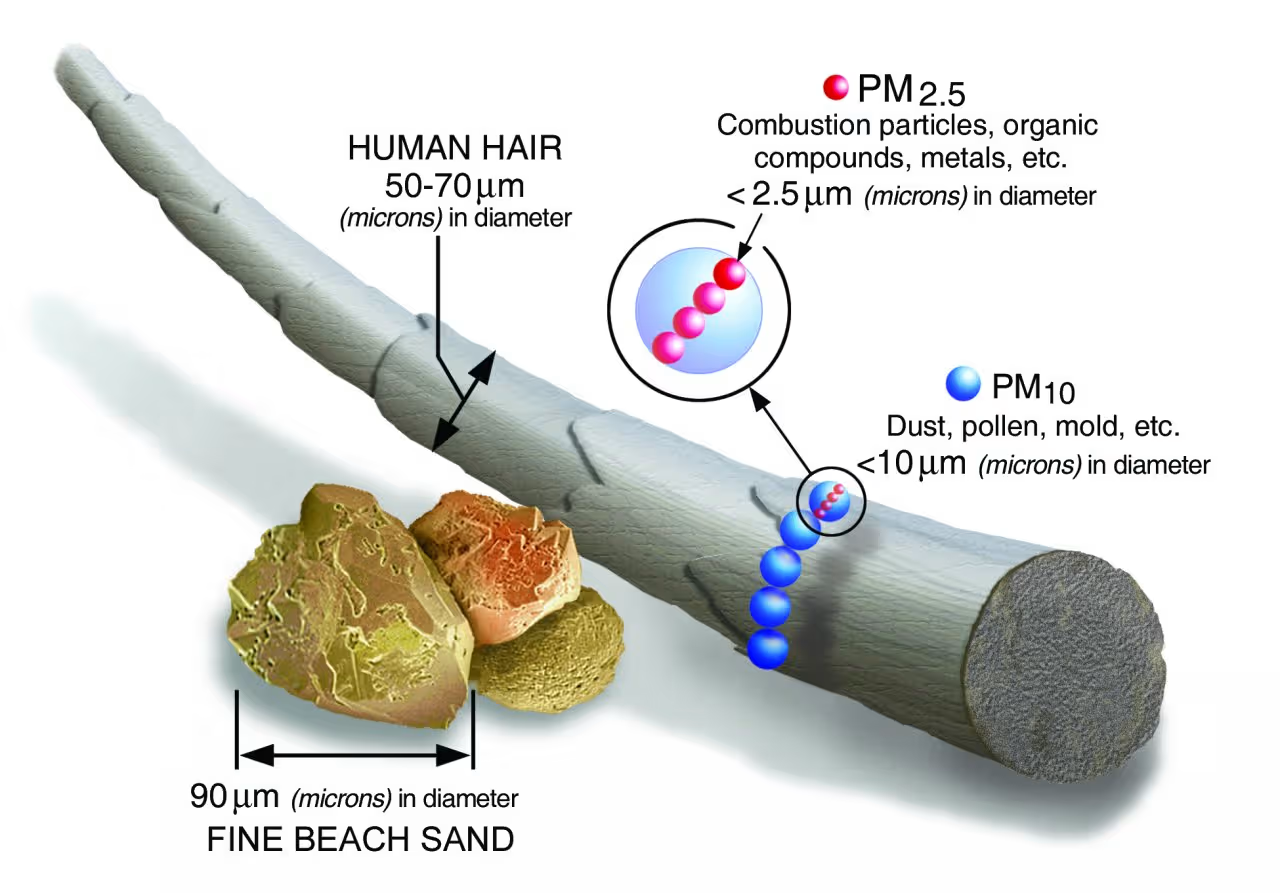
Particulate matter can cause significant damage to human health. Short-term exposure can result in increased infant mortality and increased hospital admissions for heart attacks and COPD. Long-term exposure increases the likelihood of a heart attack, stroke, lung cancer, and even diabetes and alzheimer’s.
How does particulate matter reduce visibility?
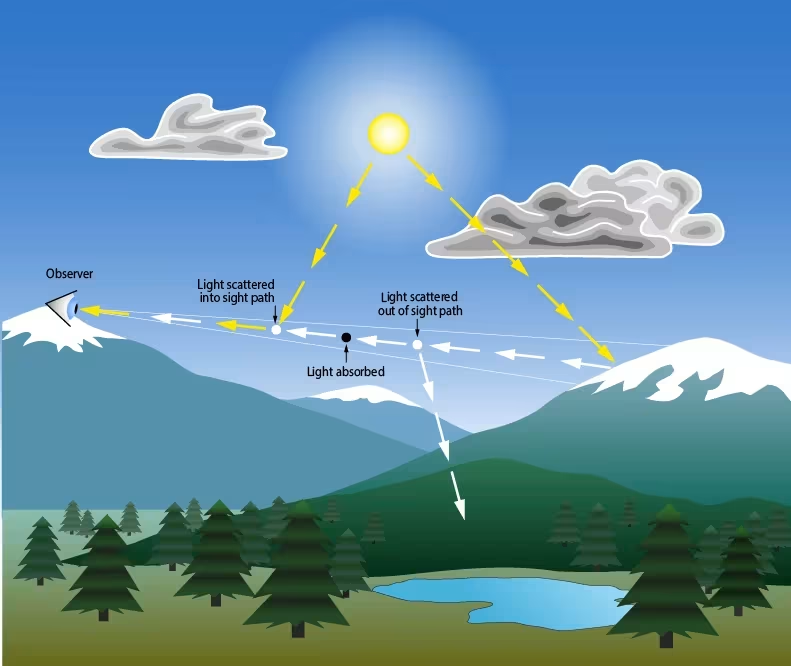
When sunlight encounters the tiny particles in the air, it can be partially absorbed or scattered away, dulling colors, reducing clarity, and creating the haze that we see. The greater the number of particulates in the air, the more light gets absorbed and scattered.
Some particles can scatter more light than others. For instance, sulfates tend to scatter light very efficiently, especially when the air is humid. Particles that have diameters between 0.1 and 1.0 micrometers are the most effective at reducing visibility per unit of aerosol mass.
Visibility-decreasing particulates can come from both natural and anthropogenic sources. Some of them are emitted directly into the atmosphere, while others are formed in the air from chemical reactions. The latter category typically forms as a result of fuel combustion, and these air pollutants can travel hundreds of miles away from the original emission sources. Naturally occurring particulates can include windblown dust. As wildfires become more frequent across the United States and other parts of the world, they are also a more common source of visibility-reducing particles.
While ambient haze frequently hangs over cities as a result of smog, reduced visibility from particulate air pollution can occur far away from urban areas. One report evaluated 417 United States national parks and found that for 370 of them (89%), visibility impairment was either a moderate or significant concern. On average, national park visitors were missing out on 50 miles of scenery.
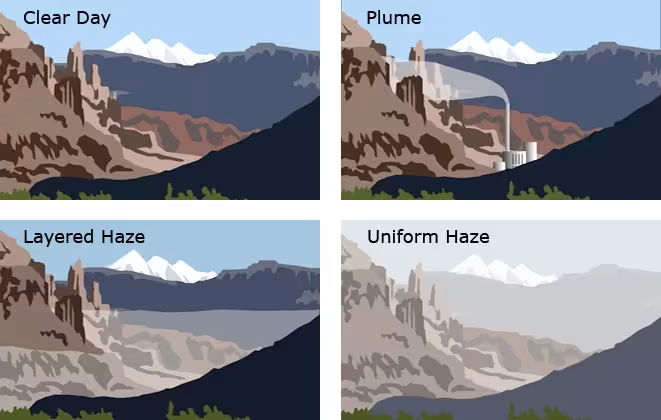
According to the EPA, the visual range has decreased from 90 miles to 15-25 miles in Eastern parks and from 140 miles to 35-90 miles in Western parks. Most of this air pollution did not originate within the parks themselves, but traveled there from distant fossil fuel combustion.
What are the consequences of visibility reduction?
In addition to containing particulates that are harmful to human health, visibility reduction can have serious consequences for tourism. A systematic review of 26 papers analyzing the impact of air quality on tourism found that much of the literature indicates that decreases in air quality lead to decreases in tourism flows or a lower likelihood of visiting certain destinations.
Air quality ranks high among factors that tourists take into account when deciding where to travel. One study looking at the effect of air pollution on foreign tourists visiting China estimated that travelers who encountered air pollution during their trip were 92.857% less likely to revisit a specific city and 93.421% less likely to revisit China.

Tourism reductions can have significant economic repercussions in both the United States and the world. The travel and tourism industry contributed $2.3 trillion to the US economy in 2022 and supported 9.5 million jobs. In 2024, travel and tourism accounted for $10.9 trillion of global GDP, representing 10% of the global economy.
Visibility-reducing particulates can also have negative outcomes for the environment. Nitrates and sulfates contribute to acid rain, which harms both ecosystems and man-made structures. Additionally, Particulate matter can have a direct impact on plant life. The microstructure on leaf surfaces promotes particulate matter deposition. However, once particulate matter lands on leaves, it can affect the plant’s ability to photosynthesize as effectively, decreasing plant growth. On a large scale, this can have a significant ramification for ecosystems.
Looking forward
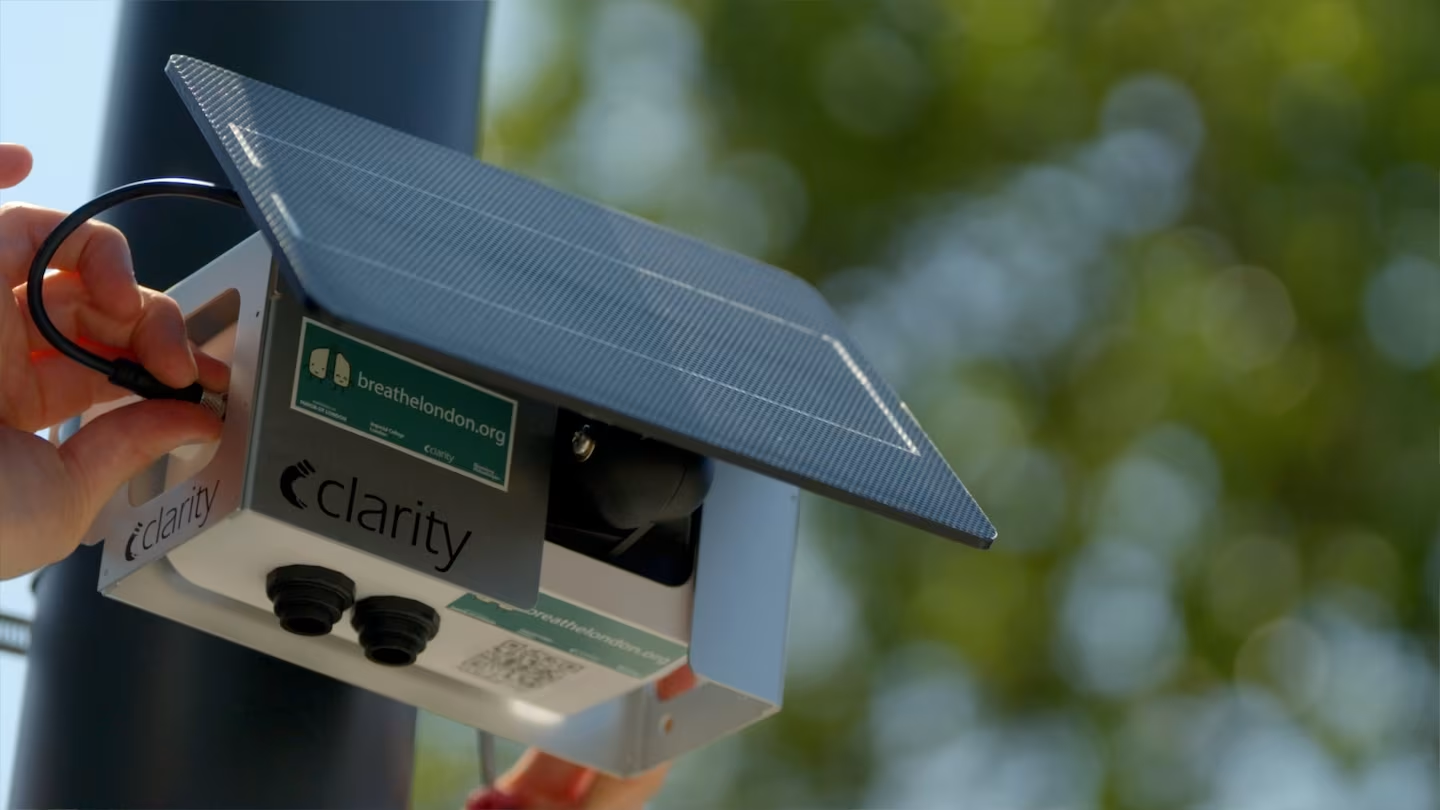
Both seen and unseen air pollution can negatively affect public health and the environment. However, air quality monitors can help raise awareness and support air pollution regulation. You can partner with Clarity to implement an air quality sensor system and help promote cleaner air.