Monitoring Technology
Announcement
September 16, 2026
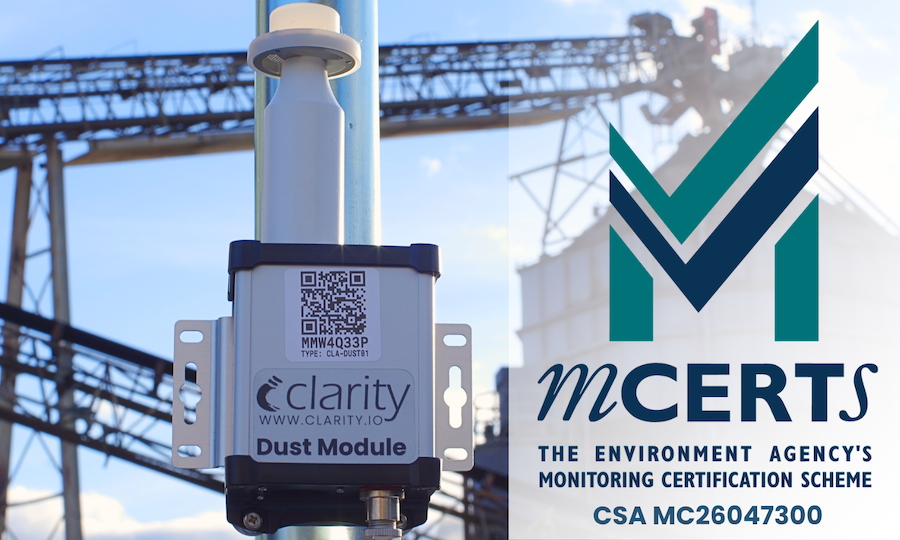
Clarity Dust Module earns MCERTS certification for PM10: First indicative monitor approved for elevated dust concentrationsThe Clarity Dust Module is the first indicative PM10 monitor MCERTS-certified at the elevated dust concentrations found on construction and industrial sites.
Article
Closing the Global Air Quality Data Gap: A Modern Approach to Air Quality MeasurementAir pollution poses a severe global health and environmental threat, making accurate and open air quality data crucial. Yet, many governments do not monitor or share air quality measurements, largely due to a lack of funding and technical expertise.
Article
Building Resilient Communities Through Effective Air Pollution MeasurementDiscover how cutting-edge air quality monitoring technologies empower communities to tackle the silent threat of air pollution, paving the way for healthier, more resilient environments.
The Potential of Low-Cost Sensors for Comprehensive Air Quality Management
Low-cost air quality sensors are revolutionizing environmental monitoring, offering precision and accessibility. Dive into how these tools are paving the way for proactive, comprehensive air quality management.
Article
The global impact of air quality monitoring: Connecting local actions to global solutionsThough air pollution is an issue that is global in scale, action at the local level can be impactful in enacting tangible change and encouraging more widespread action. Local projects can serve as models for successful work at a global scale — such as how the Breathe London air quality monitoring network is now being used as a framework for the Breathe Cities program.
Article
Air Quality Management 2.0: How researchers drive actionable air quality intelligence with open data and analysisCross-stakeholder collaboration, like that with researchers and other data analysts under Air Quality Management 2.0, helps expand air quality data analysis capacities, collect more meaningful data insights, and drive action for cleaner air.
Article
Air Quality Management 2.0: The role of air quality monitoring companies and air pollution measurement technologyAir quality monitoring technology must be leveraged effectively in order to bring about meaningful data insights, and stakeholders such as communities and regulators doing so under Air Quality Management 2.0 can help establish more resilient air quality monitoring networks.
Article
Air Quality Management 2.0: How community-led air pollution initiatives turn insights into actionCommunity partnerships are a key component of Air Quality Management 2.0, as collaborative work with communities directly affected by air pollution helps to ensure effective and sustainable air quality improvement.
Article
Air Quality Management 2.0: What is the future of air quality management for large cities — and what role do air quality sensors play?Many urban areas struggle with air pollution due to the number and density of air pollutant sources in cities. Fortunately, there are a number of ways to improve cities' air quality, from establishing stringent air quality targets to enacting clean air zones, and innovative projects like Breathe London and Breathe Cities are paving the way for this work.
Article
Why real-time air monitoring matters for 2026 wildfire seasonResearch shows that wildfire smoke can travel thousands of miles and, in addition to its well-known detrimental impacts on human health in the short term, may also have cumulative effects. Consequently, it is essential to establish a real-time air quality monitoring network to understand pollution exposure during wildfire season.
Article
Monitoring in the face of fire season: Takeaways from our Wildfire, Smoke, and Air Quality WebinarOur recent webinar highlights the innovative work of our partners that has been used to establish high-resolution air quality monitoring networks and collect, communicate, and forecast air quality information during wildfire season.