Monitoring Technology
Announcement
September 16, 2026
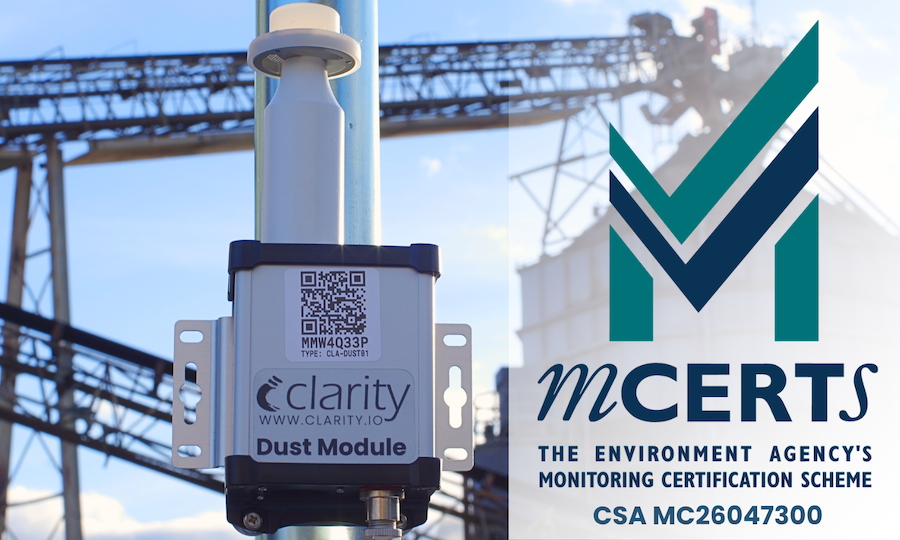
Clarity Dust Module earns MCERTS certification for PM10: First indicative monitor approved for elevated dust concentrationsThe Clarity Dust Module is the first indicative PM10 monitor MCERTS-certified at the elevated dust concentrations found on construction and industrial sites.
Article
US EPA Air Sensor Guidebook Series: How to select the right air quality monitoring equipment for your project By considering various low-cost sensor specifications, like sensor accuracy, ease of use, and data analysis capabilities, you can choose the most appropriate technology for your air quality monitoring project.
Article
What is air quality monitoring and why is it important?We delve into the purpose and importance of air quality monitoring, the types of monitoring technologies that exist, and the health and environmental consequences of air pollution.
Article
Takeaways from our webinar on air sensor network designThe second webinar in our Clean Air Month series highlights the important factors to take into consideration when effectively planning air sensor network design.
Article
Why we need resilient infrastructure — and air quality monitoring networks — in the face of climate change and accelerating environmental disastersAs climate change progresses and environmental disasters that contribute to air pollution intensify, it is more important than ever to have resilient air quality monitoring.
Article
What Makes a Measurable Impact on Air Pollution? How Low-Cost Air Sensors Are Enabling a New Paradigm of Air Quality Policies and InterventionsAs air quality monitoring technology progresses to allow for more localized, specialized measurement of air pollutants, air quality policy has also become more targeted.
Article
The myriad use cases for low-cost air quality sensorsLow-cost sensors can be used in a wide range of different air quality monitoring projects, either alone or in conjunction with reference-grade air quality monitors.
Article
Best practices for effectively communicating data from low-cost air quality sensorsCommunicating air quality data in an effective, actionable way is an essential part of using air quality data to enact policy and behavioral change to improve the air.
Article
How open access to air pollution data is paving the way for greater air quality awarenessAn increasing number of platforms are enabling open access to air quality data, which is important for increasing public awareness and supporting air improvement initiatives.
Air Quality Measurement Series
Air Quality Measurement Series: Wind Speed and DirectionAs we continue our Air Quality Measurements Series, we discuss how measuring wind speed and direction are vital to understanding the complete picture of air pollution.
Air Quality Measurement Series
Air Quality Measurement Series: Nitrogen DioxideIn the second installment of our Air Quality Measurements Series, we cover nitrogen dioxide (NO₂) and how it is tied to poor air quality, human health, and environmental damage.