
Part of the image above is provided by Josh Olalde via Unsplash.
TL;DR: UK construction sites can use IAQM guidance to match dust monitoring to their risk level, respond promptly when readings exceed site action levels, and set controls in a dust management plan approved by the local planning authority. IAQM has found that some low-cost sensors under-report PM10 at the elevated concentrations where action is most needed. Project managers should carefully select air quality monitors that are MCERTS-certified to accurately report dust levels even at high concentrations.
What is the IAQM construction dust guidance?
The Institute of Air Quality Management (IAQM) is a member-led organization that exists within the Institute of Environmental Sciences. Although it is not a government body, the IAQM is an important mouthpiece for air quality professionals in the UK. IAQM dust guidance is well respected and serves as the guideline for the dust regulations implemented by many local authorities across the UK. IAQM dust guidance includes specific support on how to manage and mitigate dust emissions from construction, demolition, and other activities.
Relevant IAQM construction dust guidance documents include:
- Air Quality Monitoring in the Vicinity of Demolition and Construction Sites (2018 V1.1): This document provides guidance on air quality monitoring near demolition and construction. It is meant to be taken into account alongside the 2014 Guidance on the assessment of dust from demolition and construction. However, there is updated guidance on the assessment of demolition and construction dust below.
- Assessment of dust from demolition and construction (2024 V2.2): Unlike the previous document, this one focuses on dust assessment rather than monitoring, making it slightly less relevant to this article. This document provides guidance for demolition and construction dust planning, risk assessment, and mitigation measures.
- 2025 Position Statement on the use of low-cost sensor systems for PM10: This statement provides valuable information on the role and potential limitations that low-cost sensors have in monitoring coarse particulate matter dust (PM10) at construction sites.
These guidance documents are more than just theoretical; they have real influence. IAQM dust guidance influences government policy and planning. Construction stakeholders are often required to adhere to this guidance in order to meet local planning conditions.
How site risk sets your monitoring level
Not all construction activities require the same level of monitoring. IAQM dust monitoring guidance suggests certain monitoring activities that correspond to each site’s risk category. The following table uses information from the 2018 IAQM dust guidance along with the 2024 IAQM dust assessment guidance.
The IAQM assessment of dust from demolition and construction (2024 V2.2) separates construction activity into four categories: demolition, earthworks, construction, and trackout. Each activity can consist of a large, medium, or small dust emission magnitude with specific examples. Areas are also assigned sensitivity parameters, which can vary based on a variety of factors, from nearby hospitals to local plant species.
The risk of a site depends on the combination of all of these different categories as outlined in the 2024 document. The risk of a site can change over time as activities and area sensitivity fluctuate throughout the project.
Choosing the right construction dust monitor
There are many different air quality monitoring techniques available. “Active” (powered) samplers measure specific dust fractions on a continuous basis, whereas simpler “passive” (unpowered) samplers measure dust flux, dust deposition, and soiling.
Active samplers consist of both reference methods and indicative methods. The former provide the most accurate measurements. Reference methods and their equivalents can be used to determine compliance with limit values, air quality objectives, health-based bandings, and Data Air Quality Indicators. However, reference methods can be very expensive.
Indicative methods include light-scattering instruments, many of which the Environment Agency has certified under the MCERTS scheme for indicative ambient particulate monitoring. These are less accurate than reference methods, but tend to be more affordable, often consisting of low-cost monitoring methods. They cannot be used for compliance reporting against air quality limit values, but they can reliably detect an exceedance of the site action level in real-time, enabling quick dust suppression.
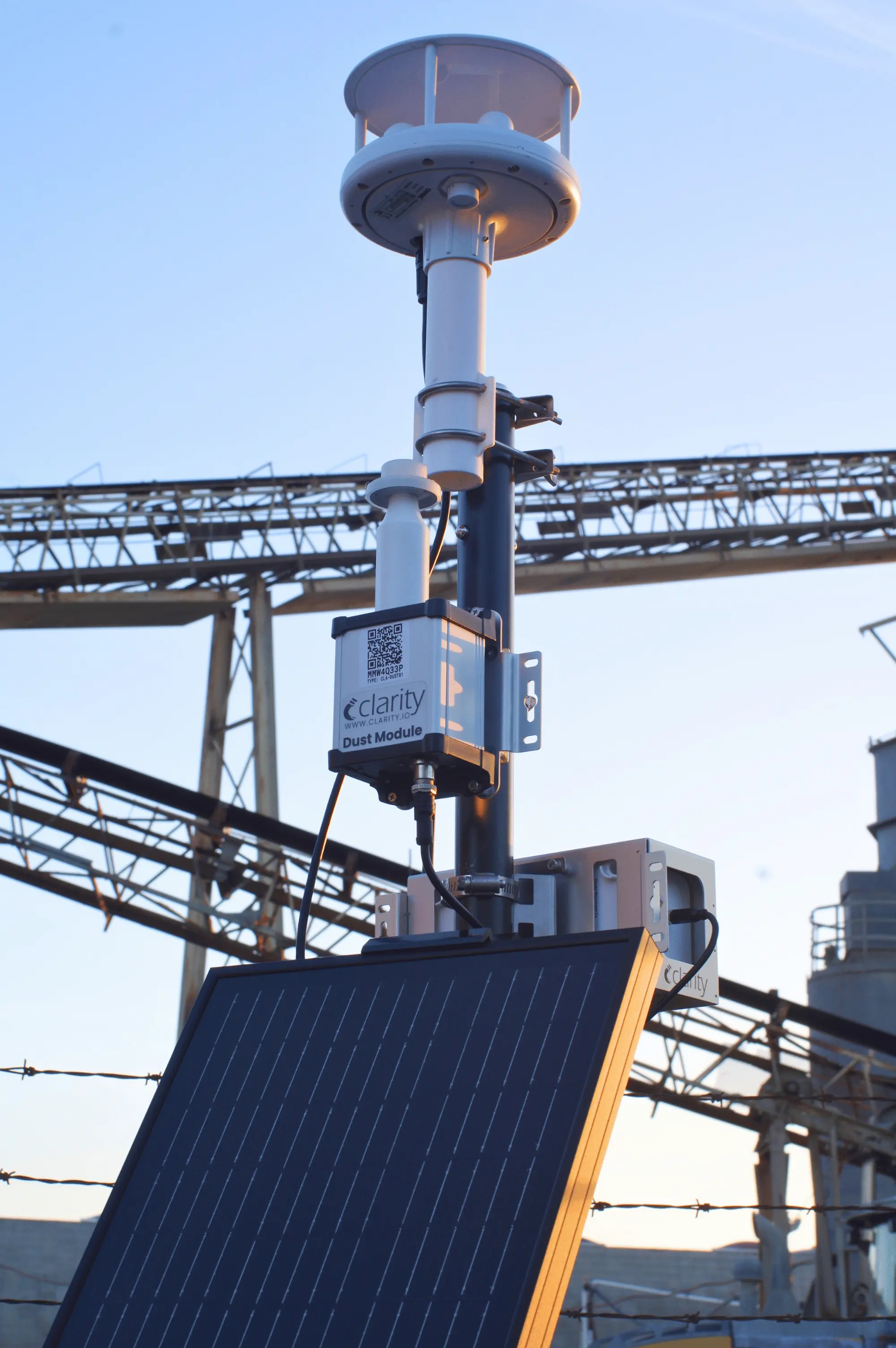
When choosing the right dust monitor for your construction project, there are several factors that you should consider:
- Is there a requirement for real-time monitoring?
- Is the monitoring expected to measure compliance with air quality objectives?
- Does the monitoring system have proper QA/QC?
- Does the indicative method have a heated inlet?
- Are there reliable meteorological data for the site?
- Does the site include access to electrical power?
IAQM dust monitoring site action levels
Site action levels are the pollution thresholds above which further investigation or action is initiated. Sometimes, emissions need further examination, data analysis, or suppression.
A King’s College London report evaluated measurement data from nine construction sites using reference-equivalent samplers and analyzed at least 1.8 million data points. The report established a recommended Site Action Level of 190 μg/m3 measured as a one-hour mean PM10 concentration. The IAQM guidance endorses this recommendation.
The 2018 IAQM guidance recommends the action levels in the table below. Page 18 of the same guidance document provides more information on dust flux action levels, which are not specified below.
In 2025, the IAQM released a position statement on using low-cost sensor systems (also known as IAPM, for indicative ambient particulate monitor) for PM10. This statement noted an issue with certain IAPM systems: many are designed for general ambient PM10 concentrations and under-report dust levels near or above 190 μg/m3, the generic action level for PM10 construction activities.
MCERTS product certification still does not guarantee IAPM suitability for measuring higher PM10 concentrations, typical of construction and demolition activities.
To address this, the CSA Group, which is responsible for MCERTS certification, withdrew stated certification ranges from its certificates. Manufacturers can now extend the scope of certification by submitting field test evidence from locations with high dust concentrations. This allows project managers to better understand whether a particular IAPM is appropriate for monitoring elevated dust concentrations and construction activities.
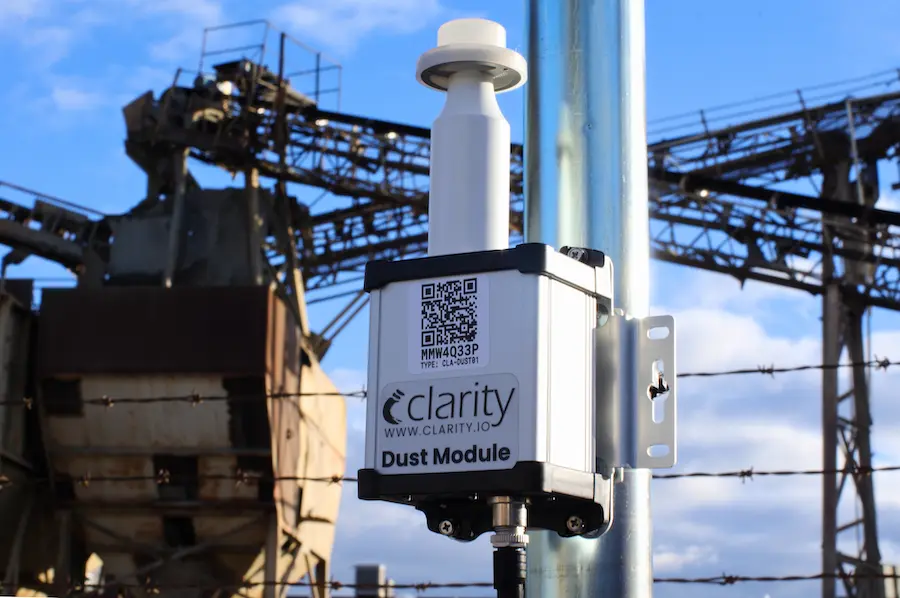
Clarity’s Dust Module: The first IAPM MCERTS-certified for elevated PM10
On September 15th, 2026, Clarity’s Dust Module received MCERTS product certification with a PM10 performance range of 0 to 374µg/m³ based on the hourly concentrations encountered during field testing. This range, which is nearly twice the IAQM action level of 190µg/m³, covers the dust levels usually found at construction sites. To our knowledge, the Dust Module is the first device to be certified specifically for elevated PM10 concentrations.
How to create a compliant dust management plan
A dust management plan supports safer, compliant construction.
What a DMP is and when you need one
The 2024 IAQM guidance document refers to a dust management plan (DMP) as “a document that describes the site-specific methods to be used to control dust emissions.”
Use professional judgment to determine site-specific mitigation measures, taking into account site risk levels and other conditions. These specific mitigation measures should be consolidated into a dust control management plan approved by the local planning authority before any construction begins. Major construction projects might have the DMP integrated into a Code of Construction Practice or Construction Environmental Management Plan.
What to include
Key aspects of the DMP include assigning dust management responsibility to a specific staff member, providing appropriate staff training, and communicating with the local community.
The mitigation measures included in the dust management plan depend upon the site risk and activities taking place. Some applicable dust mitigation measures may include the following:
- A stakeholder communications plan with community engagement.
- Any important contact information and dust management accountability personnel.
- A record of any air quality complaints to address and share this complaints log with local authorities when asked to.
- A record of any exceptional air pollution incidents to address.
- Regular liaison meetings with other nearby high-risk sites to coordinate dust management plans.
- Air quality monitoring and inspection, from frequent inspections to real-time PM10 continuous monitoring.
- A site layout that keeps machinery and dust emitters far from vulnerable residents and other sensitive areas.
- Properly maintained barriers, enclosures, and/or coverage to keep dust emissions contained.
- Strategies to minimize water or mud runoff from the site.
- The quick removal of dust-emitting materials after use.
- Conscientious vehicle and machinery operation, such as minimizing idling, avoiding diesel- or petrol-powered generators, imposing speed limits on unpaved roads, and ensuring on-road vehicles comply with local requirements like the London Low Emission Zone.
- A Construction Logistics Plan and Travel Plan that supports sustainable travel and delivery.
- Suitable dust suppression techniques, including water sprays or local extraction. Make sure that adequate water supply is available for dust suppression.
- Shorter drop heights from conveyors, loading shovels, or other handling equipment.
- Proper equipment on hand to clean up any dry spillages as soon as possible.
- The avoidance of fires and waste burning.
Monitoring construction dust with Clarity
Construction and demolition dust monitoring helps ensure DMP compliance, identify air pollution sources, and enable quick intervention to minimize any harmful impacts to the community and the environment. Clarity’s Dust Module is ideal for the high dust concentrations often found at construction sites. Partner with Clarity to protect clean air and secure efficient compliance.