TL;DR: Chicago, Philadelphia, and Washington, D.C. are scaling citywide air quality sensor networks to provide real-time, neighborhood-level data, using lessons from past efforts and community input to improve coverage, accessibility, and public health insights.
Last week, we held a webinar where air quality advocates around the world heard from our partners in Chicago, Philadelphia, and Washington, D.C. regarding how these US cities are scaling air quality sensor networks for the next generation of air quality monitoring. They shared their challenges, experiences, and planning processes to help folks interested in implementing similar projects around the world understand what it takes to successfully launch a citywide air monitoring network.

Open Air Chicago
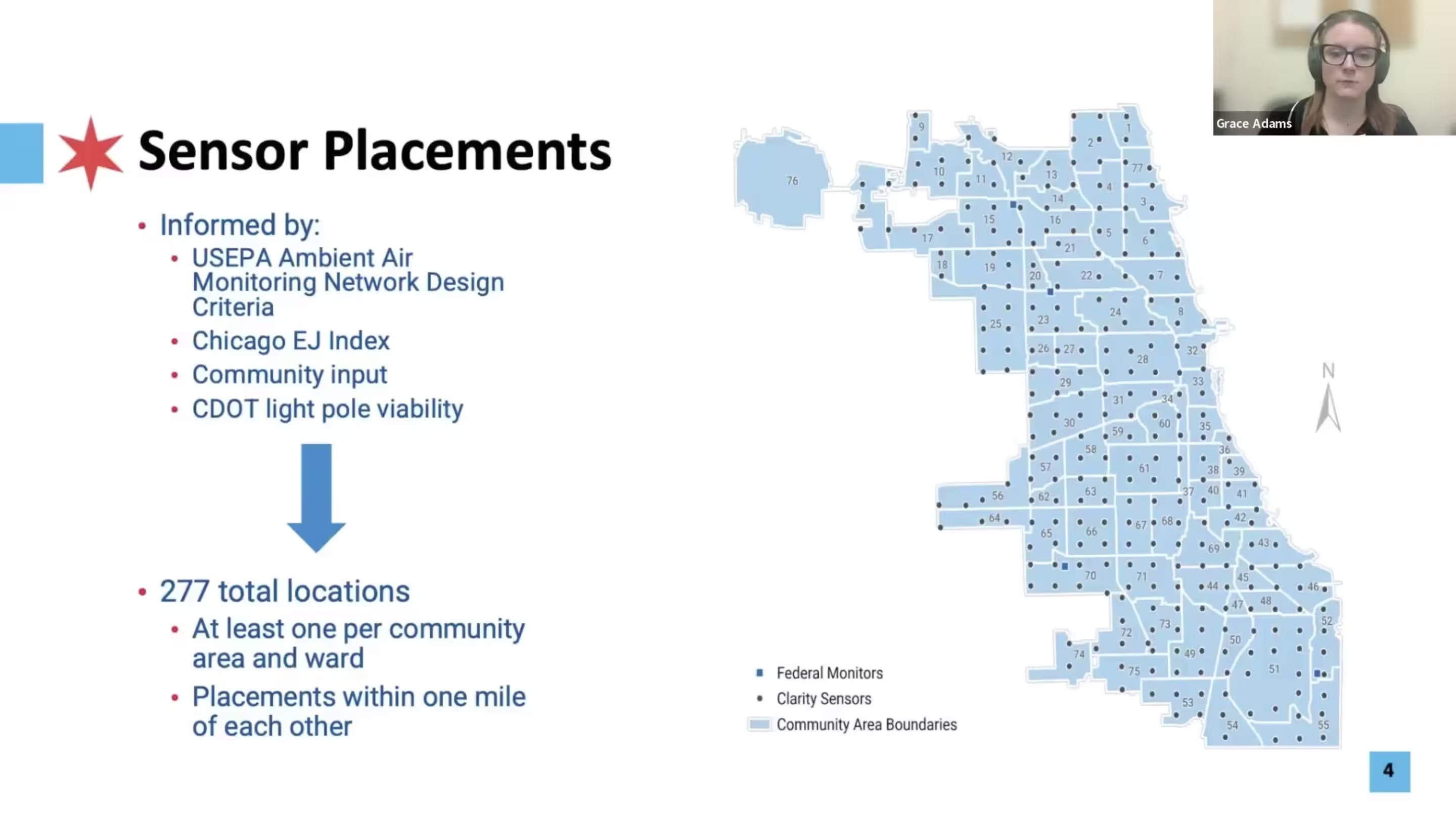
Grace Adams, MNM, MPH, the Projects Administrator at the Chicago Department of Public Health, spoke about Open Air Chicago, their citywide network of 277 Clarity air quality sensors that is the largest in the United States. Over the last few years, the Chicago Department of Public Health has been researching different sensor options. In 2024, they chose to move forward with Clarity.

Last spring, they were able to assemble, charge, and test the solar-powered Clarity Node-S air pollution sensors. The Chicago Department of Public Health worked with the University of Illinois Chicago’s School of Public Health (UIC SPH) to ensure community involvement in planning and deploying the network.
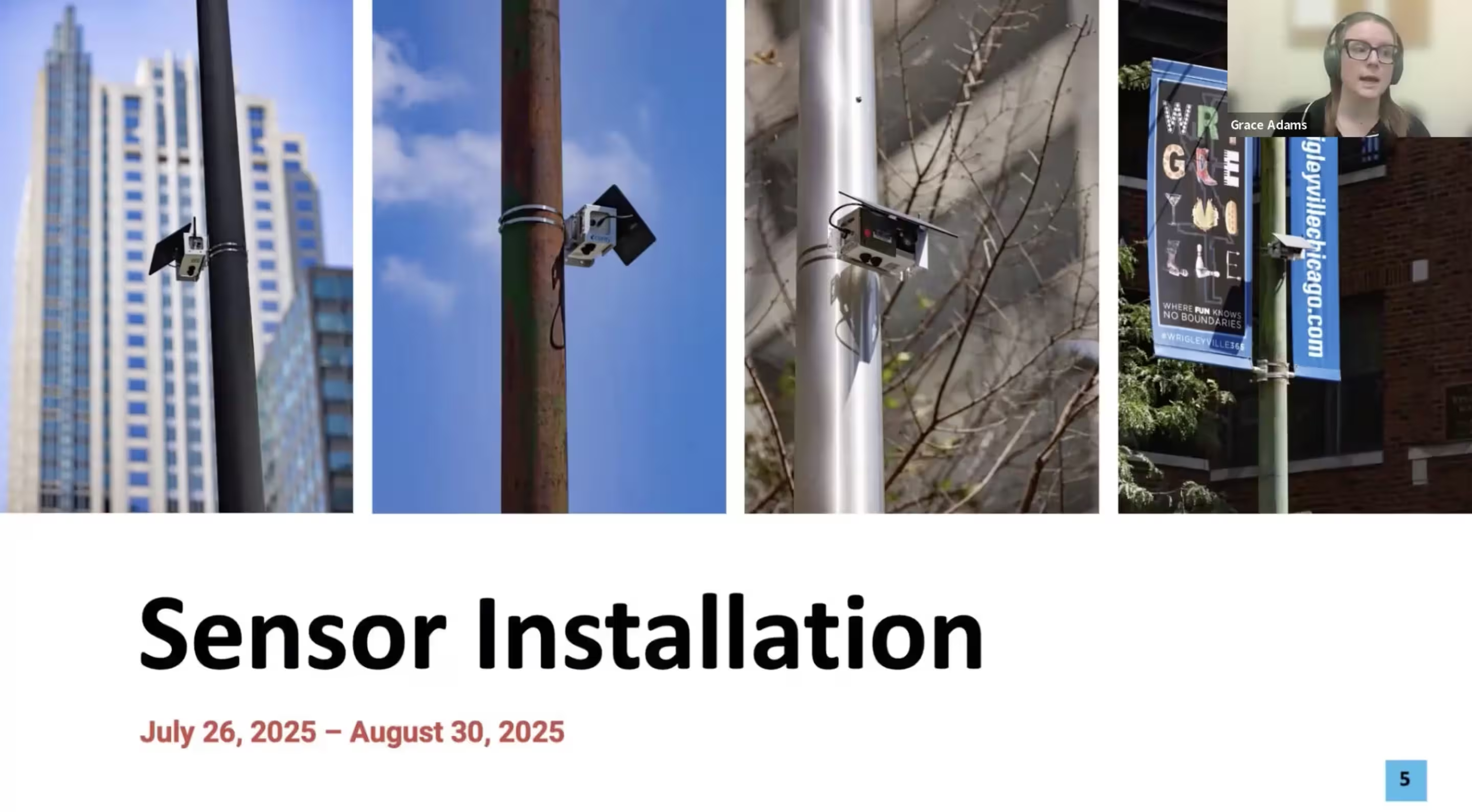
UIC SPH, along with its partners at the University of Illinois Urbana-Champaign, developed a grid network that would allow the sensors to be aligned across the entire city of Chicago. The advisory board provided input on specific light pole selections, deciding which ones best represented individual neighborhoods. Over the course of six weeks, the Chicago Department of Public Health worked with its partners at the Chicago Department of Transportation to install all 277 of the air quality sensors on city light poles.
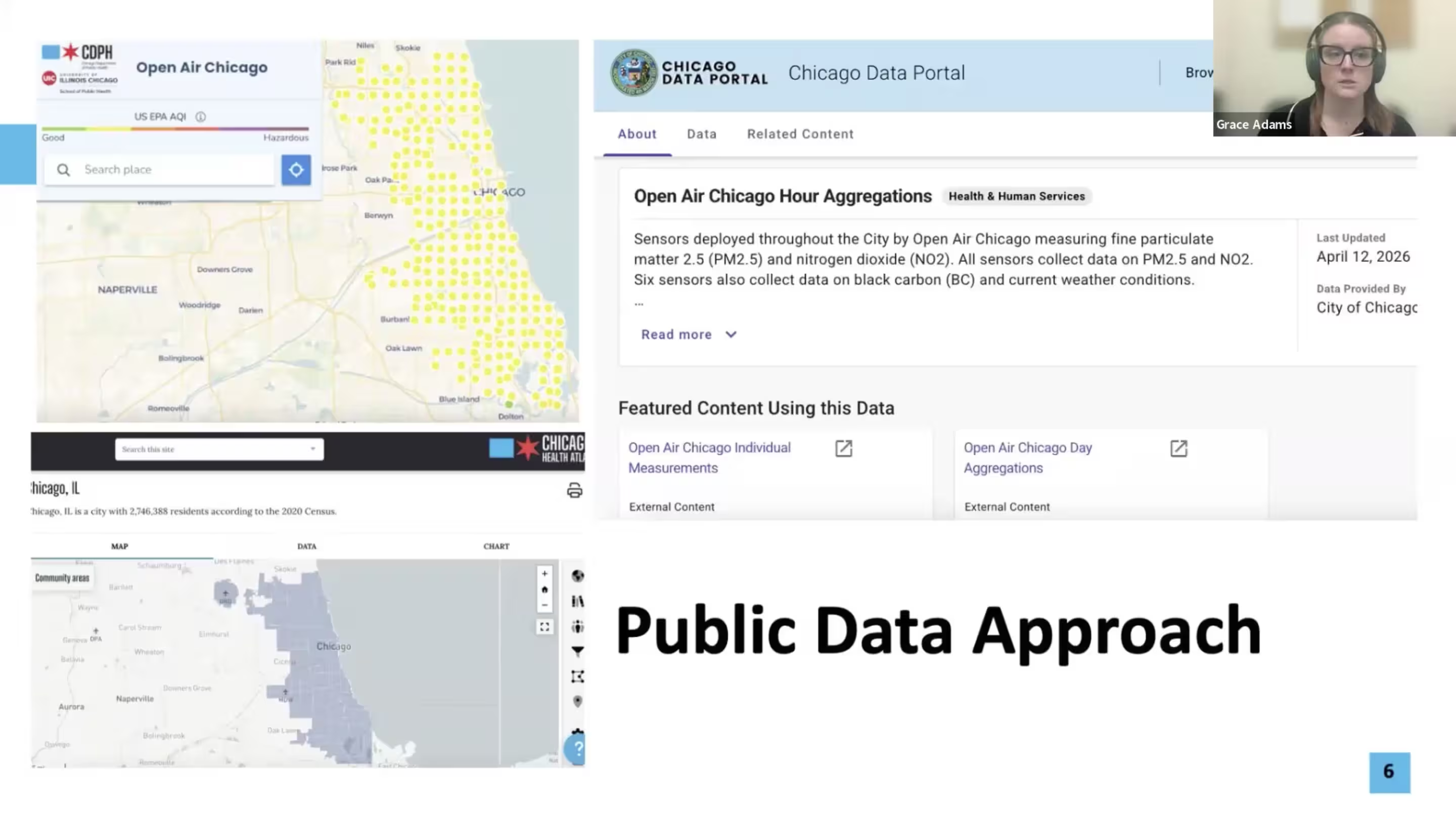
Last fall, Open Air Chicago undertook the community education component of the project. They worked with their advisory board to identify tools that they would find useful for utilizing the network. In February, the air quality sensor data was publicly released.
Breathe Philly
Kassahun Sellassie, Ph.D., P.E., the Director of Air Management Services at the Philadelphia Department of Public Health, discussed the Breathe Philly air quality sensor network. Sellasssie has been the Air Management Services director since 2015.
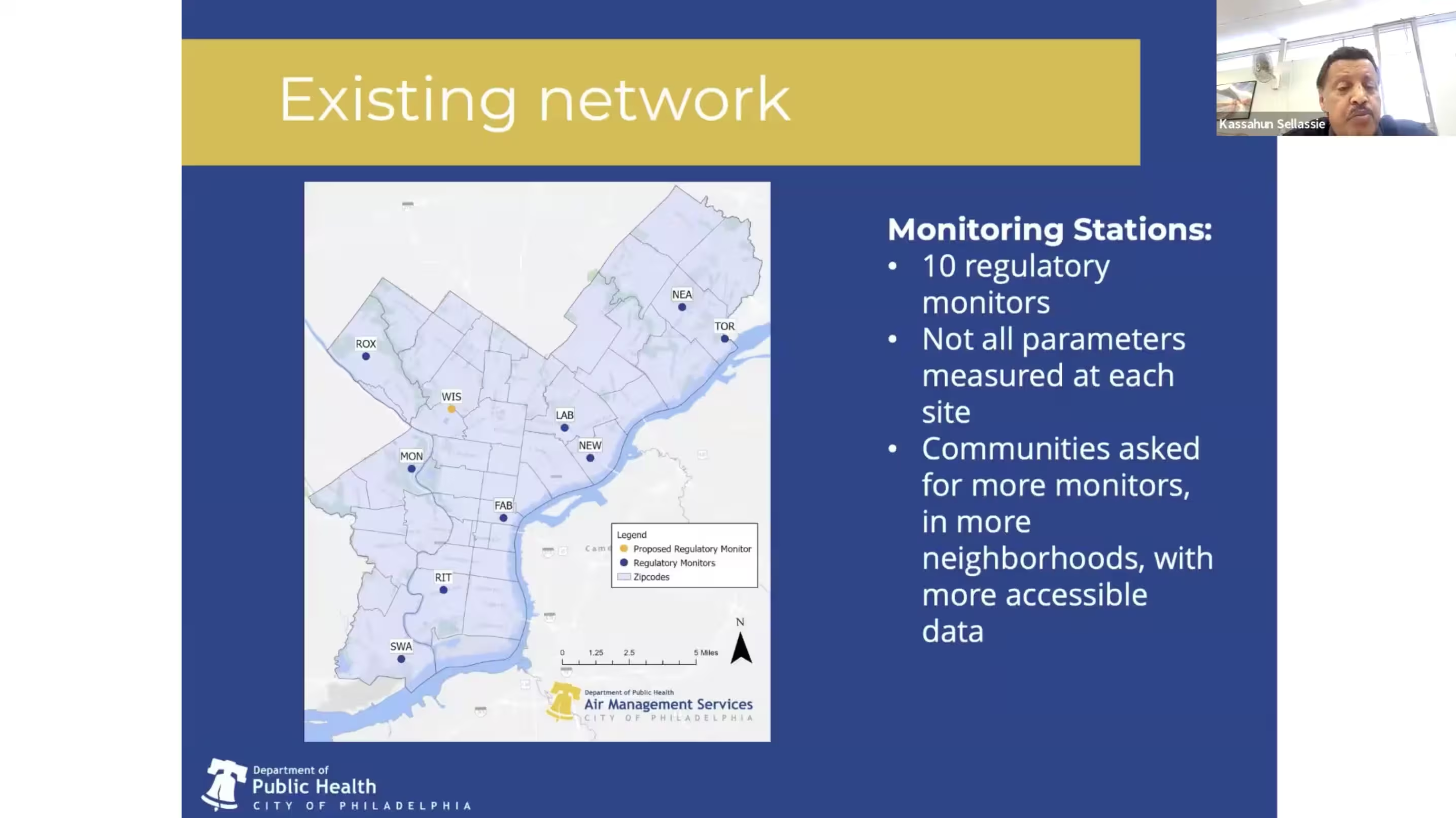
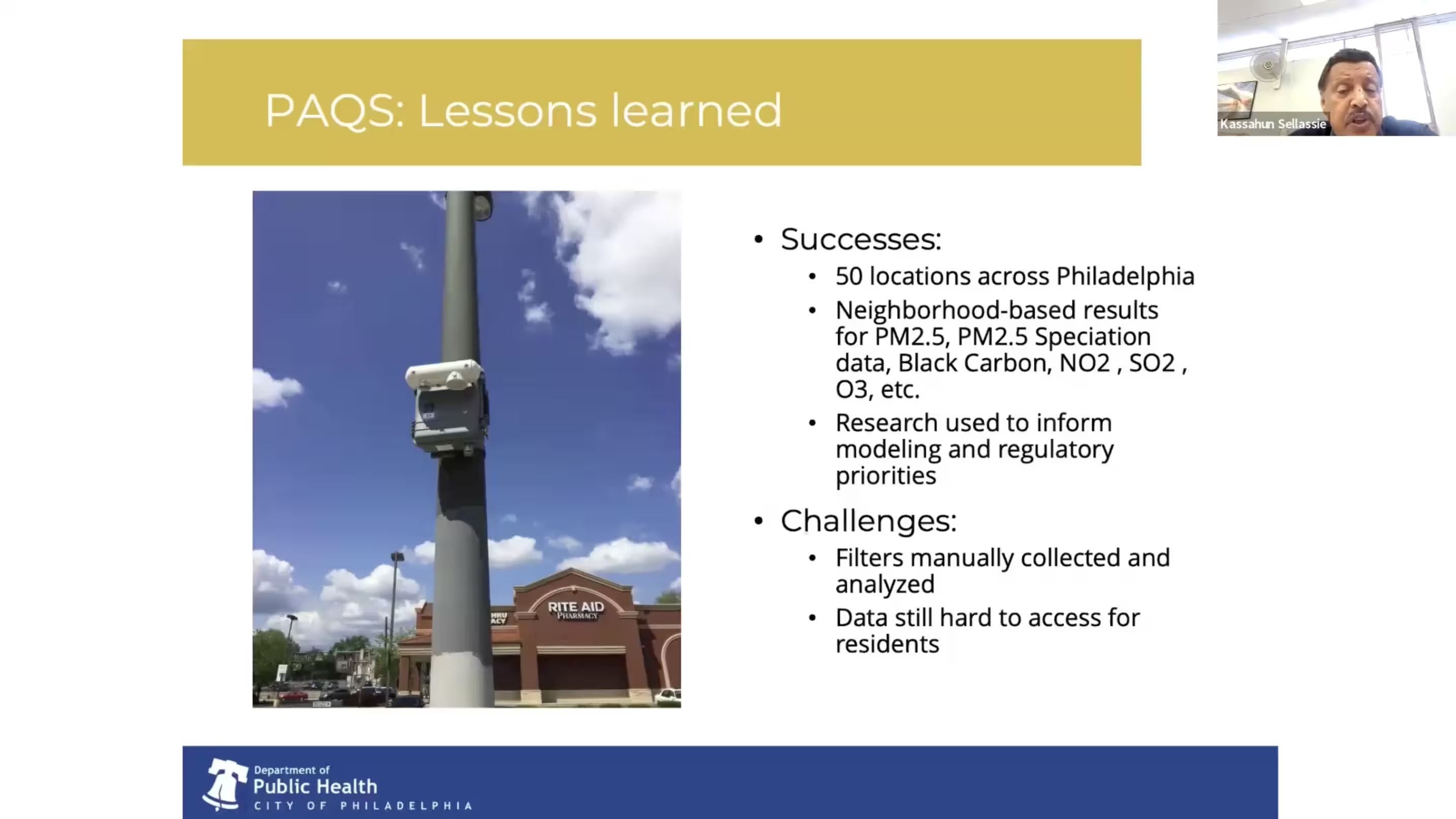
In 2016, the Air Management Services implemented the Philadelphia Air Quality Survey (PAQs). The PAQs consist of 50 monitors that conduct street-level, neighborhood-oriented air sampling. The air is sampled for about 24 months, capturing the seasonal changes and neighborhood variations in air quality. This data was valuable, but it was not real-time, and the PAQ network was difficult to maintain.
Clarity’s ambient air quality measurement solution solved many of the issues with the existing PAQs network. The Philadelphia Air Management Services began to work with Clarity through a pilot program, receiving three units in 2023. Each unit was collocated at a regulatory monitor location. The sensors showed highly accurate data with high correlation to the regulatory monitors.
Unlike other sensor brands, Clarity’s sensors performed well during the pilot program because they have relative humidity control, which is critical for Philadelphia’s humid summer conditions. Clarity’s sensors also have online calibration and a solar system with battery backup, which proved very useful for urban deployment in a city like Philadelphia.

Breathe Philly has its own dashboard, created using Clarity’s OpenMap technology. Sellassie conveyed that Clarity’s team has always been very responsive and cooperative with regard to the OpenMap and other assistance. Currently, the Air Management Services is working with Clarity to develop an alert system to allow residents and/or staff to know when air quality levels are particularly high.
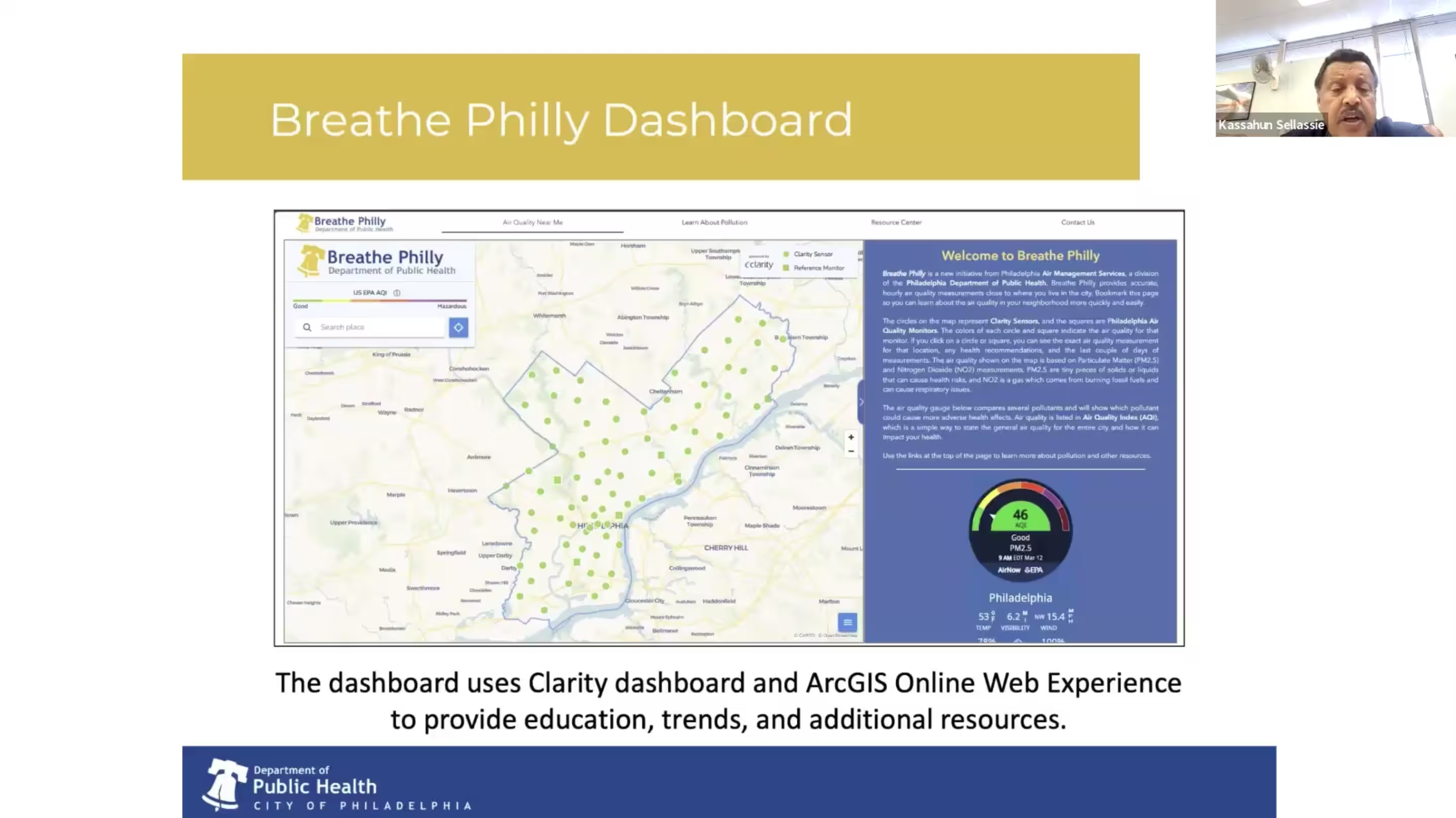
Breathe Philly was publicly launched in February, 2026. The monitors were installed by the Air Management Services team. To commemorate the launch, the City of Philadelphia hosted a press conference with Mayor Cherelle Parker, the Council President Kenyatta Johnson, Sellassie, and others in attendance.
District of Columbia’s Clarity Node Project
Henry Frishman, the Air Quality Specialist at the Department of Energy and Environment (DOEE), talked about the Washington, D.C. Clarity Node Project, which has been underway for about a year and a half.
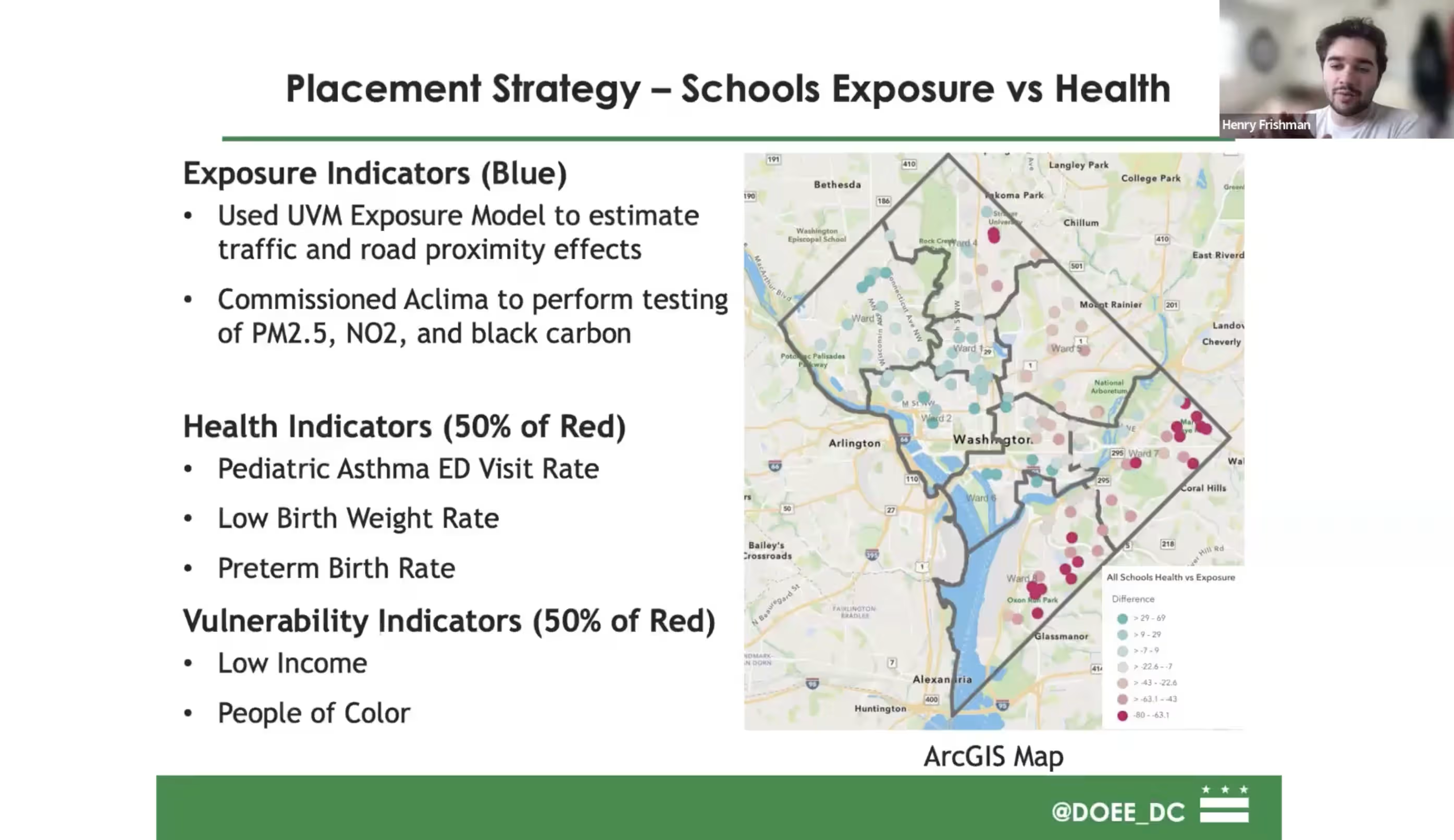
The Department of Energy and Environment used the University of Vermont's exposure model to identify how exposed students were to sources of air pollution. They also commissioned Aclima to perform mobile air quality monitoring to measure exposure. The Department looked into local hospital data to determine health indicators, and data on income and racial demographics to identify vulnerable communities.
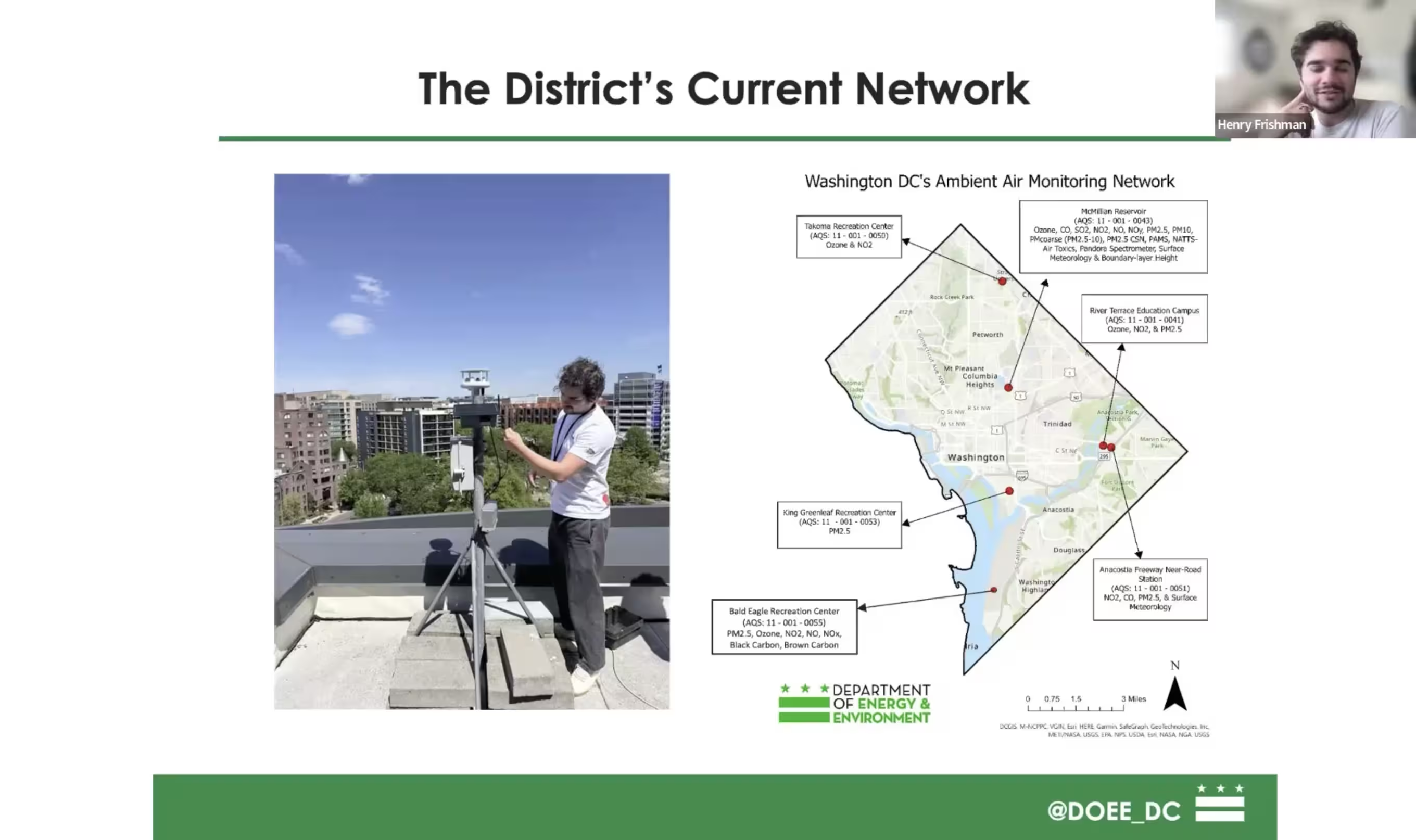
Exposure, health, and vulnerability were all taken into account regarding sensor placement. Sensors were placed in both areas with high exposure and low health vulnerability, areas where there is high health vulnerability but low exposure, and areas with a mix of the two. This strategy allowed sensors to be adequately spread out throughout the city, whilst also gathering data on why there are places with poor health, high asthma rates, and low predicted exposure. Low-cost sensors can help the Department understand any unexpected sources of air pollution.
The project experienced a few challenges in sensor deployment. Deployment at public schools and on light posts proved to be difficult due to administrative hurdles. However, the Department found more success deploying the sensors at charter schools, libraries, NGOs, and businesses.

Frishman and the DOEE also developed an Internal Compliance Map. This tool reads Clarity sensor data on an hourly basis, detecting and alerting the compliance team to air pollution spikes. The map integrates different sensors, data on different pollutants, wind direction information, and allows the internal compliance team to look at certain days, averaging periods, and other analytical tools.

The project also has a public dashboard that depicts hyperlocal air pollution information in a way that is easy to understand. It shows AQI and NowCast information. The public dashboard is provided to sensor hosts, including schools and businesses that have shown interest in seeing their local air quality data.
For more information on the D.C. Clarity Node Project, you can contact Samuel Kay, the Air Quality Planning Branch Chief (samuel.kay@dc.gov), or Kane Samuel, the Environmental Protection Specialist (kane.samuel@dc.gov).
Top lessons for other cities looking to deploy an air quality sensor network
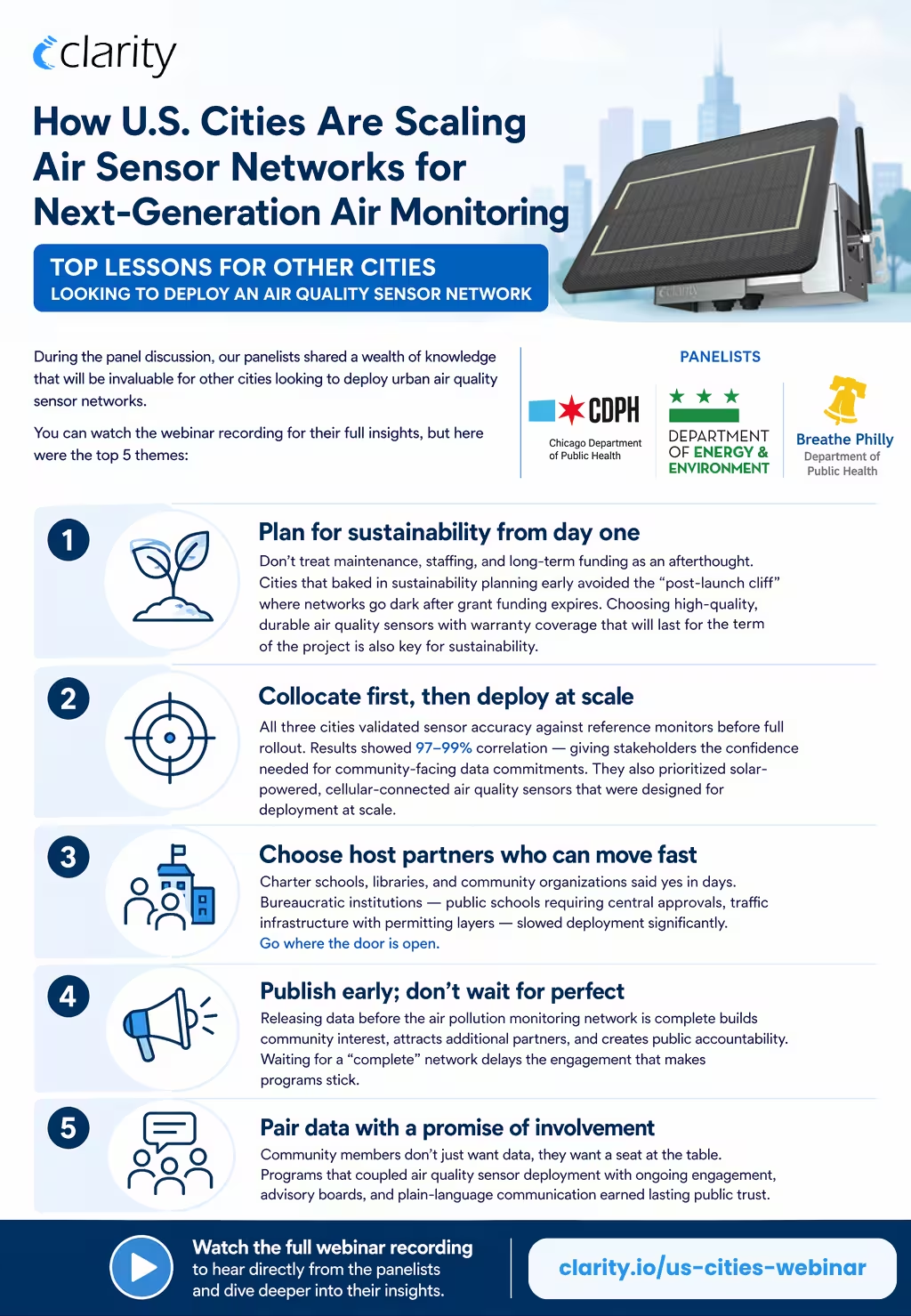
During the panel discussion, our panelists shared a wealth of knowledge that will be invaluable for other cities looking to deploy urban air quality sensor networks. You can watch the webinar recording for their full insights, but here were the top 5 themes:
- 1) Plan for sustainability from day one — Don't treat maintenance, staffing, and long-term funding as an afterthought. Cities that baked in sustainability planning early avoided the "post-launch cliff" where networks go dark after grant funding expires. Choosing high-quality, durable air quality sensors with warranty coverage that will last for the term of the project is also key for sustainability.
- 2) Collocate first, then deploy at scale: All three cities validated sensor accuracy against reference monitors before full rollout. Results showed strong correlation (97–99% in Breathe Philly’s case), giving stakeholders the confidence needed for community-facing data commitments. All three cities also prioritized solar-powered, cellular-connected air quality sensors that were designed for deployment at scale.
- 3) Choose host partners who can move fast: If you have access to municipal light poles like Chicago and Philadelphia or strong relationships with public school districts, those are great options. But if not, charter schools, libraries, and community organizations can be great alternative options. Bureaucratic institutions — public schools requiring central approvals, traffic infrastructure with permitting layers — slowed deployment significantly. Go where the door is open.
- 4) Publish early; don't wait for perfect: Releasing data before the air pollution monitoring network is complete builds community interest, attracts additional partners, and creates public accountability. Waiting for a "complete" network delays the engagement that makes programs stick.
- 5) Pair data with a promise of involvement: Community members don't just want data, they want a seat at the table. Programs that coupled air quality sensor deployment with ongoing engagement, advisory boards, and plain-language communication earned lasting public trust.
Take the next step for air quality monitoring in your city
Clarity low-cost air quality sensors provide reliable, real-time, and hyperlocal air pollution data. We also offer free triplicate sensor collocation to government agencies and cities. Contact us today or apply for the collocation demo program here to get started!