
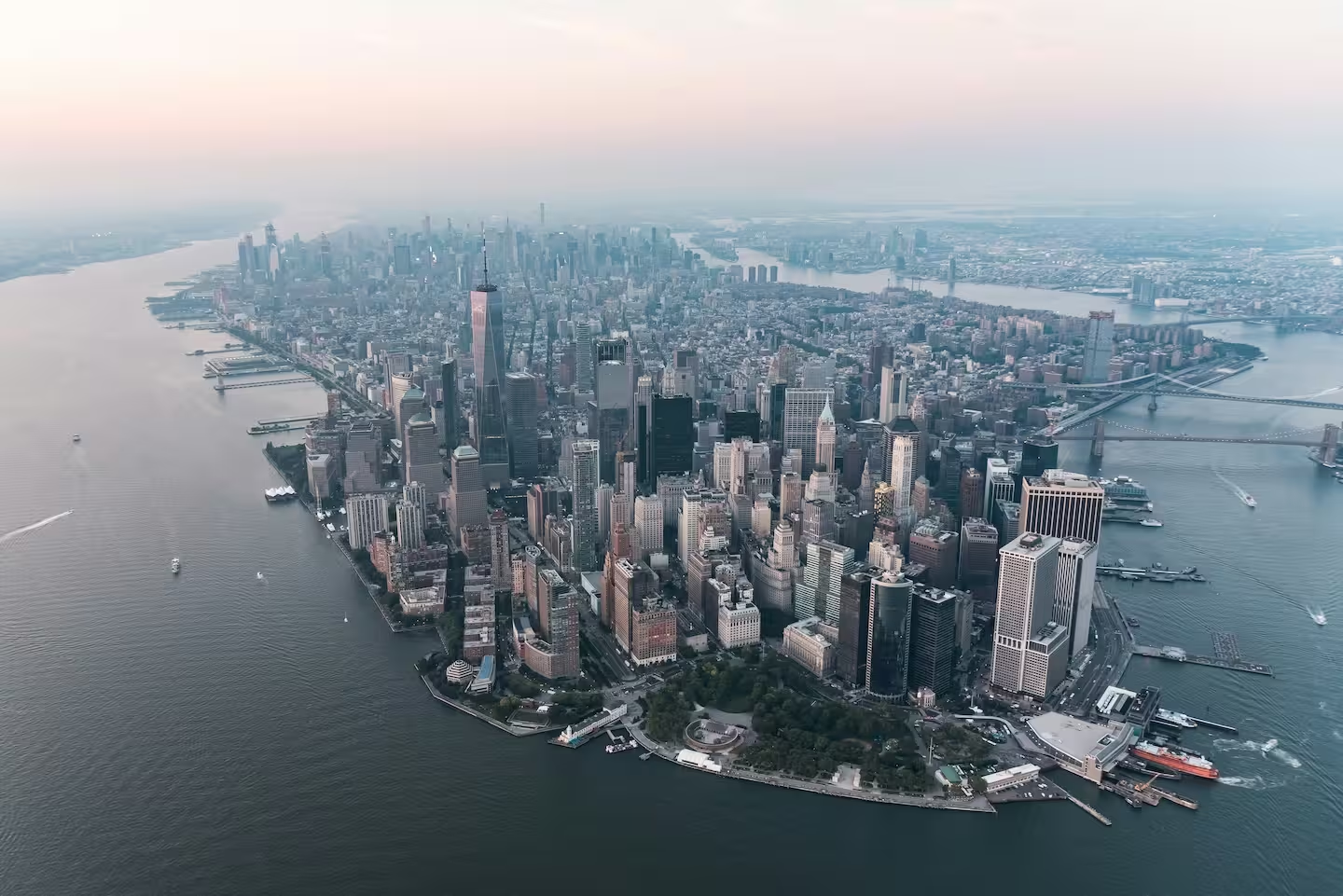
Image provided by Kit Suman via Unsplash.
TL;DR: New York is offering about $7M in Environmental Justice grants, up to $200K per bidder. The grants help community and tribal organizations to lead projects like air quality monitoring that address environmental and public health issues in disadvantaged areas. Applications are due July 1st, 2026.
Key Facts: New York Environmental Justice Community Impact Grants
- Program Name: New York Environmental Justice Community Impact Grants (EJCIG R13)
- Administering Agency: New York State Department of Environmental Conservation (DEC), Office of Environmental Justice
- Total Funding Available: Approximately $7 million
- Funding Source: New York State Environmental Protection Fund
- Minimum Award: $50,000 per applicant
- Maximum Award: $200,000 per applicant
- Award Limit: One award per applicant per grant round
- Application Deadline: July 1, 2026, at 3:00 PM Eastern Time
- Bidding Period Opened: April 15, 2026
- Question & Answer Period Ends: June 17, 2026
- Awards Announced: Q3 2026 (July–September 2026)
- Contract Term: November 1, 2026 – October 31, 2029
- Project Duration: Up to 36 months (with possible one no-cost time extension)
- Application Platform: New York Statewide Financial System (SFS) — applicants must be registered and prequalified
- Eligible Organizations: Not-for-profit community-based organizations and Tribal organizations recognized by New York State or the United States with reservations at least partly within New York State
- Organization Size Requirement: Annual total revenue must not exceed $3 million
- Geographic Service Area: One county or smaller outside NYC; one borough or smaller within NYC
- Community Residency Requirement: More than 50% of organization members or people served must reside in the affected community
- Project Location Requirement: Projects must be located within or serve a potential environmental justice area and/or disadvantaged community in New York State
- Eligible Project Types: Air quality monitoring, community gardens, environmental education, capacity building, and other projects addressing environmental and public health concerns
- Required Project Components: Defined objectives, tasks, deliverables, expenditure-based budget, work plan, and a research component
- Eligible Expenditures: Personnel services, travel, equipment, and other project-related costs incurred within the contract term
- Bid Submission Limit: Up to 3 bids per applicant reviewed (no duplicate projects or locations)
- Fiscal Sponsor Option: Unincorporated community-based organizations may partner with an incorporated not-for-profit fiscal sponsor
- Program Contact: Raymond Loftfield, NYS DEC Grants Administrator — ejgrants@dec.ny.gov | 518-402-8556
- Technical Support Contact: NYS SFS Grants Management — helpdesk@sfs.ny.gov | 877-737-4185
What are the New York Environmental Justice Community Impact Grants?
The New York State Department of Environmental Conservation (DEC) is announcing funding for projects to support disadvantaged communities and potential environmental justice areas in the state of New York. These grants are intended to support community-based, not-for-profit, and tribal organizations that are leading projects that address multiple environmental and public health concerns.
The projects can address a variety of issues and come in different forms, from community gardens to environmental education and capacity building. Notably, funded projects can include air monitoring programs. A list of past funded projects is available on this site.

Roughly $7 million is available for this round of grants. The funding is provided by the New York State Environmental Protection Fund, with money assigned to Environmental Justice. The minimum award amount for each bidder is $50,000, while the maximum award amount is $200,000.
Who is eligible for funding?
In order to be eligible for funding, applicants must be a not-for-profit community-based organization or a Tribal organization recognized by the State of New York or the United States with a reservation at least partly sharing geography with New York State. An unincorporated community-based organization may partner with an incorporated not-for-profit known as a fiscal sponsor.
In order to be eligible for funding, projects need to be located within or serve a potential environmental justice area and/or disadvantaged community within New York State. More information can be found here.
Community-based organizations must serve the residents of an area equal to or smaller than one county outside of New York City, or an area equal to or smaller than one of the five boroughs within NYC. They need to have an annual total revenue that doesn’t exceed $3 million.
The organizations cannot have their charter revoked or be dissolved by the action of another organization. They need to be able to enter into legal agreements independent of any affiliated not-for-profit organization, government body, university, or other entity that would be ineligible to apply for this grant.
The organizations must focus on addressing the public health and/or environmental issues of the residents of a community impacted by several environmental harms/risks. These harms/risks should be the focus of the projects.
The organizations must have their primary office locations in the affected community. More than 50% of the organizations’ members need to reside within the affected community, or more than 50% of the people served by the applicant community group need to reside in the affected community.
More detailed information on who is eligible for funding can be found here and here.
Project expenditures and timeline
Eligible expenditures can include a variety of things, from personnel services to travel and equipment. All projects need to have defined objectives, tasks, and deliverables that can be completed and invoiced within a 36-month period. The projects should have a contract term of November 1st, 2026, to October 31st, 2029. Any costs outside of the contract period/term are ineligible.
Any time extensions beyond the contract term end date will be determined by the Department of Environmental Conservation. Up to one no-cost time extension can be granted, based upon written justification from the Bidder.
Application guidelines
Organizations must use the New York Statewide Financial System (SFS) to apply for these grants. The applicant should be registered and prequalified on the SFS, or else their bids will not be considered. The bidders complete all of the questions in SFS and include all requested documentation in order for their application to be reviewed. Their application must include an expenditure-based budget, work plan, and more.
Bidders may submit multiple bids, but only the first three bids submitted will be reviewed. Multiple bids cannot be for the same project or project location, and an applicant may only receive one award per grant round. Eligible projects must also contain a research component that should be included in the project proposal.
For questions regarding the grants and bidding process, interested parties can contact the New York State Department of Environmental Conservation Grants Administrator, Raymond Loftfield. The Office of Environmental Justice is on the 3rd floor of 625 Broadway, Albany, NY 12233. You can email ejgrants@dec.ny.gov or call 518-402-8556.
For technical information regarding the Grants Management Bid event, you can contact the NYS SFS Grants Management at helpdesk@sfs.ny.gov or by calling 877-737-4185 toll-free | 518-457-7737. The SFS Help Desk is open Monday through Friday from 8:00 am to 5:00 pm. Be sure to include EJCIG R13 in the subject line of the email, and provide your SFS Vendor ID. Questions regarding this grant will be accepted by the Department until June 17th, 2026. Questions and answers will be uploaded to the Grants Management System bid event and the OEJ website for all bidders to see.
For more information, check out the frequently asked questions page, the project proposal example, and the reviewer instructions.
Application timeline
Bids are due at 3:00 pm Eastern Time, July 1st, 2026. The bidding period began on April 15th, 2026. There was a webinar on April 29th, 2026. The question and answer period ends on June 17th, 2026. Lastly, the Department of Environmental Conservation anticipates that awards will be announced in Quarter 3 (July-September) 2026.
Partnering with Clarity
All information about the New York Environmental Justice Community Impact Grants, along with links to associated pages, can be found here. If you are interested in proposing a funded project that includes air quality monitoring, please feel free to contact Clarity.
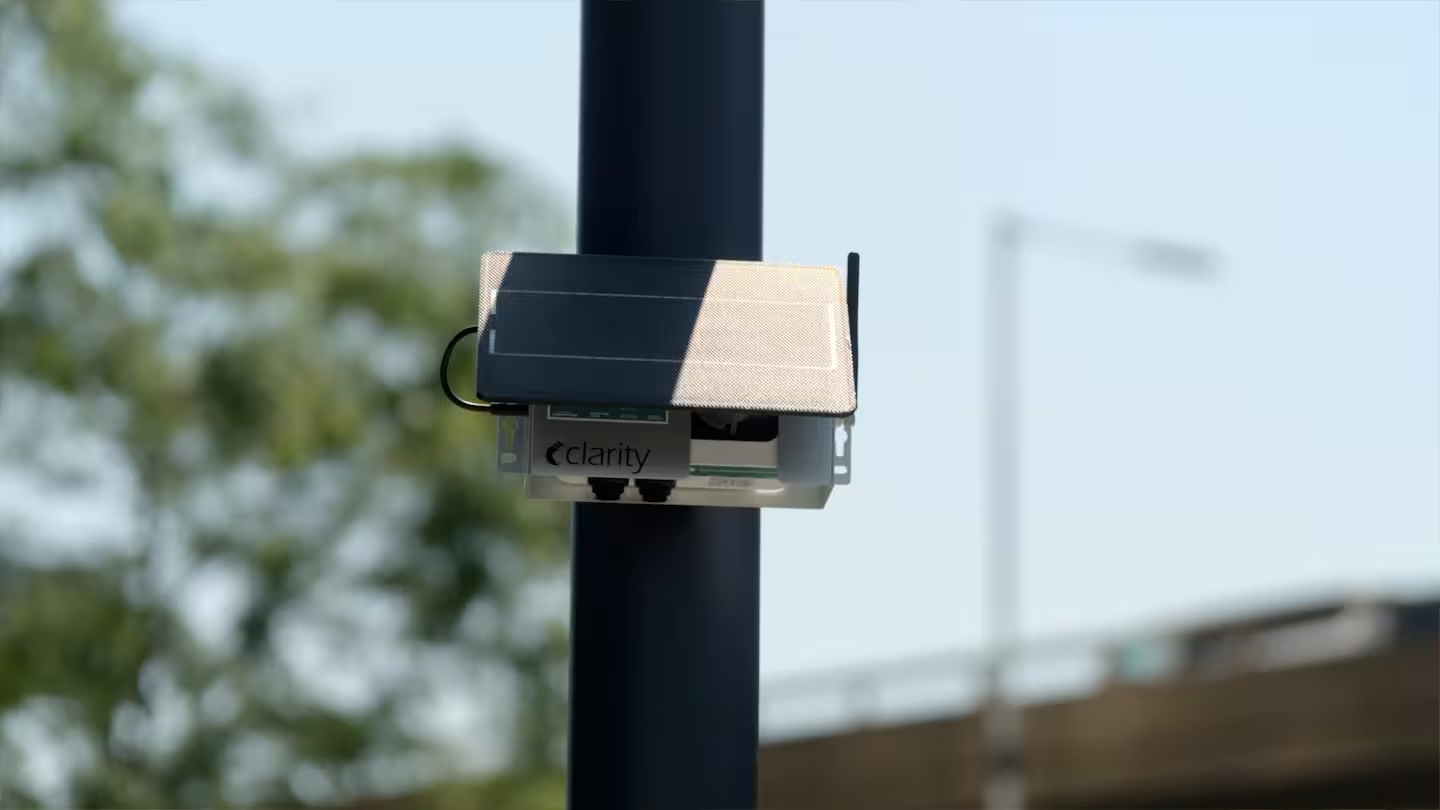
We offer a variety of air quality monitoring solutions, from our flagship Node-S sensor, which measures fine particulate matter (PM2.5) and nitrogen dioxide (NO2), to our assortment of modules, which cover everything from ozone to black carbon and coarse particulate matter (PM10). Check out our complete air quality monitoring ecosystem and work with us to strive for cleaner urban air.
Explore the latest Air Quality Monitoring Funding Opportunities to find grants and programs that can support your next monitoring project.