
Image provided by charlesdeluvio via Unsplash.
TL;DR: The Philippines People’s Survival Fund is accepting proposals for climate adaptation projects that help vulnerable communities prepare for climate-related risks. Eligible applicants must submit concept notes by May 29, 2026.
Climate change
Climate change is a threat to global health. It directly contributes to heatwaves, wildfires, intense storms, and floods. These humanitarian emergencies are increasing in frequency and scale, and 3.6 billion people live in areas that are highly susceptible to climate change. Unfortunately, the Philippines is particularly vulnerable to climate change-related threats.

Climate change and air pollution have a complex relationship. The burning of fossil fuels exacerbates both global warming and poor air quality. Wildfires, enabled by climate change, produce air pollution, while heatwaves can increase ozone production. Certain air pollutants, such as black carbon, worsen global warming, while others have more complicated effects.
What is the Philippines People’s Survival Fund?
The People’s Survival Fund (PSF) was created by the Republic Act 10174. The PSF is a yearly fund meant to aid local government units and accredited local and community organizations in enacting climate change adaptation programs. The goal is to enable vulnerable communities to cope with the effects of climate change.
Currently, the People’s Survival Fund is sending out a call for proposals. They are inviting Local Government Units (LGUs) to submit concept notes and proposals for climate change adaptation programs and projects.
.avif)
While there is no specific allocation per project or for the year, the People's Survival Fund (PSF) has a mandated annual allocation of at least PhP 1 billion from the national budget. As of April 2026, the fund is currently supporting 28 projects with total financing commitments of roughly PhP 1.5 billion.
What is eligible for funding?
Projects and programs implemented by Local Government Units (LGUs) intended to support climate change adaptation are eligible for funding. Community adaptation support programs by local organizations are also eligible for funding. The projects may enable environmental preparedness in a variety of ways, addressing health, land and water resource management, infrastructure, agriculture, fisheries, or natural ecosystems.
Eligible projects might address climate change-related vector-borne diseases through monitoring and other means, or cover the implementation of forecasting and early warning systems for climate-related hazards. Eligible projects can include drought and flood contingency planning in high-risk areas as well as other climate change planning, preparedness, and impact management.
The funds may be used for the creation or strengthening of regional centers and information networks that support climate change adaptation programs. It can also be used to meet the risk transfer insurance needs of agriculture and other stakeholders.
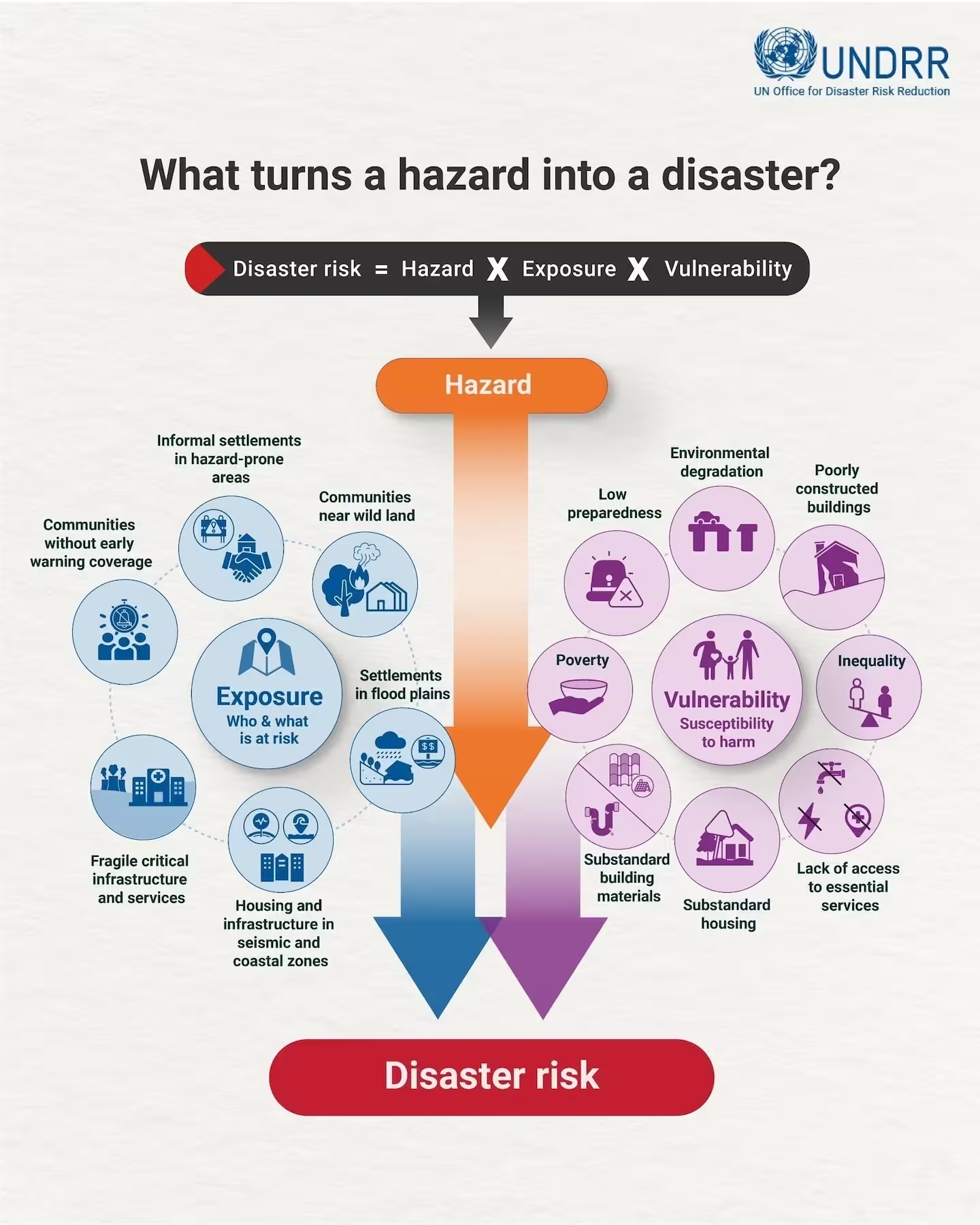
One area where the Philippines is lacking the necessary infrastructure needed to reduce disaster risk is air quality monitoring. Real-time, local air quality data helps keep citizens informed of the health risks they face from air pollution, reducing both exposure and vulnerability to this environmental hazard that is expected to increase with climate change.
To help local government units (LGUs) in the Philippines familiarize themselves with modern air quality monitoring equipment, Clarity is offering free trials of the CARE Kit (Clarity's Air emergency REsponse Kit). If you are interested in receiving a free trial of our air quality monitoring equipment via a CARE Kit, please contact Ethel Garcia from the Clarity Movement team.

Submission Guidelines
The submission process for funding consists of two steps. The first step is to submit a concept note. The note is a short summary of the proposed project that must be completed using the prescribed template. The People’s Survival Fund will review the concept note and decide which projects will move on to the next step.
The PSF will either send a non-selection letter providing feedback or invite the local government unit to submit a full proposal. The full proposal includes a letter of intent, an accomplished project proposal, a work and financial plan, and lastly, adaptation references.
Adaptation references may include Climate Risk and Vulnerability Assessments (CRVA), a Local Climate Change Action Plan (LCCAP), CCA-DRR-enhanced Comprehensive Land Use / Development Plans (CDPs), or an Annual Investment Plan (AIP).
Clarity now offers a Proposal Writing Tool, which allows users to create a funding proposal in a fraction of the time. The tool includes a curated database of funding opportunities, AI-assisted proposal drafting, and auto-generated maps and project plans. The Proposal Writing Tool is equipped with Clarity product specs and other relevant information. Please request access to use this tool to assist with drafting a concept note and/or a full proposal to the People’s Survival Fund.
Prioritization Criteria
Projects and programs will be evaluated based on five different criteria: climate risk relevance and policy alignment, impact potential, scalability and sustainability, inclusiveness and co-benefits, and lastly, whether they include a transformational approach to adaptation. These criteria help ensure that projects are equitable, relevant, and aligned with both climate risk data and national priorities.

Potential projects should align with national policies and plans, demonstrate that they address climate vulnerabilities, and present a clear climate rationale that addresses specific impacts. Priority funding will be given to areas most at risk. Potential projects will be evaluated based on their poverty incidence and poverty reduction potential, as well as their contributions to ecosystem health and environmental integrity. The programs should have an explicit and verifiable number of beneficiaries.
Potential programs should be cost-effective and scalable. They should comply with safeguards to minimize any negative impacts and promote long-term sustainability. Potential projects should be responsive to gender-differentiated vulnerabilities and maximize multisectoral and cross-sectoral benefits. They should include the participation of affected communities in their design and implementation.
Lastly, the PSF will prioritize transformational approaches to adaptation. This refers to the use of traditional knowledge, the blending of such knowledge with modern science, the use of new technologies, or the use of nature-based solutions.
Timeline
The deadline to submit climate change adaptation concept notes is May 29th, 2026. Any submissions made after this date will not be considered. Proponents are welcome to contact the People’s Survival Fund Board Secretariat with any questions or concerns they may have. More information may also be found on social media.

Looking forward
Climate change poses an imminent threat to both the Philippines and the world. Fortunately, sustainable practices and projects aimed at climate adaptation offer ways to protect and support the people most at risk. Partner with Clarity to implement an air pollution monitoring network to safeguard clean air amongst a changing climate.
Browse our curated list of Air Quality Monitoring Funding and Grants to discover relevant opportunities for air quality monitoring initiatives.