
This image is provided by todd kent via Unsplash.
TL;DR: Urban air pollution is a major issue in most cities, but thoughtful urban planning can significantly improve air quality by promoting alternatives to car use, properly designing green spaces, and strategically locating industrial activities. Design features such as ventilation corridors and well-planned street layouts can also help disperse pollutants. However, one solution may not work in all cases. Effective air quality management depends on local context, data, and careful planning.
Urban air pollution
Cities are often hotspots for poor air quality. In fact, 41% of cities around the globe have air pollution that is more than 7 times higher than the World Health Organization’s recommendation. Vehicle activity, industrial facilities, and constant construction all contribute to poor air quality in cities. Fortunately, urban planning, by encouraging alternatives to vehicle use, promoting green spaces, and enabling thoughtful placement of industrial facilities, can foster cleaner urban air.
Encouraging alternatives to vehicle use
Transportation accounts for roughly half of the air pollution emissions in cities, but deliberate urban planning can promote low-emission transportation options. Infrastructure that encourages walking or biking, such as bike lanes and safe walking areas, can help protect public health by both facilitating physical exercise and reducing air pollutants from vehicle use. Walking for half an hour or cycling for as little as 20 minutes on most days reduces mortality risk by at least 10%.

Congestion pricing and low-emission zones can also help reduce urban air pollution. Low-emission zones (LEZs) are designated areas in cities where access by certain vehicles is restricted or discouraged, while congestion pricing zones require drivers to pay a fee to drive through certain areas of a city. Successful zones of this kind can lower traffic-related air pollutants such as particulate matter (PM), carbon monoxide (CO), volatile organic compounds (VOCs), and nitrogen oxides (NOx).
Public Transportation
Proper public transportation is a great way for urban planners to improve air quality. Public transportation carries people more efficiently than individual vehicles. A single train or bus can carry great numbers of passengers compared to individual cars, which can only carry a few passengers at a time. Public transport also reduces traffic by decreasing the number of cars on the road.
Public transportation reduces traffic-related air pollutants and greenhouse gases. In the U.S., it is estimated that public transportation saves 37 million metric tons of carbon dioxide from being released into the atmosphere every year.
Public transportation provides other benefits as well. In New York City, for instance, public transportation often delivers faster commuting times and helps make the city more equitable for low-income residents. Public transport also promotes walking, which comes with health benefits.
Green Spaces
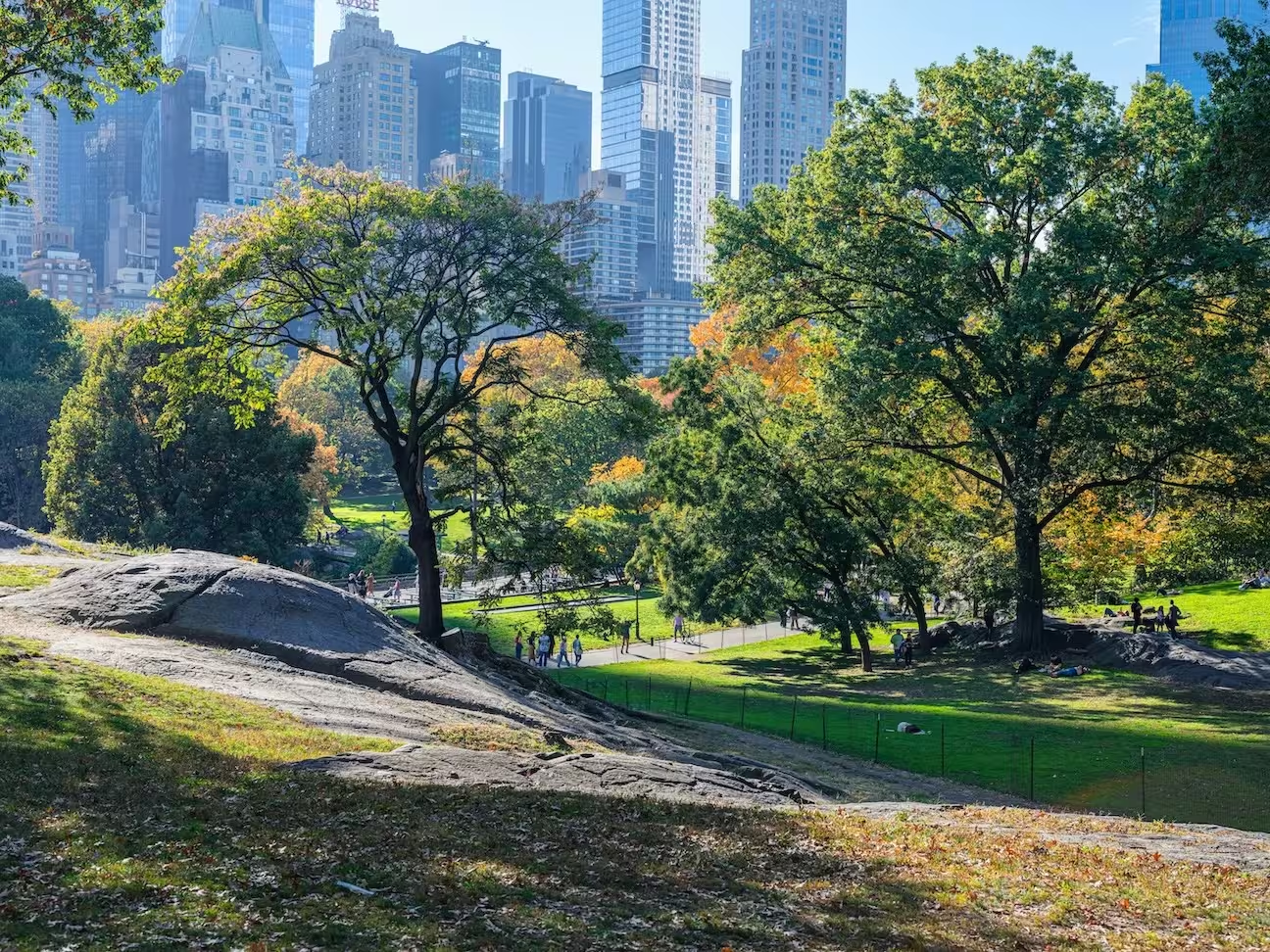
Green spaces refer to areas that are either partially or fully covered by vegetation, such as parks, gardens, and street trees. Green spaces have the potential to reduce air pollution in a variety of ways. Particulate matter can deposit on the surfaces and leaves of plants, where it can be absorbed, broken down, or washed away with the weather. In this way, green spaces can significantly reduce PM10 concentrations.

The plants in green spaces can also modify gaseous pollutants such as volatile organic compounds. These plants can affect air pollution dispersion, acting as a physical barrier against air pollution sources and populated areas. Vegetation can additionally reduce desertification, promoting soil and dust retention, and helping to prevent land degradation, which can lead to air pollution. Lastly, the presence of green spaces can replace spaces where there might otherwise be air pollution sources in urban areas.
Notably, green spaces do not always have a significantly positive effect on air quality. Their impact depends on factors such as their size and placement. Sometimes, green spaces can even negatively impact air quality. For instance, certain tall trees might decrease the wind flow in urban canyons, reducing ventilation and resulting in higher air pollution concentrations. Further, at certain times of year when they release pollen, trees and other vegetation can become air pollution sources themselves, with some studies even linking increased asthma-related hospital visits to urban tree cover. For more information about how to reduce pollen and other allergens in your home, see this article on five effective ways to reduce allergies in your home.
The varied outcomes of green spaces make it especially important for urban planners to properly design and maintain vegetation that reduces air pollution within the context of each green space’s individual context.
Placement of industrial facilities
Locating polluting industries away from overburdened areas and vulnerable populations, such as residential areas and schools, can be a successful way to reduce air pollution in selected areas. One study found that the implementation of the National Industrial Relocation Demonstration Zones policy in China decreased SO2 emissions in policy-targeted cities by 16.92% per capita.
However, this method for managing air quality should take into consideration the potential air pollution impacts of the industries in general. Just because they are kept away from vulnerable or dense populations does not mean that there are no environmental consequences.
Street canyons and urban corridors
Street canyons are narrow streets that are lined on either side by continuous high buildings. This urban feature is more common in dense city environments. Street canyons often have high air pollution levels due to emissions from street traffic combined with poor natural ventilation. This heightened air pollution endangers pedestrians and residents in the street. Urban planners should make efforts to improve street ventilation and protect public health.

One method to improve street airflow is through urban ventilation corridors. These are corridors designed along the prevailing wind direction, with the intent to allow clean air to penetrate deep into dense urban areas, where the fresh air can dilute the city's air pollution. Urban corridors have the potential to improve air quality; however, urban corridors are not always effective at dispersing air pollution. Sometimes, the fresh air can become polluted and simply spread the polluted air to other urban areas. This phenomenon makes it important to consider city geographical factors and neighboring air quality when implementing street canyons.
Looking forward
Urban planning for air quality management is complex and varied. One strategy may not always work in all urban environments; specific contexts, landscapes, and weather patterns must be taken into consideration. Air quality monitoring can help urban planners and policymakers understand which air pollution mitigation strategies are proving effective.
Want to measure the impact of your urban planning initiatives on air quality? Partner with Clarity to implement an urban air quality sensor network to promote healthy city air.