
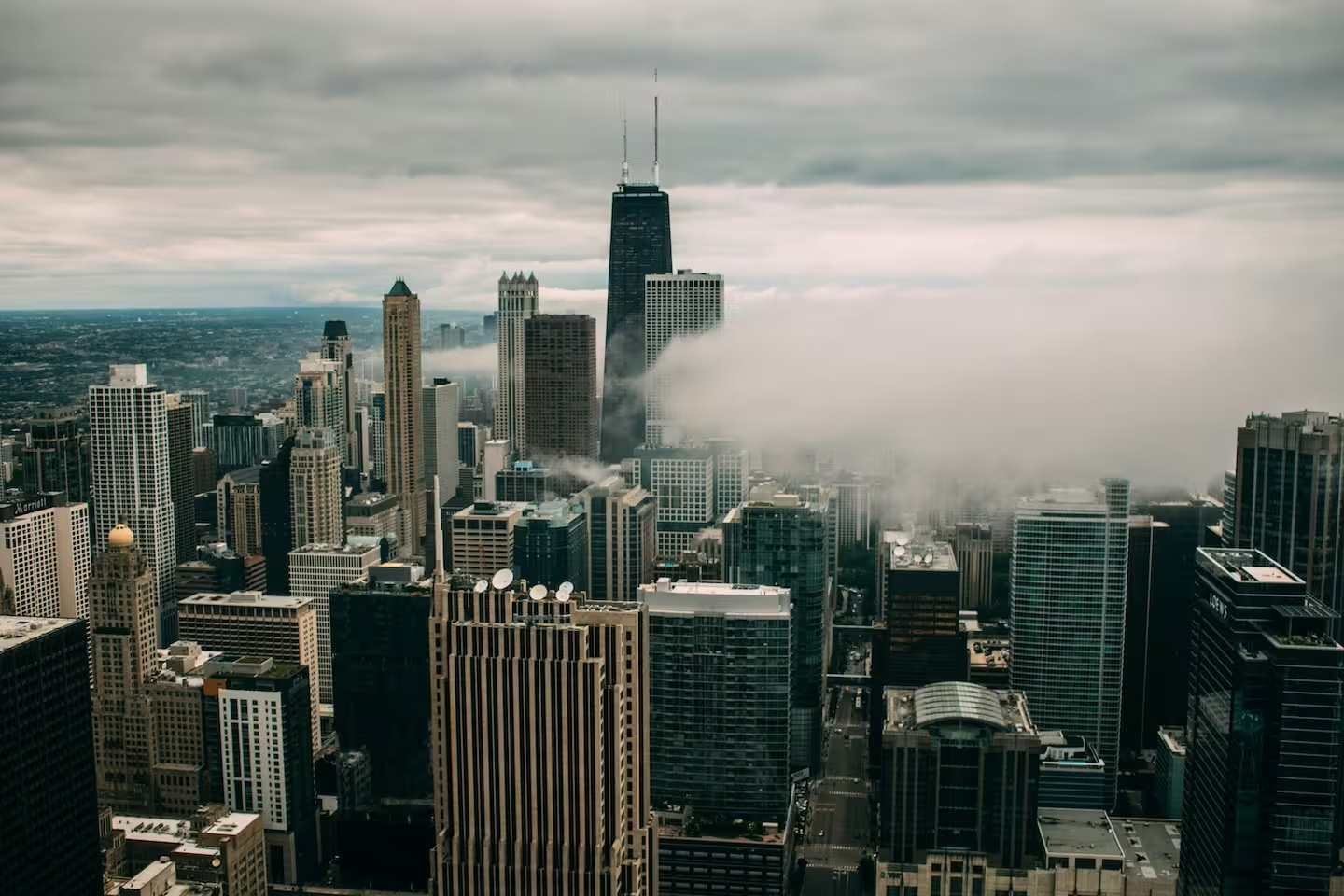
Image provided by Drei Kubik via Unsplash.
TL;DR: Air pollution is a major health risk linked to about 100,000 deaths annually in the U.S. Exposure is uneven, with low-income and minority communities facing higher pollution levels and greater health risks. This inequality is tied to factors like residential segregation, concentration of industrial sites, and less political power than the polluting corporations. Addressing it requires stronger regulations, community-led decision-making, and expanded air quality monitoring.
The health effects of air pollution
Air pollution, including particulate matter (PM2.5), nitrogen oxides (NOx), and ozone (O3), has many negative effects on human health. In fact, air pollution is associated with 6.7 million premature deaths annually, with 4.2 million premature deaths estimated to have been caused by ambient (outdoor) air pollution in 2019. Research published in 2020 found that air pollution from sources in the United States leads to 100,000 deaths in the U.S. every year.
Air pollution is a risk factor for many different diseases. It is the major environmental driver associated with several respiratory conditions, including asthma and lung cancer, as well as neurological diseases like Alzheimer’s. Children, the elderly, and people with certain chronic diseases are most vulnerable to the effects of air pollution. Poor air quality can also harm fetal development.
In 2019, 99% of the global population was living in locations where the WHO air quality guidelines levels were not met, with low- and middle-income countries disproportionately experiencing the burden of ambient air pollution. Yet, different parts of the United States experience very different air quality, with the contrast often falling along racial and socioeconomic lines.
Air pollution inequality in the United States
People with lower incomes and ethnic minorities tend to face greater exposure to air pollution in the U.S. Extensive research has led to this conclusion. One study in 2022 found that the average fine particulate matter (PM2.5) concentration for the Black population in America was 13.7% higher than that of the White population. The same research also found that, as the Black population increased in a particular zip code, so did the PM2.5 concentration, while the opposite was true for the White population within a zip code. Other research has similarly found that Hispanic, Asian, and Black individuals have a higher risk of premature death from particle pollution than White individuals.
A more recent study found that minority and low-income groups across the United States are exposed to higher PM2.5 levels and are even prone to greater health risks from high blood pressure, asthma, diabetes, and more. Other research also pointed to how socioeconomic status might increase the risk of premature death from fine particulate matter.
Yet another study by researchers at the EPA-funded Center for Air, Climate, and Energy Solutions found that people of color breathe more particulate matter air pollution on average, even across income levels and regions of the United States. This study broke down pollution by "source types" like cars, power plants, and factories to look at how much pollution each group breathes from those specific sources. White people were found to be exposed to below-average concentrations from all emission source types, with discrete pollution emission sources causing 60% of overall exposure. People of color, on the other hand, experience greater-than-average exposures from these emission source types, causing 75% of overall exposure.
Why is air quality unequal?
There are a few reasons why air quality may be so unequally distributed throughout the United States. Decades of residential segregation, for instance, may cause African Americans to be more likely to live near air pollution sources. Racism, class bias, and land costs can play a factor in positioning disadvantaged communities in areas with high air pollution exposure. Industrial plants, landfills, and refineries are concentrated in low-income neighborhoods in states like Texas, Louisiana, and California.

Minority and low-income communities frequently have less political leverage to push back against air pollution. They often have fewer elected representatives and limited access to legal resources. They may also have lower voter turnout because of decades of disenfranchisement. This makes them more vulnerable to big polluting companies that pour millions of dollars into lobbying, lawyers, and political connections. These communities have less power to shape zoning boards, permitting decisions, and regulation enforcement.
Disadvantaged communities may also have less access to health care and good job opportunities, making it even more difficult for them to cope with the health effects of air pollution and their associated financial tolls.
Creating change
Because air pollution inequality is systemic, it is not an easy thing to solve. However, there are still things that can be done to promote change. Stronger zoning protections, appropriate industry constraints, and community-led planning can make a difference. Regulators need to prioritize the health of disadvantaged communities over corporate benefits, decision-making needs to be placed in the hands of communities, and municipal protections need to be legally enforceable.

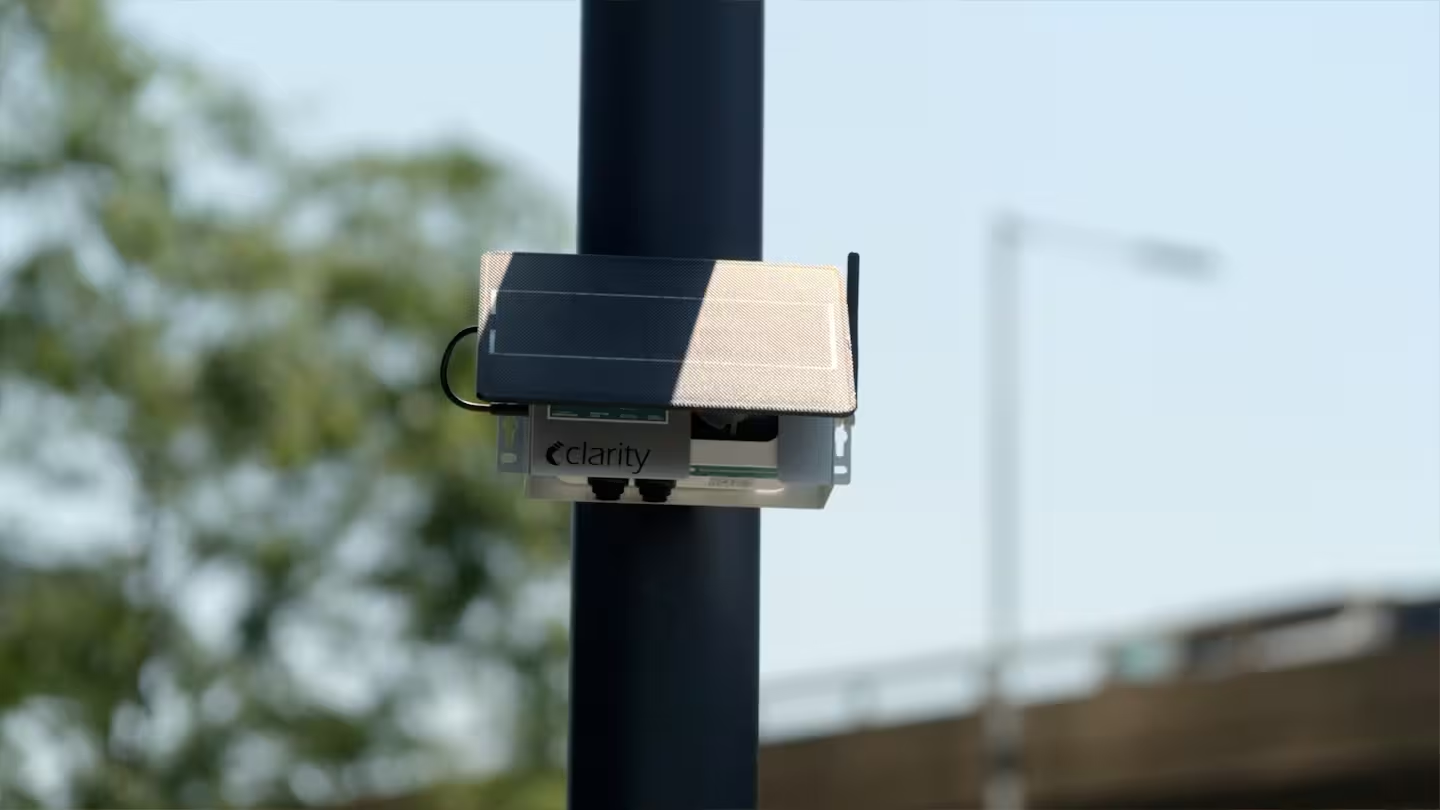
Air quality monitoring can help raise awareness for air pollution inequality, showing where action needs to be taken and providing accurate data to support that action. Monitoring can also help identify policy infractions for proper regulation enforcement and show which air pollution reduction strategies are most effective.
Low-cost air quality sensors have a greater potential for widespread deployment compared to traditional monitoring systems, allowing them to reach more disadvantaged communities and identify local air pollution sources. If you’re looking to take the next step in addressing air pollution inequality, partner with Clarity to implement a low-cost air quality monitoring network and support clean air for all.