
Image provided by Etactics Inc via Unsplash.
TL;DR: Air pollution poses serious health and economic risks, contributing to millions of premature deaths worldwide each year. In the United States, the Clean Air Act has dramatically reduced harmful pollutants, helped phase out leaded gasoline, and, according to EPA estimates, prevented more than 2,300,000 premature deaths, 135,000 hospital admissions, and 200,000 heart attacks — benefits that far outweigh its costs. Unfortunately, the recent directive from the Trump administration that the EPA should value human lives at zero dollars will have profound impacts on the agency’s ability to reduce human exposure to air pollution.
Recent changes in air pollution policy
The United States Environmental Protection Agency (EPA) stance on regulating air pollution has changed under the current administration due to deregulatory actions. For instance, the EPA’s ability to place regulations on greenhouse gases has been limited.
The EPA has also been directed that it should no longer consider the health effects of air pollution in the cost-benefit analysis necessary for clean-air regulations, effectively valuing a human life at zero dollars in those economic calculations for the first time in decades. The agency is focusing on the costs to businesses for complying with regulations. This change will affect rules for fine particulate matter (PM2.5) and ozone (O3).
Similarly, the EPA has set up a new rule that revises emission limits for nitrogen oxides (NOx) from new gas-burning turbines used in power plants. The rule has made the limits less restrictive, and did not estimate the economic value of health benefits that come from reducing NOx and other kinds of air pollutants.
With all these changes in mind, it is worth examining the impact that common-sense air pollution regulation—the type that values human life at more than zero dollars—has had in the years since the Clean Air Act.
How does air pollution affect human health?
Air quality regulation helps protect people from the harmful health effects of air pollution. Fine particulate matter (PM2.5) can enter deep into our lungs and respiratory system. PM2.5, ozone (O3), and nitrogen dioxide (NO2) can aggravate lung disease, cause asthma attacks, increase susceptibility to respiratory infection, and potentially lead to premature death.
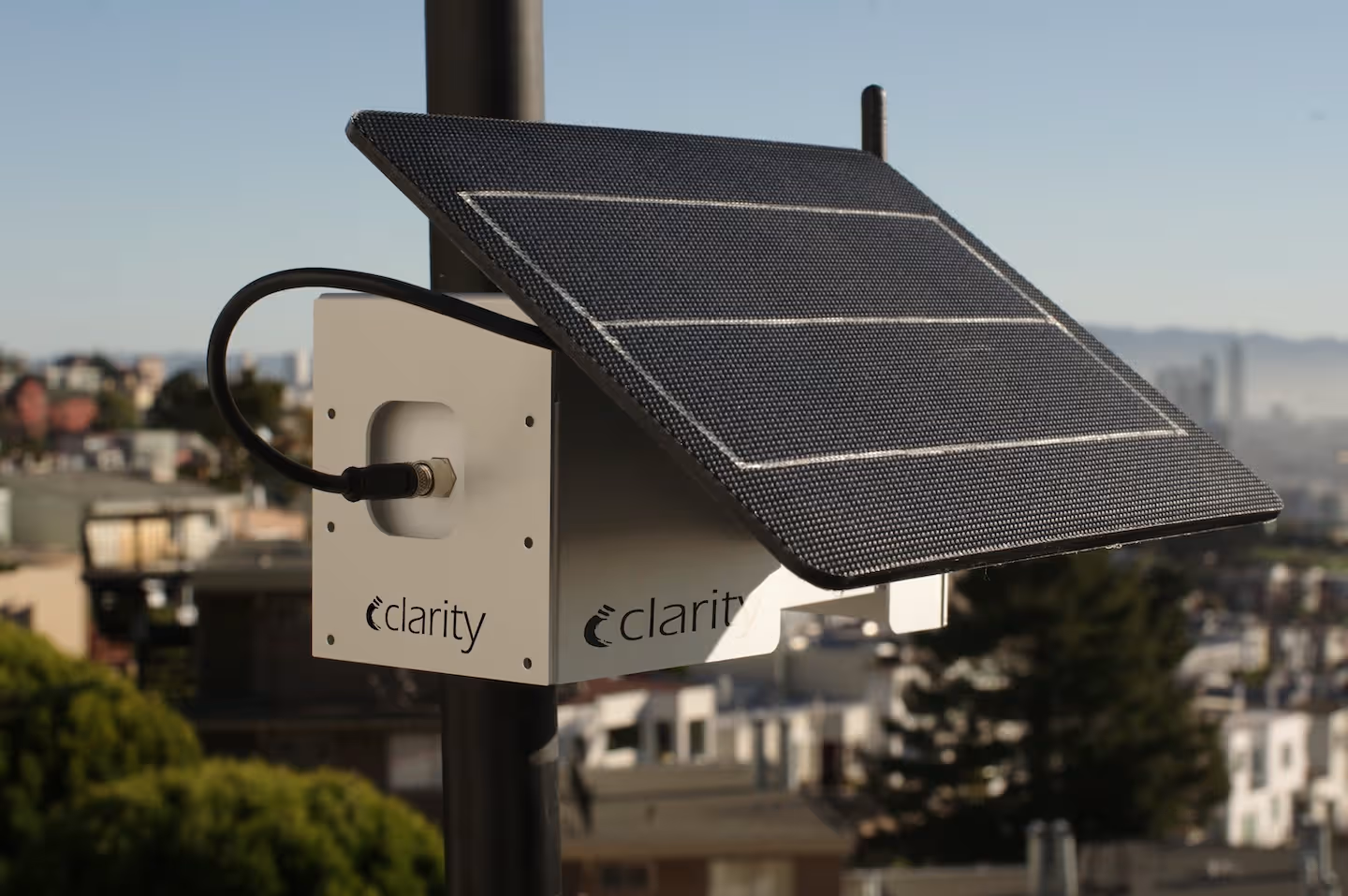
Indoor and outdoor air pollution combined is linked to 6.7 million premature deaths every year. In the United States alone, as many as 100,000 people die annually from air pollution sources in the same country, with about half of these deaths coming from fossil fuel burning. Reducing air pollution can help mitigate these harmful health effects and high death toll.
The Clean Air Act
The Clean Air Act (CAA) is central to air pollution regulation in the United States. This act was passed in 1970, complementing the creation of the Environmental Protection Agency. The CAA regulates air pollution emissions from stationary and mobile sources. The EPA is responsible for implementing the various requirements of the Clean Air Act.
A central component of the CAA was that it granted the EPA the authority to establish National Ambient Air Quality Standards (NAAQS). The NAAQS are national limits placed on six criteria air pollutants that pose a threat to human health. For each criteria pollutant, there is a primary and secondary standard, taking into account public health and public welfare, respectively. The Clean Air Act requires periodic scientific reviews of the NAAQS to occur every five years.
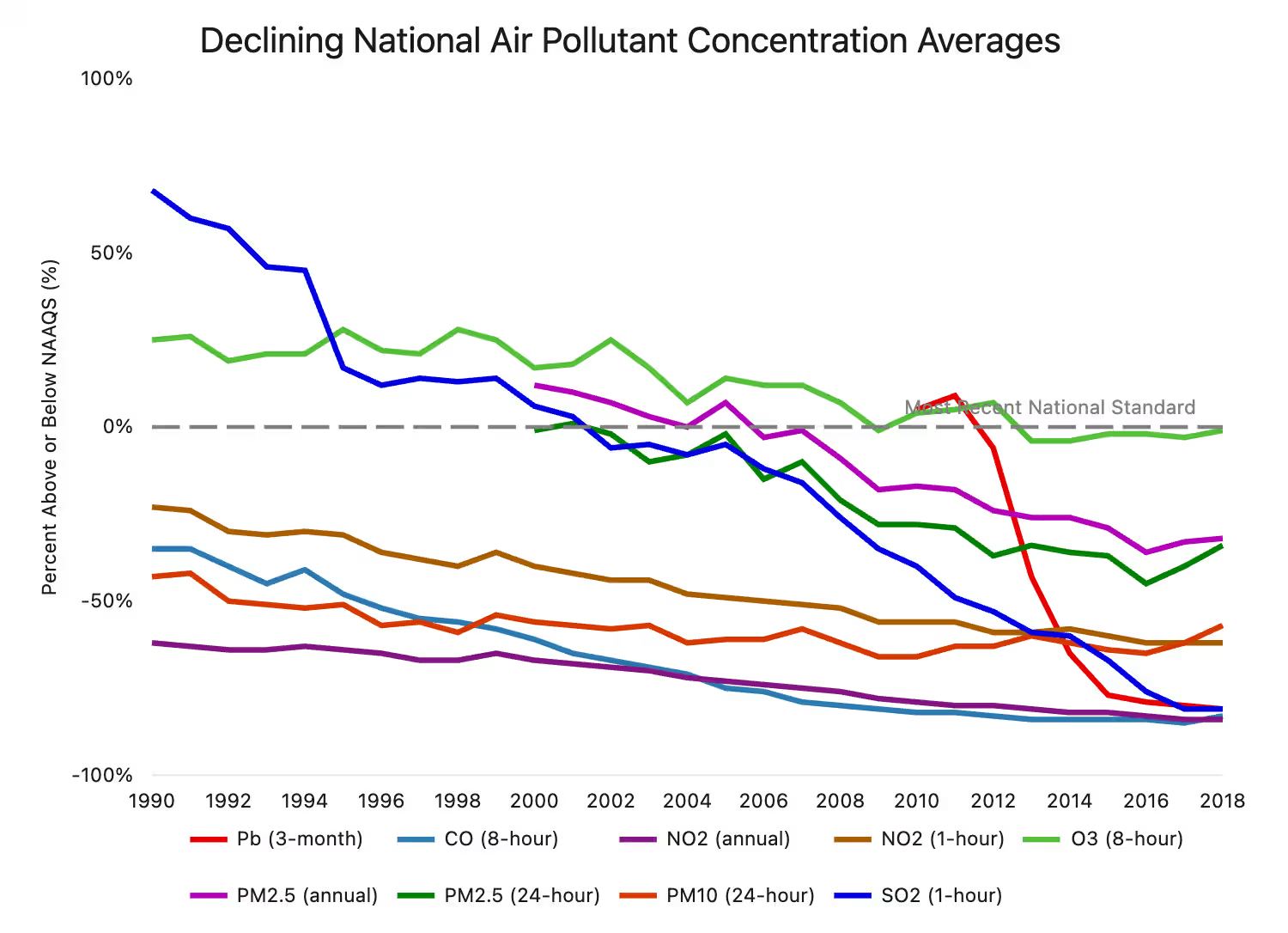
The Clean Air Act has led to many positive impacts. For instance, the CAA has helped phase lead out of gasoline. In 2010, lead levels in outdoor air were 92% lower than they were in 1980. The Clean Air Act has also saved countless lives. During only the first 20 years of the implementation of the CAA, its programs prevented 205,000 premature deaths and 18 million cases of child respiratory illnesses. EPA modeling estimated that the act has led to the avoidance of more than 2,300,000 premature deaths, 135,000 hospital admissions, and 200,000 heart attacks.
What is the financial impact of air pollution?
Air pollution not only harms lives, but it also harms the economy. By impairing human health, air pollution leads to lost work days and higher medical bills. In 2014, air pollution cost the United States about 5% of its yearly gross domestic product (GDP) in damages, adding up to $790 billion.
The Clean Air Act has prevented 17 million lost work days. During the Biden administration, the EPA strengthened limits on PM2.5 emissions from industrial facilities. The agency projected that, in 2032 alone, the updated rule could avert up to 4,500 premature deaths and prevent 290,000 missed workdays. The agency also estimated that each dollar invested in reducing PM2.5 could yield as much as $77 in health-related benefits.
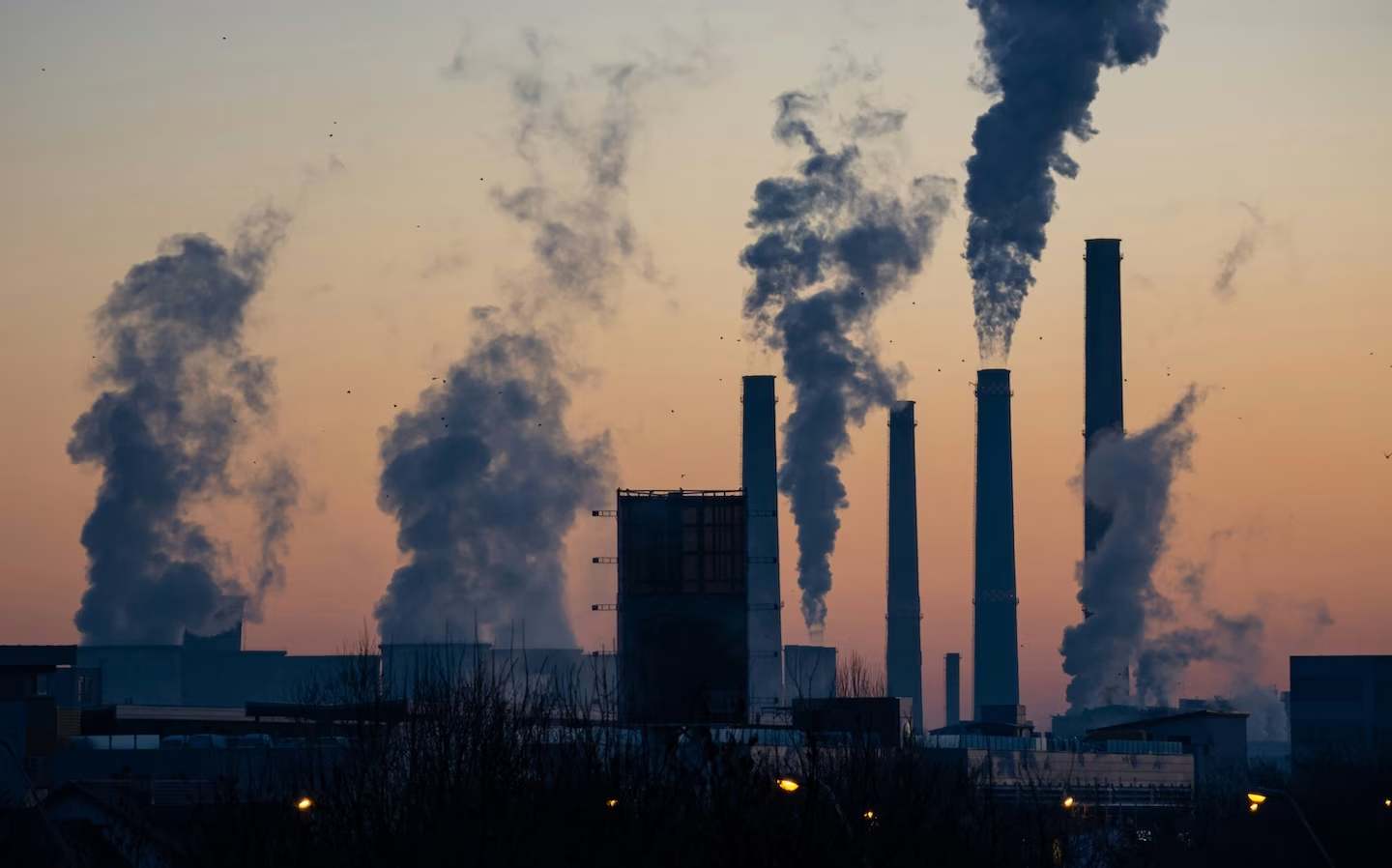
A 2011 peer-reviewed study estimated that by 2020, the central benefits of the act would exceed costs by a factor of more than 30-to-1. An older study, looking at the benefits and costs of the CAA between 1970 and 1990, similarly found that the act’s benefits exceeded its costs by a considerable margin.
A peer-reviewed study based in Los Angeles found that air pollution regulation does not reduce overall employment levels. In fact, reducing air pollution fosters some industries by promoting environmental technologies. In 2018, the environmental technologies and services industry in the United States supported 1.6 million jobs. In short, reducing air pollution comes with tangible economic benefits that should be taken into account when creating and revising air pollution restrictions.
Looking forward
Proper legislation implementing air pollution restrictions is important because it protects human health and provides economic benefits from increased productivity. These kinds of policies can be supported and enforced by air quality monitoring. Partner with Clarity to implement an ambient air quality sensor network and continue to fight for clean air.