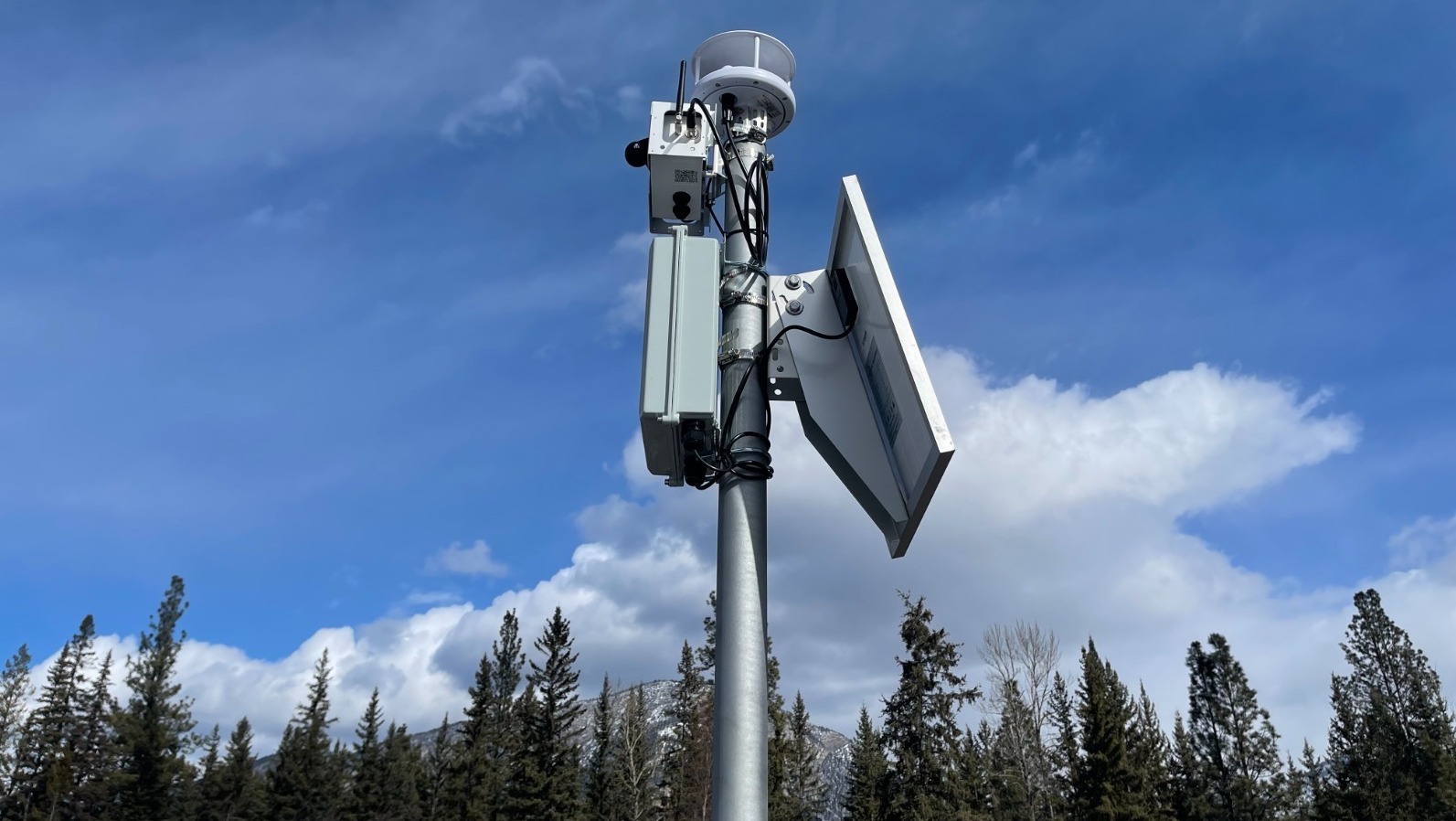
TL;DR: Wind transports, disperses, and even occasionally helps create air pollution. Anemometers measure wind speed and direction, which helps track air pollution sources and exposure. Anemometer accuracy is tested using wind tunnels. Clarity’s Wind Module showed very low error in both speed and direction, making it a reliable tool for improving air quality monitoring and decision-making.
How does wind affect air pollution?
Wind plays an important role in dispersing air pollution, sometimes causing emissions to travel far away from their original sources. During the 2021 wildfires, wind caused the smoke from fires in California and Oregon to travel as far away as New York. Air pollution has even been known to spread well beyond country boundaries.

Wind can sometimes dilute pollutants; higher wind speeds can disperse air pollution, resulting in better local air quality. However, wind can also move air pollution from one location to another, making the air pollution source seem deceptively benign for local air, while a distant area suffers from its emissions.
What is an anemometer?
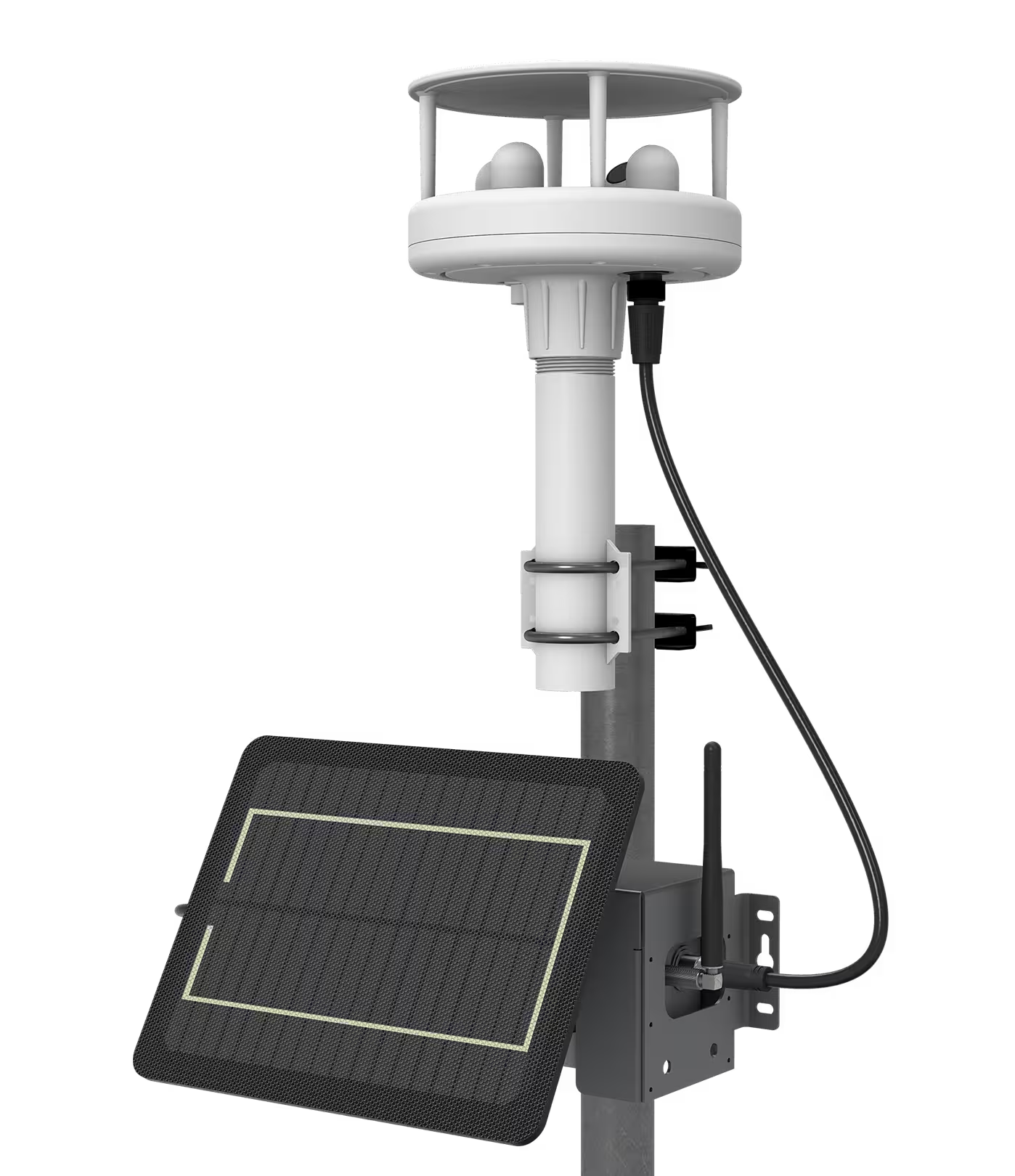
An anemometer is an instrument that measures wind speed and pressure. These tools are helpful to both meteorologists, who analyze weather patterns, and physicists, who study the movement of air.
Anemometers are also very useful for understanding ambient air quality. Data on wind direction and speed can help identify air pollution sources. Knowing where polluted air is headed can also help identify which areas will face the most air pollution exposure.
How to assess the accuracy of an anemometer
Measuring the accuracy of an anemometer often includes the use of a specialized wind tunnel. Wind tunnels are devices used for producing a controlled stream of air in order to study its effects on certain things placed inside the tunnel itself.
The anemometer can be placed within the wind tunnel, with the tunnel calibrated to generate a set wind speed. The measurements taken by the anemometer are then compared to the target wind speed in the tunnel to determine deviation. The set wind speed can also be changed as necessary to see how well the anemometer measures different wind speeds.
A similar test can be conducted to measure how accurately an anemometer measures wind direction. The anemometer is again placed within a controlled wind tunnel. The device is then rotated to a predetermined angle relative to the direction of the wind. The measurements taken by the anemometer are then compared to the known angle to determine any deviation.
Exact recommendations vary by regulatory body, but typically, to be considered accurate, the expectation is that an anemometer will provide measurements:
- Within 0.2 m/s + 5% of observed speeds for Wind Speed
- Within a 5-degree margin of error for Wind Direction (including the sum of orientation errors and linearity errors)
How Clarity’s Wind Module performs in accuracy testing
Clarity conducted the two aforementioned tests to determine the accuracy of our Wind Module’s ability to measure both wind speed and direction. For the first test, which was used to determine the accuracy of the Wind Module’s wind speed measurement, the wind tunnel was set to have a wind speed that steps from 2 m/s to 3 m/s in the U direction between 0 and 600 seconds. Then, it was set to step from 2 m/s to 3 m/s in the V direction between 600 and 1200 seconds.

The test revealed that the mean absolute error (MAE) of the wind speed measurements from the Clarity Wind Module is 0.05 m/s. This is well within the requirement of +/- 3 m/s, and confirms that the Wind Module provides accurate and reliable wind speed measurements with low error rates.
For the second test, which was used to determine the accuracy of the Wind Module’s wind direction measurement, the wind tunnel was set to maintain a consistent wind speed. Clarity plotted the 1-second time resolution measurements from both the Clarity Wind Module and the target wind direction over the entire data collection period.
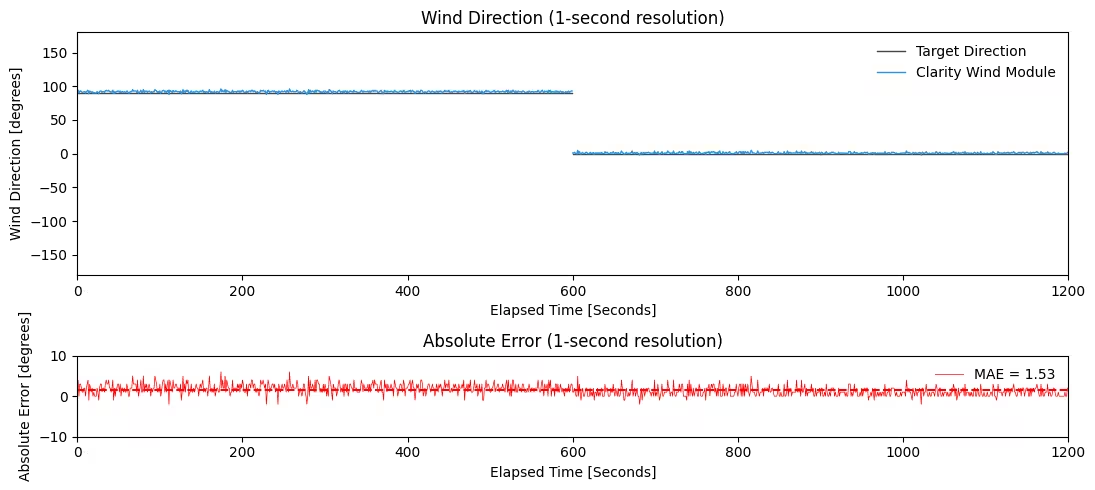
The second test revealed that the mean absolute error (MAE) of the wind direction measurements from the Clarity Wind Module is 1.53 degrees. This is well within the requirement of +/- 10 degrees, confirming that the Wind Module provides accurate and reliable wind direction measurements with low error rates.
Looking forward
Data on wind speed and direction can complement information about air pollutant concentrations, forming a well-rounded picture of local air quality. Better data means better policy decisions and regulation enforcement. Partner with Clarity to implement our reliable air quality sensor technology and accurate Wind Module.