
Image provided by NASA.
TL;DR: Drought linked to this year’s unusually strong El Niño has helped drive some of Indonesia’s worst wildfires in over a decade, with smoke spreading to neighboring countries. The fires have caused wildlife losses and damaged farmland. In August alone, wildfire smoke caused 1,700 deaths in Indonesia. Deforestation and climate change contributed to fire risk. Governments and emergency managers should ensure proper fire and smoke preparation as global temperatures continue to rise.
What is El Niño?
El Niño is a weather phenomenon that occurs every 2-7 years, when the Pacific Ocean trade winds that normally blow west along the equator are weaker than normal. This pushes warm water back east toward the United States’ west coast.
Warmer-than-usual waters in the central and eastern Pacific Ocean can affect temperature and rainfall patterns worldwide. Although El Niños can cool the air in certain areas, they usually warm climates around the world. While El Niños usually last up to 18 months, the largest temperature increases occur the year after an El Niño. For instance, 2024, which followed the powerful 2023-2024 El Niño, was the hottest year on record.
El Niño is short for “El Niño de Navidad,” meaning “The Christmas Child.” This name allegedly originates from Peruvian fishermen in the 1600s who noticed reduced fish catches and a warm current that became most prominent around Christmas time. This story reflects how El Niño is a natural weather event that has been around for millennia. Yet, scientists have debated whether climate change is exacerbating El Niño now.
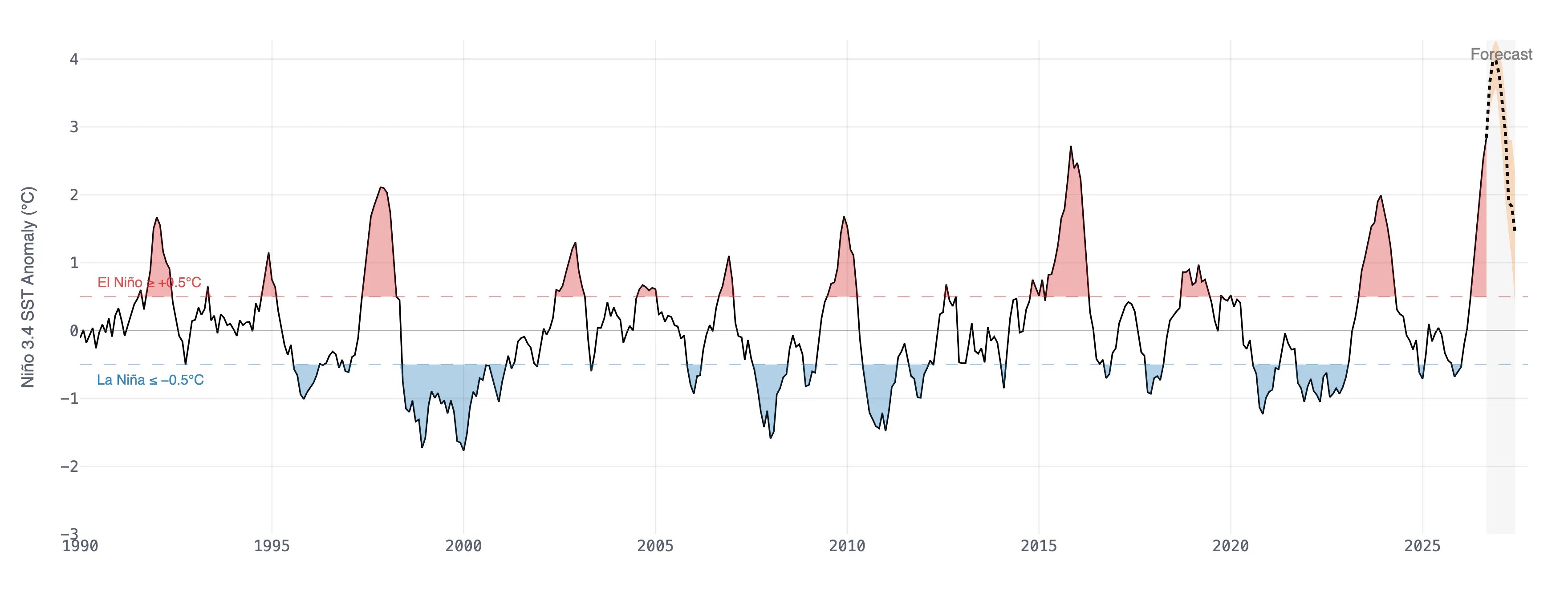
Despite its long history, this year’s El Niño is unlike any other. When the water is more than 2°C warmer than average, it qualifies as a “very strong” El Niño. As of October 8th, there is more than an 83% chance of a strong-to-very strong El Niño through January to March 2027.
On September 19th, daily sea surface temperatures in the central-eastern Pacific were 3.05°C above average. This El Niño could even be the strongest out of almost 80 years of records, earning it the nickname “Super El Niño.” It may even be the strongest one since the 1800s.
How is El Niño affecting Southeast Asia?
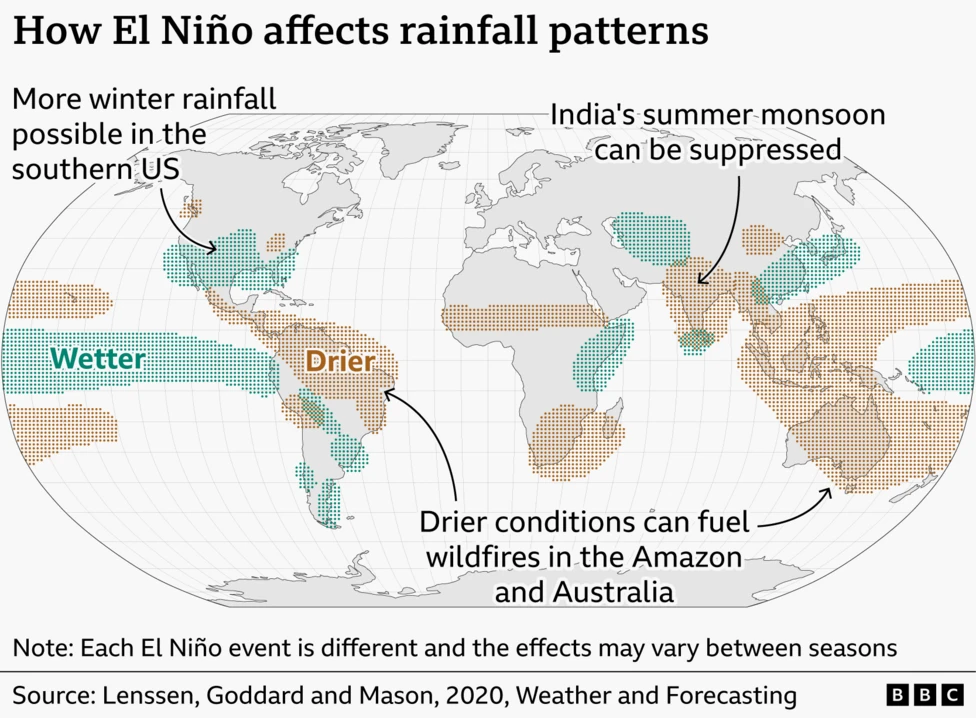
These weather events usually peak in winter, but this one has already had intense, far-reaching effects as early as the summer months. Certain areas have seen increased rainfall and flooding, while others are plagued by drought. India has seen less rainfall this year, while the Atlantic has been experiencing far less hurricane activity. Meanwhile, coastal parts of Peru, Ecuador, and the southern United States face an increased risk of flooding.
Regions of Southeast Asia have been hit particularly hard as drought has paved the way for wildfire activity. Wildfires flare up annually in Indonesia, fueled by slash-and-burn agricultural activity. Yet, this year, Indonesia has been battling some of its worst wildfires in 11 years.
In August alone, 600,000 hectares burned in parts of Indonesia. As of October 7th, roughly one million hectares have been burned since January, and more than 800,000 hotspots have been reported. These conditions have been so severe that they have even triggered a class action lawsuit against Indonesian government officials accused of negligence. As of October 8th, Indonesia detected 387 forest and land-fire hotspots. This number is lower than previous counts, but the fires and haze are still a concern.
The Indonesian wildfires might not go away anytime soon. Hot and dry conditions are expected to persist into the new year. Many of the wildfires are occurring on peatland where underground organic material may continue to smolder long after the above fires appear to be out, possibly leading to a later reemergence of flames. Of the 24 million hectares of Indonesian peatland, 16 million have already been made more vulnerable to wildfires from deforestation, drainage, and ecosystem damage.
What impacts do the wildfires have?
The Indonesian wildfires have had far-reaching impacts that often span beyond the country’s borders. Within Indonesia itself, the wildfires have devastated wildlife. The fires have affected habitat that contains 52% of the Bornean orangutan population. Flames have spread into the habitats of five endangered gibbon species and more than 20 Sumatran elephant habitats. Sunda pangolins, snakes, and endangered proboscis monkeys have also been affected.
The wildfires contribute to food scarcity for these species, meaning surviving animals may still die off in the coming months. Forests may take years to fully recover.
Unfortunately, food scarcity may affect more than just animals. The UN World Food Program (WFP) estimates that El Niño may push nearly 50 million more people in highly vulnerable communities worldwide into acute hunger. While the Indonesian wildfires are not the sole cause, they have damaged many agricultural areas throughout the country. Heat waves and water stress are also threatening harvests in the region.
The wildfires’ impact on air quality and public health
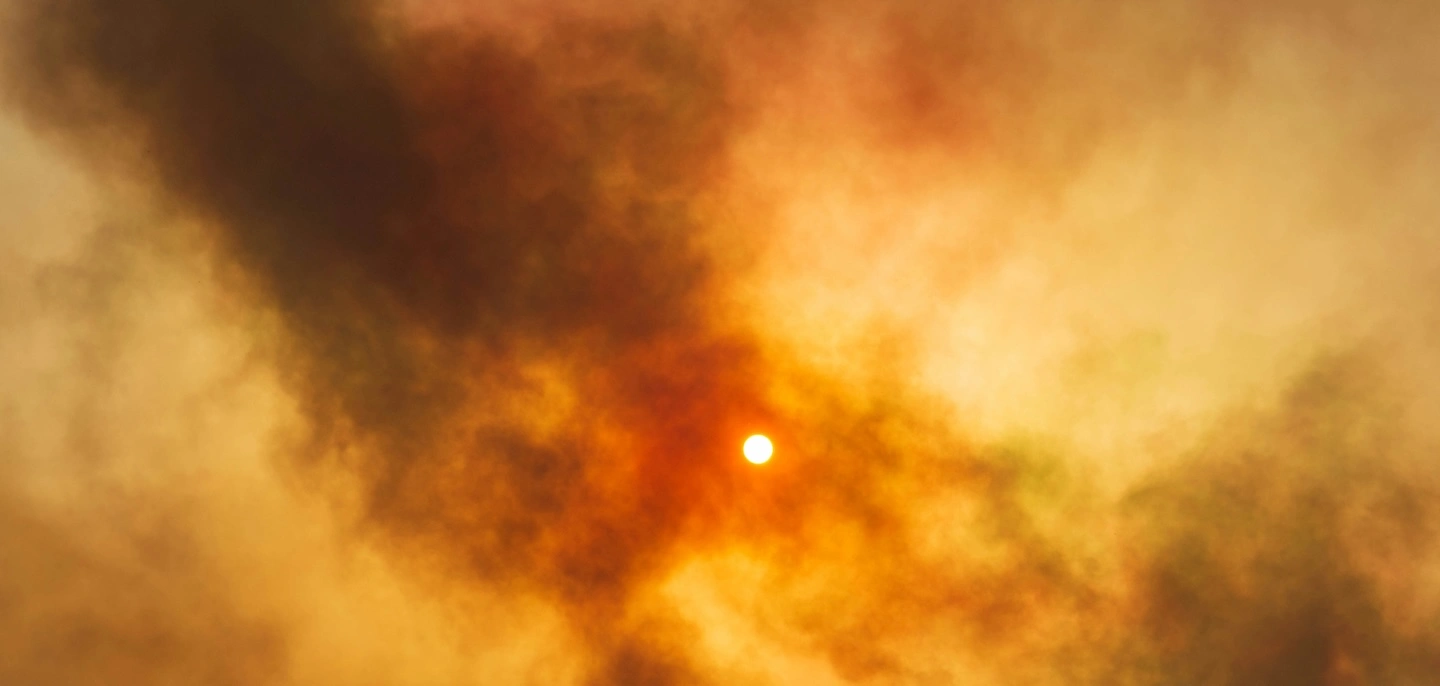
Much of the damage has come not from the flames themselves, but from intense smoke plumes. Dangerous smoke from the Indonesian wildfires has spread to many parts of Southeast Asia, including Malaysia, Singapore, and the Philippines. The haze crisis, which has covered the sky in yellowish-grey smoke, has been ongoing for months.
Across Breathe Metro Manila, a public air quality monitoring network using Clarity sensors, the 24-hour average fine particulate matter (PM2.5) concentration was about 36.1µg/m³, which is 2.4 times higher than the World Health Organization (WHO) 24-hour guideline.
On Monday, October 5th, fine particulate matter (PM2.5) reached a concentration of 1,702 micrograms per cubic meter (μg/m3) in Palembang, Indonesia. For context, the index’s highest “dangerous” category begins at 300 μg/m3. In the same area, acute respiratory infection cases increased from 13,480 in July to 17,434 in September, with more cases in areas bordering the wildfires.
In August alone, wildfire smoke caused 1,700 deaths in Indonesia, adding to the alarming death toll of 2,000 deaths in the same month from chronic air pollution caused by other anthropogenic sources. On August 18th, 41 million Indonesian citizens experienced air quality that was ‘unhealthy’ or worse. Since August, at least 175,000 respiratory infection cases linked to the fires have been reported.
What this spells for the future and what we can do about it
Although El Niño conditions enabled these devastating wildfires, deforestation and climate change compounded the risks. El Niño may have raised temperatures in the short term, but global warming may make those temperatures the new normal over the next decade. It is important to take action now, both to mitigate global warming and properly prepare for the wildfires it may cause.
Wildfire preparedness with Clarity
Clarity offers wildfire monitoring solutions, including the Node-S, which measures fine particulate matter and nitrogen dioxide, and the Multi-Gas Module, which measures carbon monoxide, ozone, nitrogen dioxide, nitric oxide, and nitrogen oxides. Explore these solutions and more, and partner with Clarity to ensure clean air and safer communities.