TL;DR: Acting on climate and clean air together protects public health and is also a strong economic investment. A new report from UNEP and CCAC finds that integrated action delivers more than tackling either issue alone, raising economic benefits to roughly 11.4% of global GDP by 2100. Yet, every year of delay wears those gains down. The barriers are real, but the report names 16 change enablers that can facilitate change. Implementing air quality monitoring networks is one of the 16 key change enablers named, demonstrating how measuring air quality is the key first step to improving air pollution.
What is the new report?
Hidden assets: The economic and health case for climate and clean air action is a new report created by both the United Nations Environment Program (UNEP) and the Climate and Clean Air Coalition (CCAC). Together, these organizations produced this report, which is the current Global Economic Assessment of Integrated Climate and Clean Air Action.
The report identifies 25 solutions that simultaneously address both clean air and climate challenges across six sectors (energy, transport, industry, agriculture, waste, and cooking). These serve as a focal point for the report’s economic analysis.
The 25 solutions consist of the following measures. The table below was adapted from the report’s executive summary.
Unlike previous reports published about air quality and climate change, this one quantifies the combined economic value of both air pollution and climate action in a single framework instead of adding separate estimates together. While the co-benefits of combining these two environmental initiatives have long been recognized, this report offers the most complete picture of both the benefits and costs of combined climate and clean air action. The report pinpoints barriers to action and assigns an economic value to removing them.
What is at stake?
Human-caused ambient air pollution in the form of fine particulate matter (PM2.5) and ozone (O3) together led to an estimated 6.4 million premature deaths around the world. Air pollution has also been linked to many life-threatening and debilitating diseases.
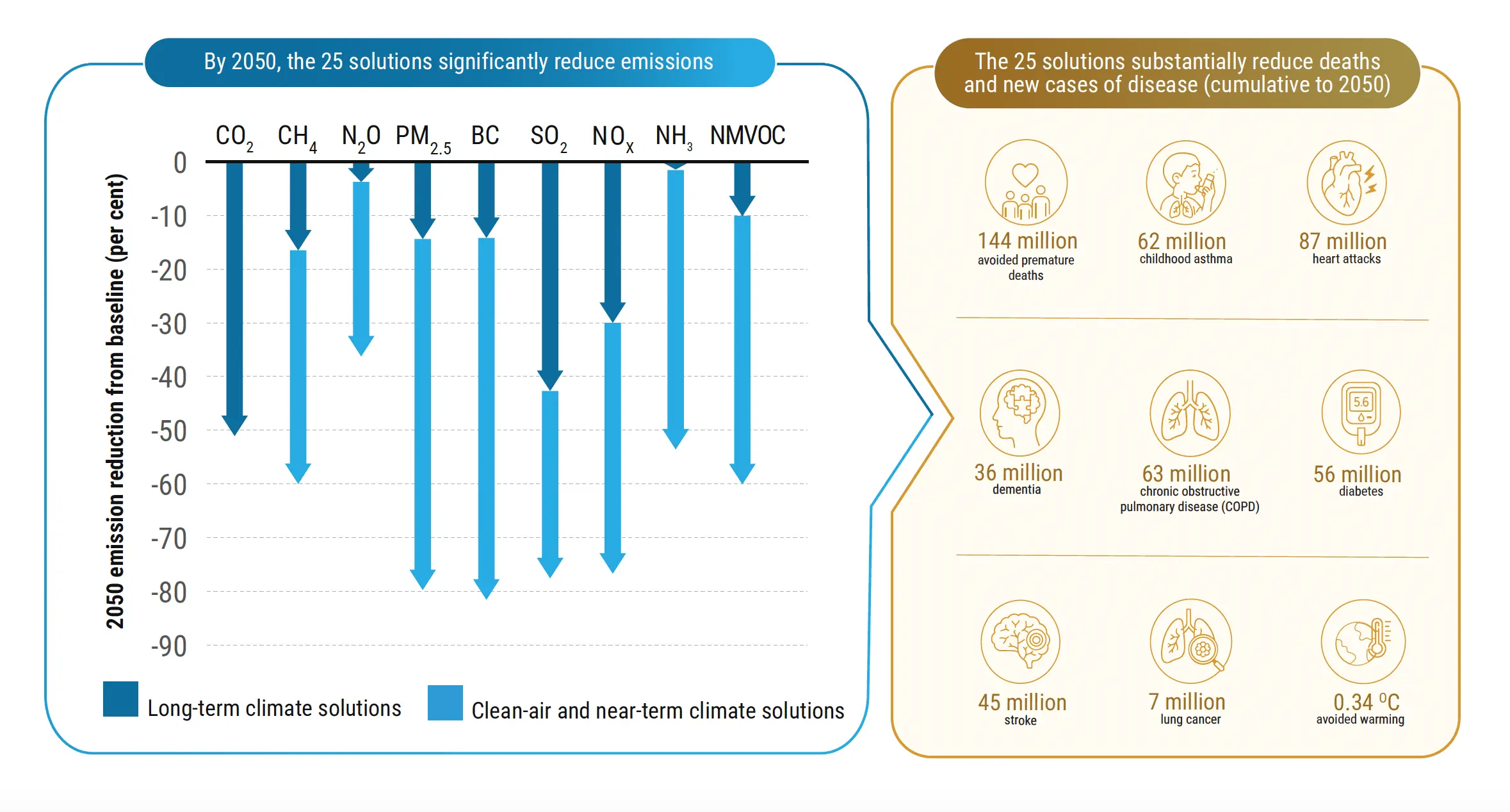
If the 25 integrated solutions are implemented, an estimated 144 million premature deaths from PM2.5 and ozone exposure would be avoided by 2050.
The table below, adapted from the report’s executive summary, shows the number of new cases of disease linked to anthropogenic PM2.5 exposure in 2025 and the proportion of all instances around the world.
Exceeding 1.5 ºC is widely seen as unavoidable, and without the right action, greenhouse gases are expected to keep rising. However, with the right measures taken now, the harmful effects can be mitigated. The 25 solutions introduced in the report could avoid about 0.34 ºC (between 0.1 and 0.6) of warming by 2050 and about 1.4 ºC (between 0.9 and 2.1) by 2100. Because temperatures rise faster over land than the global average, these benefits will be even greater at the regional level.
What can we gain by taking climate and clean air action now?
By acting now, governments can achieve both substantial monetary and public health benefits. For every dollar invested in the 25 solutions, around 15 dollars of economic benefits are generated, with market returns expected to exceed implementation costs within ten years.
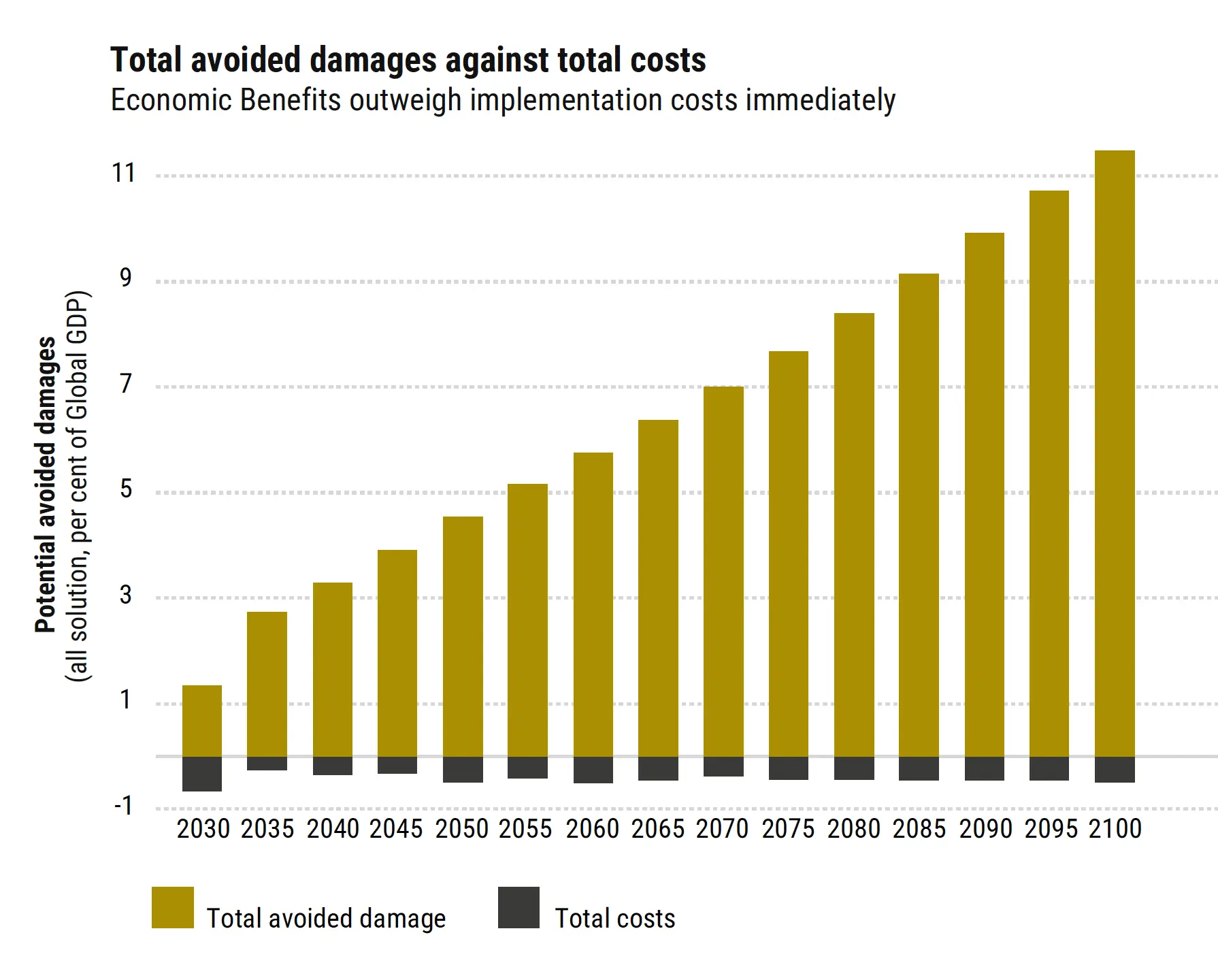
Tackling both climate change and air pollution sources together boosts economic benefits to roughly 11.4% of global GDP by 2100. Moreover, joint air quality and climate action generates about 0.2% of global GDP in additional economic benefits compared to addressing the two issues separately.
By 2050, the 25 solutions are estimated to cut global CO2 emissions by half and CH4 emissions by 60%. Similarly, they are expected to cut black carbon and PM2.5 precursors such as NOx and SO2 by 70%.
The consequences of delay
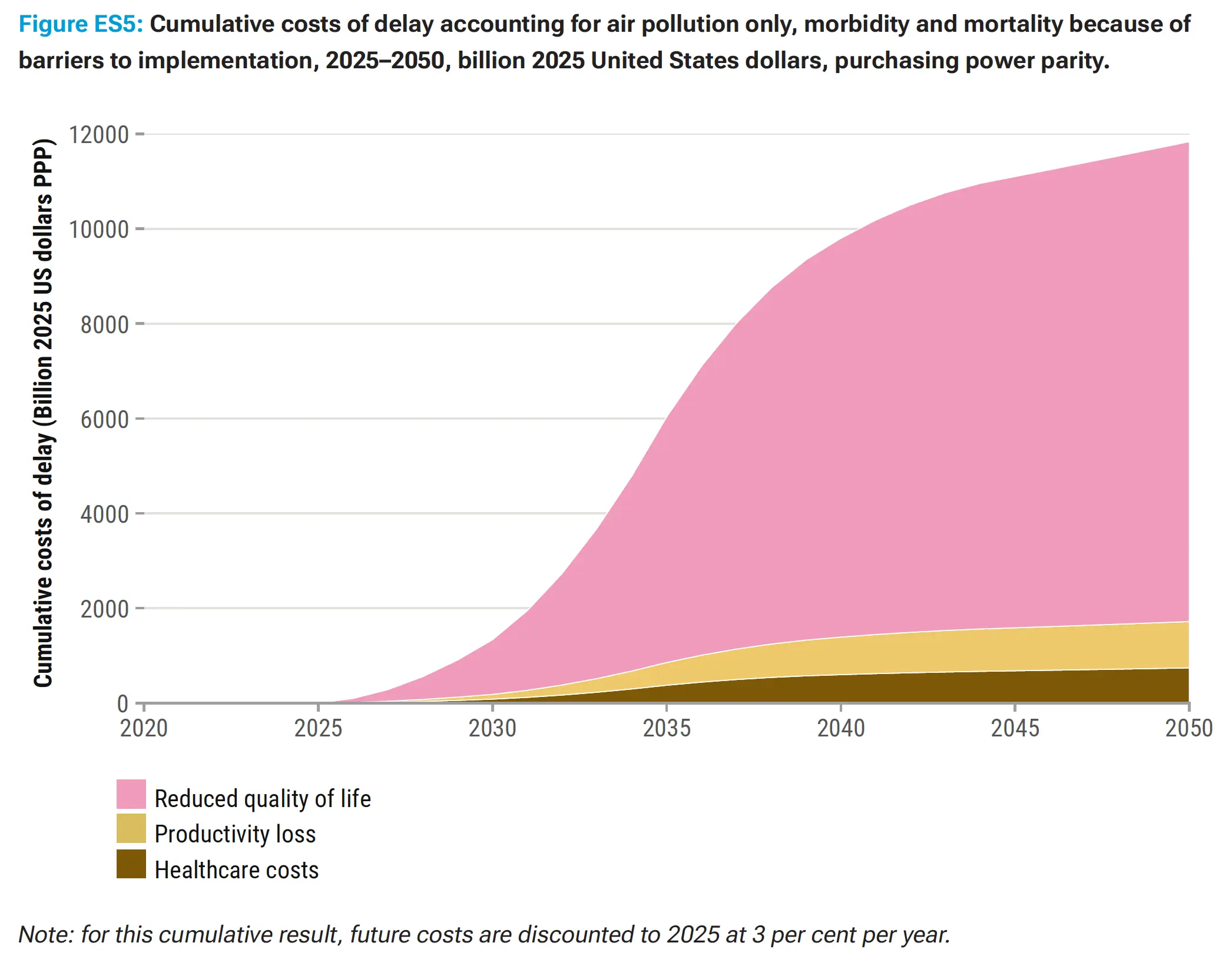
Delaying change has serious consequences and significantly cuts benefits. In fact, each year of delay means that more than 0.5% of global GDP in benefits is lost. This is over $1.5 trillion in combined market and non-market value. Implementation delays of 7.5 to 8 years are expected on average globally, yet a delay of this scale approximately halves the achievable emissions reductions by 2035.
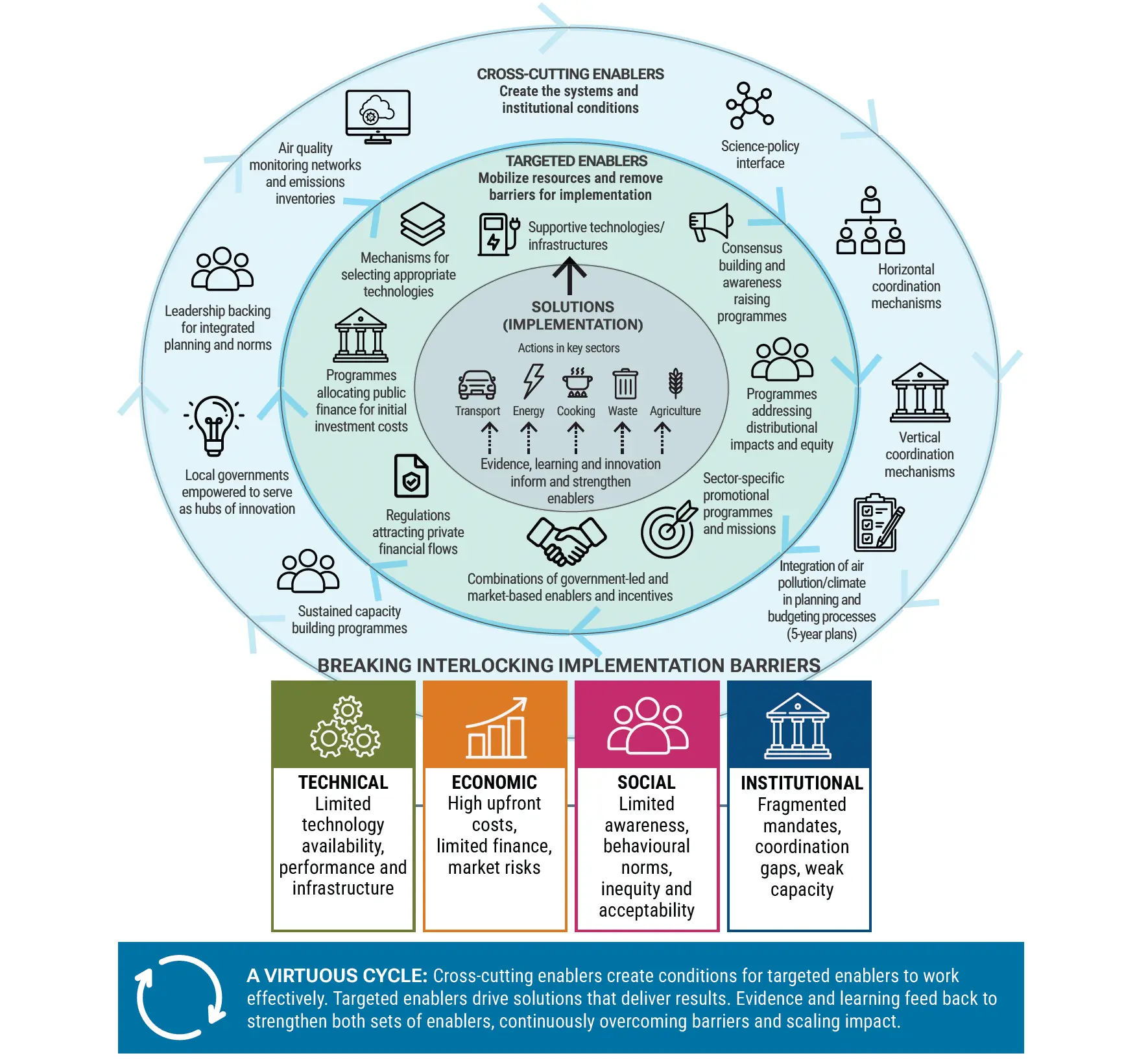
The report identifies multiple barriers to implementing the 25 solutions. The barriers are either institutional, economic, technical, or social. Fortunately, the report identifies 16 enablers that push through the implementation barriers and lead to positive change. Real-world examples from China to Mexico demonstrate that lasting progress is achievable.
Clean air action with Clarity
Air quality monitoring networks are one of the key change enablers identified by the new report. With air quality monitoring, governments can identify pollution hotspots, raise public awareness, make informed decisions, and track pollution mitigation measures. Partner with Clarity and secure clean air for all.