4 Node-S
air sensors deployed across the most occupied spaces
208,150 acres
on the Quinault Indian Nation Reservation
4,500 tribal members
with access to real-time air quality data


Quinault Indian Nation is a sovereign nation with the inherent right to self-govern. The QIN decided to further advance its sovereignty by establishing its own air quality monitoring program.
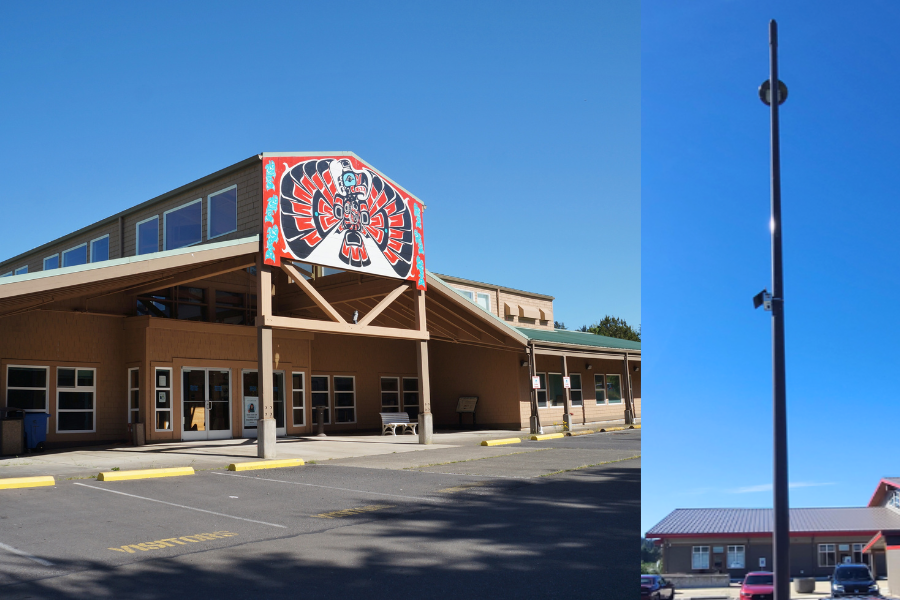
The Quinault Indian Nation (QIN) consists of descendants of the Quinault, Quileute, Queets, Hoh, Chehalis, Cowlitz, and Chinook people. The reservation is located on the southwestern corner of the Olympic Peninsula. Its 208,150 acres contain large forests, diverse wildlife, abundant rivers, and 23 miles of pristine Pacific coastline.
The QIN is a sovereign nation with the inherent right to govern itself and deal with other tribes and governments on a government-to-government basis. Following this, the Nation decided to further advance its sovereignty in the realm of environmental management by establishing its own air quality monitoring program.
Housed under the Quinault Environmental Protection Department, the Quinault Air Quality Program (AQP) aims to communicate air quality information and concerns to the Nation and promote resources that mitigate the community’s exposure to air pollution. The AQP is public health-oriented. It oversees emissions released in the tribe’s airspace and addresses violations of the Federal Air Rules for Reservations (FARR).
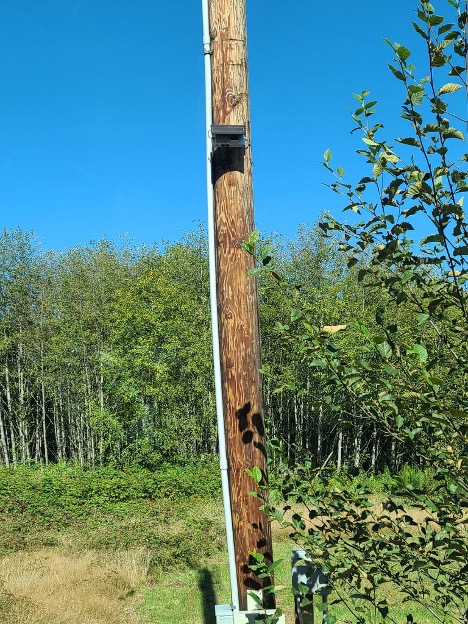
The AQP has run several emissions reduction projects, including facilitating 5 DERA grants, a current vessel replacement project under the Tribal Electronic Boats Program, replacing an aged diesel dump truck with VW mitigation settlement funds, and woodstove replacement projects.
The Quinault community faced a number of air quality concerns, including woodsmoke pollution from winter air stagnation and indoor mold. Prescribed burns and wildfires produce smoke that sometimes affects residential air quality.
Without air quality data, the AQP found it difficult to address these concerns. The organization did not know the worst times of year for air pollution, nor could it do more than speculate on the causes and effects of air pollution events.
You can’t act without info, simple as that! You can’t identify the worst times of the year for AQ, speculate cause/effect for AQ events, etc…”
— Cody Cook-Winscher, Air Quality Specialist at the Quinault Environmental Protection Department
The Quinault Indian Nation installed 4 Clarity Node-S sensors, one in each of the reservation’s most occupied spaces: Taholah, Queets, QuiNaiElt Village, and Amanda Park.
We did assess other monitoring solutions. Ultimately, reliability, durability, pricing, and connectivity even in remote areas were our primary reasons for selecting the Clarity Node-S. The solar panel option made siting far more convenient, and we have never had battery issues.”
— Cody Cook-Winscher, Air Quality Specialist at the Quinault Environmental Protection Department
The Node-S sensors are solar-powered and cellular-connected. This self-sufficiency makes the Clarity sensors perfect for deployment in the reservation’s coastal, forested terrain. Each Node-S is also placed 15 to 20 feet off the ground to further help with connectivity.
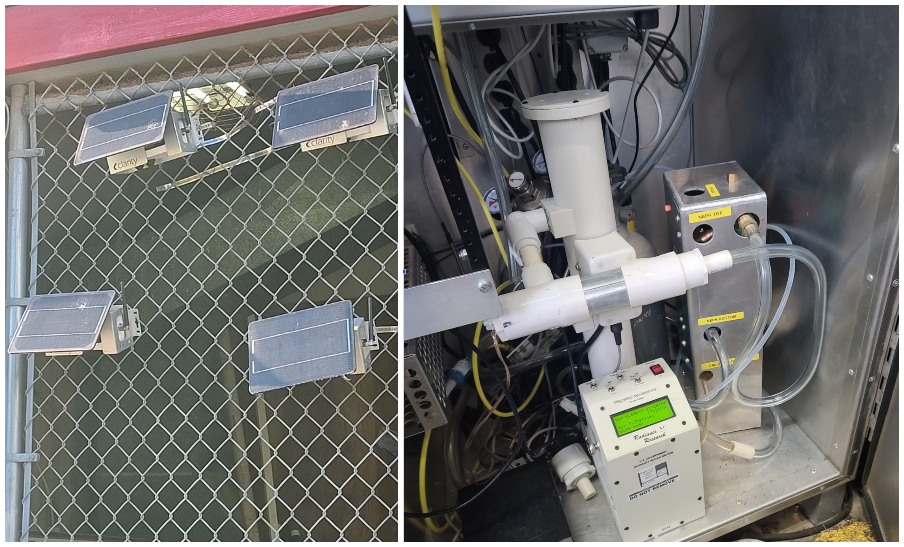
The 4 Node-S monitors also have quality assurance collocation testing. Since these sensors were funded by an EPA grant, Clarity’s rigorous QA/QC activities have helped the Quinault Nation meet the EPA’s quality assurance requirements. Even prior to receiving the QA/QC dedicated nodes, Quinault performed a collocation with one of their nephelometers, which showed that all 4 nodes correlated at 86% or higher.
Clarity’s staff have been super supportive and helpful. Anytime anything goes wrong, or I have a question about how part of the Dashboard works or anything about the sensors, Clarity’s team is on it.”
— Cody Cook-Winscher, Air Quality Specialist at the Quinault Environmental Protection Department
Air quality data has helped the Quinault Indian Nation understand the impact of prescribed fires on air quality, facilitating further collaboration with the Forestry Department’s Fire Section to plan safer Rx burns.
The sensor in Queets, in particular, revealed that this area faced air stagnation challenges compared to other villages. The AQP then led a community event addressing open burning and best practices for woodstove use. The data motivated air quality discussions with the community, as organized by the Queets community leaders. The local air sensor also inspired more Queets support for the ongoing woodstove changeout project.
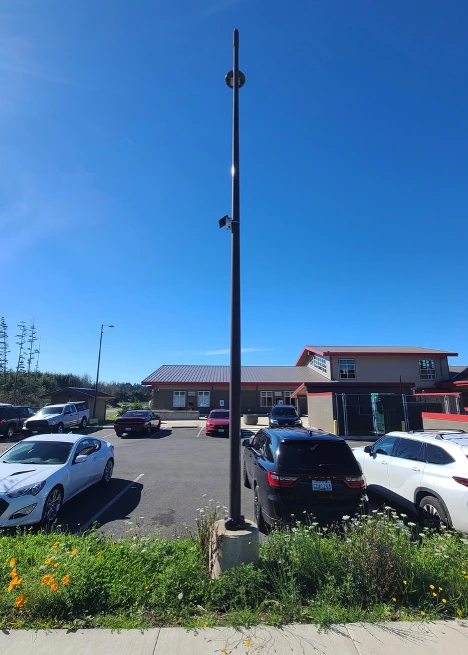
This image depicts another Clarity Node-S sensor deployed in the Quinault Reservation. The Clarity sensors require little maintenance, allowing them to be deployed 15 to 20 feet off the ground, without requiring constant manual access and retrieval.
The network has directly informed my decision to put out public smoke advisories in four prior instances when wildfire smoke was bad. There’s a difference between knowing that smoke is in the area and knowing how bad it is and if it merits notifying the whole community to take reasonable precautions.”
— Cody Cook-Winscher, Air Quality Specialist at the Quinault Environmental Protection Department
Having successfully implemented a community air quality monitoring network, the Quinault Air Quality Specialist has recommendations for other tribal nations considering community air monitoring. Cody suggests securing funding before purchasing air quality monitors, if possible.
If you can get funding to do so, don't just charge right in. Start from what should be your step one — assessing what your community's most likely air quality challenges are, and using that to frame how you should set up your monitoring network.”
— Cody Cook-Winscher, Air Quality Specialist at the Quinault Environmental Protection Department
Far before deploying the sensors, Cody suggests that other tribal nations should begin by assessing what their community’s likely air quality challenges are. They can use that information to frame how the monitoring network should be set up.
The chosen sensor locations should be emblematic of local air quality. Tribal nations should make sure that these locations have adequate cellular or WiFi access and other logistical support to facilitate easy sensor deployment and management.
Ensure that with the sites you have in mind, you have permission to deploy sensors and the logistical details worked out to do so. Also consider:
- Is there adequate internet there?
- Are those sites susceptible to vandalism?
- Are those sites representative of local air quality?
- Would you physically be able to deploy sensors there?
- Can staff readily access those sites to check the sensors or take them down/put them back up if needed? (Not needed often for Clarity’s, but still worth considering.)
These are all important factors air programs should consider before deploying sensors, to ensure their sensor projects provide an accurate picture of air quality in the spaces they’re assessing.”
— Cody Cook-Winscher, Air Quality Specialist at the Quinault Environmental Protection Department*
*Note, these are Cody’s recommendations given his experience and past projects, not a reflection of formal guidance or opinions of the Quinault Indian Nation or its programs.
The AQP plans to integrate the existing network with other sensors to achieve a holistic approach. They are also considering deploying Clarity’s Black Carbon and Dust modules sometime in the future.
Air quality data helps ensure community safety and informed decision-making. Clarity’s sensors are self-sufficient and accurate, making them ideal for both city and remote deployments. The Quinault Air Quality Program now shares its network publicly through a custom-branded OpenMap (embedded below), live at map.clarity.io/quinault.
Anyone in the community can see real-time readings from all four village sensors without a login or a data request. That turns the network from an internal decision-making tool into a public resource residents can check before a burn day, a smoke event, or an afternoon outdoors. It also gives the AQP a single link to point to in smoke advisories, community meetings, and outreach materials.
If you’re interested in reliable, real-time air quality measurement at a reservation or another remote site, you can partner with Clarity to implement an air quality monitoring network and promote clean air.