TL;DR: Air quality funding is one of the biggest hurdles in air quality monitoring. Fortunately, air quality monitoring grants are available across federal, state, regional, philanthropic, and co-funding sources. Securing funding requires identifying the right opportunities, meeting eligibility requirements, understanding matching funds or cost-share conditions, and writing a persuasive grant application.
In the United States alone, as many as 100,000 people die yearly from air pollution sources within the same country. The World Health Organization has found that air pollution is associated with 7 million premature deaths annually worldwide. The 2025 State of Global Air Report even found that 7.9 million deaths in 2023 were attributed to air pollution. It is the cause of 1 in every 8 deaths globally.
Air quality monitoring plays a major role in understanding and mitigating air pollution, which helps prevent these deaths and safeguard clean air. However, air quality monitoring projects require funding, which can be difficult to navigate, especially when you don’t know how to get started.

Why funding is the biggest hurdle in air quality monitoring
Air quality monitoring rarely turns a profit in the traditional financial sense. Moreover, monitoring projects can cost a small fortune, with reference monitors in particular often incurring a $15,000 to $40,000 purchase cost plus exorbitant operational and maintenance fees.
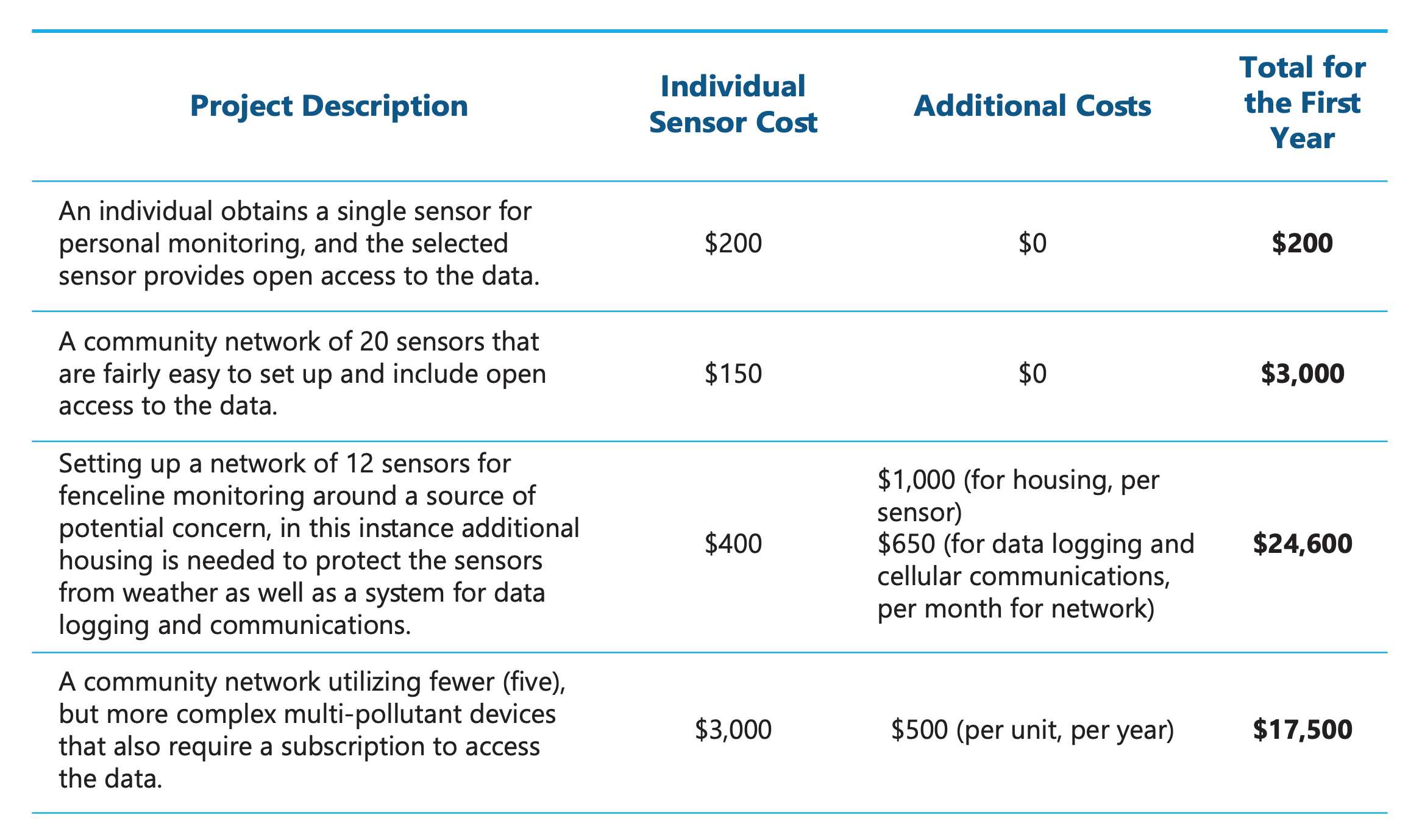
While there have been incredible technological advancements in air quality monitoring, including more affordable sensors and subscription payment models, the cost of sensors and the need for granular networks make funding a major hurdle for air quality monitoring projects.
Where air quality funding comes from: The main sources
Monitoring projects derive funding for air quality monitoring from a variety of places, including:
- Federal grants: The United States Environmental Protection Agency (EPA) offers grants and rebates for projects aiming to improve air quality. The EPA offers two types of grants: competitive and non-competitive. Competitive grants require applicants to apply, and one eligible organization will be selected, while non-competitive grants are usually given directly to governmental units for environmental program support.
- State and regional programs: The California Air Resources Board (CARB), among others, offers various funding programs for air pollution reduction projects. Regional programs offer air quality monitoring grants too. Just this year, the Bay Area Air District (BAAD) offered the People’s Air Grant Program, which awarded up to $400,000.
- Private foundation funding: Private foundations are certain types of charitable organizations, typically funded by an individual, family, or corporation. Bloomberg Philanthropies, a private foundation, recently committed $45 million to expand clean air efforts after the success of the Breathe Cities initiative.
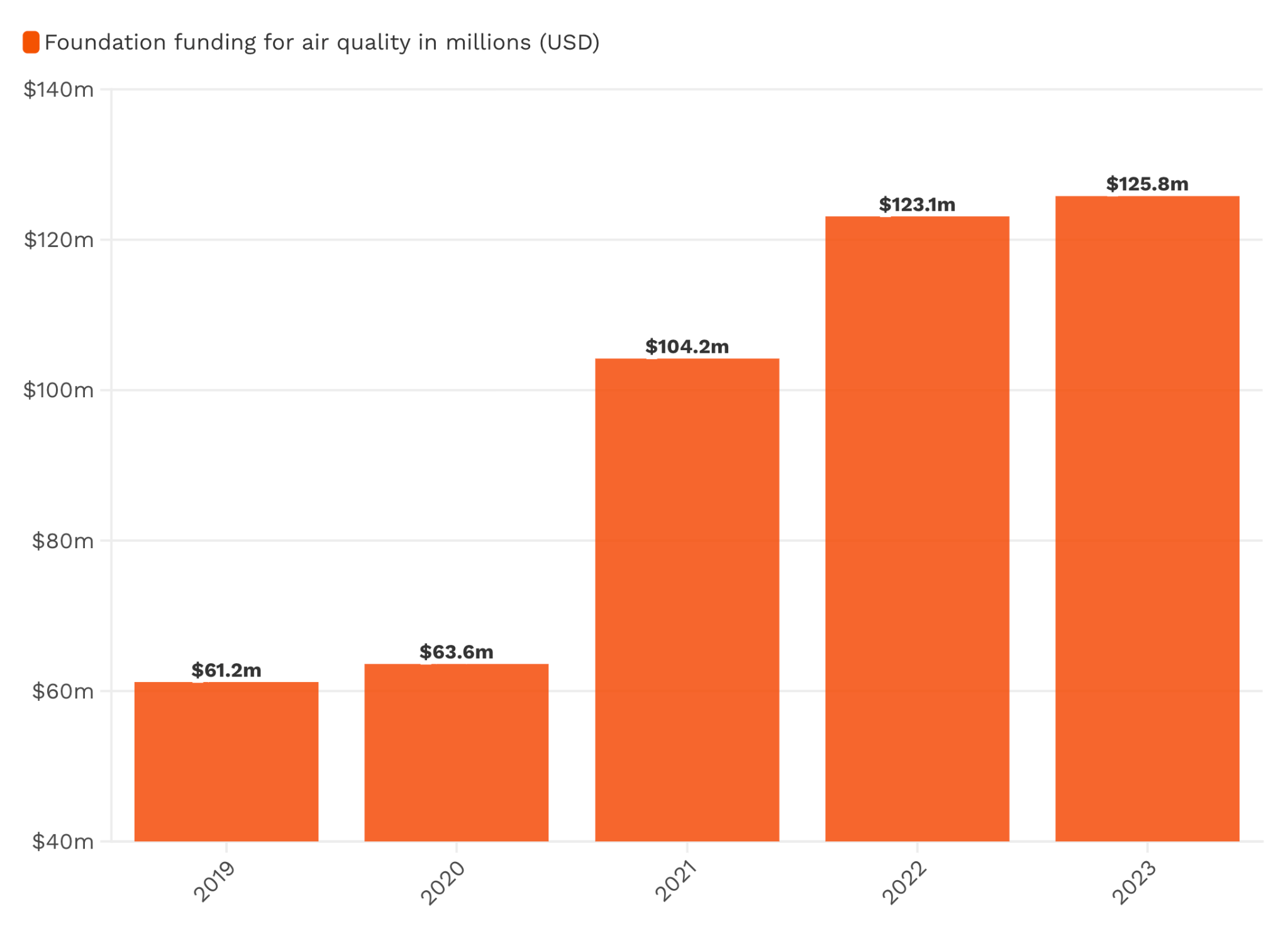
- Other Charitable Funding: Organizations, such as the Clean Air Fund and Coefficient Giving (formerly Open Philanthropy), are not private foundations because they pool money from multiple donors. These groups provide immense funding to air quality programs. In fact, the Clean Air Fund is the world’s largest philanthropically funded organization dedicated to fighting air pollution, having funded over 600 projects and spent about $154 million.
- Co-funding and partnership models: Many air quality monitoring projects draw both funding and expertise from multiple sources, including universities, industry, philanthropy, and even communities. For instance, the Breathe London air quality monitoring network pools funds and expertise from Bloomberg Philanthropies, the Mayor of London, the Clean Air Fund, C40 Cities, Vodafone Business, Imperial College London, and more. Community members can even purchase an air quality sensor in London.
How to find air quality grants you actually qualify for
Looking for air quality grants can be difficult. You need to make sure that you meet the full qualifications of the grants you apply for, including any location, organization type, and registration requirements.
Some helpful tips include:
- Explore EPA, state, and regional program websites
- Sign up for big funder newsletters and mailing lists
- Be sure to check funding program eligibility requirement pages before you apply
- Make sure you have any required registrations for each funding program
- Understand each program’s funding timeline
- Watch for match/cost-share requirements
Be sure to check out Clarity’s Air Quality Funding Opportunities Collection, a regularly updated compilation of useful air quality network funding opportunities.
How to write a fundable grant proposal
Many large air quality grants include specifications on what types of projects they are looking for and what criteria they will use to evaluate grant applications. Be sure to read all the information provided in the grant opportunity, attend any relevant info sessions, and ask grant coordinators any relevant questions you may have. At certain intervals, you may even be able to ask the grant coordinators for feedback on your application.
According to the US EPA, grant proposals usually include the following:
- 1. Project introduction
- 2. Project justification
- 3. Project objectives
- 4. Project timeline
- 5. Project budget
Generally, strong grant applications carefully follow all the instructions, adhere to any application requirements, fully address the evaluation criteria, and include all required additional forms. Air quality monitoring grant applications should be clear and concise, and meet the proposal deadline. Take advantage of any samples and checklists provided. Remember that grant reviewers prioritize facts over opinions in a proposal.
The EPA also recommends engaging with community support, which includes relevant political, academic, and professional individuals, organizations, community members, or groups that may aid your proposal either monetarily or through other kinds of input. The right letters of endorsement can be valuable, but they may take months to develop, so be sure to request them early. You should also consider putting together a grantwriting team to ensure the best proposal is written.

Clarity offers a grant Proposal Writing Tool. This website contains Clarity’s extensive knowledge on running an air quality sensor network, grant applications, and detailed specifications and case studies for Clarity’s products. The tool uses AI to draft grant proposals and/or provide writing assistance, as well as pre-written boilerplate grant applications that you can adapt. Please contact us for more information.
Real-world examples: Funded air quality networks in practice
Many organizations have used grant funding to help implement Clarity air quality monitoring networks. Data from Clarity sensors has also been used to secure additional air quality funding.

Grant-funded air quality monitoring in Angola
Led by Evanilton Pires, an environmental engineer and lecturer, the Higher Polytechnic Institute of Tundavala secured a grant from Penn State that enabled them to implement 8 Node-S air quality sensors. The sensors were placed in strategic locations around Angola, including cities, towns, and rural areas, with a focus on schools and university partners. The air quality monitoring network raised awareness of air pollution issues in the region, supported teaching and research initiatives, and helped advocates call for clean air policy changes.
Clarity's air quality monitoring solutions are playing a significant role in our efforts to raise awareness and educate our students and communities on the importance of air quality."
— Evanilton Pires, Environmental Engineer and Lecturer at the Higher Polytechnic Institute of Tundavala
Grant-funded air pollution measurement in Almaty and Bishkek
In Central Asia, the cities of Almaty and Bishkek experience very serious air pollution, especially during the winter. Supported by the Asian Development Bank (ADB), the governments of Kazakhstan and the Kyrgyz Republic led efforts to improve urban air quality in these cities. In 2021, 50 Node-S air quality sensors were deployed throughout Bishkek, with funding from the ADB. In 2022, 50 more were deployed throughout Almaty city.
The air quality data established a baseline, showing the progress of air quality management initiatives in the area, and playing a key role in the ABEC Clean Air Initiative. It enabled multiple air pollution research projects, including a report from UNICEF and the Japanese government. The data also helped secure greater funding. In 2023, the World Bank provided $50 million in funding for the Kyrgyz Republic Air Quality Improvement Project.
The data provided by the sensors helped to speed up the city’s decision-making. Today, the sensor readings have had a direct impact on public opinion. This year, we launched public ecological transport and eco-taxi, and we are launching a new system of dedicated public transport lanes that will directly affect the transition to eco-friendly modes of transportation.”
— Jyrgalbek Shamyraliev, Vice-Mayor, Bishkek City Mayor’s Office
Grant-funded air pollution measurement in San Francisco
In 2020, the non-profit Brightline Defense deployed an air quality monitoring network of 15 Node-S air quality sensors throughout San Francisco, which was later expanded to 19 sensors due to increased community demand. These sensors provided valuable air quality data to help protect local communities during wildfire air pollution events.
Brightline Defense funded this community air monitoring network through AB 617, also known as the Community Air Protection Program. This is a California state policy that provides funds for community-based air quality monitoring projects, backed by California Climate Investments. Clarity has helped both Brightline and other communities establish air quality monitoring programs through AB 617
Clarity has always been very accessible to make sure all of the different pieces of this program - technical and nontechnical - were able to move forward. There is a lot of value in working with an air quality monitoring service provider that acts as a partner rather than a vendor.”
— Eddie Ahn, Executive Director of Brightline Defense
Grant-funded air pollution measurement in Accra
Led by Professor Kofi Amegah’s team at the University of Cape Coast, the Breathe Accra project is a community-driven initiative seeking to improve air quality in the Greater Accra Metropolitan Area (GAMA) in Ghana by making hyperlocal air quality data accessible to the public. The project falls under the Ghana Urban Air Quality (GhanaAQ) mother project and is a part of the Breathe Cities initiative.
Breathe Accra is funded and supported by the Clean Air Fund. The sensor network has fostered public and legislative awareness of air pollution issues. Today, 56 Node-S air quality sensors are deployed across Accra and Ghana.
The impact of the project has been great in the sense that we have revolutionized the air quality landscape. The citizenry is now more aware of air pollution issues. We started the mother project in 2019 when not a lot of the population was even interested in air pollution. With Clean Air Fund coming into the landscape and supporting projects like ours, we’ve been able to create more public awareness.”
— Professor Kofi Amegah, Project Lead.
Fund your air quality monitoring network faster with Clarity
Clarity provides several tools to help you secure air quality network funding. Check out our Air Quality Funding Opportunities Collection and our EPIC Air Quality Fund page. Contact us for access to our Proposal Writing Tool and other grantwriting support.
Clarity’s subscription model makes funding easier to secure and sustain, eliminating hidden costs and providing technical support. Partner with Clarity today to secure funding and implement an air quality sensor network in your city.