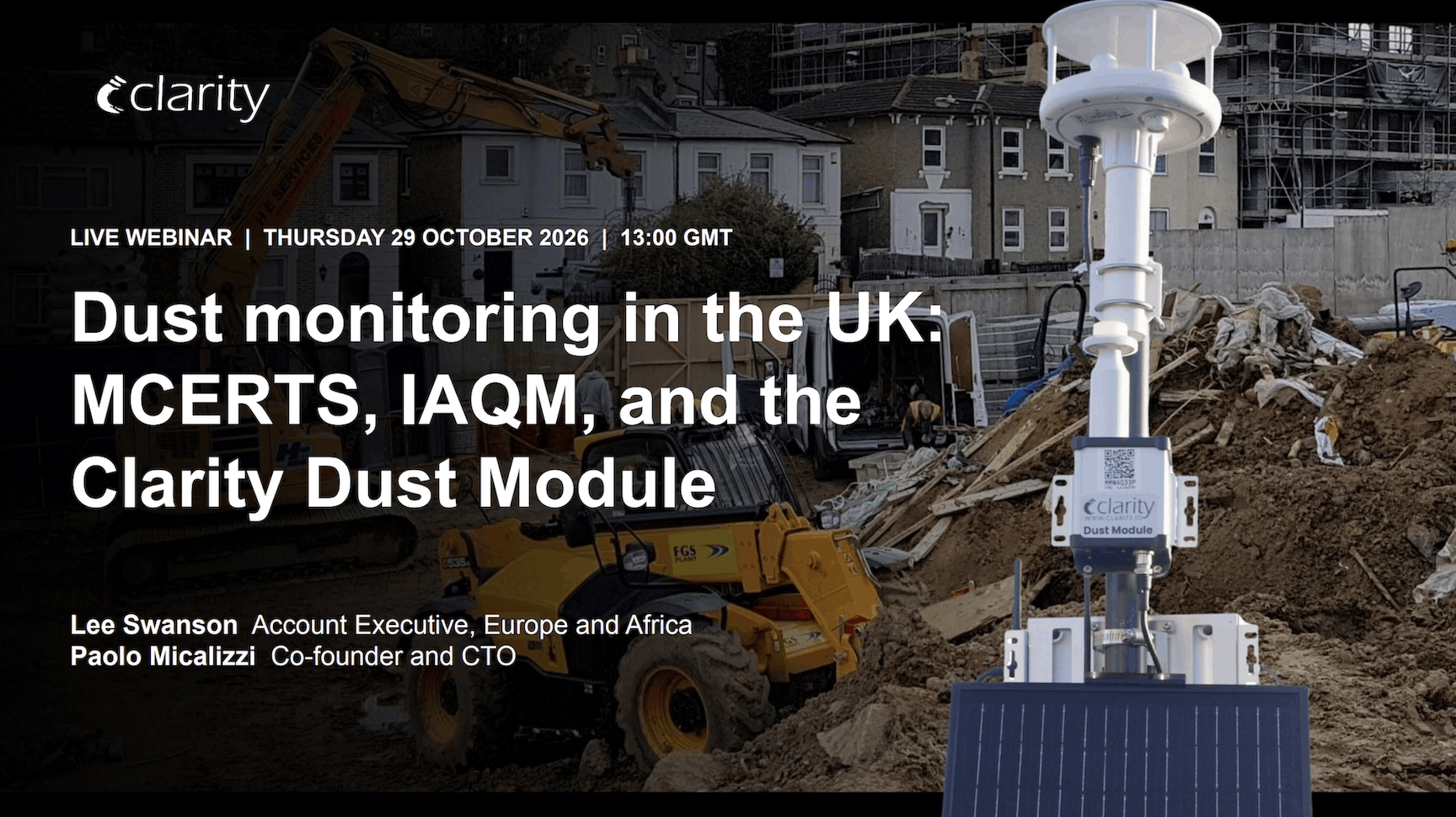
TL;DR: Two 2025 changes, the IAQM position statement and CSA Group Bulletin PC4, mean an MCERTS certificate is now only as useful as the performance range it actually states. Site managers need to confirm that their monitor was tested at the concentrations and conditions found on their site. Clarity’s Dust Module was independently tested and secured MCERTS certification with an hourly PM10 performance range of 0 to 374 µg/m³, which is well above the UK site action level.
An introduction to Clarity
Clarity Movement has supported air quality monitoring projects worldwide for over 10 years, with more than 10,000 unique deployments across 250+ cities in 85+ countries. Our Sensing-as-a-Service offering provides air quality monitoring hardware, software, and an expert team all in one subscription, with no hidden costs.

What changed in UK dust monitoring in 2025
UK dust monitoring underwent several changes in 2025.
The IAQM position statement
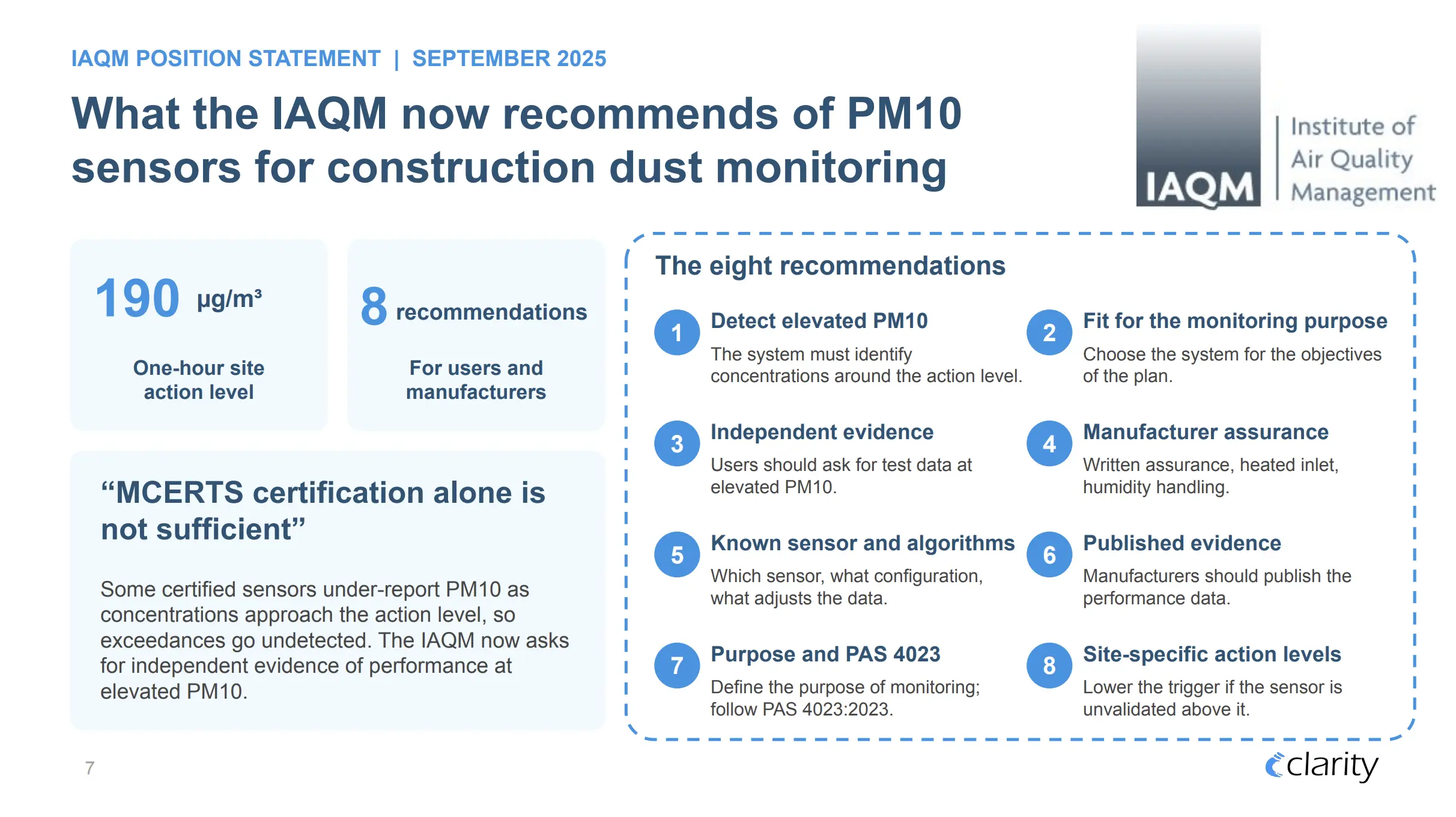
In September 2025, the Institute of Air Quality Management (IAQM) published a position statement on using low-cost sensor systems (also known as IAPM, for indicative ambient particulate monitor) for PM10 near demolition and construction sites.
The position statement explained why indicative sensors were not appropriate at the time for monitoring dust (PM10) at elevated concentrations. Most low-cost sensors used at quarries and construction sites underreported PM10 levels. These sensors used an algorithm to estimate PM10 levels based on PM2.5 levels, a method that is less accurate at higher concentrations. Some sensors were not even validated to reach the 190 µg/m³ one-hour UK site action level.
The position statement provided eight recommendations for dust monitoring. Ideally, the system should measure PM10 directly, be independently validated for the required ranges, and use known sensor algorithms. Relying on MCERTS certification alone is not enough.
The IAQM also provides additional monitoring guidance.
The CSA Group Bulletin PC4
Prior to the position statement, suppliers would give three sensors to be collocated next to a reference site for a period of time. If the data for that certification period fulfilled certain criteria, then the sensor would seemingly be given default sampling ranges on its MCERTS certificates. However, in reality, many of these sensors could not achieve accurate measurements anywhere near the default sampling levels on their certificates. The sensors may not even be calibrated at those levels.
In July 2025, the CSA Group, which is the body responsible for MCERTS certification, published the MCERTS Product Certification Bulletin PC4. This bulletin removed the default ranges from existing MCERTS certificates. New certified ranges will consist only of what is observed in field testing, such as the observed levels, temperatures, and humidity.
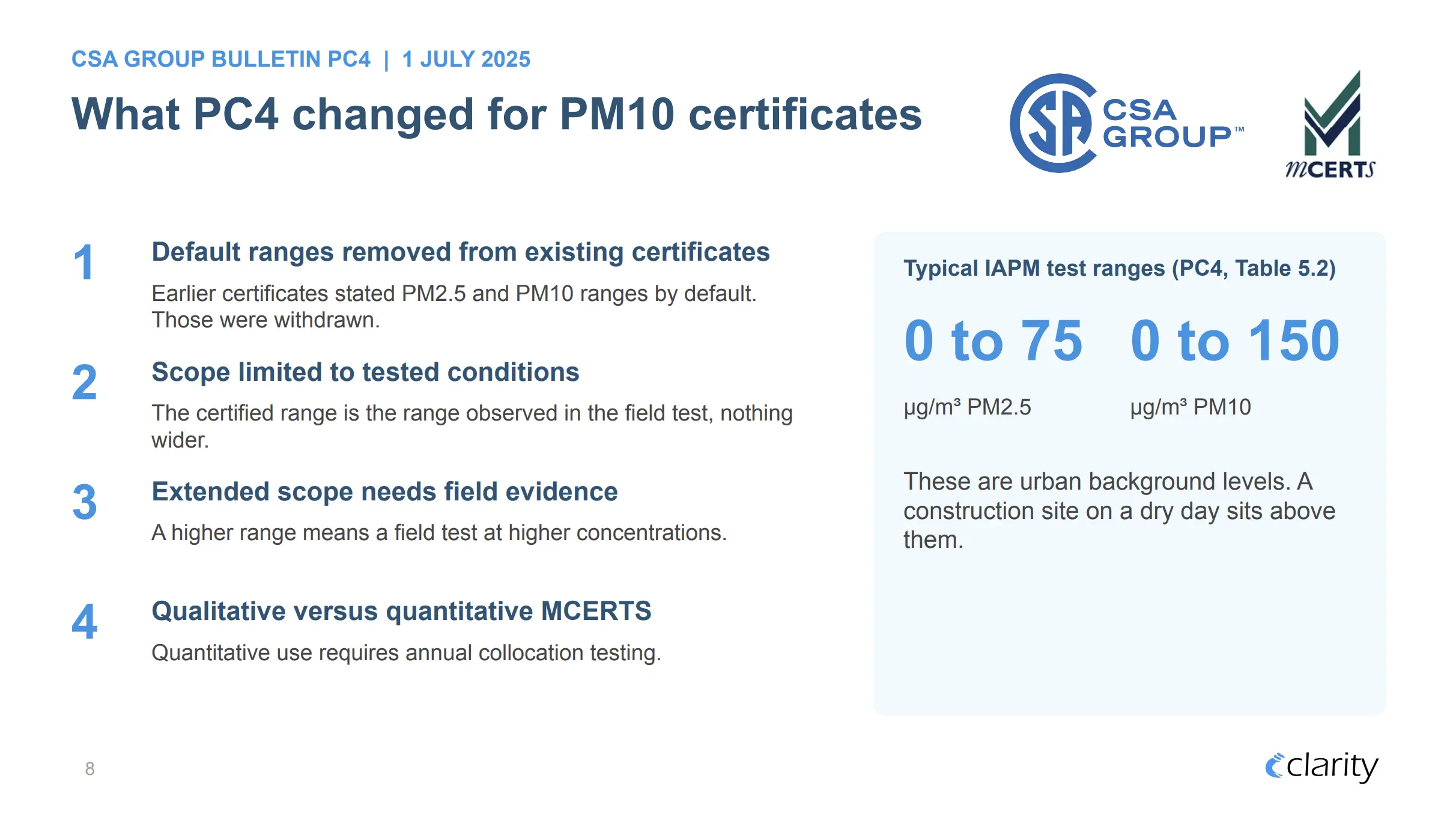
Now, there are also two ways that MCERTS is described on the certificates: qualitative MCERTS and quantitative MCERTS. The former is great for tracking trends. It consists of a predefined calibration factor that is determined from the field testing, which you can apply and continue using.
The latter, quantitative MCERTS, requires collocation of the device and re-checking device calibration at least every 12 months or whenever the device is moved. This requires sensor removal and recolocation over a period of 2 to 4 weeks next to a reference monitor, before reinstallation.
How we tested the Dust Module for elevated PM10
Clarity’s products and Dust Module
Clarity’s flagship product is the Node-S air quality sensor. Measuring fine particulate matter (PM2.5) and nitrogen dioxide (NO2), this sensor is the basic building block of our hardware solution. You can expand the sensing capabilities of the Node-S with Add-On Modules.
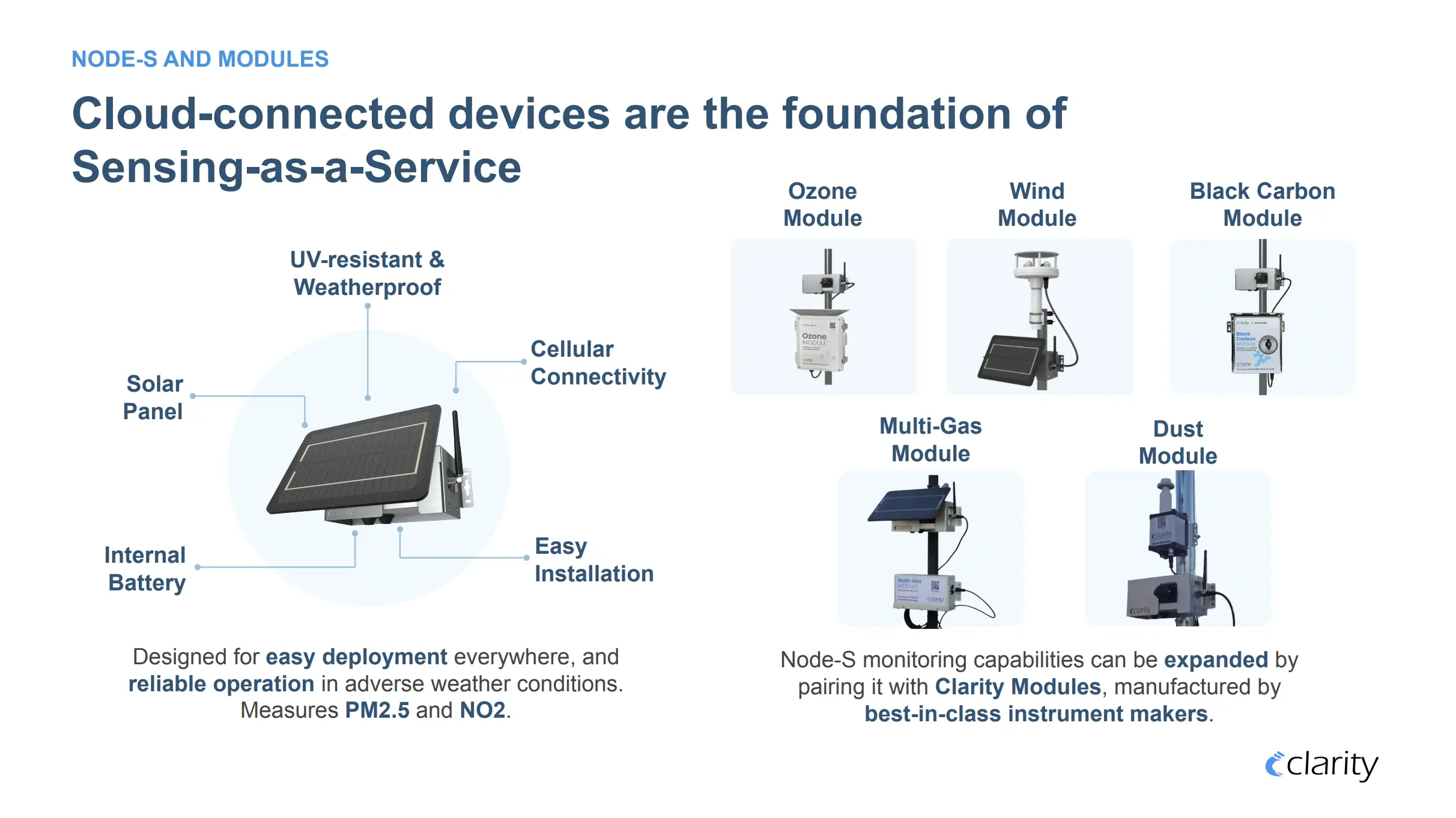
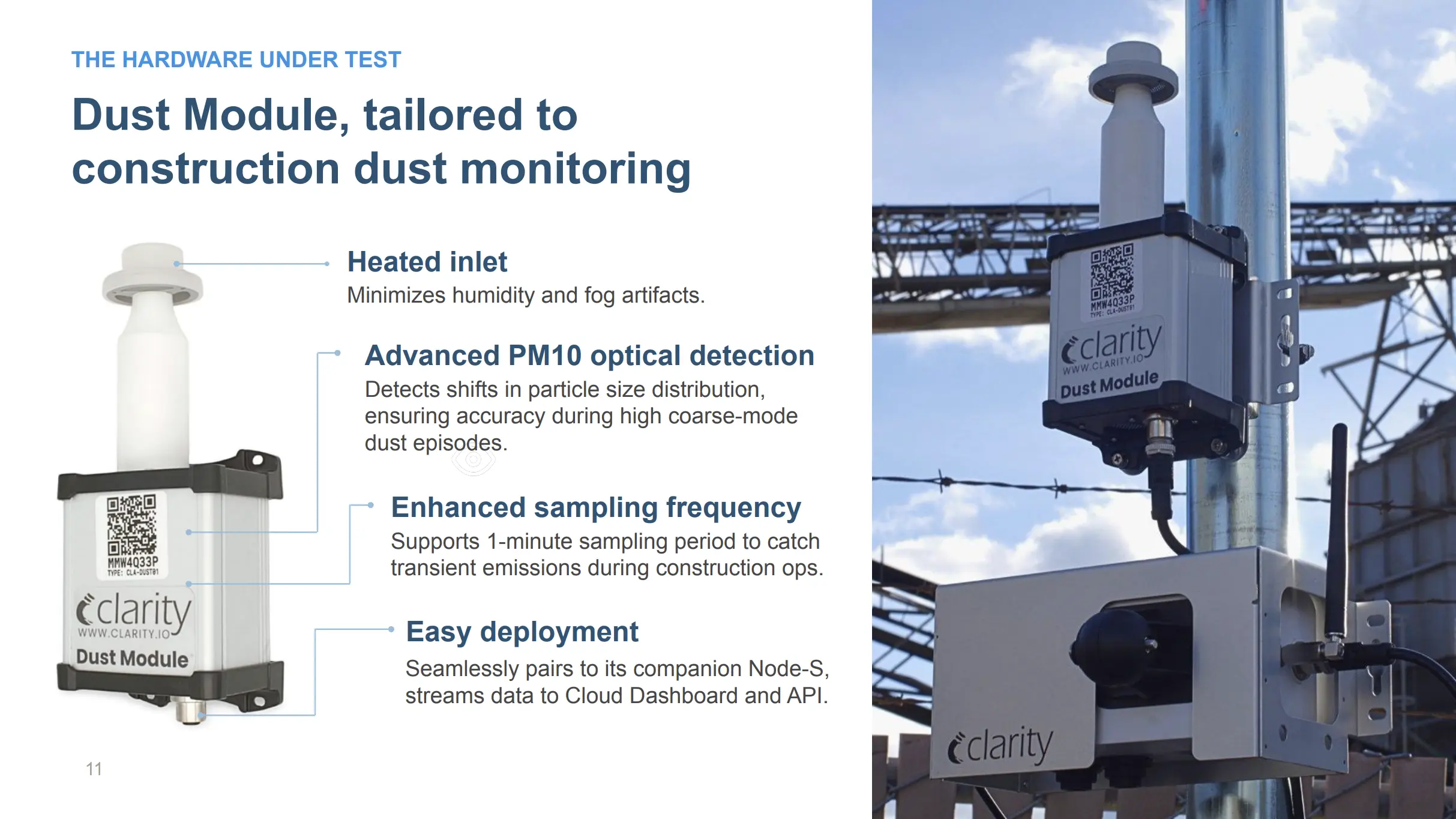
Clarity’s Dust Module is one of these Add-On Modules. It is designed for construction dust and general dust monitoring. It goes beyond the limitations of other low-cost sensors that estimate PM10 from present PM2.5 levels. The Dust Module can measure larger particles directly and detect shifts in particle-size distribution, enabling reliable monitoring in environments with high PM10 levels. It also includes a heated inlet, which minimizes measurement errors from humidity and fog.
Construction activities often create high dust pollution spikes over shorter periods. The Dust Module’s enhanced sampling frequency lets it capture these shorter spikes, so that no emissions go undetected. Data flows quickly to your Clarity Dashboard and API, without Wi-Fi hotspots or extraneous SIM cards.
We offer a dashboard specifically designed for construction dust monitoring. If interested, please reach out so we can demo it for you.
Testing the Dust Module
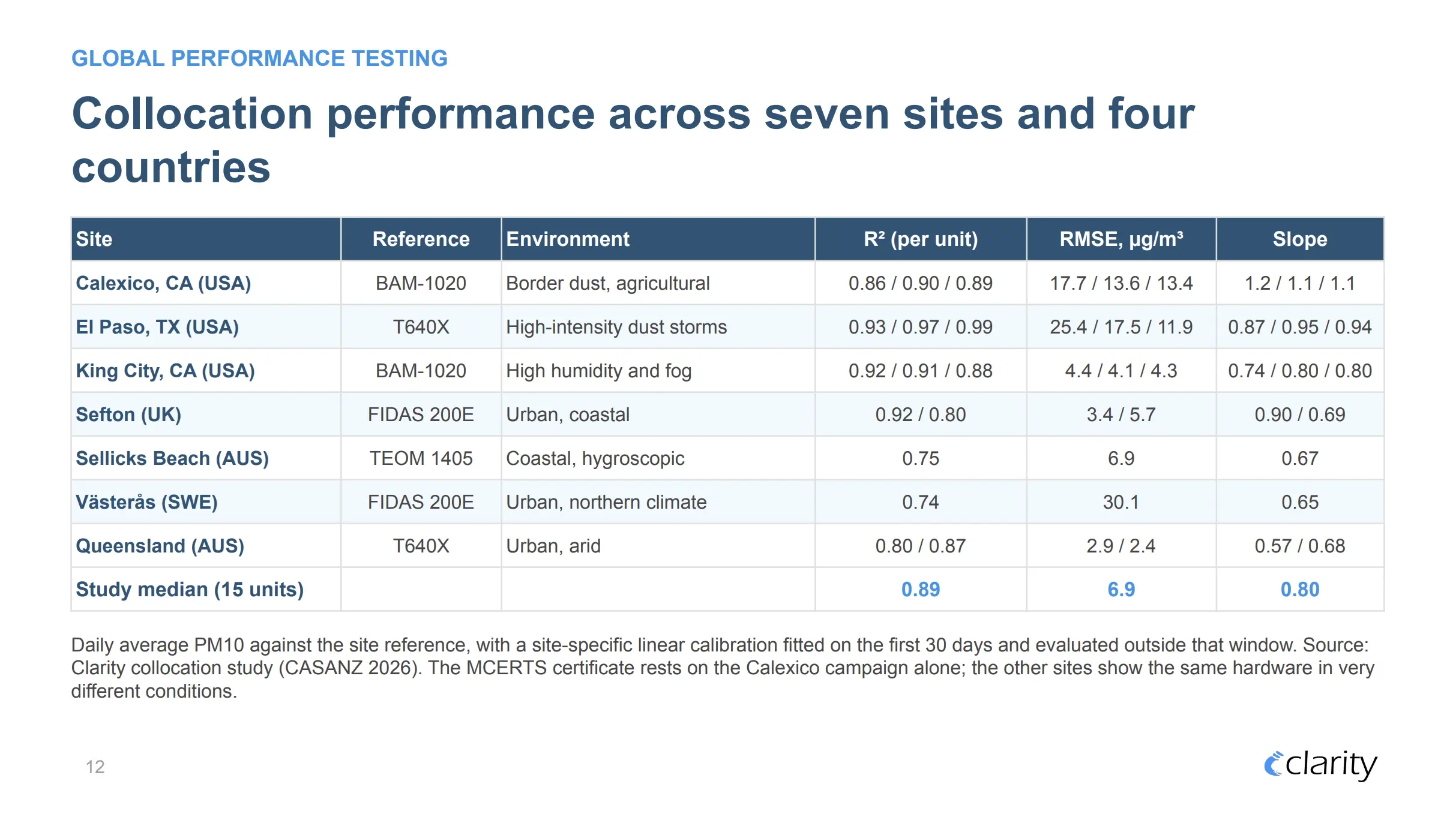
Before release, we performed a global performance testing campaign across 7 sites and 4 countries. We wanted to avoid cherry-picking good results and instead show consistent performance across a variety of situations.
One particularly challenging site where we collocated a Dust Module is Calexico, California. Here, PM10 levels frequently peak above 250 µg/m and particle composition changes over time. The site experiences distinct PM2.5 regimes, driven by both dust and urban sources, including dust storms, agricultural operations, highway traffic, and a parking lot. We tested the Dust Module against FEM instrumentation here from October 10th, 2025, to January 18th, 2026, with Bureau Veritas as the independent test body. Then, we submitted this data set to MCERTS for certification.
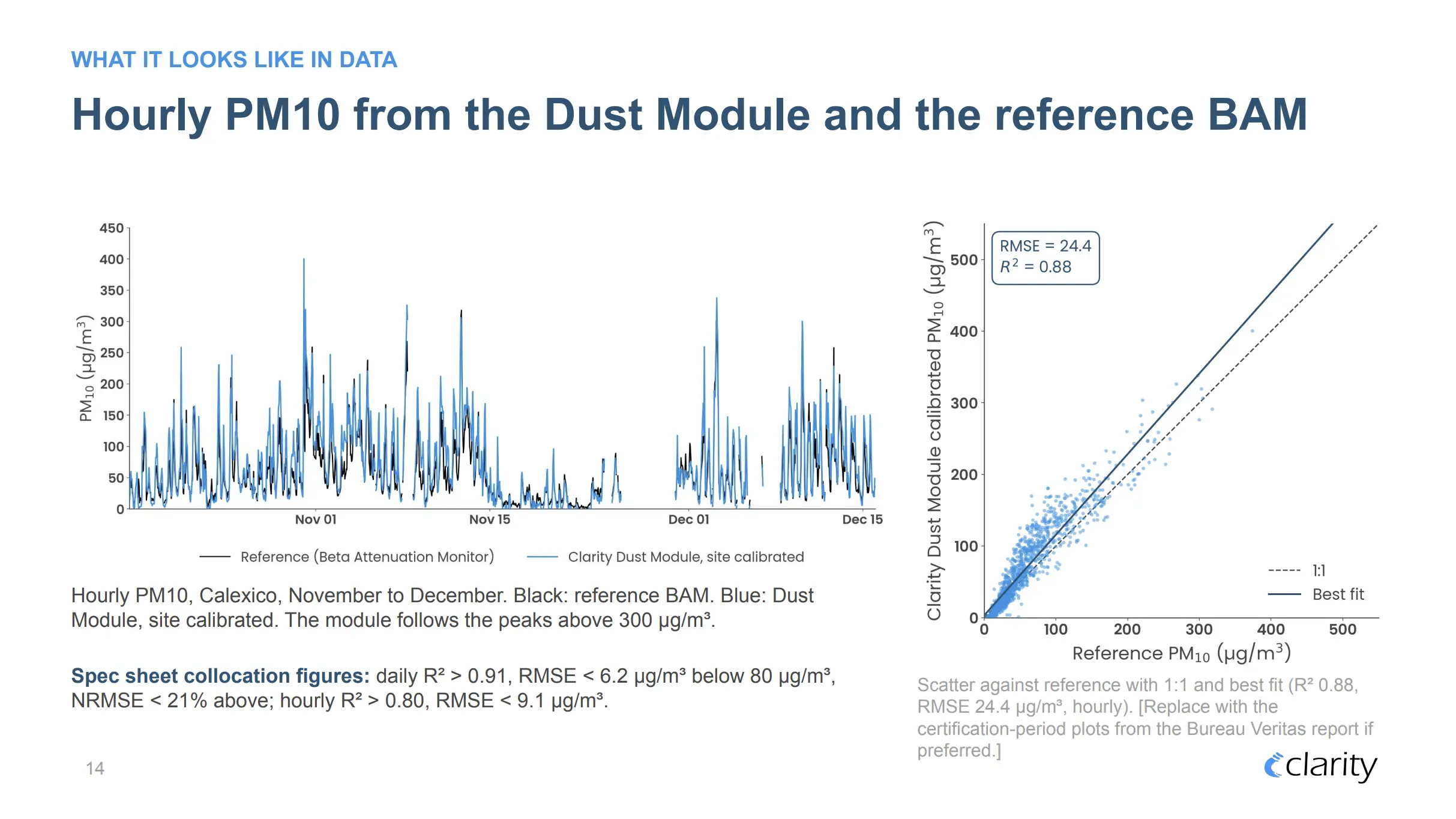
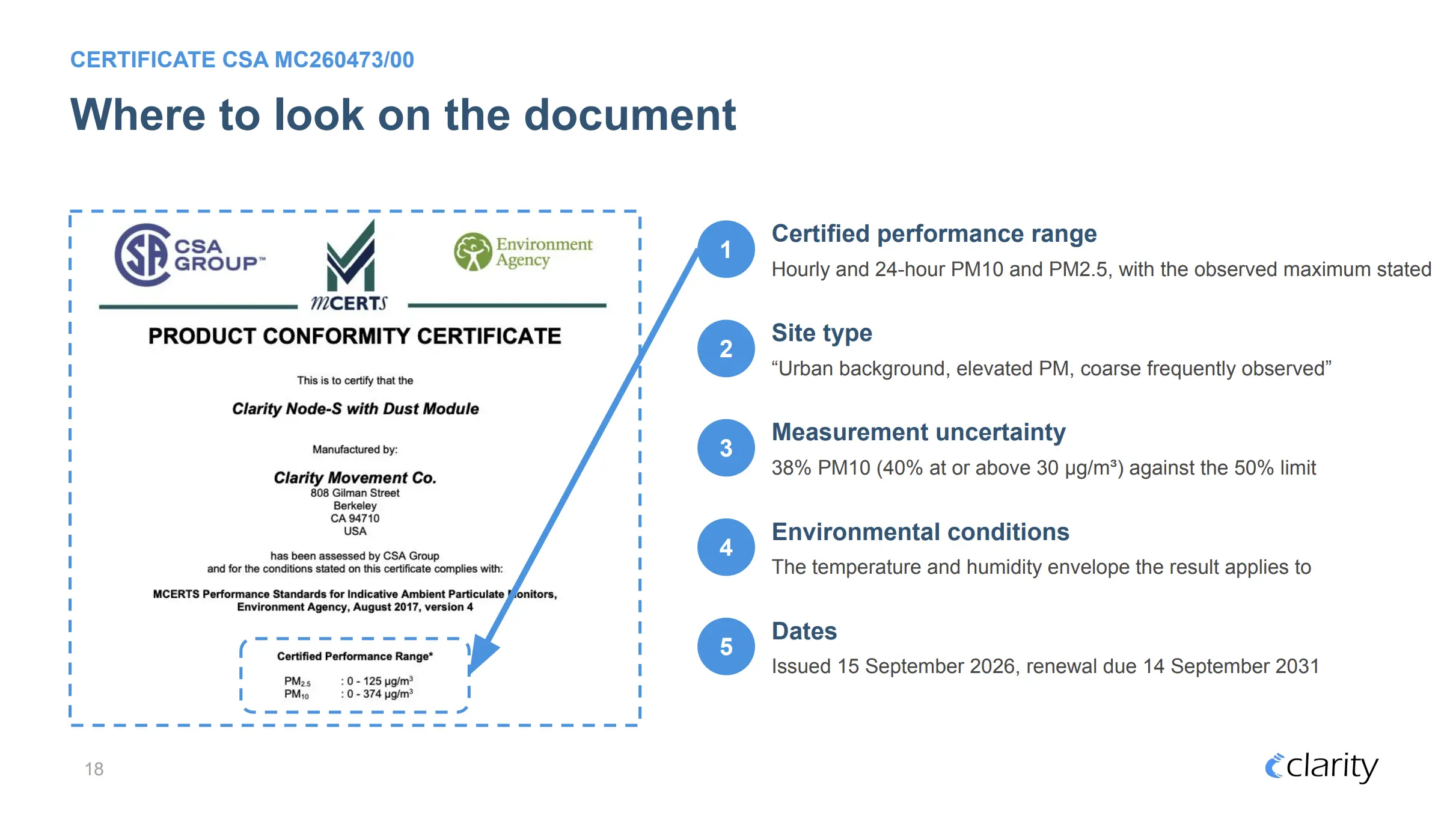
With this collocation data, we secured MCERTS certification with an hourly PM10 performance range of 0 to 374 µg/m³. This is much higher than the UK site action level of 190 µg/m³ and the typical test range for older MCERTS-certified sensors of 150 µg/m³. The Dust Module’s certified range also covers the wide scope of temperatures and relative humidities tested in Calexico. The ambient temperature observed during the test stretched from 8 to 36 degrees Celsius, and relative humidity ranged from 7 to 98% during the test.
Reading a PC4-era certificate
Before you begin monitoring at your site, there are a few questions you should ask the monitoring equipment supplier to ensure proper air pollution measurement. For instance, you want to understand whether the sensors are co-located at urban background levels or elevated PM10 levels. You want to check whether the stated uncertainty meets the 50% indicative limit required for MCERTS certification and whether the equipment is certified or self-validated. Does the certified range cover your local action level? If it has MCERTS certification, was this certification issued after the PC4 bulletin changes?
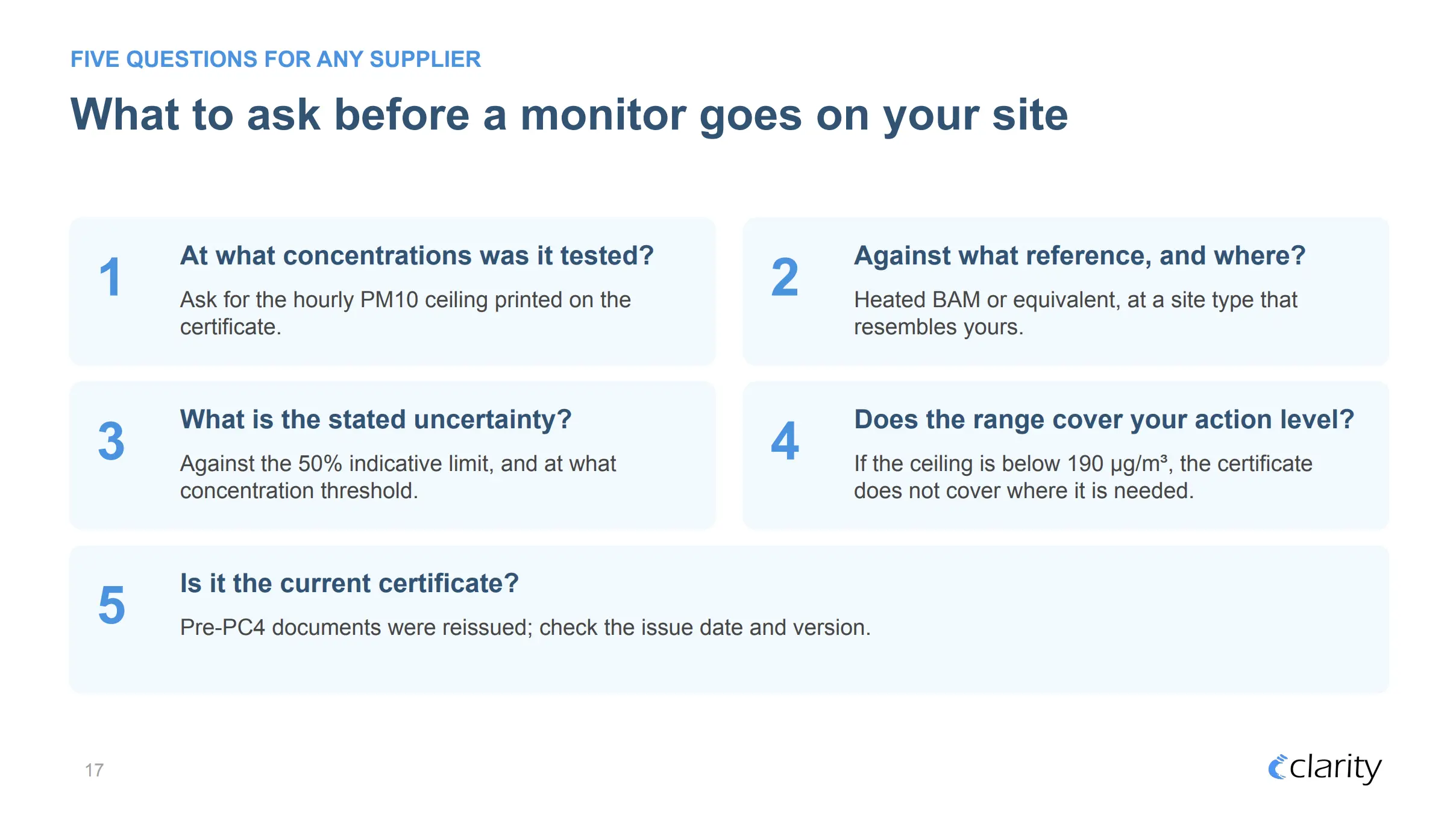
When reviewing an MCERTS certificate, there are some key points you should look for. If the certificate is up to date, it should have a performance range specified at the bottom. Check that the performance range, site type, and environmental conditions roughly match the environment of your site. Measurement uncertainty should be below 50%, with lower percentages preferred. Ensure that the certificate was issued recently.
What this means for your sites
Moving forward, a simple MCERTS certification is not enough for your PM10 site monitoring needs. You must actively check that your monitoring equipment has a certified or self-validated range that is ideally above the site action level.
You may be required to submit the certificate as part of a tender response or local authority check. You may use the certificate as evidence. However, you need to ensure that it includes all required information so the results of your monitoring campaign are not rejected due to an unvalidated sensor or an incorrect certified range.
Clarity’s Dust Module and Node-S both have the appropriate certified performance ranges for your monitoring needs. They were also tested independently, rather than self-certified.
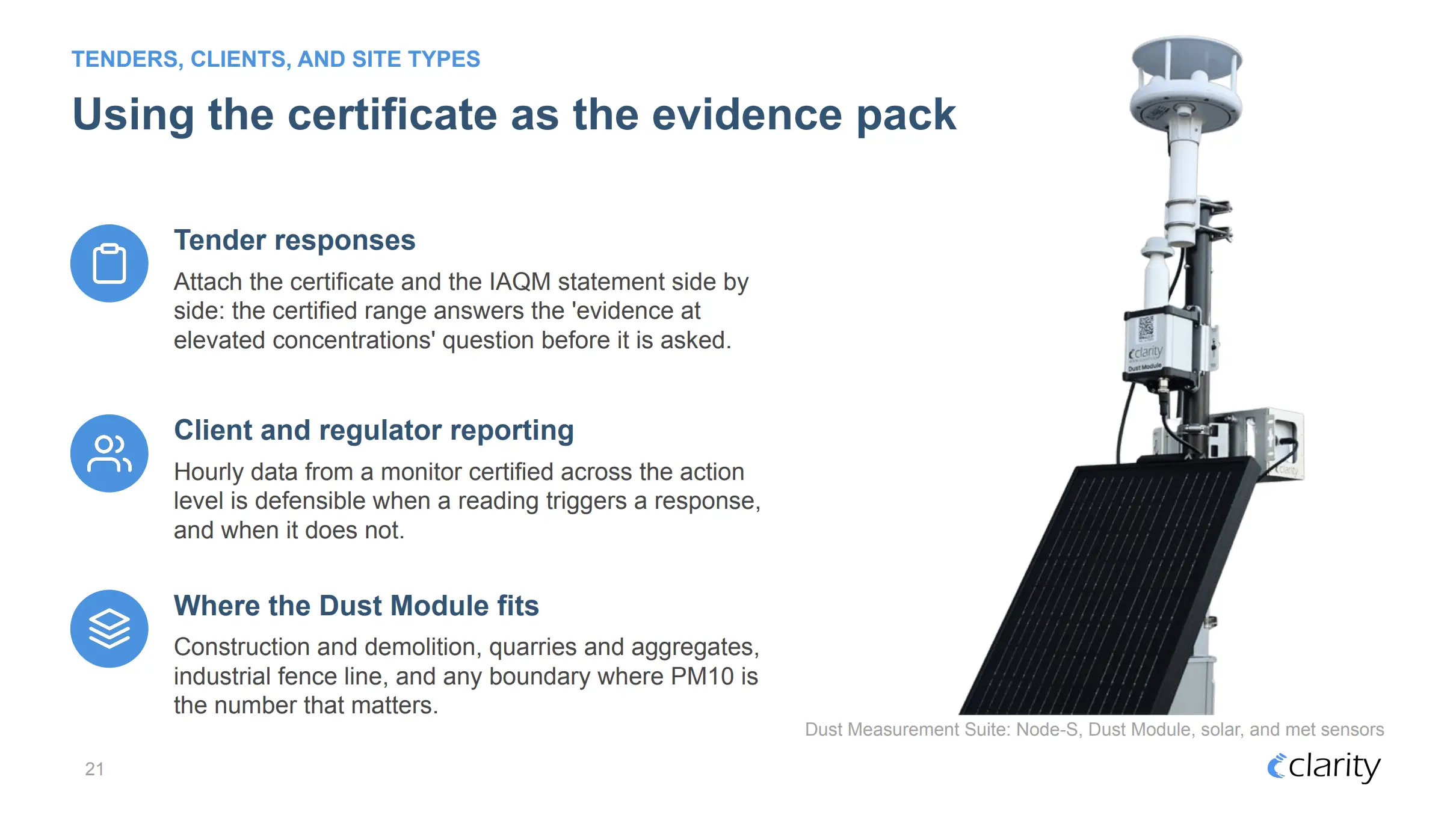
Although MCERTS is a UK-focused scheme, it is increasingly requested for worldwide tenders to show independent verification. IAQM guidance sets the template for construction dust methodologies both in the UK and beyond. MCERTS certification is recognized worldwide.
Looking forward: Dust monitoring with Clarity
To our knowledge, Clarity’s Dust Module is the first indicative monitor to be certified at elevated PM10 levels. Our MCERTS certification is valid until September 2031. The certificate is publicly available on the CSA website, or you can contact us for a copy. Our Dust Module and Suite are available now, and you can contact Lee Swanson, our Account Executive for Europe and Africa, at leeswanson@clarity.io for lead times in your region.
Partner with Clarity to ensure low dust emissions and clean air for all.