
This image is provided by Geoffrey Moffett via Unsplash.
TL;DR: Data centers are placing growing pressure on energy grids, water supplies, and local air quality. They often draw power from fossil-fuel-heavy electricity sources, rely on diesel backup generators, and use on-site gas turbines that emit significant air pollution. This strain has intensified as AI workloads, which demand much more computing power than traditional data processing, drive rapid data center expansion across the United States. The result is a wider public health and environmental footprint, from asthma-related illness near facilities to increased greenhouse gas emissions. Data center air quality monitoring in accordance with data center air quality standards is an important tool for protecting community health.
What is data center air pollution?
Data centers emit a variety of air pollutants into the atmosphere, affecting local air quality and contributing to climate change. Some of these emissions are indirect, resulting from the pressure on the existing grid to produce enough electricity to meet data center needs. Other emissions come from on-site diesel generators, many of which are the size of a rail car, releasing significant diesel fumes into the air.
The growing demand for AI
Artificial Intelligence is increasingly being used in all walks of life, from medical devices and self-driving cars to internet searches. In 2024, 78% of business organizations reported using AI, a number which rose to 88% in 2025. Also in 2025, the global corporate investment in AI totalled 581.69 billion US dollars.
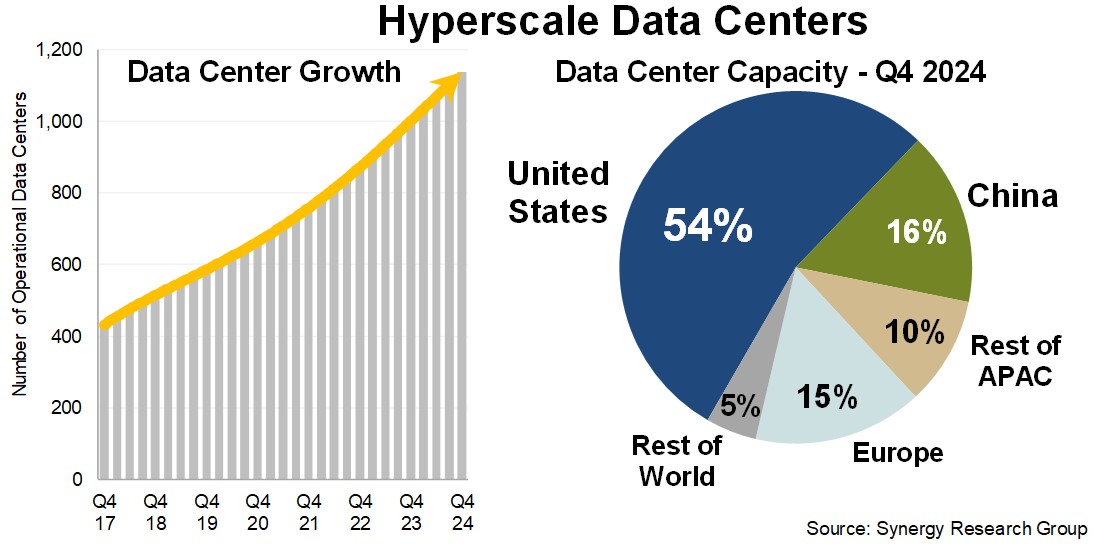
Across the United States, data centers are being built at a drastic rate to accommodate exponential growth in AI adoption. This unprecedented rapid expansion is fueled by billions of dollars in tax incentives and fast-track permitting. The number of large data centers operated by hyperscale providers reached 1,136 by the end of 2024, having doubled over the previous five years, with the United States accounting for over half of the total worldwide capacity, measured by MW of critical IT load.
Synergy Research Group predicts that it will take less than four years for the total hyperscale data center capacity to double once again, with 130 to 140 additional hyperscale data centers coming online yearly.
What are AI data centers?
AI data centers are the facilities that house the specific information technology infrastructure needed to train, deploy, and deliver artificial intelligence applications and services. These data centers contain advanced architectures for computing, networking, and storage. In US federal policy these facilities are now also described as super intelligence (SI) data centers, following the Trump administration’s attempt to rename AI as super intelligence.
AI data centers share similarities with traditional data centers, but AI data centers have much more computing power to accommodate high-intensity artificial intelligence workloads. They use a large number of high-performance graphics processing units (GPUs), which require certain associated infrastructure like advanced storage, networking, energy, and cooling capabilities. They also often take up more physical space than traditional data centers due to these requirements.
Hyperscale data centers are massive. They are engineered for large-scale workloads, such as generative AI. These data centers have at least 5,000 servers, likely miles of connection equipment, and can take up millions of square feet.
Do data centers cause air pollution?
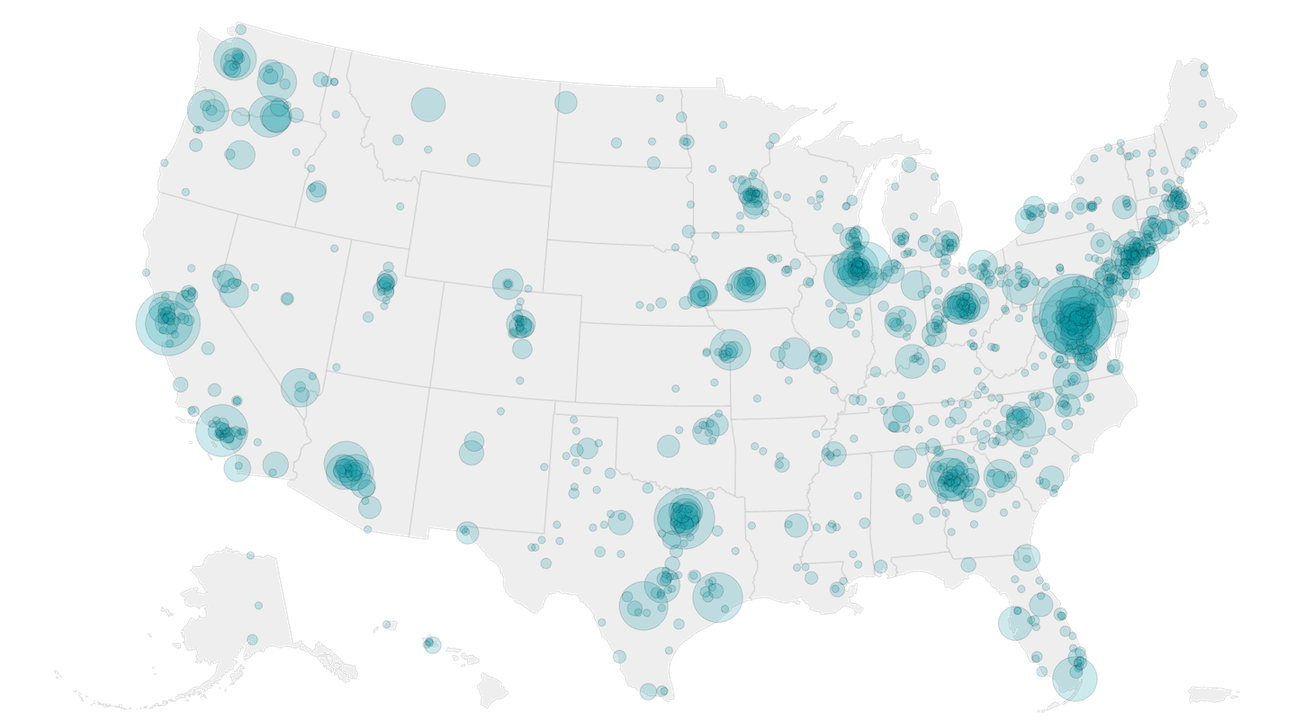
Yes, data centers do cause air pollution through a variety of sources, including:
- Increased electricity through a fossil-fuel-heavy grid
- Diesel backup generators
- On-site gas power plants
AI data center air pollution
The high energy demands of data centers frequently lead to the increased use of dirty energy, with roughly 56% of the electricity used to power data centers in the United States coming from fossil fuels. Many AI data centers are located in carbon-intensive areas, using energy generated from fossil fuel power plants.

Other AI data centers are even building or planning to build on-site fossil fuel-driven power plants to keep up with energy demands and alleviate strain on the local energy grid. These new power plants, often fueled by natural gas, might help keep up with the growing power demand, but they contribute to climate change and harm local communities. A study looking at 2,132 data centers in the US operating between September 2023 and August 2024 found that the centers generated more than 105 million tons of CO2e.
Data centers also have diesel generators for emergency backup power, which produce fine particulate matter (PM2.5), carbon monoxide (CO), nitrogen oxides (NOx), and other air pollutants. While these generators are theoretically used sparingly, they can emit 200 to 600 times more NOx than natural gas plants, as well as more fine particulates and other toxic emissions. One analysis found that data center backup generators in Virginia could already cause 14,000 asthma-related cases every year, along with other health impacts, resulting in a total public health burden of $220-300 million annually.

AI data centers have specific air pollution drivers, including fast-tracked permitting which may enable rapid and less scrutinized buildout, and increased electricity demand. The significant data center power requirements result from various AI needs and equipment:
- Large numbers of servers, which can be equipped with CPUs and GPUs, on average account for around 60% of electricity demand in modern data centers.
- AI training is very energy-intensive, sometimes requiring thousands of high-performance chips to run for weeks or even months.
- Inference has been estimated to account for up to 80-90% of the computing power for AI
Key Pollutants Emitted by Data Centers
Data centers emit many different types of air pollutants, which harm both human health and the environment.
Data center impact on community air quality & health
Data centers might help support the growing demand for AI, but they also come with unintended consequences for public health and the environment. Just one modern AI data center can use as much electricity as 100,000 households, with the largest ones currently under construction possibly consuming up to 20 times more energy than that.
Water use is another significant contributor to data center environmental impacts. Data centers rely on water to cool their facilities. A medium-sized data center consumes roughly 300,000 gallons of water per day, which is about the same amount as 1,000 households. Larger data centers can use up to 5 million gallons per day, or roughly 1.8 billion annually. All the United States data centers together consume many billions of gallons of water every year. This water consumption is especially harmful for the data centers located in areas already facing water scarcity and drought.

The AI data center community impact extends beyond energy consumption and water use, affecting quality of life in lesser-known ways. Data centers are responsible for a significant amount of noise pollution, which can disrupt the lives of locals. They also take up large expanses of land, sometimes well over a square mile, which can accelerate the loss of productive farmland.
The community impacts of data centers may include:
- Elevated air pollution near data center sites
- Increased rates of respiratory diseases, cardiovascular conditions, and elevated cancer risk
- Data centers disproportionately sited in disadvantaged communities
- Increased electricity bills
- Worsening water scarcity in drought-prone areas
- Elevated noise pollution near data center sites
- Increased air pollution near power plants and other fossil-fuel–powered grid infrastructure
How far does data center pollution travel?
Communities living within one mile of EPA-regulated data centers face levels of particulate matter, nitrogen dioxide, and diesel particulate matter above the national median. However, the impact may not be confined to just those living within such close proximity. Under certain conditions, PM2.5 particles can travel hundreds or even thousands of miles away from their source, meaning that data center emissions can affect affect non-fenceline communities. Nitrogen oxides have a relatively short atmospheric lifetime, but they can still travel far with strong winds.
What can be done about AI data centers’ environmental impacts?
Fortunately, there are some steps that AI data centers can take to mitigate their negative impacts. For instance, data centers can take advantage of more water-efficient cooling methods such as closed-loop cooling systems or immersion cooling. They can even use acoustic barriers to help reduce noise pollution. Deliberate permitting practices can encourage AI data centers to make sustainable choices.
AI data center air pollution can be mitigated by the use of more renewable energy, either by building new centers in areas with more clean energy or generating their own renewable energy on-site. They can also take steps to make their facilities more energy efficient and use battery energy storage systems instead of diesel generators.
Data center air quality monitoring helps regulators enforce air pollution standards while providing communities with valuable information about potential health risks from local pollution sources. Partner with Clarity to implement an air quality monitoring system to promote clean air and healthy communities.