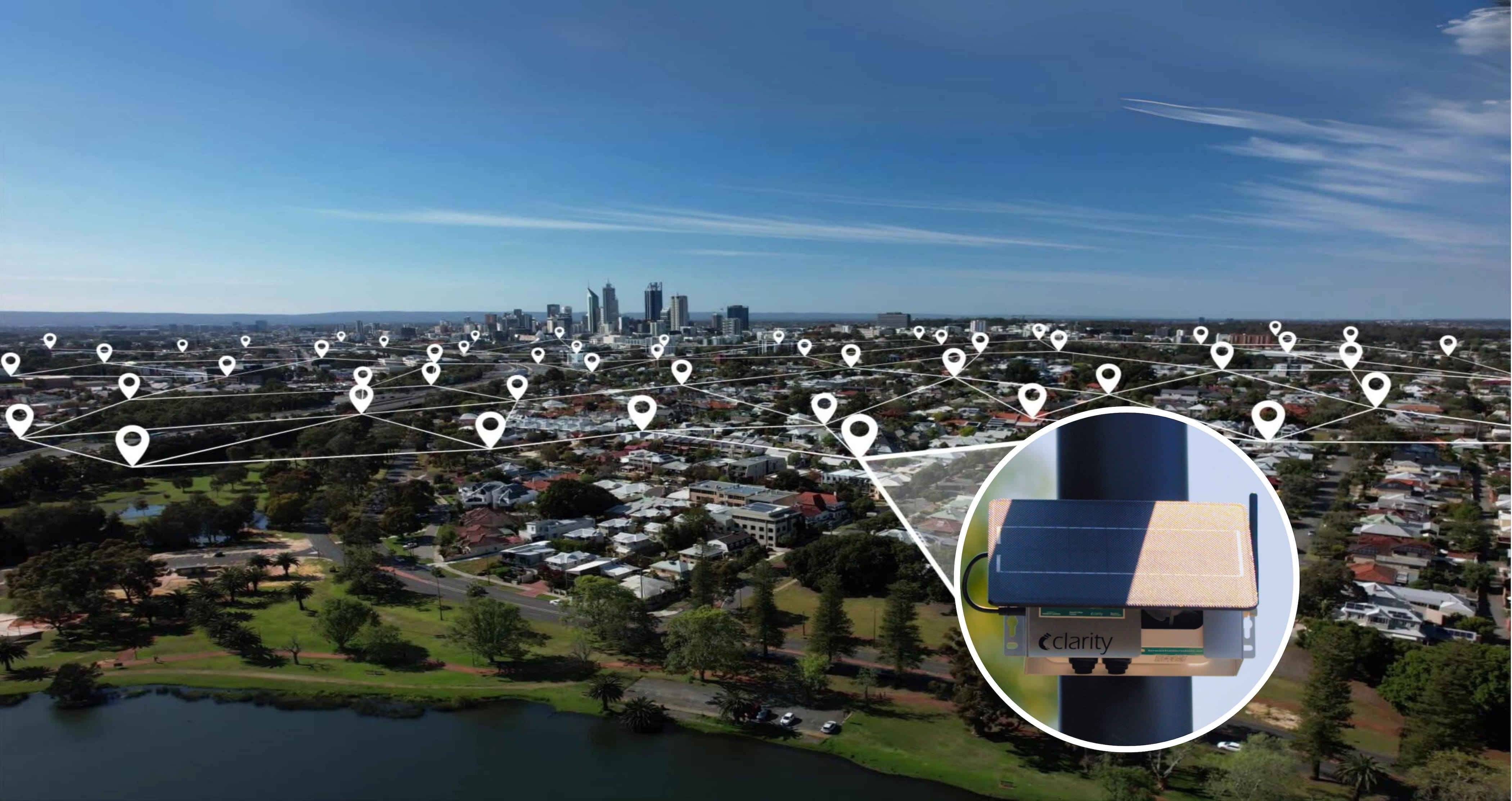
TL;DR: Air pollution is a major public health risk. Traditional regulatory-grade monitors are accurate but costly and too sparse to capture neighborhood-level differences. Low-cost air quality sensor networks fill this gap, offering hyperlocal data that empowers residents, supports the public during air pollution events, exposes pollution inequality, and strengthens both public policy creation and enforcement. Cities worldwide are using these air quality networks to protect public health and guide smarter air quality decisions — all at a much lower cost than traditional air quality monitoring solutions.
The effects of air pollution
Air pollution causes many different adverse health effects, from lung cancer to cardiovascular diseases. Ambient (outdoor) air pollution is estimated to have caused 4.2 million premature deaths worldwide in 2019, making this a severe threat to public health.
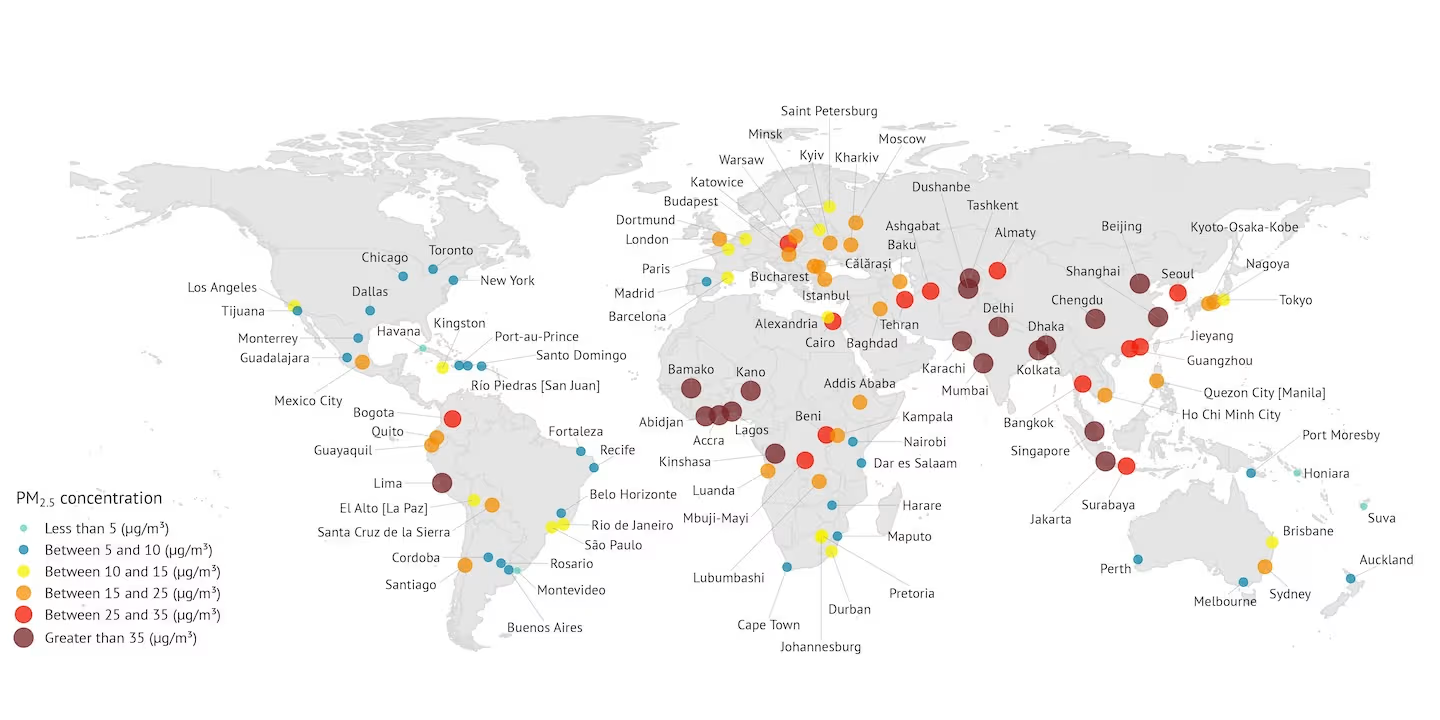
Cities are often hotspots for poor air quality. Sometimes, this air pollution is visible as the smog that frequently hangs over urban areas. Some of the most common air pollutants in cities include fine particulate matter (PM2.5) and nitrogen dioxide (NO2). Although other air pollutants, such as ozone (O3) and carbon monoxide (CO), can also have a negative impact on urban residents. Measuring air pollution can help protect residents from the toxic effects of urban air.
The limitations of regulatory-grade monitors
Regulatory-grade monitors are the scientific gold standard for measuring air pollution. These monitors provide highly accurate data in cities around the world. They play an important role in establishing a correct baseline in air quality measurement.
Yet, these monitors also have limitations. The biggest drawback is how much they cost. Regulatory-grade air quality monitors usually cost between $15,000 - $40,000. They also come with equally expensive operating costs. The monitors also require specific equipment, technicians, and electrical power, which can limit where they can be deployed.
Due to these drawbacks, regulatory-grade monitors are usually sparse, with only a few, if any, set up to cover large areas. This means that a lot of local variation in air quality goes unnoticed and therefore unregulated.

Fortunately, over the last few decades, a new air quality monitoring technology has emerged: low-cost sensors. These air quality sensors are smaller, easier to deploy at scale, and relatively low-cost compared to regulatory-grade monitors. Sensor networks can be installed in addition to reference-grade monitors to provide more hyperlocal data. They can even be used in cities where reference-grade monitors are not present.
Public insight
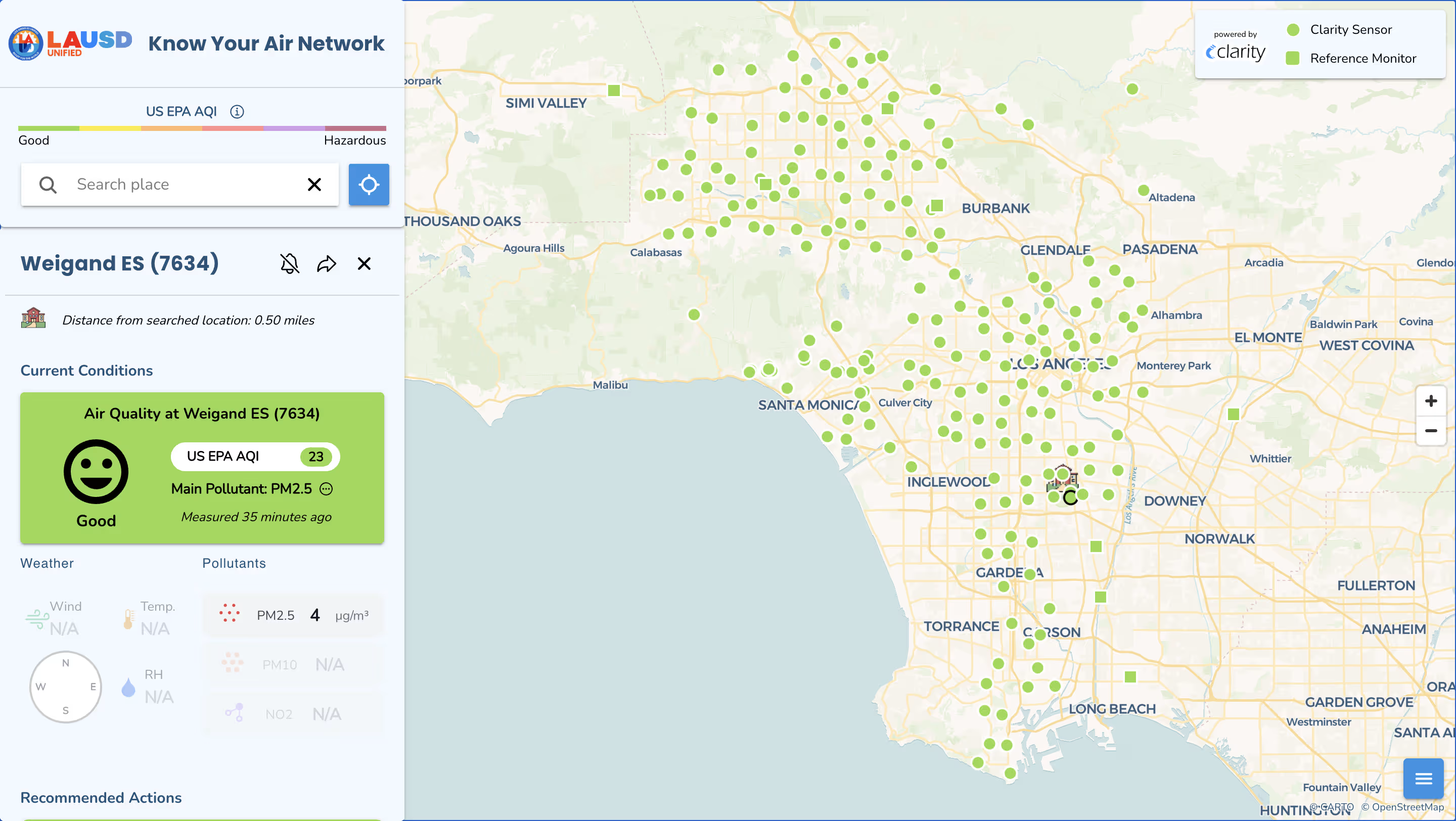
Low-cost air quality sensor networks can help keep people safe. The hyperlocal air quality data that they provide allows urban residents to check the air pollution levels in their area, rather than relying on a monitor that may be miles away. More local data helps people make the most informed decision to protect themselves. This is especially important during events such as wildfires, when air pollution frequently fluctuates and varies from neighborhood to neighborhood.
For example, Los Angeles frequently experiences wildfires. During these events, the low-cost air quality sensor network established by the Los Angeles Unified School District (LAUSD) enables school officials to monitor air quality at each school. Because of this data, school districts are able to make the best decisions tailored to each school location, ensuring the safety of their students as the air quality changes from hour to hour. The general public also has access to the LAUSD sensor network’s data, enabling them to better protect themselves as well.
Air quality sensor networks can also help raise public awareness concerning air pollution issues. Many people are unaware of the full dangers of air pollution, but having access to air quality data in their own neighborhood can make them more invested in breathing clean air. The Breathe Accra air quality monitoring network, for instance, helped make Accra citizens more aware of air quality issues, creating local dialogues and promoting grass-roots change.

Sensor networks make people aware of air pollution inequality. Air quality can vary significantly even within the same city. People of color are more likely to be exposed to air pollution, while prime real estate often boasts cleaner air. Hyperlocal air quality data can help bring these inequalities to light, allowing more polluted neighborhoods to understand the imbalance and advocate for equal access to clean air.
For instance, the implementation of an air quality sensor network in London allowed a group of parents to understand how their children’s school playground was experiencing especially high levels of NO2 air pollution. This knowledge empowered them to advocate for better air for the local children in the Hackney Borough.
The Open Air Chicago air quality monitoring network, which recently launched, is the largest community air monitoring network in the United States. With 277 air quality sensors spread across the city, the network ensures that no neighborhood is left without essential air pollution information. This granular data promotes environmental justice.
Similarly, Philadelphia’s Breathe Philly air quality sensor network is installed so that every city resident lives within 1.5 miles of an ambient air quality monitor. By providing real-time, hyperlocal air pollution data to every zip code, Philadelphians can now make better decisions about their health.

Public policy development and enforcement
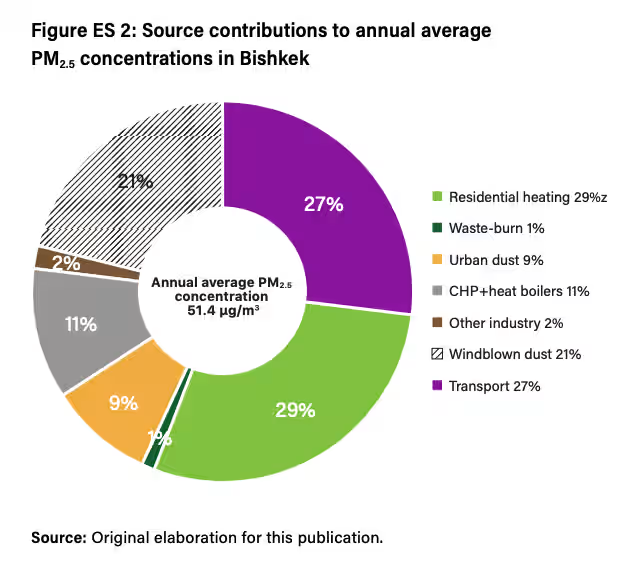
Low-cost sensor networks support public policy creation and enforcement. The public awareness generated by an air quality sensor network can pressure lawmakers into creating proper air pollution legislation. By demonstrating where air pollution emissions are most harmful, lawmakers can create tailored regulations to protect the areas that most need it. The sensors can also show where progress is being made, showing which policies are effective and which are not, as well as help enforce existing policies by alerting officials to infractions.
In the Almaty - Bishkek Economic Corridor (ABEC), a network of over a hundred Node-S air quality sensors has been installed as a part of the ABEC Clean Air Initiative. The sensor network supports the implementation of sustainable public transportation powered by renewable energy, along with other air pollution mitigation strategies. Data from air quality sensors has helped speed up city decision-making processes and quantify the impact of air pollution mitigation efforts.
In Yerevan, Armenia, a network of 170 Clarity Node-S air quality sensors has helped support construction policy. Rapid construction in the city has led to increased particulate matter air pollution. However, Yerevan’s City Council (Council of Elders) passed a mandate in 2022 requiring that air quality monitoring devices be installed at Yerevan construction sites.
The Yerevan monitoring initiative helped ensure that construction projects adhered to air quality standards. Not only are contractors now held accountable for their emissions, but with the air quality data available to the public, broader policy discussions led to stricter regulations being implemented to better protect the public from construction emissions.
Looking forward
With recent developments in air quality measurement technology, there is no reason that every major city shouldn’t have a real-time air quality monitoring network to protect residents from air pollution. With the advent of accurate low-cost sensors, the cost of real-time air pollution measurement has decreased drastically and is more than offset by the public health benefits of investing in such monitoring networks.
Clarity has partnered with London, Los Angeles, Perth, Yerevan, Bishkek, Almaty, Chicago, Philadelphia, and many more cities to help promote clean, healthy air. Partner with Clarity today to implement an air quality sensor network in your city.