.png)
Image provided by Towfiqu barbhuiya via Unsplash.
TL;DR: Volatile organic compounds (VOCs) can be found in both indoor and outdoor air, released by sources ranging from paint and cleaning products to vehicle exhaust and industrial processes. Beyond their direct health effects, VOCs help form ground-level ozone and fine particulate matter. Exposure to harmful volatile organic compounds can be higher near industrial zones and fenceline communities. Monitoring VOCs, through ambient sensor networks or regulatory fenceline requirements, is how project managers and regulators identify pollution hotspots and track the effectiveness of mitigation efforts.
What are VOCs (Volatile Organic Compounds)?
Volatile organic compounds (also known as VOCs) are a class of chemicals that are both volatile and contain carbon atoms. These compounds have a high vapor pressure and low solubility, meaning they evaporate from a solid or liquid form at room temperature. If something smells, it is probably releasing VOCs into the air.
Some VOCs are naturally occurring. Plants can release non-harmful VOCs, producing pleasant scents. Other VOCs are much more harmful, with many coming from anthropogenic sources, such as household products, traffic emissions, and industrial processes. VOCs are generally much more concentrated indoors, where there is less ventilation. However, they can also be found in ambient air.
Common volatile organic compounds include benzene, formaldehyde, ethylene glycol, methylene chloride, toluene, tetrachloroethylene, xylene, and 1,3-butadiene.

VOCs in air quality: Why they matter
There are many reasons why volatile organic compounds matter to air quality. Many VOCs can trigger adverse health effects, from smaller symptoms like eye, nose, and throat irritation to more concerning impacts such as liver, kidney, and central nervous system damage, and even cancer.
Many volatile organic compounds contribute to the formation of ground-level ozone (O3). These VOCs react with sources of oxygen molecules like nitrogen oxides (NOx) and carbon monoxide (CO) in the presence of sunlight to form ozone, a major component of smog. Volatile organic compounds are also a precursor for secondary fine particulate matter, another harmful air pollutant. For this reason, VOCs are of concern to ambient air quality despite being present in higher concentrations indoors.
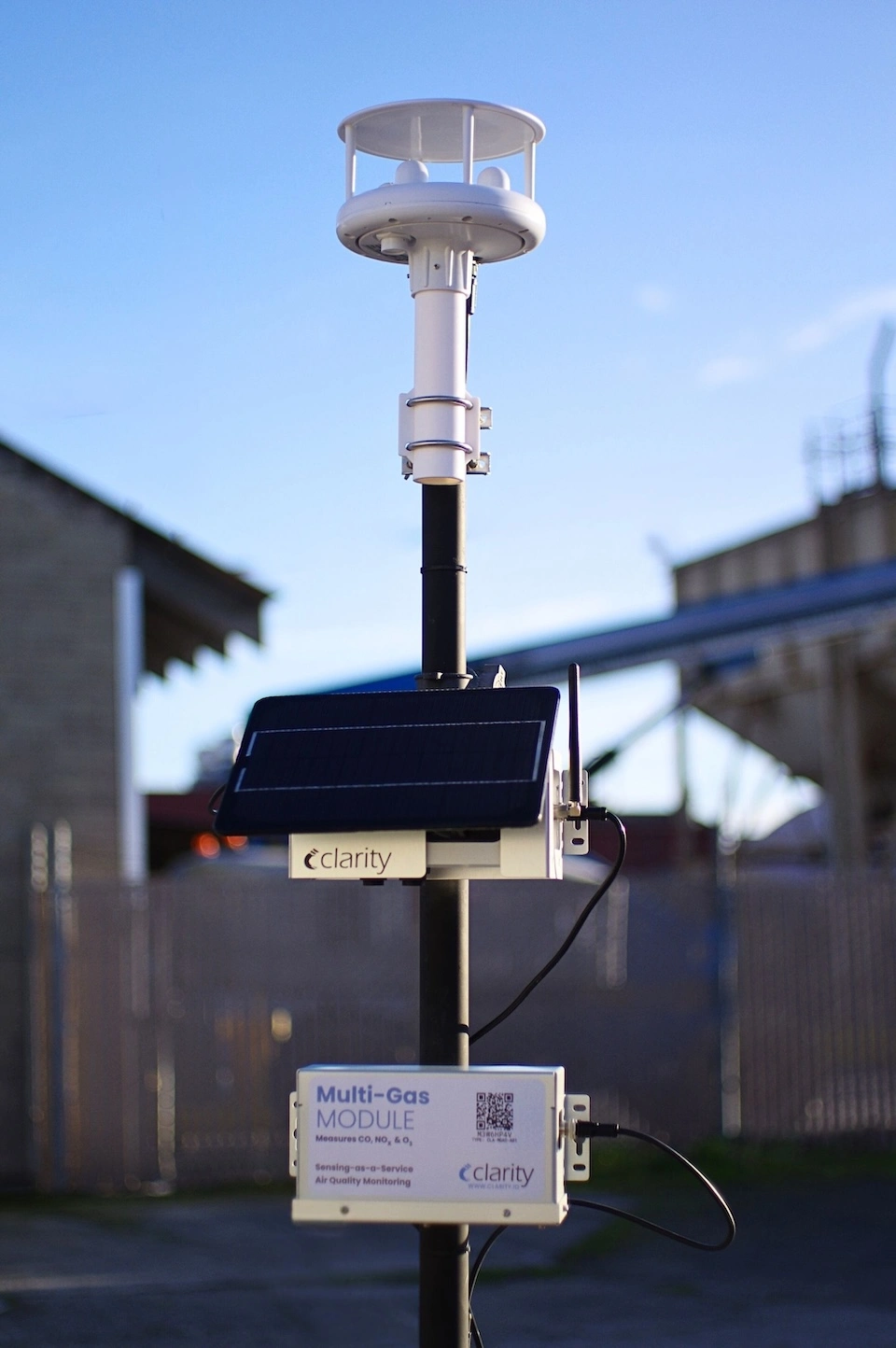
Volatile organic compounds are also an environmental justice issue. Many industrial activities emit VOCs, leading to higher exposure among those living near chemical industrial zones. Fenceline communities like these often consist of low-income minority groups.
To summarize, the reasons why VOCs matter include:
- Many VOCs are associated with adverse health effects
- Many VOCs are precursors for ground-level ozone and fine particulate matter
- Many industrial activities emit VOCs, potentially harming nearby communities
What VOC air quality monitoring measures
VOC air quality monitors may use different units to express the concentration of VOCs in the air, including parts per million (ppm), parts per billion (ppb), and micrograms per cubic meter (µg/m3). Parts per million means that for every million air molecules, there is x amount of VOC molecules. Parts per billion means that for every billion air molecules, there is x amount of VOC molecules. Micrograms per cubic meter means that for every cubic meter volume of air, there are x micrograms of mass (weight) of VOCs.
Sometimes researchers measure and report total volatile organic compound (TVOC) concentrations. This refers to the total concentration of multiple VOCs present in the air at the same time. TVOC methods actually measure a subset of VOCs expected to be present, rather than all VOCs present.
VOC air quality levels: What the numbers mean
Volatile organic compound air monitoring enables project managers to identify and address emissions. Concentration readings should be accompanied by the appropriate action to protect communities.
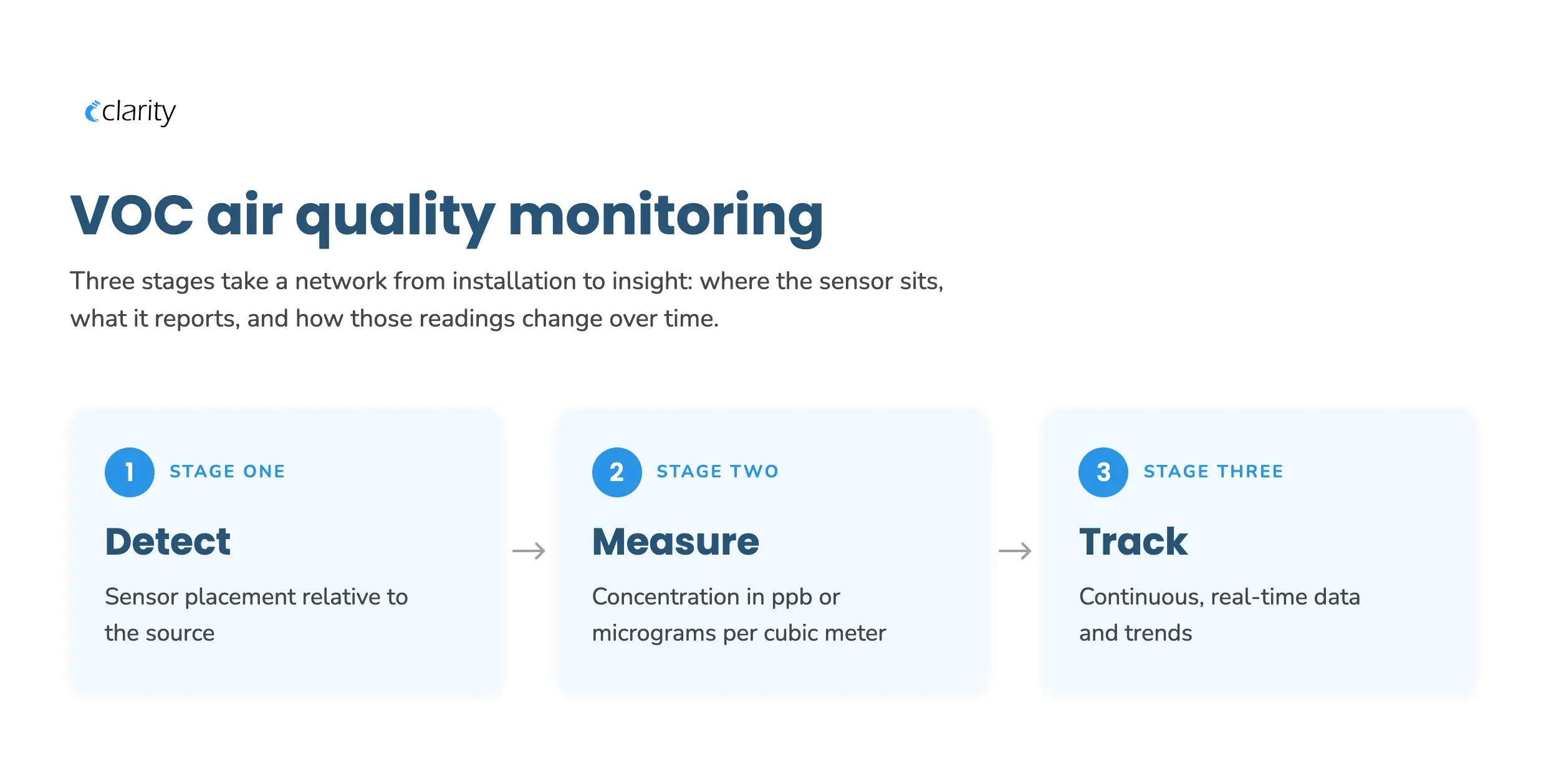
How VOC air quality monitoring works: Detect, measure, track
VOC air quality monitoring consists of three steps:
- 1. Detect: Sensors should be set up near the source(s) of VOC air pollution. Exposure levels, adequate power, and land ownership should all be considered when identifying monitoring locations.
- 2. Measure: VOC concentration data allow project managers to see where emissions are most harmful and identify pollution hotspots.
- 3. Track: Continuous VOC monitoring helps kickstart tailored mitigation strategies and also evaluate the effectiveness of those same strategies in a feedback loop that empowers real change.
Where outdoor VOCs come from
Volatile organic compounds come from many indoor and outdoor sources. Ambient VOC emissions can result from both industrial activities and everyday activities, prompting closer inspection to address individual VOC pollution hotspots. Below are some of the things that contribute to VOC air pollution.
Standards and regulations for ambient VOCs
The United States Environmental Protection Agency (EPA) has national volatile organic compound emission standards for consumer products. This rule sets limits on the VOC content of certain categories of consumer products. The final rule is based on the understanding that VOC emissions from consumer products contribute to ambient ground-level ozone (O3) concentrations. Ozone is one of the six criteria air pollutants regulated by the EPA under the Clean Air Act.
The standards and regulations for ambient VOCs include:
- National VOC emission standards for consumer products under the Clean Air Act.
- State and local VOC standards, such as those set by the California Air Resources Board (CARB).
- The EPA regulates emissions of certain hazardous air pollutants, which include many VOCs.
- The EPA has fenceline monitoring requirements for certain VOCs to ensure compliance with hazardous air pollutant emissions limits.
Pairing VOC monitoring with Clarity’s air quality network
Although Clarity does not currently offer any air quality monitoring equipment capable of measuring volatile organic compounds, we do offer monitoring solutions for related air pollutants including particulate matter (PM2.5), nitrogen dioxide (NO2), carbon monoxide (CO), nitrogen oxides (NOx), and ozone (O3). Partner with us and help protect clean air for all.