
Parts of the image provided by Open Air Chicago and Breathe Philly’s Clarity OpenMap instances.
TL;DR: Reference stations are highly accurate but expensive and sparse. Cities around the world are adding more affordable air quality sensor networks to see how air quality changes from one neighborhood to the next. Choosing the right sensor provider means considering what a city needs to measure, where it will place sensors, and how it will pay for and share the data. Chicago, Philadelphia, and Yerevan show what city-wide air quality monitoring looks like in practice.
What is an air quality monitoring network?
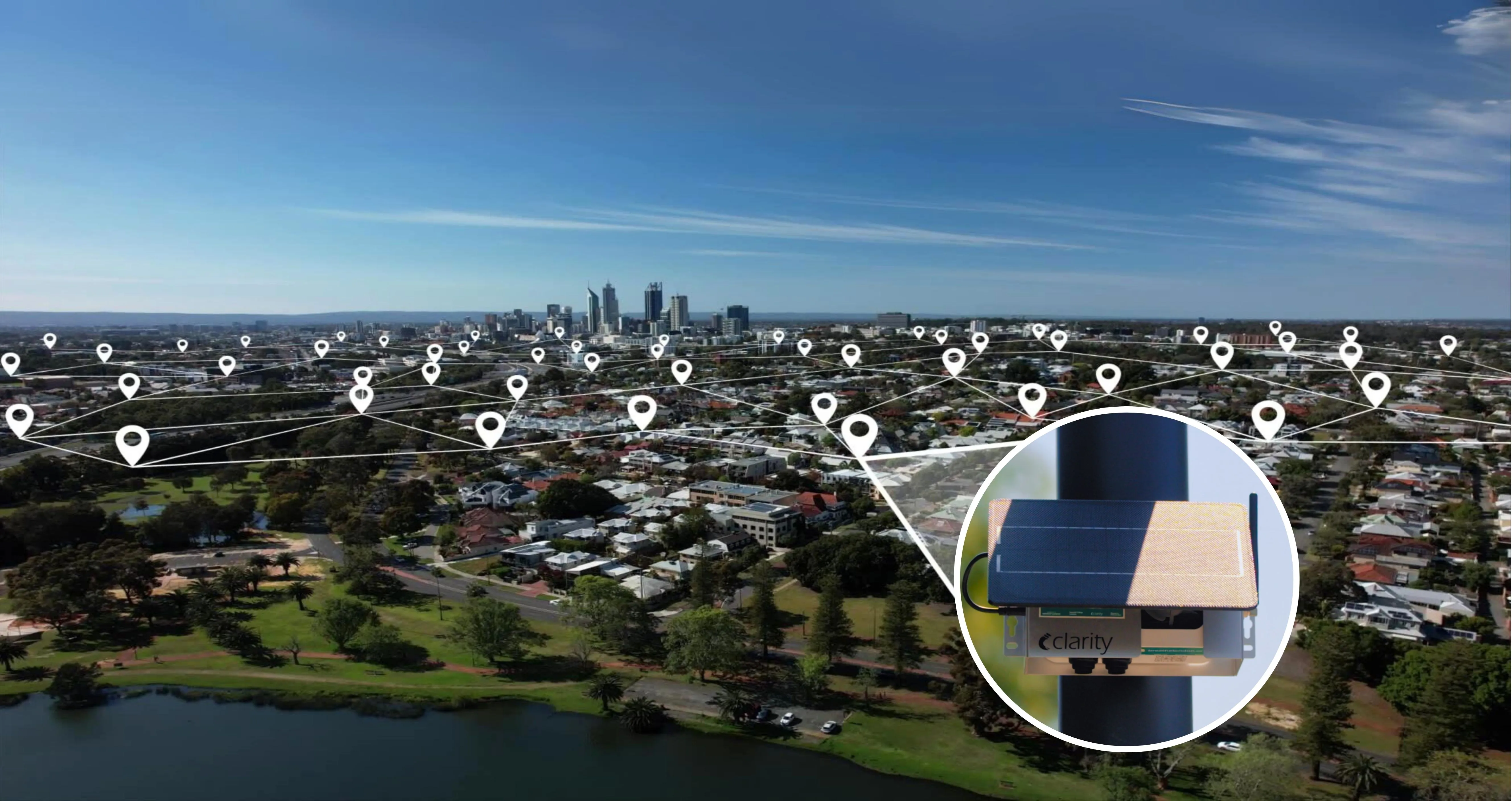
An air quality monitoring network is a group of air quality sensors or monitors stationed throughout a specific area to better protect public health and the environment. While reference monitoring stations are sparse due to high costs, cities can use low-cost air pollution sensors to implement large, granular networks for hyperlocal, real-time air quality monitoring.
Ideally, federal reference methods can provide accurate data, augmented by air sensor networks for non-regulatory supplemental and informational monitoring (NSIM) applications. Together, both monitoring methods form a holistic view of air quality.
Top air quality monitoring companies for city networks
Not all air quality monitoring networks are the same. There are many different air sensor brands that can scale to a city-wide network, each with different pros and cons. Some of the popular ones include:
- Clarity Movement
- PurpleAir
- Aeroqual
- AirGradient
- AQMesh
City-scale air quality monitoring providers compared
With so many choices available, it is important to understand what makes each network provider unique so that you can make the best decision for your city.
How to choose an air quality monitoring company for a city or local authority
When choosing an air quality monitoring company, cities need to take into consideration a range of factors including budget, scalability, purpose, timeframe, and more. Factors that local authorities should take into account for their ambient air monitoring network include:
- Project budget: Air quality monitoring technology can vary widely in cost. Determine what kinds of equipment you can afford, taking into account hidden costs, and the number of sensors you wish to have in your network.
- Power and connectivity: Will your sensors need to be able to operate off-grid? Will they have a stable wifi connection? Options such as solar power, cellular connectivity, and remote operation can help your sensors operate in rugged settings.
- Durability: How long is the lifespan of your sensor? Is the hardware weatherproof and durable? Are you prepared to tackle replacement fees if something breaks? Under Clarity’s subscription model, you don’t have to worry about replacement fees.
- Data platform: How the data are analyzed and displayed to project managers and the public plays a major role in making air quality information more accessible and manageable. Some air quality monitoring companies offer separate subscriptions for their data platforms. Do they offer API integration?
- Pricing model: Air quality monitoring companies may offer their equipment as a one-time purchase or provide rental options. Clarity has a subscription pricing model that eliminates certain hidden costs and bundles our data platforms and services.
- Calibration and support: Some companies charge extra for calibration and provide minimal support. Clarity’s subscription includes both calibration and in-depth support.
- Accuracy: How accurate are the data from each network provider? Accuracy can vary based on calibration and other factors. If you intend to use the monitors for regulatory compliance monitoring, then a reference-grade instrument may be more appropriate. However, even for non-regulatory supplemental and informational monitoring (NSIM) applications, a more accurate sensor is ideal.
Examples of city air quality monitoring networks
When identifying the right provider, it may be helpful to look at successful networks already in place to help you choose the best option. Smart cities around the world are deploying air quality sensors to ensure clean air and public health.
Open Air Chicago, Illinois
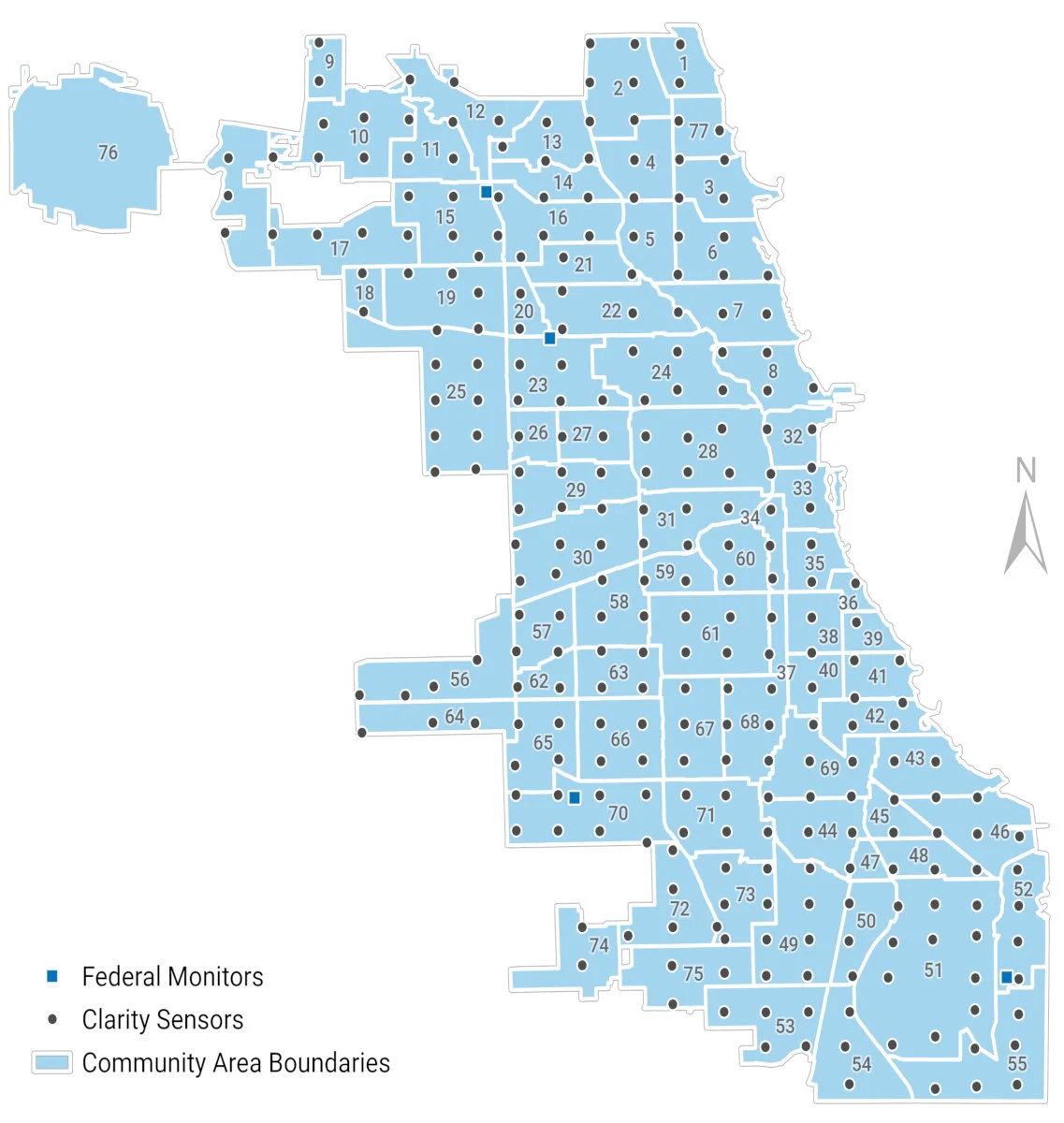
The Chicago Department of Public Health, the University of Illinois Chicago’s School of Public Health, ComEd, and other partners deployed 277 Node-S air quality sensors throughout the city in 2025. Sensors were installed in a grid-based approach so that locations are no more than a mile apart.
The resulting Open Air Chicago community air monitoring network is the largest in the country and the second largest in the world. This dense network ensures that everyone in the city has access to hyperlocal air quality data, and residents are enabled to make the best decisions for their health.
Philadelphia, Pennsylvania
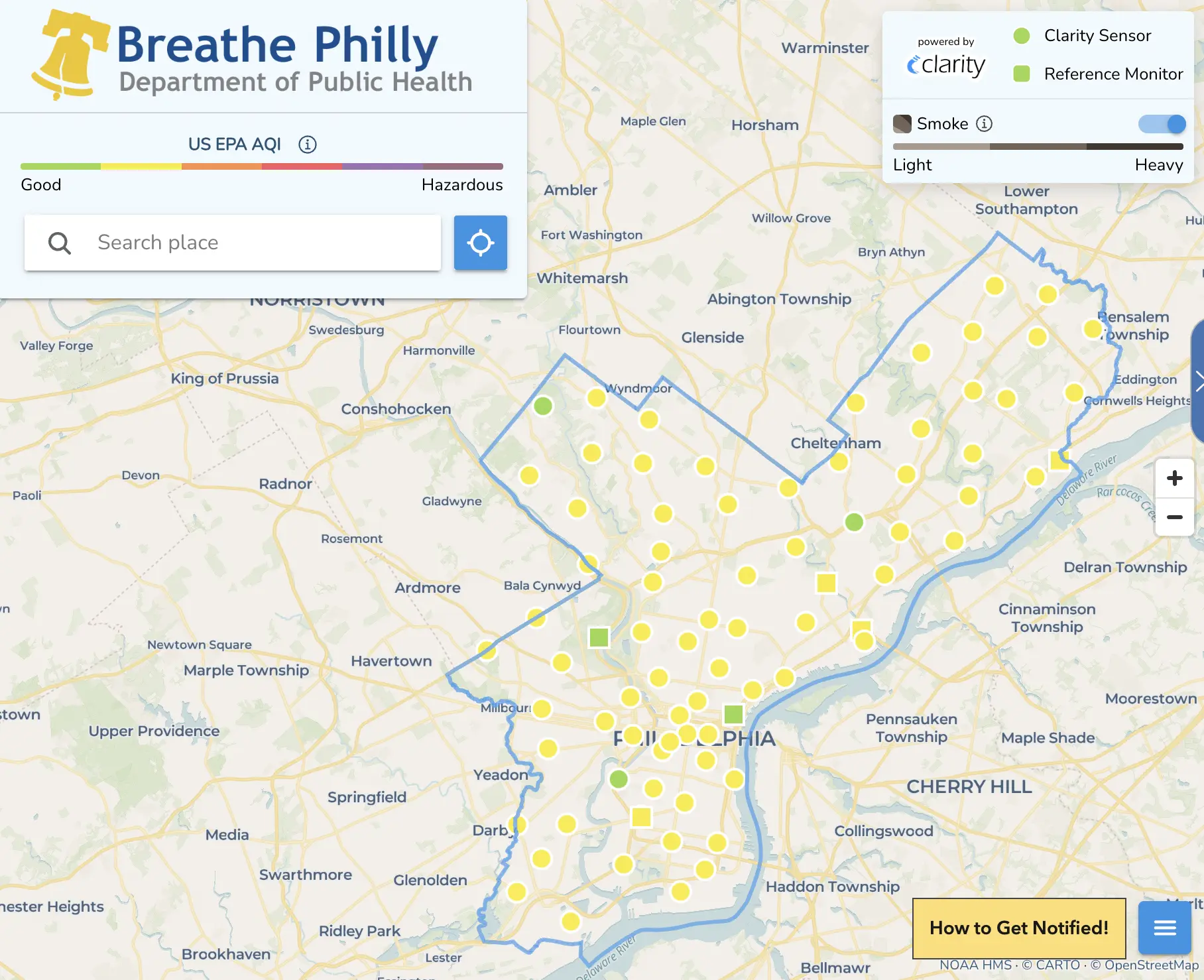
In February 2026, the Philadelphia Department of Public Health, Mayor Cherelle Parker, and the Air Management Services team launched the Breathe Philly network. This network consists of 76 Clarity Node-S sensors installed across the city, making every resident live within 1.5 miles of an air pollution monitor.
The Breathe Philly Dashboard, powered by the Clarity OpenMap, allows members of the public to check their local air quality. The Dashboard is easy to understand and equipped with air quality index (AQI) color ratings.
Breathe Philly is the culmination of years of effort by the Health Department’s Air Management Services division to ensure high-quality, reliable, and accessible air quality data are available for all Philadelphians – in every zip code and every neighborhood. We’re excited to use the Breathe Philly network in our work to improve air quality, but we’re just as excited to see how residents use it – whether you’re a citizen scientist, the parent of a child with asthma, or just a resident enjoying the outdoors.”
— Dr. Palak Raval-Nelson, Philadelphia Department of Public Health Commissioner
Yerevan, Armenia
Yerevan Mayor’s Office TMCYC partnered with Clarity to deploy about 170 air quality sensors across the city to help address air pollution from rapid urban growth and construction. The ambient air monitoring network ensured that each major construction site in Yerevan has at least two air quality sensors.
Because the Node-S sensors are wireless and solar-powered, they could be deployed at sites that lack access to permanent power and data connectivity. Now the Municipality’s Department of Environmental Protection can quickly detect dust pollution violations and construction companies are incentivized to self-regulate. Data from the sensors are also open to the public so that citizens can make more informed decisions.
Clarity’s innovative technology has significantly improved our understanding of urban air pollution and its impact on public health and the environment. The system’s accuracy, reliability, and user-friendly interface have proven to be extremely effective tools for both decision-makers and the public. It provides real‑time, accessible data that enables informed policy development and empowers citizens with the knowledge to take action. This initiative has been highly appreciated by local authorities, environmental specialists, and the general public.”
—Sargis Manukyan, Director of the Technology Management Center of Yerevan City
Building an air quality monitoring network with Clarity
Air quality monitoring networks provide real-time, hyperlocal air quality data to cities. They help identify hotspots, uncover pollution inequalities, and track mitigation measures. Clarity’s sensors and Add-On Modules are affordable, scalable, and accurate, making them ideal for building an urban air quality monitoring network. Partner with Clarity to ensure clean air for all.