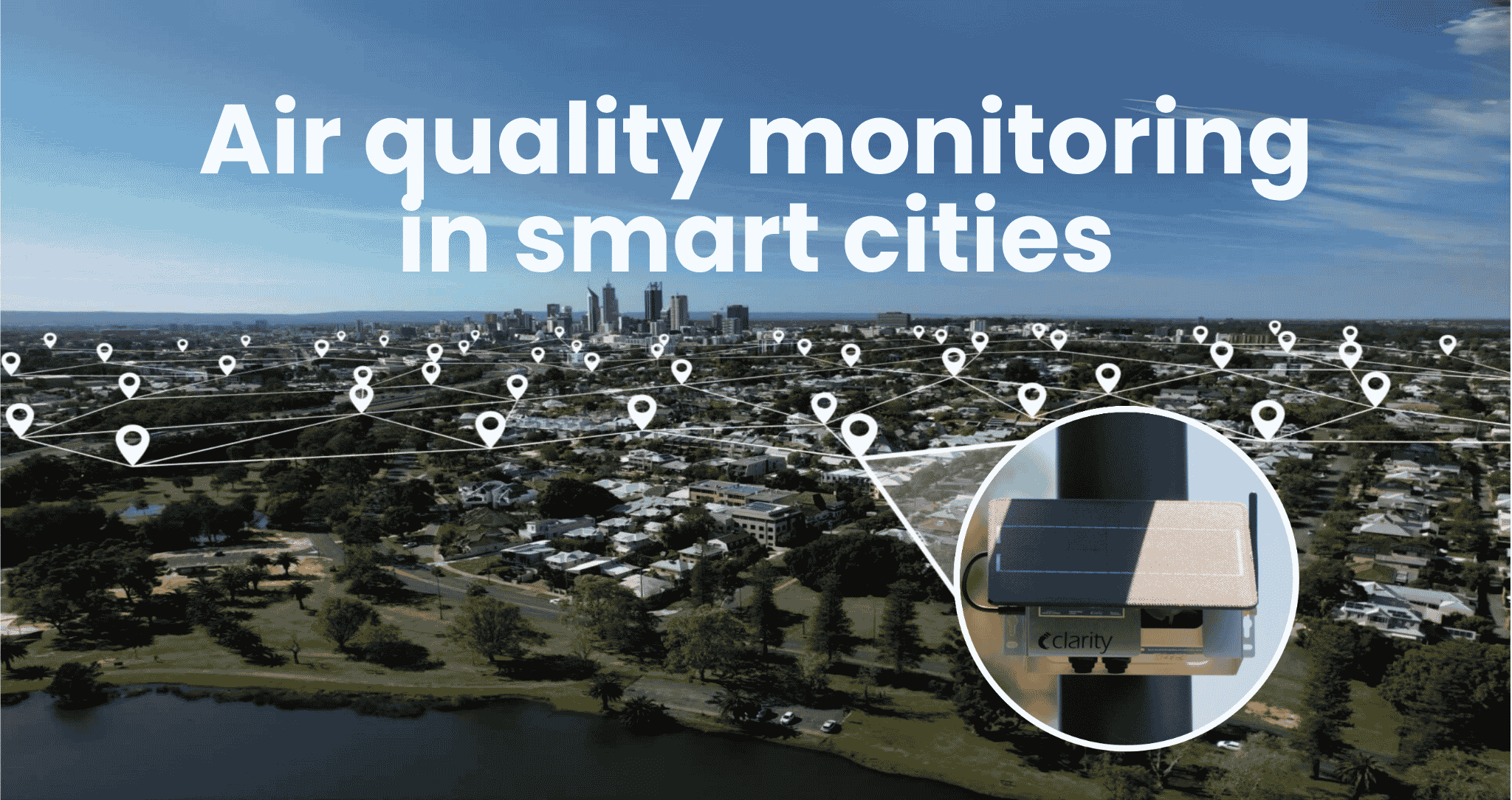
TL;DR: Reference monitors are highly accurate, but they’re too expensive and too sparse to show block-to-block variation in air pollution. Smart city air quality monitoring fills those gaps with dense, low-cost sensor networks. These networks give cities and residents the local air quality data they need to find hotspots, target interventions, and track whether clean air and sustainability policies are working. Smart city air quality monitoring protects both public health and the environment.
What is smart city air quality monitoring?
A smart city refers to a city where digital technology and data are widely used to improve efficiency in sustainability, economic growth, and quality of life. The International Organization for Standardization (ISO) developed a set of indicators for smart cities to measure their performance regarding sustainability. However, the term is loosely defined, without a single widely agreed definition. Generally, the aim is to use technology to achieve the United Nations’ Sustainable Development Goals (SDGs) or similar objectives.
Air quality monitoring in smart cities often includes a large number of remotely operated, real-time air quality monitoring systems. These systems should be widespread, thoughtfully located, and paired with other policies to reduce air pollution
Why air quality monitoring matters for smart cities
In 2019, outdoor air pollution is estimated to have caused 4.2 million premature deaths around the world, according to the World Health Organization (WHO). Cities in particular are hotspots for poor air quality. 41% of cities worldwide have air pollution more than 7 times the WHO’s recommended limits on air pollution exposure for human health. Air quality monitoring helps cities track and reduce air pollution, protecting public health.
Some reasons why air quality monitoring matters for smart cities include:
- Mitigating the major health burden of air pollution
- Promoting environmental justice for communities that face disproportionate air pollution
- Achieving climate and sustainability goals
- Protecting the environment and mitigating climate change
- Tracking the effectiveness of air pollution reduction policies
- Keeping construction, industrial, and mining emissions in check
- Uncovering hotspots and at-risk communities for targeted interventions
- Informing the public about air pollution risks so that they can ensure their safety
How smart city air quality monitoring works
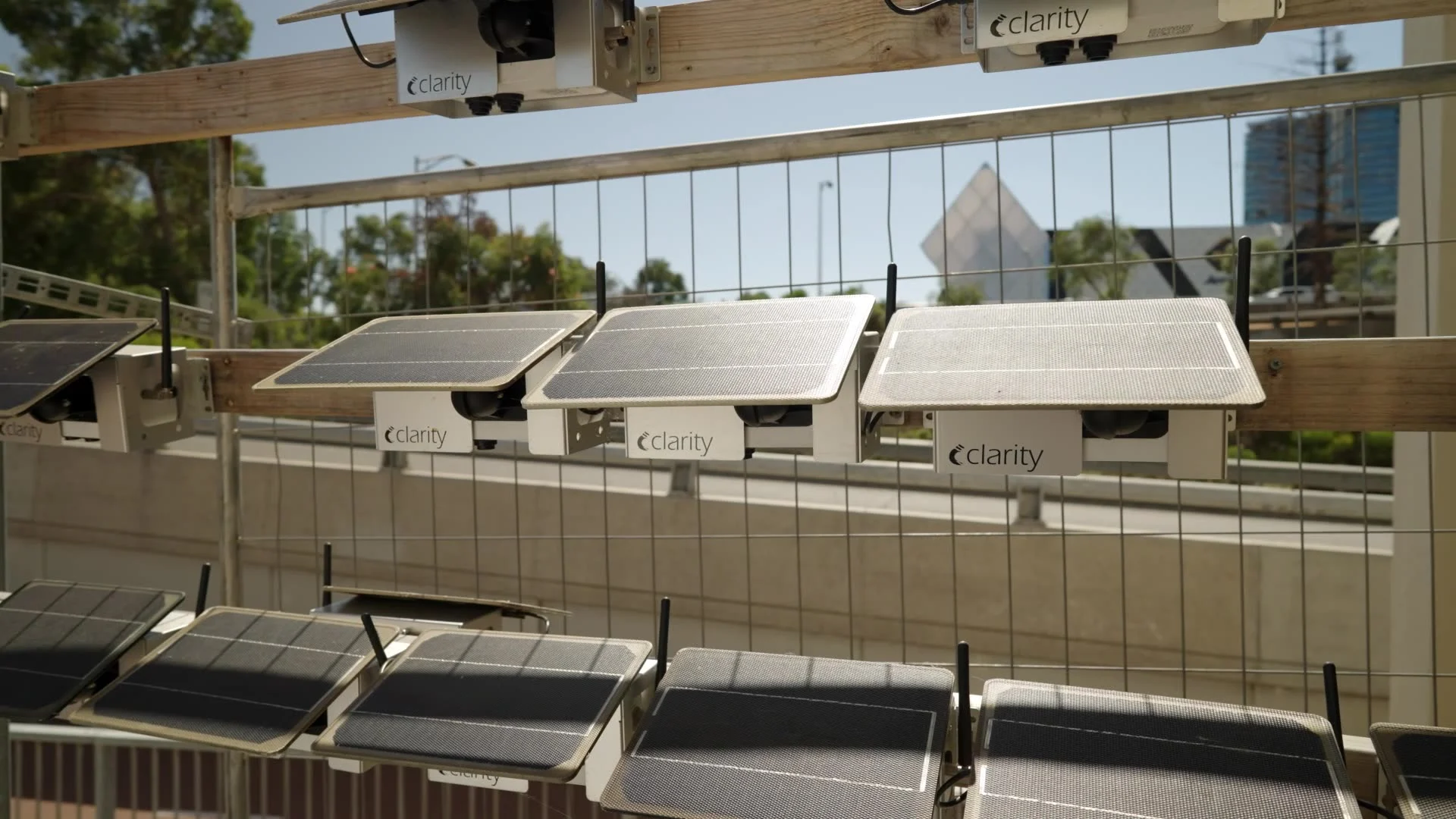
Real-time environmental monitoring in smart city initiatives features distributed sensor networks with advanced technology for optimal air quality measurement. Examples of this advanced technology include:
- Dashboards and alerts for easy data and sensor management
- Continuous, real-time data sent directly to the cloud for immediate and low-maintenance data storage
- Visualization platforms to convey air quality data to the public in a way that is clear and digestible
- Solar power and cellular connectivity for remote deployment
- Rugged and weatherproof hardware
- Remote calibration and colocation options for accurate data

What smart city networks measure
A variety of different harmful air pollutants exist in urban areas. Emissions come from fossil fuel burning, factories, wind-blown dust, and more. Vehicle traffic alone produces particulate matter, black carbon, carbon monoxide, nitrogen dioxide, polycyclic aromatic hydrocarbons, and volatile organic compounds. Air quality monitoring in smart cities tracks these pollutants to protect public and environmental safety.
Smart cities monitor the following common urban air pollutants:
- Fine particulate matter (PM2.5)
- Dust (PM10)
- Ultrafine particles (UFPs)
- Nitrogen oxides (NOx)
- Nitrogen dioxide (NO2)
- Sulfur dioxide (SO2)
- Volatile organic compounds (VOCs)
- Methane (CH4)
- Carbon monoxide (CO)
- Ozone (O3)
- Black carbon (BC)
Smart cities might also consider monitoring wind speed and direction to better understand where air pollutants originate and where they are headed.

From monitoring to management: Turning data into action
Air quality monitoring alone is not enough. Smart city air quality monitoring efforts should be paired with concrete policies and actions to reduce air pollution emissions and promote clean air.
Common policies and strategies for improving air quality and protecting public health include:
- Low and ultra-low emission zones
- Market-based economic incentives, such as cap-and-trade programs, subsidies, and air pollution taxes
- Strategic urban planning
- Increased public transportation infrastructure
- Mandatory control technologies for industrial emissions
- Open air quality data and alerts to raise awareness and allow the public to make informed decisions
- Legislation and regulations such as the National Ambient Air Quality Standards (NAAQS) under the Clean Air Act (CAA)
- Fuel and vehicle regulations
Smart city sensor networks vs. traditional reference stations
Low-cost air quality sensors are a relatively new technology. Traditionally, cities relied on reference-grade instruments, like federal reference monitors (FRMs) and equivalent methods (FEMs) for their air quality management needs. FRMs and FEMs are still the gold standard of air quality measurement, providing the most accurate data. They are used to adhere to certain air quality regulations. However, these instruments are often very expensive and high maintenance. The purchase cost of a regulatory-grade reference monitor is usually between $15,000 and $40,000, not including the high upkeep costs.
Because of these high price points, reference monitors are sparse, with only a few monitors tackling large areas. This means that they cannot easily pinpoint local variations in air quality or identify pollution hotspots. Some reference monitors also do not monitor continuously, creating a delay between when the air pollution is measured and when data are available to the public.
Ideally, reference-grade instruments and air quality sensors should be used together to create a more holistic picture of air pollution, maximizing accuracy and temporal/spatial resolution.
Real-world examples: Smart city air monitoring in practice
Many cities worldwide have optimized air quality monitoring to achieve ‘smart’ status and protect public health. The following are some examples of smart city air monitoring in action.
Breathe London
In 2019 alone, air pollution contributed to the equivalent of more than 4,000 early deaths in London. To combat this, London implemented an ultra-low emission zone in the central London area, where vehicles must meet strict emission standards or face charges. In 2021, the Greater London Authority (GLA) partnered with Imperial College London’s Environmental Research Group (ERG) to create the Breathe London air sensor network.
Today, hundreds of low-cost air quality sensors throughout the city deliver valuable real-time air quality monitoring data. The widespread network promotes public awareness, helps identify emission sources, and uncovers air pollution inequalities. The Breathe London model was so successful that it sparked the Breathe Cities Initiative around the world.
I am delighted that Londoners will now have access to real-time, accurate air quality data for their area from more than 400 monitoring sites. This will improve awareness and help people reduce their exposure to polluted air. and better target efforts on improving air quality at a local level."
— Sadiq Khan, Mayor of London

Open Air Chicago
Throughout 2025, the Chicago Department of Public Health (CDPH), the University of Illinois Chicago’s School of Public Health, ComEd, and other partners deployed 277 Node-S air quality sensors across the city, forming the largest community air monitoring network in the country and the second largest in the world.
Open Air Chicago sensors were installed in a grid-based approach informed by the EPA’s Clean Air Act Network Design Criteria for Ambient Air Quality Monitoring, the Chicago Environmental Justice (EJ) Index scores, and community input. The resulting grid ensures sensor locations are no more than a mile apart, so that everyone has access to hyperlocal data.
Powering smart city air quality monitoring with Clarity
Smart cities have cutting-edge air quality monitoring infrastructure to improve lives, promote sustainability, and safeguard the environment. Clarity’s technology enables advanced sensor networks that help raise awareness, detect hotspots, uncover inequalities, and track air pollution mitigation policies. We offer solar-powered and weatherproof sensors that offer accurate, real-time data at scale. Partner with Clarity to promote smart monitoring and clean air.