.png)
Image provided by Monika Kubala via Unsplash.
TL;DR: Methane is not included in the WHO's air quality guidelines, but it's still an air quality problem. Methane is a potent greenhouse gas and a key ozone precursor responsible for 35% of the world's harmful ozone. Methane monitoring spans a wide range of methods, from point-source sensors and fenceline instruments to satellite-based techniques capable of tracking atmospheric methane globally. Turning that data into cleaner air depends on a continuous methane monitoring system that can detect emissions, measure them accurately, and inform both regulations and mitigation strategies.
What is methane monitoring?
Methane (CH4) is a gas composed of carbon and hydrogen, also known as a hydrocarbon. It is the main component of natural gas. Methane monitoring is the process of detecting and measuring methane concentrations in the air.
Methane is a potent greenhouse gas. It is more short-lived than carbon dioxide, but far more powerful. In fact, it is more than 28 times as powerful as carbon dioxide at trapping heat in the atmosphere over a 100-year period. The Climate and Clean Air Coalition states that methane has a warming impact 86 times that of carbon dioxide per unit of mass over a 20-year period.

Why methane monitoring matters
There are several reasons why methane emission monitoring matters, including:
- Methane is a very flammable gas
- It can displace oxygen and lead to suffocation (in extremely large amounts in confined spaces)
- Methane negatively impacts the environment by contributing to global warming
- It can serve as an indicator for gas leakage identification
- Methane is a key ozone precursor
Methane and air quality: The ground-level ozone connection
Methane harms human health through its connection to global warming. Global warming contributes to extreme weather patterns, contributing to more powerful storms, intense flooding, severe wildfires, and prolonged droughts. These events increase the risk of infectious diseases as well as heat-related illnesses. Methane’s impacts on climate change and health contribute to a global annual loss of about 400 million hours of work due to extreme heat.
Methane leaks from the oil and gas industry can mix with other harmful chemicals, gases, and volatile organic compounds, harming nearby communities. Yet, one of the most significant ways in which methane harms human health is through its connection to another air pollutant: ground-level ozone (O3).
Why methane is a ground-level ozone precursor
Ozone is a colorless gas composed of three oxygen atoms. While it is beneficial in the upper atmosphere, it can be harmful in the lower atmosphere, where it contributes to smog. Ozone is formed through chemical reactions in the atmosphere rather than through direct anthropogenic emissions.
Ozone can have a variety of negative health impacts, including decreased lung function, worsened allergies, difficulty breathing, aggravation of lung disease, and premature death. In 2010, long-term Ozone exposure was responsible for about 1 million premature respiratory deaths around the world. In 2023, ozone accounted for 470,000 COPD deaths globally. Ozone-related deaths are also expected to increase in the coming decades unless regulations are strengthened.
Ozone does not just harm humans. O3 can also reduce photosynthesis in plants, slowing vegetation growth and making plants more susceptible to damage.
Methane is a key precursor for ozone. In fact, methane is responsible for 35% of the world's harmful ozone.
How cow (livestock) methane affects air quality
A single cow belches roughly 220 pounds of methane every year, making cattle the biggest source of agricultural greenhouse gases around the world. The methane that they produce leads to more ozone through chemical reactions in the atmosphere.
Fortunately, there are ways to make cows more sustainable. Creating more easily digestible cow diets and more efficient livestock production can dramatically reduce methane emissions and protect clean air.
Why methane is not in WHO air quality guidelines
The WHO Global Air Quality Guidelines set evidence-based recommended levels for certain air pollutants. The aim is to reduce air pollution to a reasonable level to better protect public health. Methane is not among the air pollutants included in the WHO guidelines because its effects on public health are indirect, mediated through global warming and ozone.
The WHO’s guidelines address air pollutants that affect public health, including particulate matter (PM2.5 and PM10), nitrogen dioxide (NO2), sulfur dioxide (SO2), carbon monoxide (CO), and ozone (O3).
What methane monitoring measures
Methane monitoring often measures methane concentrations, emissions, and flow rates. A variety of different units and metrics are used for all three types of methane measurement. For instance, methane concentration is often expressed in parts per billion (ppb) or parts per million (ppm), which means the number of methane molecules for every billion or million air molecules. Methane emissions, on the other hand, might be expressed in terms of megagrams or terragrams emitted per year.
How methane monitoring works: Detect, measure, mitigate
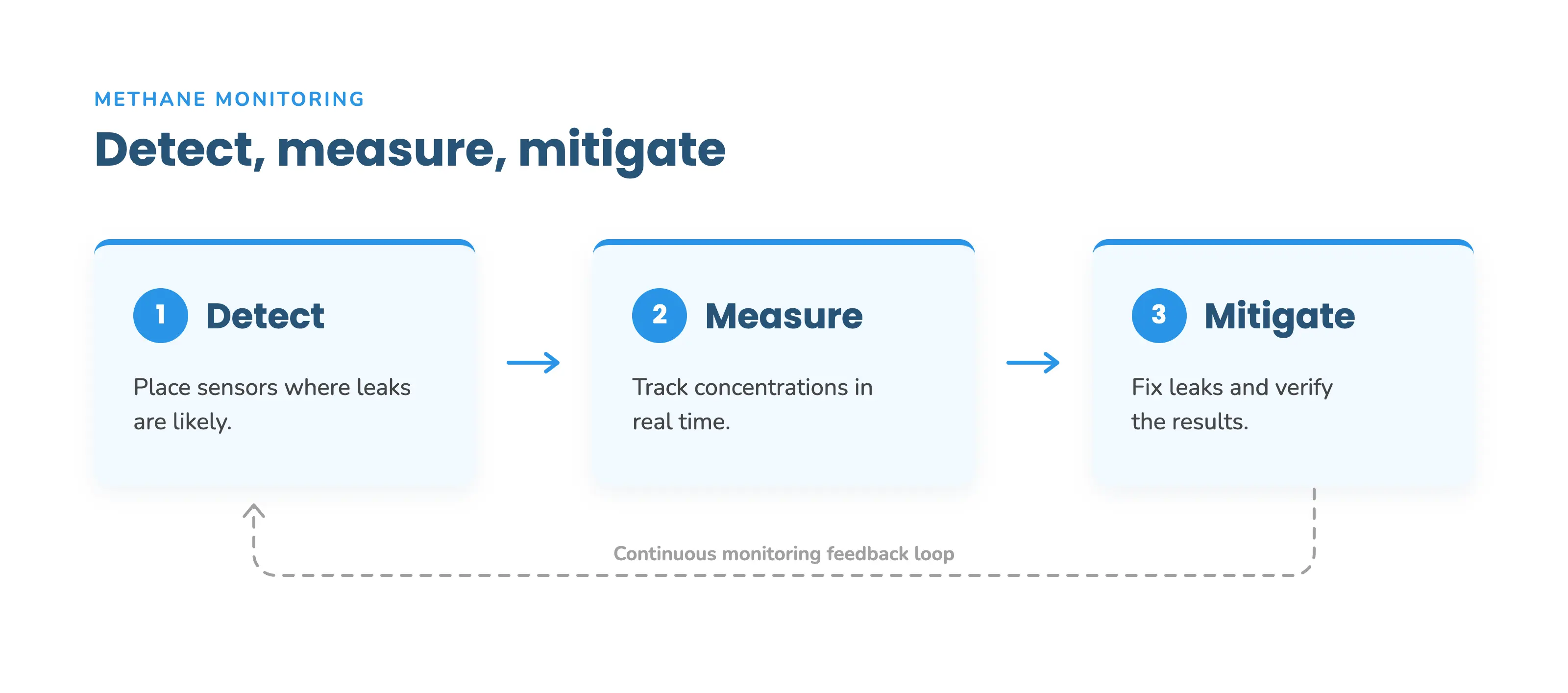
There are three steps to implementing methane monitoring:
- 1. Detect: Methane monitoring begins by securing funding, choosing a sensor, and setting up an air quality sensor system. Project managers must identify the right locations to place methane monitors to effectively identify methane emissions and leaks.
- 2. Measure: Continuous methane monitoring is best for determining high concentrations and emission rates.
- 3. Mitigate: Equipped with accurate air quality data, project managers can now properly address emissions, fix methane leaks, raise awareness, and promote positive change. Continuous monitoring also promotes a feedback loop in which methane mitigation measures can be effectively evaluated.
Methane monitoring methods: ground, satellite, and beyond
There are various ways to monitor methane. Some methods are part of bottom-up assessments, meaning they are small-scale and focus on individual sources at the ground level. In large quantities, they can be used to estimate the larger picture. Other methods are top-down, meaning they are large-scale, often higher-level, and can be used to estimate emissions across broad geographic areas.
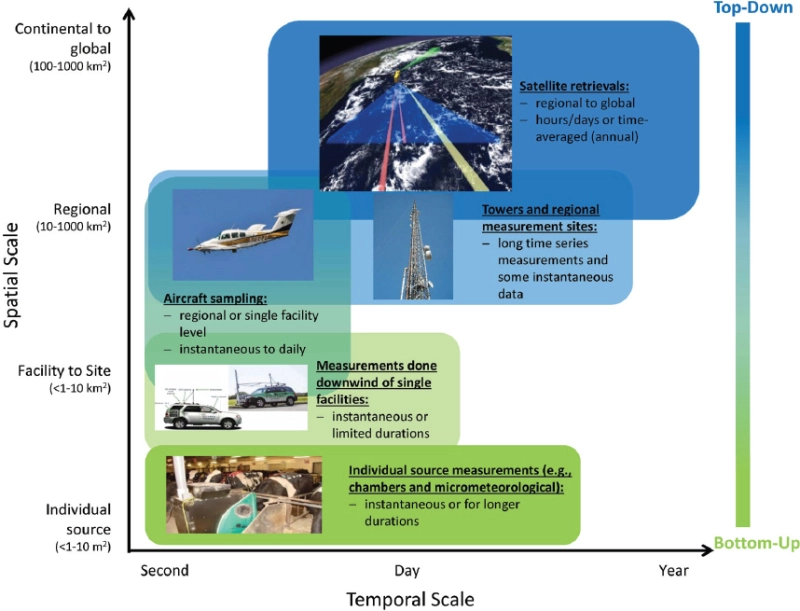
The different methods for methane monitoring include, but are not limited to:
Where methane comes from and who monitors it
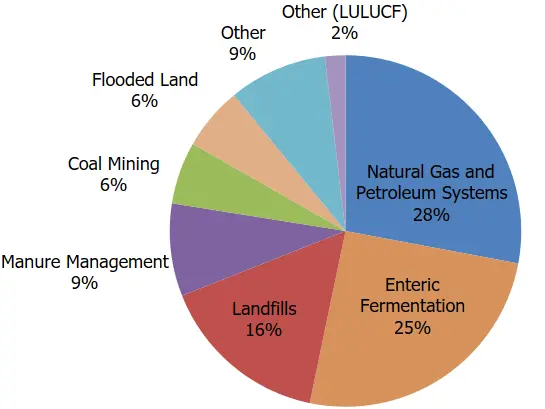
Methane emissions come from many anthropogenic sources, requiring monitoring and mitigation efforts to keep methane air pollution in check. Natural sources, such as wetlands and naturally occurring anaerobic decomposition, can also produce methane.
Regulations and reporting driving methane monitoring
Certain regulations and programs either require or encourage methane monitoring and/or reductions in methane emissions. Some of these are voluntary while others are binding. These varied programs include:
- Subpart W of the Greenhouse Gas Reporting Program (GHGRP)
- The EPA’s 2024 Final Rule
- The Methane Emissions Reduction Program (MERP)
- The Methane Super Emitter Program
- The EPA’s Coalbed Methane Outreach Program (CMOP)
- The Paris Agreement’s climate goals require reductions in greenhouse gas emissions, including methane. Many countries still adhere to this agreement, although the U.S. is not one of them.
- The Global Methane Pledge
Pairing methane monitoring and mitigation with Clarity’s air quality network
There are several different methods of monitoring methane. These include:
- Thermal conductivity detectors (TCD): These are also known as katharometers. They measure the difference in the thermal conductivity of a carrier gas, which is caused by a change in its chemical makeup.
- Catalytic sensors: These sensors are commonly used in mines. They cause a catalytic combustion reaction to understand methane levels.
- Optical sensors: Optical sensors use light, such as infrared or lasers, to detect methane. There are various kinds of optical techniques, including non-dispersive infrared technology, direct tunable diode spectroscopy, cavity-enhanced absorption spectroscopy, cavity ring-down spectroscopy, lidar techniques, and more.
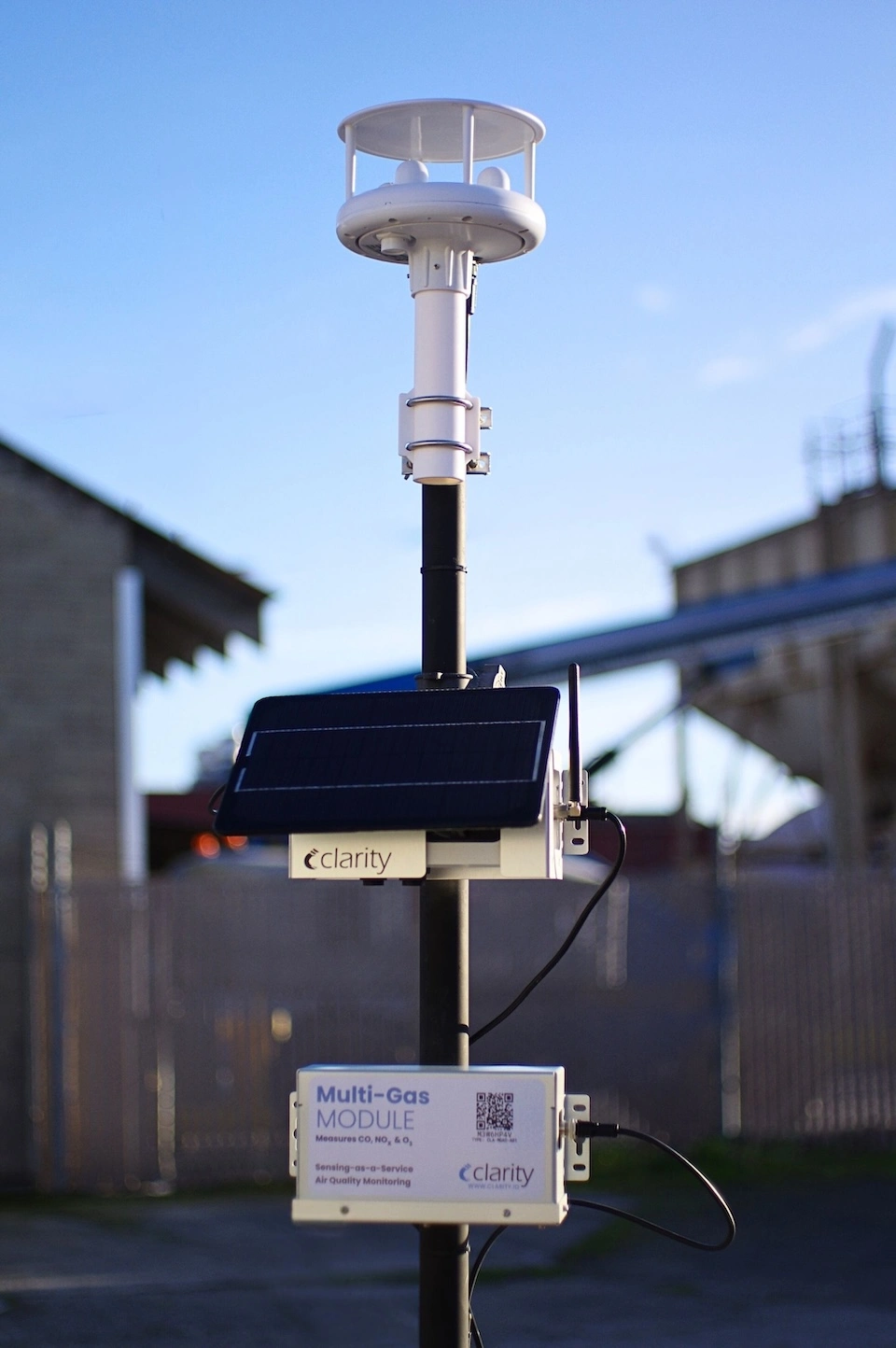
Clarity does not currently offer methane monitoring. However, we do offer an array of air quality monitoring solutions, including both fine and coarse particulate matter (PM2.5 and PM10), black carbon, and more. Our Multi-Gas Module monitors ozone (O3) along with carbon monoxide (CO), nitrogen dioxide (NO2), nitric oxide (NO), and nitrogen oxides (NOx). Methane leaves an air quality footprint in the form of ozone, which harms public health and the environment.
Partner with Clarity to promote clean air and healthier communities.