Use cases for air quality technology
Air quality technology serves a wide range of stakeholders, each with distinct needs. Below are five of the most common applications.
City governments and air quality agencies. Public agencies use dense sensor networks to supplement regulatory monitoring, identify pollution hotspots, target enforcement, and evaluate the impact of interventions like low-emission zones or congestion pricing. For example, the Kathmandu Metropolitan City council implemented a citywide network of Clarity Nodes to begin collecting air quality data for the first time.
Construction and infrastructure projects. Construction sites generate significant dust and emissions and increasingly face compliance requirements for boundary monitoring. Real-time air quality sensor data helps site managers detect exceedances, trigger mitigation, and document compliance with regulators and neighbors. For more on this use case, see our case study on Yerevan. With 170+ Node-S sensors deployed across the city, it is one of the most extensive city-run air quality sensor networks in Europe, with a focus on construction.
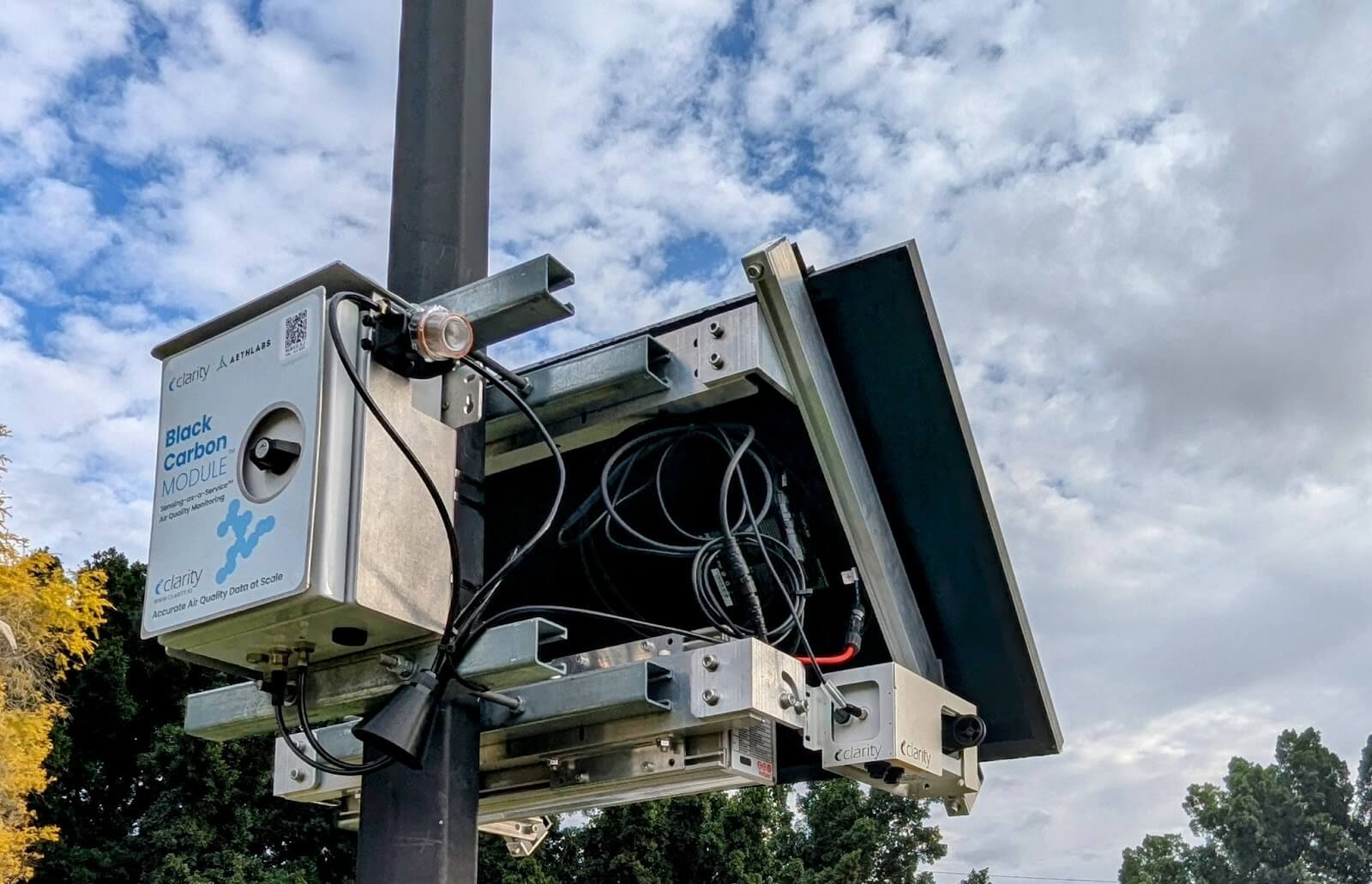
Industrial facilities. Refineries, ports, and manufacturing plants use fenceline monitoring to track fugitive emissions, comply with EPA or local regulations, and respond to community concerns with transparent data. For example, Kansanshi Mine improved its compliance monitoring, reduced operational overhead and increased reliability by implementing a network of Clarity Node-S devices.
Schools, universities, and campuses. Educational institutions deploy air quality monitoring to protect student and staff health, especially in regions affected by wildfire smoke or near busy roads. Data supports decisions about outdoor activities, HVAC operation, and long-term facility planning. Los Angeles Unified School district implemented a network of 200+ air sensors across their 710+ square mile district in order to provide principals and other decision makers with real-time air quality data to protect student health.
Individuals and communities. Hyperlocal sensor data helps residents understand exposure where they live, work, and exercise, informing everyday decisions and giving community advocates the evidence base to engage with policymakers. The Breathe London network of Clarity Node-S devices deployed over 400 monitors across all 33 London boroughs to improve awareness, help people reduce their exposure to air pollution, and help the municipal government better target efforts to improve air quality at the local level.
Technology solutions for air quality improvement
Air pollution affects health, the environment, and the economy on a global scale. It causes respiratory diseases, cardiovascular issues, and cancer, with 6.7 million premature deaths attributed to air pollution annually. This invisible threat exacerbates chronic conditions such as asthma and COPD, posing severe risks to public health.
The economic burden is substantial. Air pollution leads to increased healthcare costs and reduced labor productivity, straining public health systems and impacting industries like agriculture and tourism. These economic challenges contribute to a reduction in global GDP and an increase in public expenditure.
Environmental degradation is another consequence of air pollution. It harms ecosystems, reduces biodiversity, and accelerates climate change. The urgency to address these issues is clear.
These impacts underscore the need for effective air quality improvement technologies to protect human health, preserve the environment, and support economic stability.
Key sources of air pollution
Air pollution arises from both human activities and natural events.
Anthropogenic sources dominate urban air pollution. Anthropogenic sources include:
Industrial Emissions: Factories and power plants release pollutants like sulfur dioxide and nitrogen oxides into the atmosphere. These emissions contribute significantly to smog and acid rain.
Vehicle Exhaust: Transportation remains a major contributor to air pollution. Combustion engines emit carbon monoxide, particulate matter, and volatile organic compounds, impacting urban air quality. Find out more about vehicle emissions monitoring strategies for reducing pollution in major cities.
Residential Heating: The burning of fossil fuels for heating homes releases air pollutants. In many regions, the use of coal and wood exacerbates air quality issues, particularly in colder months.
Waste Burning: Improper waste management and open burning of garbage release harmful toxins. This practice is prevalent in areas lacking adequate waste disposal infrastructure.
Natural events also contribute to air pollution. Natural sources include:
Wildfires: These fires release large quantities of smoke and particulate matter, affecting air quality over vast regions.
Volcanic Activity: Volcanic eruptions emit ash and gases like sulfur dioxide, which can influence global air conditions.
Technological solutions must be tailored to address these diverse sources. Effective intervention requires comprehensive monitoring and data analysis, such as the services provided by our Sensing-as-a-Service model, to mitigate the impact of these pollutants and improve air quality.
Commonly Monitored Pollutants
Challenges in monitoring air quality
Effective air quality monitoring faces significant challenges. Traditional reference-grade monitors are expensive, limiting their widespread deployment. These high costs create barriers for many regions, particularly in developing areas, hindering comprehensive monitoring efforts.
Geographic coverage is another major issue. Limited numbers of monitors fail to provide the widespread data needed to understand air quality variations across different regions. Sparse monitoring networks can miss localized pollution events or trends, reducing the effectiveness of interventions.
Capturing real-time localized air quality data is critical for timely responses but current systems often struggle with this. Conventional monitoring setups can lag in delivering data, impacting the ability to make informed decisions quickly. This lack of immediacy reduces the potential for proactive air quality management.
These challenges highlight the need for more accessible, scalable, and affordable monitoring technologies, including innovations such as low-cost sensors that expand geographic coverage and provide timely data.
Advances in air pollution sensors
Technological advancements in air pollution sensors are transforming environmental monitoring. Stationary low-cost sensors are now available, providing more accessible and widespread data collection than traditional methods. These sensors enable real-time monitoring, offering immediate insights into air quality conditions.
Low-cost air quality sensors are compact and easily deployable, making them ideal for use in various settings, from urban environments to rural areas. They measure a range of pollutants, including particulate matter, nitrogen dioxide, and ozone, providing comprehensive air quality data. They enable the detection of localized pollution events.
The benefits of stationary low-cost air quality sensors:
- Accessibility: Easy to deploy in diverse locations due to compact size and affordability.
- Comprehensive monitoring: Capable of measuring multiple pollutants for a complete air quality profile.
- Real-time insights: Provides immediate data for timely decision-making.
These innovations facilitate the identification of pollution hotspots. For additional context on integrating advanced sensor technologies within hybrid networks, see our comprehensive overview of evolving air quality monitoring technologies.

The role of satellite-based monitoring
Satellite technology provides comprehensive coverage of vast areas, including remote and underserved regions lacking ground-based infrastructure. Satellites equipped with advanced sensors capture high-resolution data on atmospheric pollutants. This enables understanding pollution trends and patterns on a global scale.
Satellites provide continuous data collection over large geographical areas, crucial for monitoring transboundary pollution. Their ability to measure pollutants in the atmosphere offers insights into regional and global air quality dynamics. Satellite data complements ground-based systems, including stationary low-cost air sensors, enhancing the accuracy and coverage of air quality assessments.
The benefits of satellite-based monitoring:
- Wide coverage: Satellites can monitor large areas, including remote regions, providing a global view of air quality.
- Continuous data: They deliver ongoing monitoring, capturing data over time to identify trends and changes.
- Transboundary insights: Satellite data helps understand pollution that crosses national borders, supporting international efforts to address air pollution.
Despite these benefits, satellite monitoring has limitations. They often lack the fine granularity of localized ground-based sensors, which can provide more detailed insights into specific urban pollution events.
The integration of satellite data with ground-based systems is essential for comprehensive air quality assessment. Refer to our discussion on collaborative efforts in air quality monitoring: a global perspective.
Satellite-based initiatives like the European Space Agency's Sentinel program and NASA's Aura satellite contribute significantly to global air quality monitoring. These programs enhance our understanding of atmospheric conditions, providing valuable data for policymakers and researchers working to improve air quality worldwide.
Using big data to analyze air pollution trends
Big data analytics is transforming air quality monitoring. It processes large datasets from diverse sources to uncover pollution trends. This capability is essential for understanding patterns and predicting future pollution scenarios. Massive data streams from sensors, satellites, and IoT devices feed into big data platforms, providing a comprehensive picture of air quality. Our data analysis services offer tailored solutions that convert these massive streams into actionable insights.
Machine learning plays a crucial role in enhancing the accuracy of air pollution predictions. It integrates various data streams, from meteorological data to traffic patterns, refining models that forecast pollution events. Machine learning algorithms continuously learn from new data, improving their predictive power—a process that demonstrates how better air pollution data is helping improve air quality. This adaptability is vital for responding to changing environmental conditions.
Big data analytics allows for:
- Pollution hotspot detection: Big data identifies areas with high pollution levels, guiding targeted interventions.
- Predictive analytics: Machine learning forecasts pollution events, enabling proactive measures.
- Integrated data streams: Combines data from multiple sources for a holistic view of air quality trends.
Smartphone technology for exposure tracking
Smartphone technology is revolutionizing personal exposure assessment to air pollution. It integrates seamlessly with daily life, leveraging GPS-based tracking to offer precise insights into individual exposure levels. Users can access real-time air quality data, empowering them to make informed decisions about their daily activities and health.
Smartphone apps enhance public engagement by providing interactive platforms for monitoring air quality. They offer a range of features that increase awareness and encourage proactive behavior.
Smartphone technology for exposure tracking includes:
- Real-Time Alerts: Notify users of pollution levels in their vicinity, allowing them to adjust plans and minimize exposure.
- Interactive Maps: Display detailed air quality indexes across different locations, aiding users in choosing healthier routes or areas.
- Personal Exposure Reports: Track individual exposure over time, helping users understand their personal air quality impact.
- Health Recommendations: Offer advice based on current air quality, such as suggestions to reduce outdoor activity during high pollution periods.
- Community Engagement: Enable users to share data and experiences, fostering a sense of collective responsibility toward cleaner air. Data-driven platforms can bolster air quality advocacy and education.
The integration of smartphone technology into air quality monitoring not only enhances individual awareness but also fosters broader community engagement. By providing accessible and actionable data, these applications promote healthier lifestyles and environments.
Combining sensor networks for improved accuracy
Hybrid air quality monitoring networks integrate various sensor types to enhance data quality and spatial coverage. This approach leverages the strengths of different monitoring technologies, creating a comprehensive picture of air pollution levels in both urban and rural settings.
By combining traditional reference-grade monitors with stationary low-cost sensors, hybrid sensor networks provide localized data that captures pollution variations across different areas. Reference-grade monitors offer high accuracy, essential for establishing baseline measurements. Meanwhile, low-cost sensors offer flexibility and affordability, allowing for dense deployment across wide regions.
Hybrid networks facilitate real-time data collection, providing immediate insights into air quality conditions. With data from multiple sources, these networks support predictive analytics and modeling, enhancing the understanding of pollution trends.

Addressing indoor air pollution
Indoor air quality plays a crucial role in overall health and well-being, especially for vulnerable populations like children and individuals with chronic respiratory diseases. Indoor environments can often harbor pollutants such as dust, mold, volatile organic compounds (VOCs), and other harmful substances. These pollutants can exacerbate conditions like asthma and COPD, leading to increased health risks and respiratory issues.
Improving indoor air quality is essential for creating safe and healthy living and working spaces. Several technologies are available to target and reduce indoor air pollution effectively:
- Air Purifiers: Devices that filter out airborne particles and pollutants, using HEPA filters to capture dust, pollen, and other allergens. They contribute significantly to cleaner indoor environments.
- Ventilation Systems: Proper ventilation helps in reducing indoor pollution by bringing in fresh air and removing stale air. Systems like HVAC ensure a continuous flow of clean air, crucial for maintaining healthy indoor conditions.
- Humidity Control: Dehumidifiers help manage indoor humidity levels, preventing mold growth and minimizing dust mites, both of which can affect air quality.
- Smart Monitors: Devices that track indoor air quality, providing real-time data on pollutant levels. These monitors help identify issues promptly, enabling timely interventions.
Conclusion and future prospects
Technology is changing how we manage air quality. New solutions give us tools to tackle air pollution. Stationary low-cost sensors, satellites, and data analytics offer real-time insights, helping communities and governments make smart decisions. These tools monitor pollution, identify hotspots, and guide solutions that improve health and protect our environment.
The future of air quality is promising. Continued innovation and funding are key to improving these technologies and keeping them accessible. Our work in environmental monitoring highlights the value of combining different technologies for the best air quality data.
Key takeaways include:
- Enhanced Sensor Technology: Creating better, more affordable sensors to improve data accuracy and coverage.
- Integration of AI and Machine Learning: Using advanced algorithms to enhance predictions and real-time responses.
- Global Collaboration: Building stronger partnerships across countries to share data and strategies for better air quality worldwide.
- Public Engagement Initiatives: Giving citizens tools and information to actively participate in reducing pollution.
To improve air quality in your area, find the right solution for your needs. Visit Build your Solution to select the right air quality monitoring system and get a personalized quote. We want everyone to access good tools to improve their air quality and health.
Types of air quality technologies
Air quality technology spans three broad categories: tools that measure air pollution, tools that interpret that data, and tools that reduce pollution itself. The strongest air quality programs combine all three.
Air quality monitoring technologies
Monitoring is the foundation of every air quality program. Without data, there is no basis for action. Today's monitoring landscape is defined by two complementary approaches:
Ground-based sensor networks. Regulatory reference monitors deliver the highest accuracy but are expensive to operate, which limits how many can be deployed. Modern low-cost sensors are an order of magnitude less expensive, enabling networks dense enough to resolve pollution at the street and neighborhood level. The result is a hybrid model: a smaller number of reference stations setting the baseline, augmented by hundreds or thousands of low-cost nodes mapping spatial variation.
Satellite remote sensing. Satellites measure pollution by analyzing how the atmosphere interacts with sunlight. They cover entire continents but cannot resolve fine spatial detail. They're indispensable for tracking wildfire smoke, dust storms, and regional pollution transport, and are increasingly used as inputs to data fusion models that combine satellite, ground, and meteorological data.
Air quality data and analytics
Raw sensor readings only become useful when they're cleaned, calibrated, and interpreted. Data and analytics platforms handle several critical functions:
Calibration and quality assurance correct for sensor drift, humidity effects, and inter-unit variation, often using machine learning models trained against co-located reference data.
Forecasting and prediction combine sensor data, satellite observations, meteorology, and emissions inventories to predict air pollution hours or days in advance.
Hotspot detection and source attribution identify where pollution concentrates and, in many cases, what is causing it. It is essential when looking to identify emissions from specific industries, traffic patterns, or wildfire events.
Visualization and reporting translate complex data into dashboards, maps, and alerts that decision-makers can actually use.
Mitigation technologies
Once air pollution is measured and its sources are understood, mitigation technologies can be used to reduce it. Outdoors, mitigation tools include technological tools like catalytic converters, scrubbers and electrostatic precipitators at industrial sources, as well as policy tools like low-emission zones, congestion pricing or fuel standards. Importantly, air quality monitoring data is what makes mitigation measurable. It's how cities and operators can verify that interventions are actually working.