
Part of the Image provided by Samuel Girven via Unsplash.
TL;DR: Air pollution rarely consists of only a single pollutant, so measuring several air pollutants together helps reveal shared sources, chemical interactions, and combined exposures. Real-time sensor networks and laboratory-based air toxics sampling play different but complementary roles. The EPA regulates air toxics mainly through source emission limits. The EPA addresses criteria pollutants through ambient air quality standards. Clarity’s Node-S and Add-On Modules support multi-pollutant networks that complement air toxics monitoring.
What is multi-pollutant monitoring?
Multi-pollutant monitoring devices measure several pollutants at once. A single monitor or monitoring setup can measure multiple air pollutants, providing a more holistic picture of air quality. Different pollutants can overlap, intermingle, and react with each other in urban settings.
Traffic-related air pollutants (TRAP), for instance, consist of particulate matter (PM), black carbon (BC), carbon monoxide (CO), nitrogen dioxide (NO2), and more. Because of this complex mixture, it makes sense to monitor several pollutants together.
What are air toxics (hazardous air pollutants)?
Hazardous air pollutants (HAPs) are pollutants known or suspected to cause cancer, other serious health effects, or environmental damage. HAPs are also referred to as toxic air pollutants or air toxics. The EPA has identified 188 toxic air pollutants and is working to reduce their emissions.
Some common air toxics include:
- Perchloroethylene
- Benzene
- methylene chloride
- Asbestos
- Dioxin
- Toluene
- Pesticides
- Heavy metals such as cadmium, chromium, mercury, and lead compounds
HAPs are not the same thing as the criteria air pollutants, which are six air pollutants regulated by the U.S. EPA under the Clean Air Act. Hazardous air pollutants are not always monitored the same way that criteria pollutants are. HAPs are typically measured using dedicated sampling and laboratory methods rather than real-time air-quality sensors.
Multi-pollutant vs. single-pollutant monitoring
Urban air quality contains many different pollutants. Monitoring a single pollutant can miss the full picture, such as concurrent pollution exposures, air pollutant interactions, and secondary pollutants. On the other hand, monitoring multiple air pollutants can help determine shared emission sources and provide a clearer picture of air quality.
Multi-pollutant air quality monitoring provides benefits such as:
- Better understanding of concurrent pollution exposures
- More accurate health-risk assessment.
- Better source apportionment
- Greater understanding of pollution/chemical interactions in the air
- Cost efficiency from tackling multiple pollutants with one monitoring setup
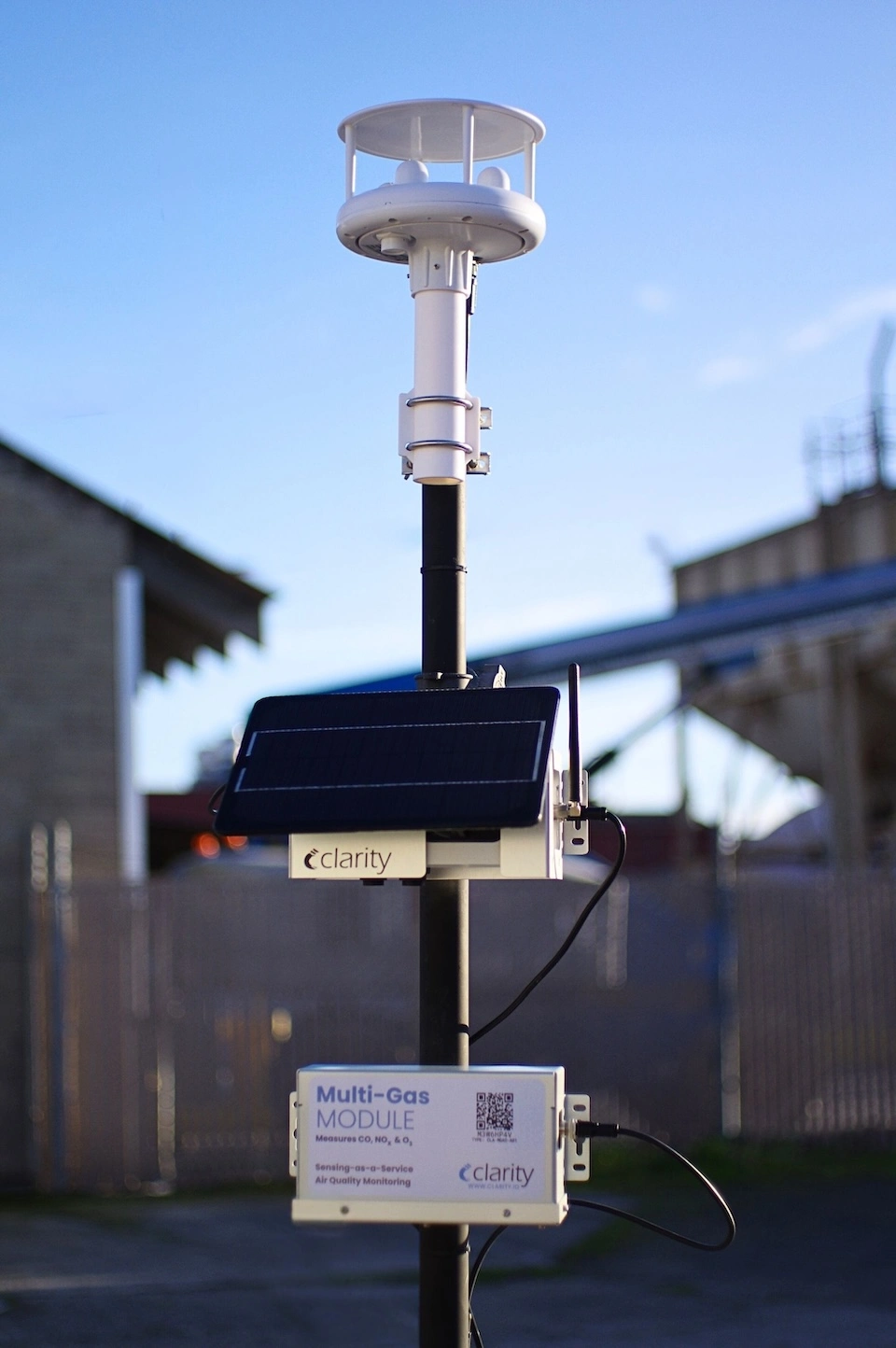
Multi-pollutant monitoring devices and equipment
Different monitoring devices and equipment are used to monitor multiple air pollutants or air toxics. Each device type suits specific monitoring situations.
For instance, multi-pollutant monitoring sensors are best for large-scale non-regulatory supplemental and informational monitoring. Conversely, sampling and laboratory methods are optimal for air toxics monitoring and regulatory enforcement. The table below breaks down some of the different methods of air quality assessment and the applications each is best suited to.
Air toxics monitoring and the EPA
Unlike criteria air pollutants, hazardous air pollutants don’t have National Ambient Air Quality Standards (NAAQS). However, via the Clean Air Act, the U.S. EPA regulates air toxics through emission limits on sources. The EPA also performs ambient air toxics monitoring to understand trends, create exposure assessments, and evaluate air quality models.
Measures the EPA takes to address air toxics include:
- Emissions standards for major sources of toxic air pollutants
- National air toxic trends sites (NATTS)
- The Urban Air Toxics Monitoring Program (UATMP)
- Community-Scale Air Toxics Ambient Monitoring (CSATAM) grant competition
- Air Toxics Analysis Workshops
- The Mobile Source Air Toxics (MSAT) rules
- Fenceline air toxics monitoring

Real-world examples: multi-pollutant monitoring in practice
Clarity has supported multi-pollutant monitoring around the world.
Air quality monitoring in Kathmandu, Nepal
In 2025, the Kathmandu Metropolitan City (KMC) officially unveiled the Kathmandu Metropolitan Air Quality Monitoring Dashboard as part of its work in the global Partnership for Healthy Cities network. The network comprises 74 cities worldwide committed to preventing noncommunicable diseases, including some that can result from air pollution.
Kathmandu set up 18 Clarity Node-S air quality sensors in high-priority locations around the city. These sensors monitor both particulate matter (PM2.5) and nitrogen dioxide (NO2), creating Kathmandu’s first city-run air monitoring system. The subsequent air quality data informs policy development and raises community awareness.
For the first time, Kathmandu has a city-run air quality network that not only measures pollution but also mobilizes our community to demand cleaner air. NFYN is proud to help connect youth, civil society, and the city government through this partnership. Together, we’re empowering citizens to safeguard their health and holding ourselves accountable for Kathmandu’s air. This is how we build a cleaner and healthier future for everyone.”
— Shashi Sharma Majgainya, Central President, National Federation of Youth NGOs Nepal (NFYN)
Improving air quality in Western Australia
In 2018, air pollution contributed to an estimated 3,200+ deaths in Australia. Vehicular, industrial, and bushfire emissions threaten public health in the region. To combat emissions, the Royal Automobile Club of Western Australia (RAC WA) invested in an air pollution monitoring network in the metro Perth and Peel regions, known as the RAC Air Health Monitor (AHM).
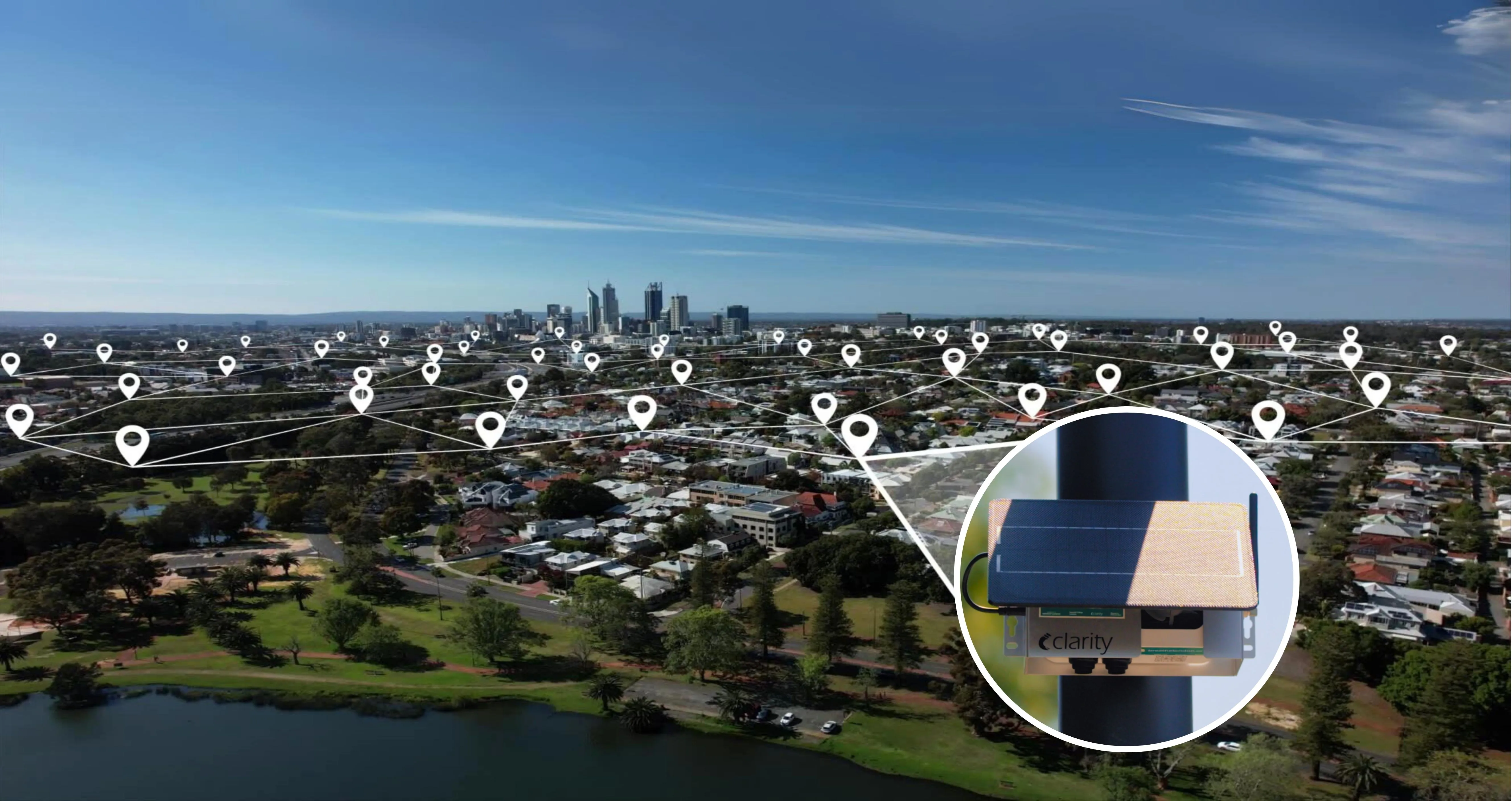
This network includes 200 Clarity Node-S air quality sensors placed strategically throughout an area spanning over 9,700 square kilometers. The RAC WA later added 10 Black Carbon Modules to the network to monitor soot in the air near pollution hotspots. The RAC WA aimed to identify whether black carbon emission patterns followed traffic-related air pollution trends. They developed a report based on data from the first 12 months of black carbon monitoring in the region.
We're going to continue to inform the community; we're going to raise awareness around air quality in our state, we're going to work with the state and federal governments and local governments to make better choices about the infrastructure they're investing in, but also their policies for the future as well around fuel quality standards and emission standards. We want them to make informed choices about the transport they're going to use in the future."
— Will Golsby, General Manager External Relations & Communications, RAC WA
Multi-pollutant monitoring with Clarity
Clarity’s technology enables accurate and seamless multi-pollutant monitoring. Our flagship Node-S sensor measures fine particulate matter (PM2.5) and nitrogen dioxide (NO2). Our wide variety of Add-On Modules expands this monitoring capability to include pollutants such as black carbon (BC), dust (PM10), carbon monoxide (CO), ozone (O3), and more.
Although Clarity does not offer air toxics monitoring, our offerings complement HAP monitoring efforts to provide a more holistic view of air quality. Partner with Clarity to get started with multi-pollutant air quality monitoring today!