Wildfire
Article
October 2, 2026
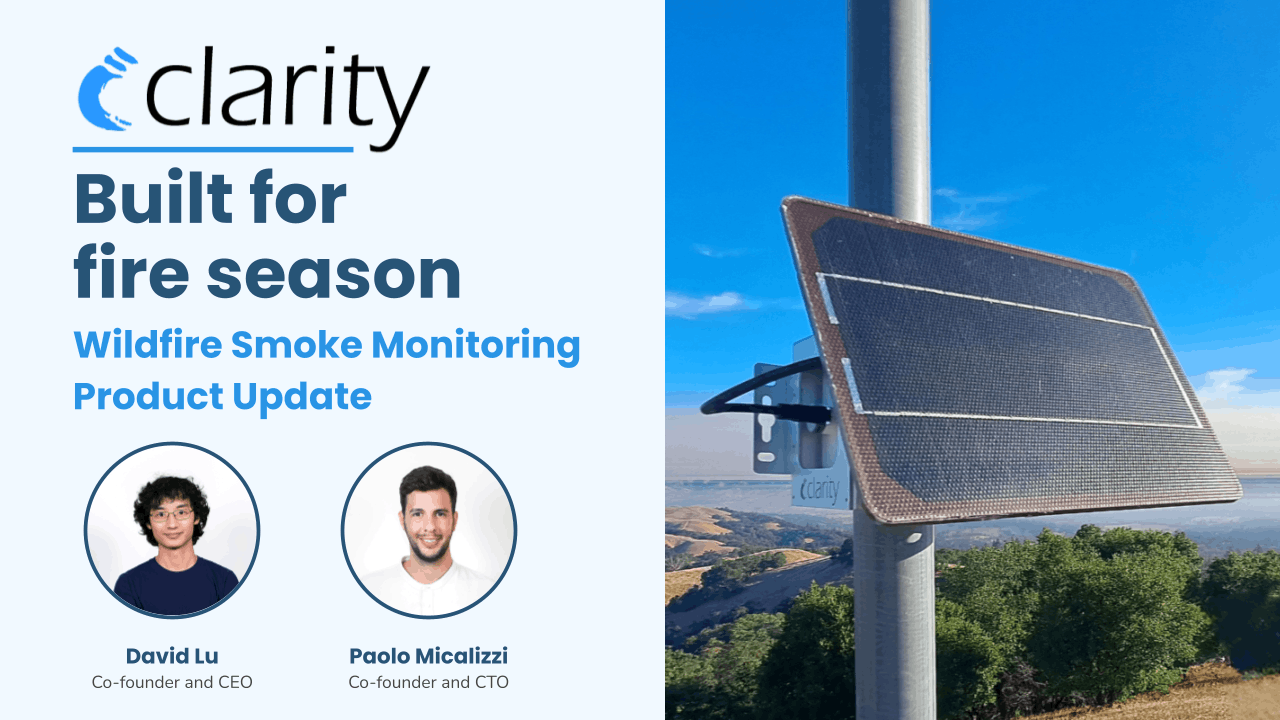
Webinar Recap | Built for fire season: Wildfire smoke monitoring product update Clarity's CEO and CTO share new wildfire smoke monitoring features, including satellite connectivity, an extended CO range, and expanded public data sharing.
Article
Wildfire Air Quality Sensor Expansion Act of 2026: A proposed bill for expanded wildfire smoke air quality monitoringExplore the proposed Wildfire Air Quality Sensor Expansion Act of 2026 and why hyperlocal air quality monitoring matters during this year’s wildfire season.
Article
Understanding the Canadian Wildfires: Widespread air quality impacts with smoke stretching across the U.S.Smoke from Canadian wildfires is causing hazardous air quality across 20+ U.S. states, as tracked by Clarity's sensor networks.
Article
2026 Wildfire Season: Community safety & preparedness guide + checklistFind out the 2026 wildfire season outlook and how your community can get ready. Understand practical safety measures and access a downloadable wildfire preparedness checklist while learning how real-time air monitoring tracks smoke before it turns hazardous.
Article
Webinar recap: How next-generation air quality monitoring infrastructure is powering wildfire resilienceLearn how schools, government agencies, and rural communities are using next-gen air quality sensors to prepare for and respond to wildfire smoke in California.
Article
Wildfire trends around the world: How is wildfire season changing in different regions?While global burned area from wildfires has declined due to land use changes, many regions are experiencing more intense fire seasons, with more people living in high-risk areas.
Article
What is wildfire smoke made of? Examining wildfire-related air pollutionWildfire smoke contains a complex mix of harmful pollutants, such as ozone precursors, carbon monoxide, and particulate matter like PM2.5 and black carbon. These pollutants can affect health and travel far from the fire source.
Article
Wildfire smoke safety tips: best practices for staying safe from air pollutionAir pollution affects millions every year, but there are simple, effective ways to protect yourself, especially during events like wildfires. Learn how to read the AQI, reduce exposure, and improve indoor air quality.
Article
Do controlled burns prevent wildfires? The shift from suppression to preventionDecades of intensive fire control have actually made forests more vulnerable to severe wildfires. Controlled burns provide a safer and cost-effective way to reduce risk, restore ecosystems, and build long-term wildfire resilience.
Article
The invisible costs of wildfires: What is the true financial impact?Wildfires carry hidden costs that extend beyond immediate damage. They strain public health systems, disrupt employment, and drive up nearby housing costs. Proactive strategies can help reduce these long-term financial impacts.
Article
When is wildfire season in the US? Why it's no longer just a West Coast issueWildfire season varies across the U.S. As climate change drives longer, more intense fire seasons nationwide, once-localized risks now threaten public health, ecosystems, and air quality across the country.